
The ATP Tour is turning into uncharted waters. For the first
time since 2002, none of Roger Federer, Rafael Nadal or Novak Djokovic are in
the top 10 in the world. After over two decades of rule with an iron fist, it
seems that the ‘Big Three’ is coming to its twilight with Djokovic the last of
a dying breed.
A young and promising Djokovic first entered the top 10 back
in March 2007. He would only briefly drop out of it between November 2017 and
July 2018 due to injury. He was soon back in it, ageing like fine wine in the
process.
However, all good things come to an end. A cumulative string
of events concluding with a very poor North American hardcourt swing has seen
the once great Serbian depart an area of the rankings people had become
synonymous seeing him in.
The ATP rankings have refreshed a staggering 1,227 times,
with a member of the Big Three in the top 10. Their legacy will be cherished forever,
and the trio of greats will be remembered fondly for their heroics on the
court.
At the end of the day, tennis moves quickly, taking no
prisoners in a ruthless manner. New competition has come in and raised the bar.
Federer and Nadal no longer compete, while Djokovic struggles to keep pace in
an evolving sport. While the 24-time Grand Slam champion is most certainly not
done yet, this new piece of news is a stark reminder for tennis fans that a
once great dynasty is firmly in the past.
| Player | First entered Top 10 | Last exited Top 10 — never returned |
| Roger Federer | 14 October 2002 | 7 November 2021 |
| Rafael Nadal | 25 April 2005 | 20 March 2023 |
| Novak Djokovic | 19 March 2007 | 14 September 2026 |
The years of dominance
Federer was the first to break into the elite back on October 14, 2002. His first Grand Slam title came in 2003 at Wimbledon, the first of
five on the spin. In between 2004 and 2009, very few were able to keep up. 24
Grand Slam events were played in that time period; 14 went the way of the
Swiss.
However, there was one player not letting him run into the
distance. Nadal was making a name for himself and emerged as Federer’s biggest
rival. He would go on to win 14 Grand Slam titles at Roland Garros alone, even
challenging Federer on different surfaces as the two enjoyed one of the most compelling
rivalries tennis has witnessed.
Two was nice, but it was about to go up a notch. Djokovic
burst onto the scene at the 2008 Australian Open, disrupting 11 consecutive
major titles won by Federer and Nadal to claim what is the first of 24 Grand
Slam titles; only Margaret Court can boast those numbers. He would be the least
popular of the trio, but that did not matter with him determined to put his name
on top. 2011 and 2015 campaigns where he was almost unbeatable are accustomed
to being brought up in debates and discussions, but it was all three who
ploughed on between 2010 and 2020, fending off any challenge to their reign.
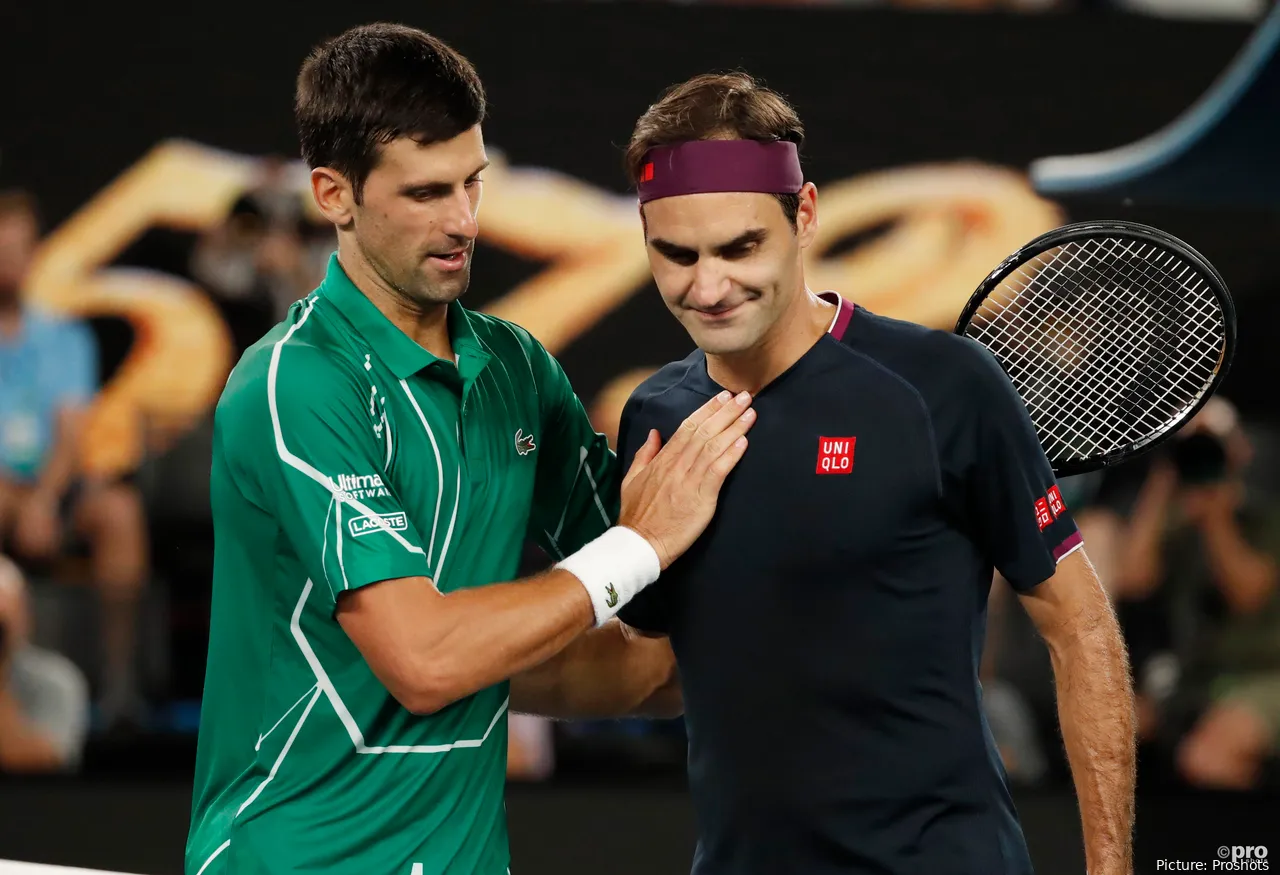
Rafael Nadal and Roger Federer dominated the ATP Tour until a new challenger came along
To put that into context, between 2010 and 2020 only eight
major titles were not won by the trio. Andy Murray and Stan Wawrinka won three
apiece, while Marin Cilic and Dominic Thiem broke the mould at the 2014 and 2020
US Open, respectively. Their consistency at the very highest level was outstanding,
but obviously it would not last.
Grand Slam champions between 2003 and 2023
| Grand Slam titles | Players |
| 24 | Novak Djokovic |
| 22 | Rafael Nadal |
| 20 | Roger Federer |
| 3 | Andy Murray, Stan Wawrinka |
| 2 | Carlos Alcaraz |
| 1 | Andre Agassi, Juan Carlos Ferrero, Andy Roddick, Gastón Gaudio, Marat Safin, Juan Martín del Potro, Marin Čilić, Dominic Thiem, Daniil Medvedev |
The start of the end – Djokovic ploughs on alone
Being the youngest of the three, Djokovic would most likely be the one to continue competing the longest, and that is exactly what happened. Federer struggled with injuries and packed it in at the 2022 Laver Cup in an emotional farewell.
Nadal battled on for another couple of years. In 2022, he still proved to be as dangerous as ever, winning his final two Grand Slam titles at the Australian Open and Roland Garros. That would leave Djokovic, who was still competing at the very highest level.
As his other two rivals drifted closer to the end, Djokovic capitalised. In between 2019 and 2023, he collected 10 Grand Slam titles. His 2023 season proved that he was one of the greats to do it, winning three of the four Slams while only losing in the final of Wimbledon to Carlos Alcaraz.
The new generation of challengers that had replaced the likes of Murray and Wawrinka were touted for great things and would soon enter their prime with the Big Three exiting theirs. Nevertheless, it was still tricky for Alexander Zverev, Stafanos Tsitispas, Andrey Rublev and Medvedev to succeed at the highest level. Medvedev defeated Djokovic in the 2021 US Open final for his sole major accolade, while Zverev finally got that monkey off his back on two occasions in 2026, where the tennis landscape looks much different.

Novak Djokovic saw his two great rivals retire, and continued on competing at the highest level
Djokovic decline
There are a few reasons for this. On paper, he is still achieving some incredible things, but to have not won a Grand Slam title since the 2023 US Open and Masters 1000 title since the Paris Masters of that year says a lot.
For a start, age has to be a factor. He has been closer to 40 than 30 for a while. Recovery has been focused on much more, with his physical condition not the same as it was when in his pomp. The consequence of this is that he is starting to compete in fewer tournaments, subsequently gaining fewer ranking points, which in turn leads to a lower ranking. Damage limitation has been through his consistent performances in the four Grand Slams, reaching the semi-finals stage in eight of the last 12, and even the final in two of them, although he did lose both.
It is obvious that the Grand Slam events are his priority. Djokovic moulds his schedule around them, putting other tournaments at Masters 1000 level and even the ATP Finals to one side. Adding to that, his form at Masters 1000 level has been poor. 12 participations in three years have led to zero titles and two finals. Two-thirds of those competitions he featured in did not even see him reach the quarter-final stage.
Not all of that is down to form. Struggling with the conditions in some events due to his age and physical condition has been obvious, noting the recent Cincinnati Open, and being dragged into long, gruelling matches can have its negatives. The argument against that is the five-set thrillers against Jannik Sinner at the Australian Open and Felix Auger-Aliassime at Wimbledon, both going the way of Djokovic. The quality is still there, the consistency not.
Last top 10 without Big Three
| Rank | Player |
| 1 | Lleyton Hewitt |
| 2 | Tommy Haas |
| 3 | Andre Agassi |
| 4 | Marat Safin |
| 5 | Tim Henman |
| 6 | Juan Carlos Ferrero |
| 7 | Albert Costa |
| 8 | Sébastien Grosjean |
| 9 | Carlos Moyá |
| 10 | Yevgeny Kafelnikov |
New generation in town
The reason Djokovic won three of the four major titles in 2023 was partly due to his incredible class but also down to the lack of competition. No one was really living up to the hype or even scaring him. All aside from one: Alcaraz. The Spaniard won Wimbledon of that year after his US Open triumph at the age of 19. He was the next big talent in the sport and the one competing at the top with Djokovic.
From 2024, he was joined by a rapidly improving Sinner whose rise had been slightly more steady but still very eye-catching. He joined the elite at the 2024 Australian Open, and since that fateful day only Zverev at this year's Roland Garros and US Open has been able to knock them off their perch. The rest of the competition have stuttered. Auger-Aliassime, de Minaur, Medvedev, Ben Shelton, and Taylor Fritz, among others, are unable to find that spark, and Djokovic can be put in this category.

No one is stopping Carlos Alcaraz and Jannik Sinner
After defeating Sinner in four of their opening five showdowns, the semi-final in Melbourne is the only other time that he has left the court victorious against the World No.1, who leads the head-to-head 7-5. It is closer between him and Alcaraz, although recent form points in the direction of the 23-year-old after their last two contests went their way to level at 5-5.
Djokovic has lost in seven of the last 12 Grand Slams against one of these two. From once being the one on top, he has been forced to watch Alcaraz and Sinner take the role he once embraced.
ATP Rankings as of 16/09/26
(as per livetennis.eu)
| Ranking | Player | Points |
| 1 | Jannik Sinner | 11,500 |
| 2 | Alexander Zverev | 9,690 |
| 3 | Carlos Alcaraz | 5,560 |
| 4 | Ben Shelton | 4,680 |
| 5 | Félix Auger-Aliassime | 3,890 |
| 6 | Daniil Medvedev | 3,770 |
| 7 | Flavio Cobolli | 3,720 |
| 8 | Frances Tiafoe | 3,380 |
| 9 | Alex de Minaur | 3,300 |
| 10 | Taylor Fritz | 3,175 |
| 11 | Arthur Fils | 3,150 |
| 12 | Novak Djokovic | 2,980 |
A shift in the tennis landscape
All of this has led to Djokovic tumbling down the order. Ranked 12th in the world following the conclusion of the US Open makes for grim reading. However, ranking has not been so important for Djokovic compared to other aspirations. If it had been, then he would have prioritised the 2025 ATP Finals instead of the Hellenic Championship and featured in more Masters 1000 tournaments.
The day was always going to come when Djokovic cannot keep pace with everyone around him. It happened to Federer and Nadal; now the same fate is occurring for Djokovic. His robust and impeccable physique, along with his quality on court, has helped him remain one of the most feared tennis players for two decades.
Read also
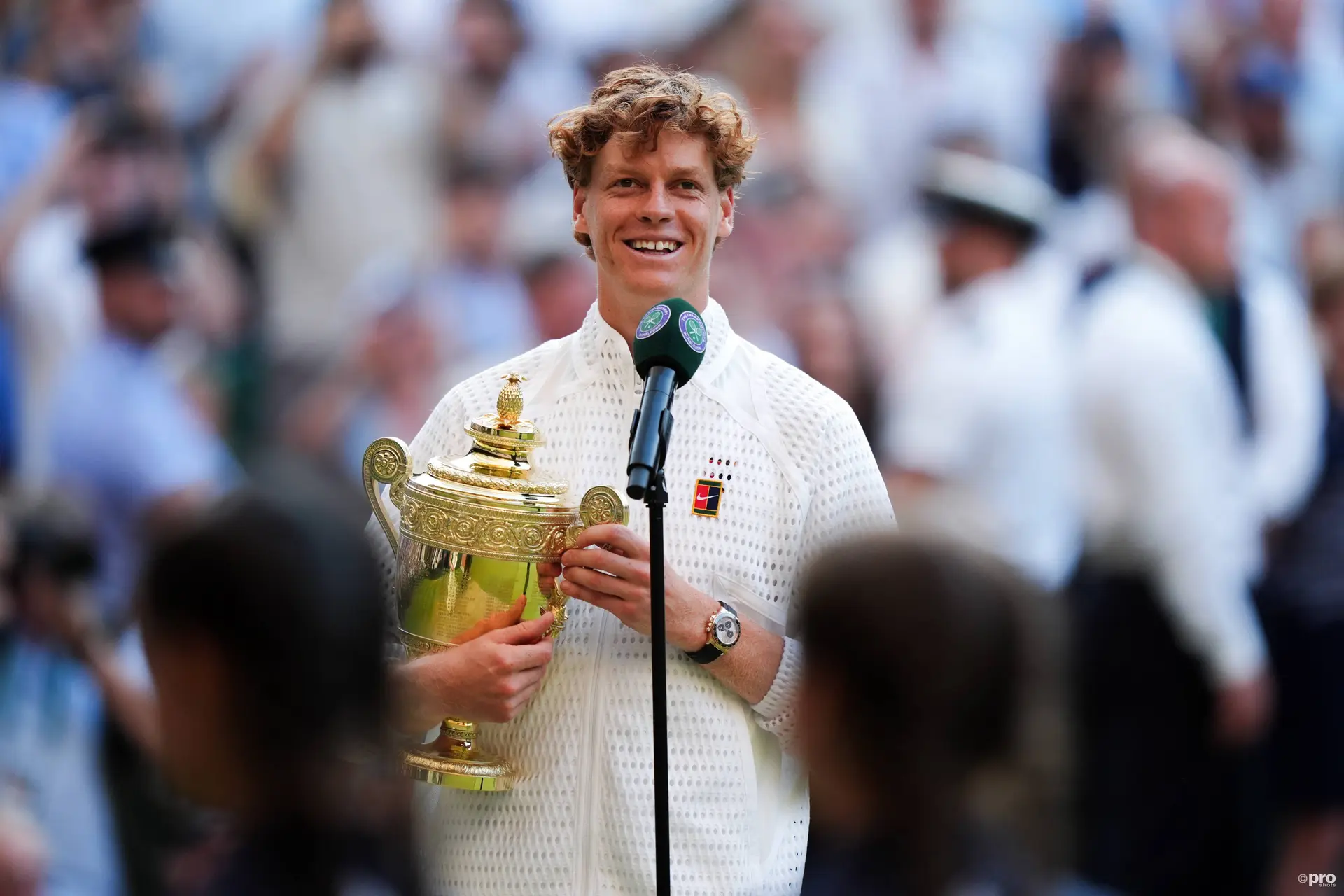
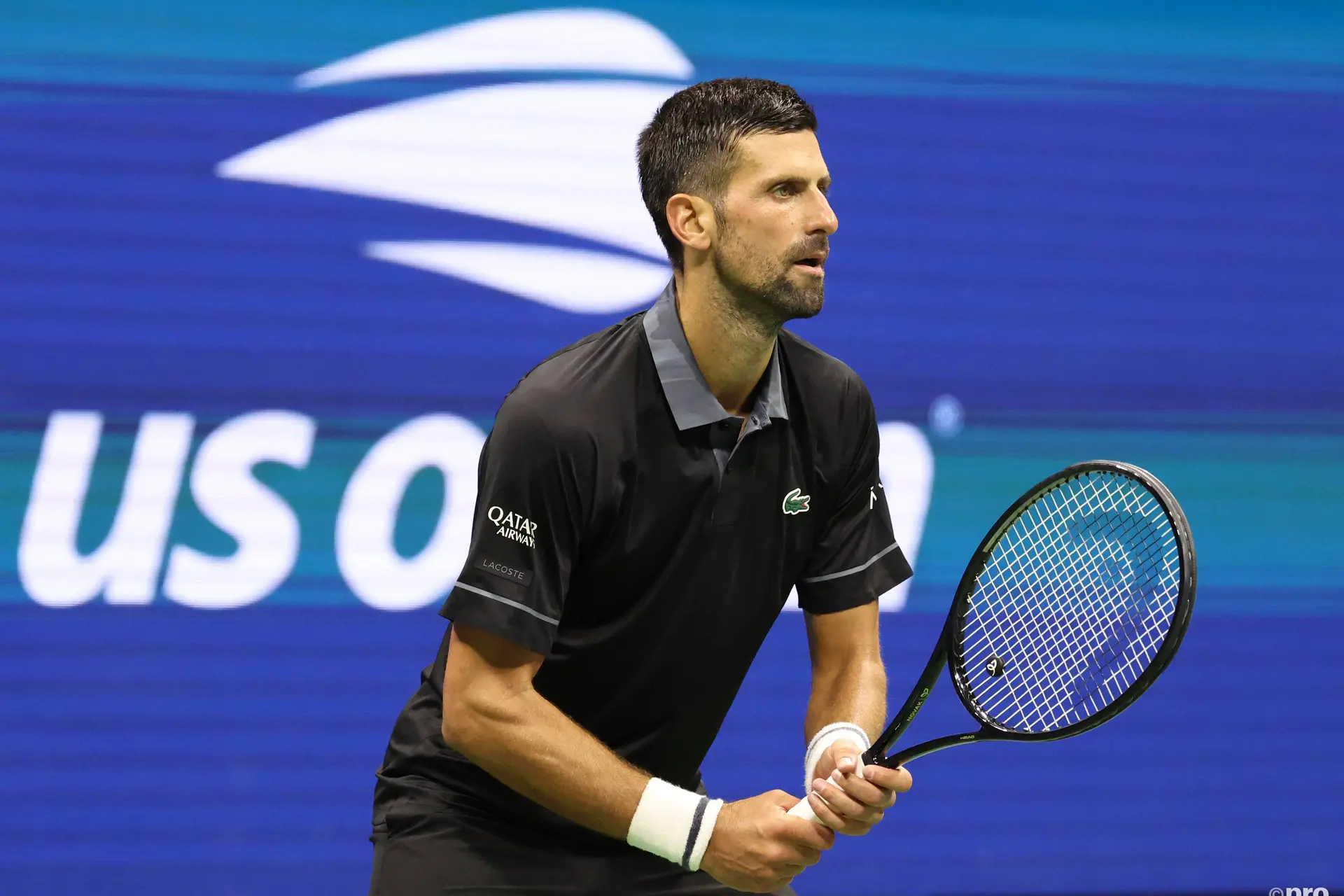
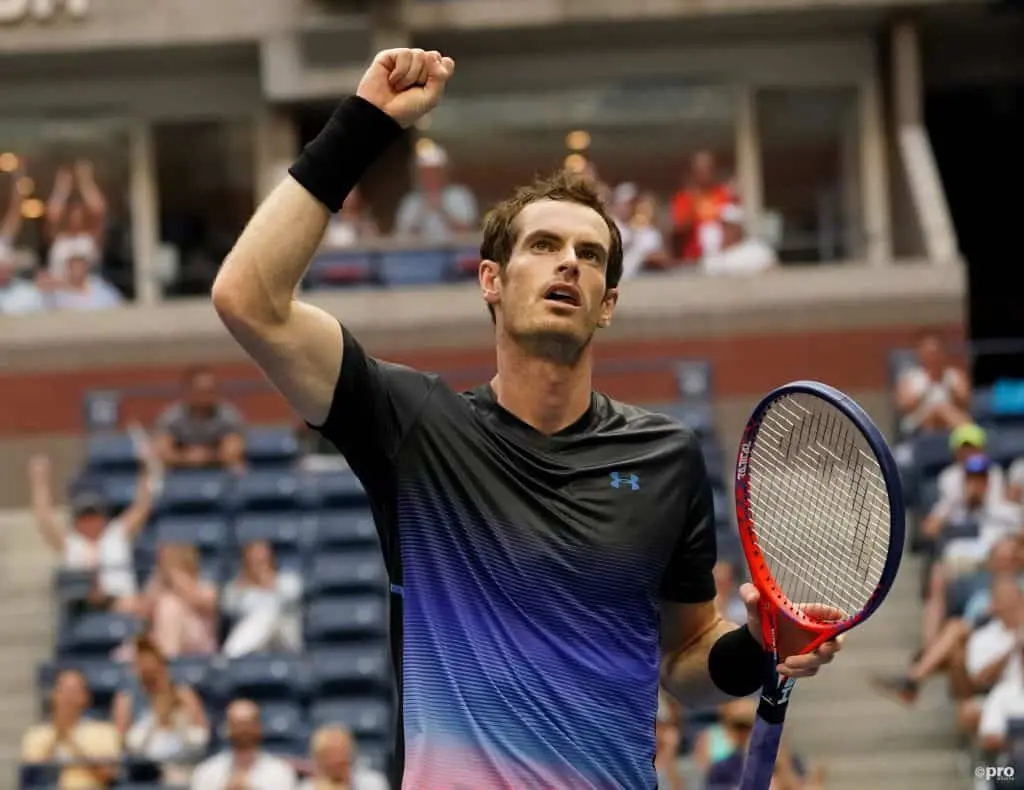
The class still remains, but that prominent question still remains on whether he can unlock it. Just because he is 12th in the world does not mean that he is the 12th best player in the world. Aside from the top three, he could probably beat everyone else in front of him in a one-off contest. That theory will be put to the sword as he looks set to continue competing in 2026. The China Open is his next destination, the first time in 11 years Djokovic has ventured to Beijing, highlighting the shift in his priorities.
Retirement does not seem imminent. The 2028 LA Olympics have been a target for Djokovic, and maybe that is when he calls it a day. What ranking position and how many titles he has won from now to then remains a mystery. The discourse surrounding him can change in an instance. He goes on to continue his 100% record at the China Open; his critics will be hushed.
As for now, Djokovic's descent from the top 10 does signal a change. The Big Three are no more. Alcaraz and Sinner are the dominant forces in the sport. Djokovic has become a challenger.

Lucas MichaelTennis Journalist
Lucas Michael is a tennis journalist based in Cambridge, UK, specializing in comprehensive coverage of the ATP and WTA tours. For the past 1.5 years, he has been a core contributor to TennisUpToDate, where he has authored more than 3,000 data-driven match reports, deep-dive analysis pieces, and engaging liveblogs.
Lucas pairs real-time statistical analysis with on-the-ground reporting, frequently traveling to tournaments to cover the action firsthand from the press box and player press conferences. This blend of advanced metrics and direct access allows him to provide sharp context regarding player form, tactical trends, and breaking tour developments.
He holds a BA (Hons) in Sports Journalism. Grounded in core journalistic ethics, Lucas places a strict emphasis on meticulous sourcing, editorial accuracy, and a commitment to updating live content swiftly as verified information emerges.
claps 0visitors 0
Just In



Popular News
Latest Comments
- Boss move, Sinner !Rapunzel27-10-2026
- Apparently still refusing to seek 'help' ...and still playing Dress-Up like a 10 year-old.
 mandoist27-10-2026
 - Lena... Takin' care of businessmandoist25-10-2026
- Can you please stop publishing this nonsense? Stick to Tennis.mandoist25-10-2026
- Does Sinner need that 4.5 mil? I doubt it. He can make that with three modelling gigs!😅🤣Rapunzel21-10-2026
- Did "People Magazine" purchase this website? This nonstop storyline is bullshit.mandoist21-10-2026
- Listen... this is of no concern to anyone but these two. Deal with your own issues -- most of us have our own. Thanks, media, for these insignificant follow-ups which are meaningless.mandoist21-10-2026
- This is so very very sad, for all three of them. I truly thought they had an unbreakable bond, but life throws up so many differing challenges. Having your homeland suffering in such a terrible way, makes happiness lose out to guilt as well. Our thoughts are with them. X💔bjsexton20-10-2026
- I have lost all respect for Svitolina! Could she not have waited until he had played at the Paris Masters!!! She is selfish and don't give a damn about Gael. That is NOT how love is demonstrated Elina!!Rapunzel19-10-2026
- Perhaps convenient tennis tour sex is not a strong enough experience in which to base a marriage?mandoist19-10-2026

Loading