Preview Shanghai Open Final | Alejandro Davidovich Fokina vs Rafael Jodar battle for biggest career title
ATP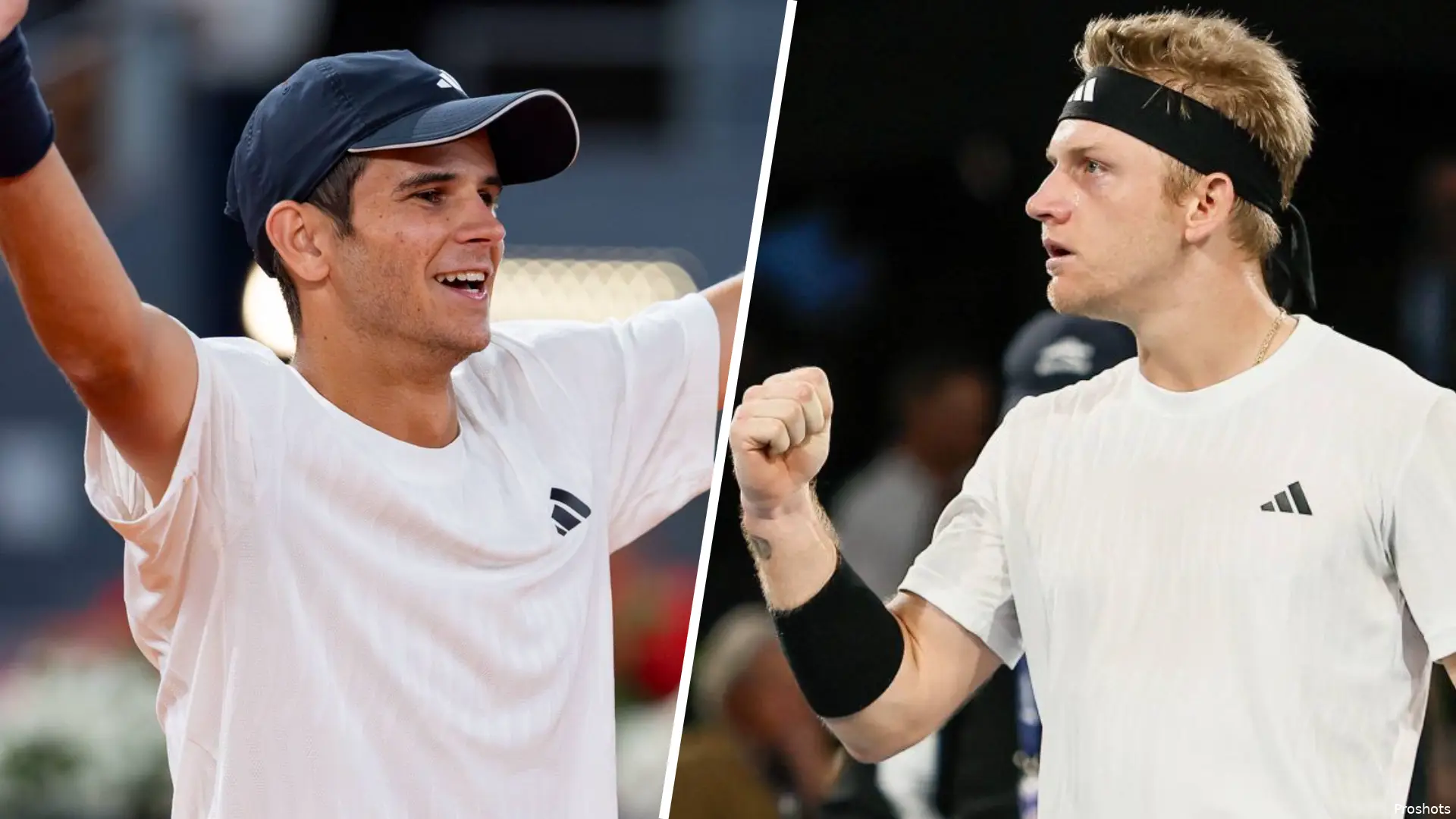
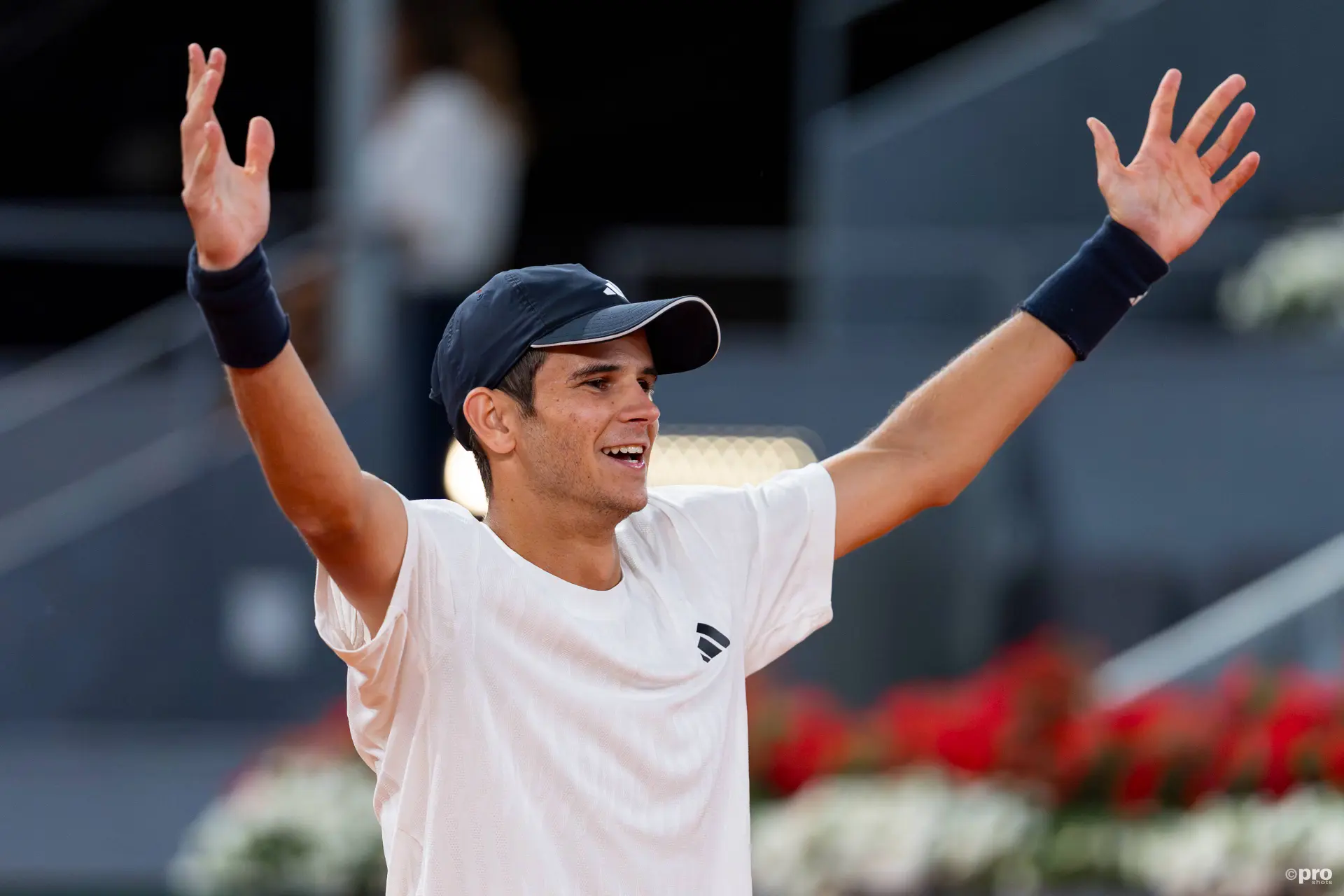
Alejandro Davidovich Fokina and Rafael Jodar will contest the Shanghai Masters final after stunning Alexander Zverev and Daniil Medvedev in Saturday’s semi-finals. Their all-Spanish showdown follows another unexpected championship match in Shanghai last year, when Valentin Vacherot defeated Arthur Rinderknech to claim the title. This time, Davidovich Fokina and 20-year-old Jodar will battle for the biggest titles of their careers, with the latter also chasing a place in the world’s top 10.
Davidovich Fokina came from a set down to beat top seed Alexander Zverev 5-7, 6-4, 6-3, while Jodar produced one of the most impressive performances of his breakthrough season to defeat Daniil Medvedev 6-3, 6-4. Their victories have set up a final between two players at very different stages of their careers, but with the same opportunity to claim the biggest title either has contested.
For Davidovich Fokina, Sunday represents a second chance to win a Masters 1000 title after losing the 2022 Monte-Carlo final to Stefanos Tsitsipas. The 27-year-old arrives in Shanghai on a nine-match winning streak in China, having won the Chengdu title last month. He has already demonstrated that he can survive the most demanding moments of this tournament, including several deciding-set battles.
Jodar, meanwhile, has transformed his standing in the sport during 2026. The 20-year-old began the year outside the top 100 and has since won his first ATP title in Marrakech, reached the Washington final and established himself as a contender at Masters 1000 events. Now through to his first final at this level, he has another opportunity to turn a remarkable season into a defining breakthrough.
Davidovich Fokina seeks redemption after Monte-Carlo final defeat
Davidovich Fokina's route to the Shanghai final has been built on resilience rather than straightforward wins. After opening with a comfortable victory over Jenson Brooksby, he needed third-set tiebreaks to overcome Frances Tiafoe and Hubert Hurkacz. Against Tiafoe, he saved a match point before prevailing 7-6, 4-6, 7-6. He then recovered from losing the opening set 6-1 against Hurkacz to win another deciding-set tiebreak.
His quarter-final against Arthur Gea ended in retirement, but the semi-final against Zverev demanded a much higher level. After losing a competitive first set, Davidovich Fokina continued to attack from the baseline, using his movement and backhand to disrupt the German's rhythm.
"I knew that if I stayed there all match, I could get at least one chance and I took it there in the second set. Then in the third set, I think I was better physically."

The victory was Davidovich Fokina's sixth career win against a top-five opponent and his first of the 2026 season. He also showed greater control on serve when the match reached its decisive stages, finishing with an 82 per cent first-serve rate according to the match statistics. His ability to maintain that accuracy while facing one of the most powerful servers on tour will be important against Jodar.
The Spaniard's previous Masters 1000 final ended in defeat in Monte-Carlo four years ago, when Tsitsipas won in straight sets. Shanghai offers a different test on outdoor hard courts, where Davidovich Fokina must balance his aggressive instincts with the discipline required to avoid giving Jodar opportunities to attack. His recent title in Chengdu also means he has already experienced the demands of closing out a tournament during this Asian swing.
There is a further historical incentive. No Spanish player has won the Shanghai Masters since the tournament began in 1990. Davidovich Fokina could become the first to do so, but he will need to overcome a younger opponent who has shown remarkable composure throughout the week.
| Round | Opponent | Result |
| Round of 96 | BYE | - |
| Round of 64 | Jenson Brooksby | 6-1, 6-3 |
| Round of 32 | Frances Tiafoe | 7-6(4), 4-6, 7-6(6) |
| Round of 16 | Hubert Hurkacz | 1-6, 6-3, 7-6(6) |
| Quarter-final | Arthur Gea | 4-1 (ret.) |
| Semi-final | Alexander Zverev | 5-7, 6-4, 6-3 |
Jodar's breakthrough season reaches another level
Jodar's progress has been just as striking, although his route to the final has required more sustained physical and mental effort. He recovered from a set down against Thiago Agustin Tirante in his opening match, then repeated the feat against Jiri Lehecka, Botic van de Zandschulp and Casper Ruud. Four consecutive comeback victories took him to the semi-finals before he finally won in straight sets against Medvedev.
Against the former world No. 1, Jodar combined clean ball-striking with effective serving and returning. He remained composed during a closely contested opening set, in which both players created break-point opportunities, before taking control of the match.
The Spaniard's ability to convert important points was particularly significant against an opponent known for his defensive consistency and ability to extend baseline exchanges. "I am super happy with how I handled the important moments in the first set and how I served and returned," Jodar said after the match. "Daniil is a very tough player. He played great today, so I had to play my best level to play him."

The victory made Jodar the youngest finalist in Shanghai Masters history. It also followed his maiden ATP title in Marrakech and a run to the championship match in Washington in August. His rise has been particularly rapid considering that he started 2026 outside the top 100, and the Shanghai result has moved him into position to challenge for a place among the world's top 10.
The final also carries consequences for the ATP Finals race. Jodar entered the weekend around ninth in the live standings, within reach of qualification for Turin. A victory in Shanghai would significantly strengthen his position and could lift him as high as sixth in the live Race. It would also give him the opportunity to claim his first Masters 1000 trophy before the end of his first full season competing at the highest level.
However, the number of matches Jodar has played should not be overlooked. His five victories in Shanghai have included several long three-set encounters, leaving him with substantially more time on court than Davidovich Fokina. The Spaniard has repeatedly demonstrated that he can maintain his level deep into matches, but the final will test whether he can reproduce that intensity after such a demanding run.
| Round | Opponent | Result |
| Round of 96 | BYE | - |
| Round of 64 | Thiago Agustin Tirante | 4-6, 6-2, 6-3 |
| Round of 32 | Jiri Lehecka | 4-6, 7-6(2), 6-4 |
| Round of 16 | Botic van de Zandschulp | 6-7(4), 6-4, 6-2 |
| Quarter-final | Casper Ruud | 4-6, 6-4, 6-3 |
| Semi-final | Daniil Medvedev | 6-3, 6-4 |
Tactical keys: serve, baseline aggression and physical freshness
This will be the first ATP meeting between Davidovich Fokina and Jodar, leaving no previous head-to-head record to establish a clear favourite. Their contrasting routes to the final provide some clues, though: Davidovich Fokina has repeatedly survived deciding-set pressure, while Jodar has relied on his ability to absorb early setbacks and gradually take control of matches.
The first key will be Jodar's return game. His aggressive baseline approach can put pressure on Davidovich Fokina's second serve and prevent the older Spaniard from dictating rallies with his forehand.
Jodar has won a higher proportion of return points during the tournament, according to the available event statistics, suggesting he has been effective at turning neutral service games into opportunities. If he can consistently make Davidovich Fokina play extra shots, the physical burden could become more significant.
Davidovich Fokina, however, has served with greater consistency. His first-serve percentage across the tournament has been around 72 per cent, compared with approximately 65 per cent for Jodar. That difference could allow him to start more rallies on his terms and protect himself from the younger Spaniard's pressure. Maintaining that accuracy will be especially important if Jodar begins returning aggressively from inside the baseline.
The second tactical question is who controls the length and direction of rallies. Jodar has shown that he can strike through the court and finish points without needing to rely exclusively on extended exchanges.
Davidovich Fokina's movement and ability to change direction, meanwhile, make him dangerous when he can stretch an opponent and open the court. The player who can create space without overhitting may gain a decisive advantage.
Read also
Physical freshness could also influence the outcome. Jodar has spent more than nine hours on court during his run to the final, while Davidovich Fokina has played for approximately eight and a half hours.
Those totals do not automatically determine who will be fresher, but Davidovich Fokina's shorter quarter-final and his ability to finish the Zverev match in three sets could prove useful. Jodar will need to recover well and avoid allowing the accumulated workload to affect his movement late in the match.

Cristhián AvilaTennis Journalist
Cristhián Ávila is a tennis journalist based in Santiago, Chile, and has been part of the TennisUpToDate team since early 2023. He covers the ATP and WTA Tours as well as all four Grand Slams, producing breaking news, match reports, analysis, and regular liveblogs from major tournaments.
His reporting combines statistical analysis with clear explanation, helping readers understand tactical developments, player form, and broader storylines across the tour. Working fluently in both Spanish and English, Cristhián collaborates with an international editorial team and contributes to comprehensive global coverage. As part of his work, he has conducted interviews and media interactions with leading figures in the sport, including Caroline Wozniacki and John McEnroe.
In his journalism, Cristhián places strong emphasis on careful sourcing, editorial accuracy, and updating articles promptly when new, verified information becomes available. His coverage is grounded in research, context, and direct engagement with professional tennis.
claps 0visitors 0
Just In

Popular News
Latest Comments
- Two Things: 1. Stop allowing these Spoiled Trust-Fund Elitists to behave badly. Your little hand-slaps do not deter them. 2. STOP the incessantly annoying "towel wiping" nonsense!!!!
 mandoist15-10-2026
 - A healthy Qinwen may be hard to stop next season. She was already scaring her opponents before her medical leave(s). Unfortunately, Zheng insisted on singing again. On the positive side -- Mirra did not sing!! ;~}mandoist11-10-2026
- Where is it written that athletes, entertainers... People in general... are mandated to keep looking at -- or even using [anti]Social Media? Public & private figures consistently complain and reveal their concerns about negativity and violence thrown at them -- yet they insist on participating. Avoid it, don't use it, don't read it. It's okay to occasionally look up at the World instead beating your eyes & thumbs to death on The Inventions out there.mandoist11-10-2026
- great articlestennisseserver07-10-2026
- Medvedev was leading Djokovic 7-5, 3-5 when an attempted return..' NO you ignorants, Djokovic was leading .weiss05-10-2026
- No more bullshit "Wildcards" to these two. Qualify like everyone else -- there will be cameras there, too. Time to scream... WTF ????!!!!mandoist29-09-2026
- Let's not BS the general public -- Sabalenka started showing cracks in her game last season. Her losses and near-losses started at about the same time she began being distracted by Fame (constant Selfies, making TV commercials, magazine shoots, endless Social Media nonsense, etc., etc.) One would think even Saba could recognize the parallels with others who failed before her -- Raducanu, Giorgi, Bouchard to name a few.mandoist25-09-2026
- Gross!! Hey Raducanu, Giorgi, and Bouchard -- reserve a seat at your Social Media Selfie table for Saba + Naomi. They're heading in your direction soon enough.mandoist24-09-2026
- And then these same players will complain about how lengthy their season’s were and need more time-off. I’m all for more tennis but the amount of tennis we get now is actually kind of crazy! We all need a break, especially the players.DaveyWavey23-09-2026
- You should do a comparison article for "different kinds of justice" the courts decide for tennis players. I can think of at least three players who received very small bans of a few months, however Tara Moore has been fighting for her literal survival the past few years. It seems odd considering she is not a "name" player, unlike the other cases.DaveyWavey22-09-2026

Loading