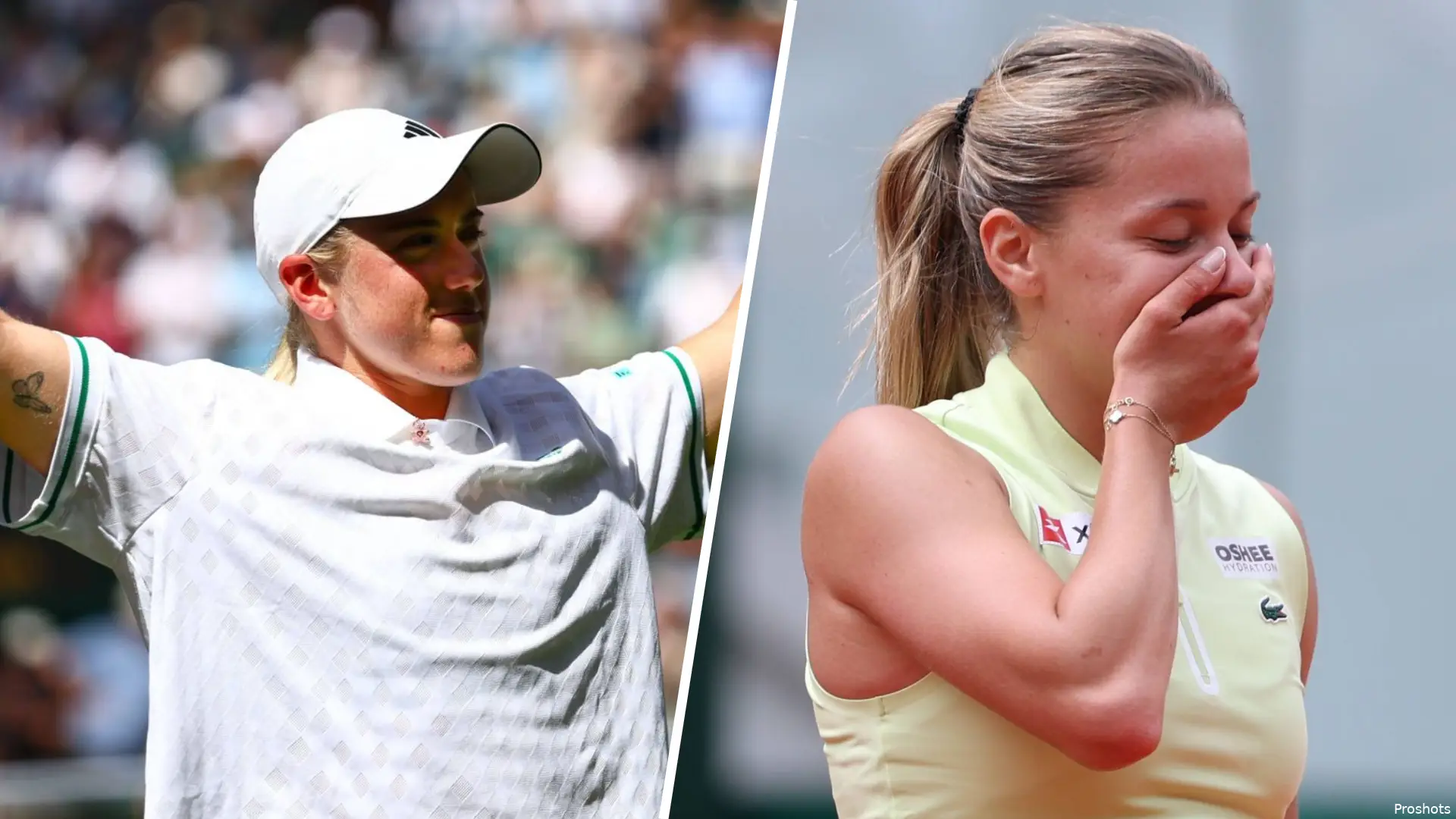
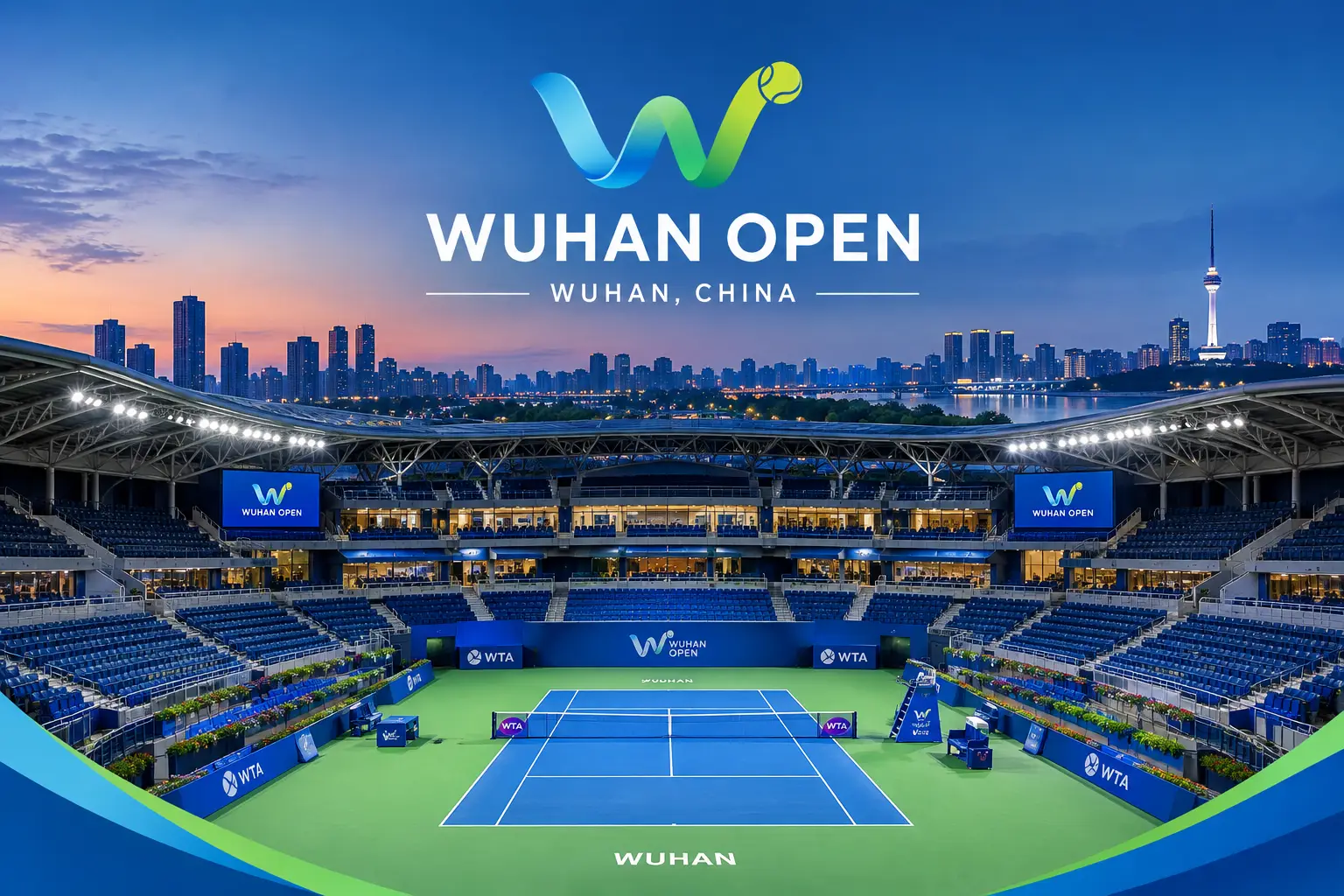
The Wuhan Open will crown an unexpected champion on Sunday when Sonay Kartal faces Maja Chwalinska in an intriguing final between two players chasing the biggest titles of their careers. Kartal defeated Jelena Ostapenko in two tense tiebreaks, while Chwalinska stunned fellow Pole Iga Swiatek to reach her first WTA 1000 championship match. Both have already surpassed expectations, but one more victory would mark a defining moment in their careers.
Kartal's presence in the final is particularly remarkable considering that she returned to competition only recently after six months out with a back injury. Having seen her ranking fall from No. 54 to No. 170, the Briton has defeated four seeded opponents in Wuhan, including world No. 6 Elina Svitolina. Her ability to manage pressure has been central to a run that has already transformed her ranking and restored her position among the leading British players.
Chwalinska has taken a different route, relying on variety, defensive discipline and tactical intelligence to overcome opponents who often possess greater power. The 25-year-old has defeated Maria Sakkari and Swiatek in consecutive rounds, building on a season in which she also reached the French Open final.
Her victory over Swiatek came with the world No. 7 struggling with a leg injury, but Chwalinska had already demonstrated her ability to compete at this level throughout the tournament.
Neither player has previously won a WTA 1000 title, making Sunday's final a career-defining opportunity. Kartal will look to impose her consistency from the baseline, while Chwalinska will attempt to disrupt her rhythm through changes of spin, pace and court position.
Kartal's remarkable return culminates in first WTA 1000 final
Kartal began the season ranked No. 54 before a back injury forced her away from competition for six months. The extended absence saw her ranking fall to No. 170, leaving her with the challenge of rebuilding her form and confidence after returning to the tour in September. Instead of requiring several tournaments to regain her rhythm, the 24-year-old has immediately produced the best run of her career.
Her campaign in Wuhan began with a straight-sets victory over Anhelina Kalinina before she defeated ninth seed Belinda Bencic 6-0, 7-5. Kartal followed that result by dismantling 15th seed Jasmine Paolini 6-2, 6-0, demonstrating that she could dictate rallies against established opponents. The quarter-final against Svitolina presented a different challenge, but Kartal recovered from losing the second set to secure a 2-6, 6-2, 6-4 victory.

The win over Svitolina was particularly significant because it was Kartal's first against the Ukrainian in three meetings. It also secured her place in the semi-finals of a WTA 1000 tournament for the first time, making her only the second British player to reach that stage since the format was introduced in 2009, after Johanna Konta.
Ostapenko then provided the toughest test of Kartal's run. The former French Open champion repeatedly found ways to take control of the scoreboard, leading 4-1 in both sets and creating multiple opportunities to close them out. However, Kartal remained composed, forcing the Latvian to play additional shots and taking advantage when her opponent's aggressive approach became increasingly erratic.
Ostapenko struck 50 winners but also committed 41 unforced errors, compared with just 13 winners and 13 unforced errors from Kartal. Those figures illustrate the contrast between their approaches: Ostapenko attempted to dictate points with outright aggression, while Kartal focused on consistency and waiting for opportunities.
The Briton's discipline proved decisive in two tiebreaks, which she won 11-9 and 7-5. "At times she's unplayable and sometimes you just have to ride that wave,” the former Wimbledon semifinalisst said. “Mentally, I think this is one of the best performances I've had in my career."
Kartal's victory secured her second career WTA Tour final and her first at WTA 1000 level. She is guaranteed to rise from No. 170 to at least No. 50 in the rankings, while winning the title would take her as high as No. 36. The result would also make her the lowest-ranked champion in WTA 1000 history.
Sonay Kartal's route to the final
| Round | Opponent | Result |
| First round | Anhelina Kalinina | 7-5, 6-3 |
| Second round | Belinda Bencic (9) | 6-0, 7-5 |
| Third round | Jasmine Paolini (15) | 6-2, 6-0 |
| Quarter-final | Elina Svitolina (5) | 2-6, 6-2, 6-4 |
| Semi-final | Jelena Ostapenko | 7-6(9), 7-6(5) |
Kartal's ability to remain composed in difficult moments has been the defining feature of her campaign. She has faced opponents with considerably more experience at this level, yet has consistently managed to impose her game when matches became tight. The final will demand the same discipline, particularly against Chwalinska, who is capable of changing the pace and direction of rallies without necessarily attempting to hit through her opponent.
Chwalinska's variety and tactical intelligence earn a major opportunity
Chwalinska has enjoyed an equally impressive run, although her success has been built on a different set of strengths. The Polish player does not rely on overwhelming power to dictate matches. Instead, she combines heavy topspin forehands with sliced backhands, drop shots and changes of pace that can disrupt opponents who prefer to establish a predictable baseline rhythm.
Her progress in Wuhan began with a straight-sets victory over Mayar Sherif, followed by a three-set comeback against 16th seed Marie Bouzková. She then defeated 10th seed Iva Jović 6-4, 6-1 before surviving a demanding quarter-final against Sakkari, winning 6-0, 3-6, 7-5. Those results demonstrated her ability to adapt to different opponents and remain tactically disciplined when matches became complicated.

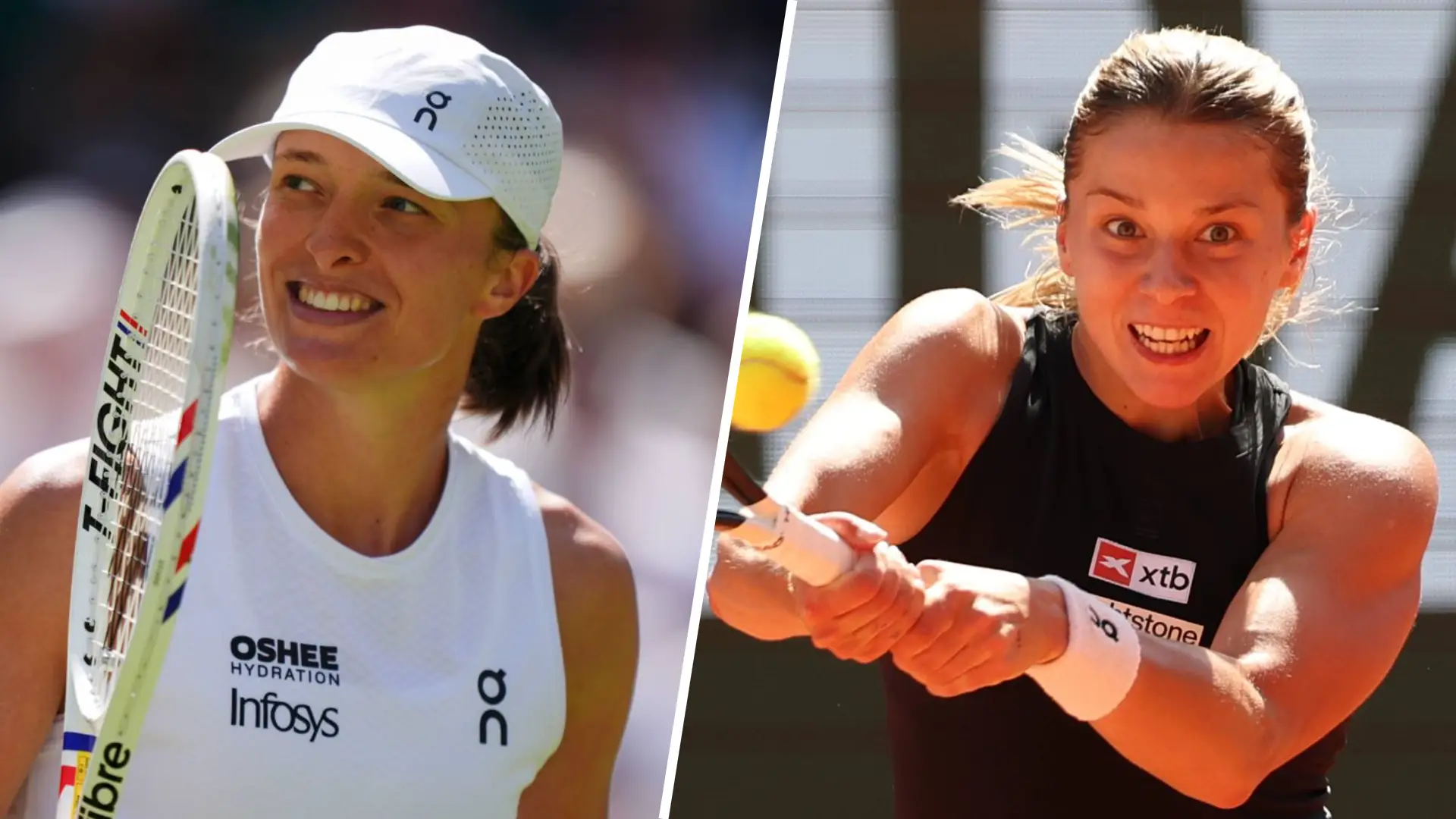
The semi-final against Swiatek was a particularly significant occasion. The two Poles have known each other since childhood and previously played junior doubles together, finishing runners-up at the 2017 Australian Open. Their first competitive meeting in a decade brought Chwalinska the biggest win of her career by ranking, although Swiatek was hampered by a left-leg injury during the match.
Swiatek led 5-3 in the opening set and held two set points, but Chwalinska recovered to win the first set 7-5. The world No. 7 then required a medical timeout and returned with her left thigh bandaged. Chwalinska took advantage of her opponent's reduced mobility to dominate the second set 6-1, winning 10 of the final 11 games.
The injury is important context, but the Polish player's ability to stay in the match when trailing and capitalise on her opportunities was central to the result. "She's a great champion, a living legend, she won everything. So it was a great honour for me to share the court with her today."
Chwalinska is now contesting her first WTA 1000 final and has moved to a career-high position in the live rankings. Her run also follows her appearance in the French Open final earlier this season, confirming that her distinctive game can be effective beyond a single tournament or surface. She will now have an opportunity to win her first WTA Tour title against an opponent she has never faced at tour level.
Maja Chwalinska's route to the final
| Round | Opponent | Result |
| First round | Mayar Sherif | 6-3, 6-2 |
| Second round | Marie Bouzková (16) | 1-6, 6-1, 6-1 |
| Third round | Iva Jović (10) | 6-4, 6-1 |
| Quarter-final | Maria Sakkari | 6-0, 3-6, 7-5 |
| Semi-final | Iga Swiatek (7) | 7-5, 6-1 |
Chwalinska's ability to make opponents uncomfortable could be particularly important against Kartal. The Briton has thrived when she can build rallies patiently and wait for errors, but the Pole's changes of spin and trajectory may prevent her from finding a consistent rhythm. Chwalinska will need to maintain the depth of her groundstrokes, however, because short balls could give Kartal opportunities to step forward and take control.
Head-to-head and tactical keys: what to expect
Sunday's final will be the first meeting between Kartal and Chwalinska at Tour level, leaving no previous head-to-head record to establish a favourite. Their contrasting styles nevertheless offer a clear tactical framework: Kartal will look to build points through consistency and depth, while Chwalinska will attempt to disrupt her rhythm with slices, drop shots and changes of spin.
The key for Kartal will be to attack short balls without rushing, particularly when Chwalinska uses low slices to draw her forward. For the Pole, the challenge will be to combine variety with sufficient depth and aggression to prevent Kartal from controlling baseline exchanges. Kartal's composure in tight moments, demonstrated against Ostapenko, could prove decisive if the match reaches another tiebreak.
Read also
Kartal has dropped only one set on her way to the final, while Chwalinska has played several demanding three-set matches. The Briton may therefore have a slight advantage if the contest becomes prolonged, although Chwalinska's ability to shorten points through changes of direction could help her manage that challenge.
Kartal's consistency gives her a slight edge, particularly if she can maintain the discipline that carried her through the semi-final. Chwalińska has the tactical tools to make the contest uncomfortable, however, and a strong start could shift the balance in her favour. The first WTA 1000 title of either player's career will depend on who can impose her preferred style for longer.

Cristhián AvilaTennis Journalist
Cristhián Ávila is a tennis journalist based in Santiago, Chile, and has been part of the TennisUpToDate team since early 2023. He covers the ATP and WTA Tours as well as all four Grand Slams, producing breaking news, match reports, analysis, and regular liveblogs from major tournaments.
His reporting combines statistical analysis with clear explanation, helping readers understand tactical developments, player form, and broader storylines across the tour. Working fluently in both Spanish and English, Cristhián collaborates with an international editorial team and contributes to comprehensive global coverage. As part of his work, he has conducted interviews and media interactions with leading figures in the sport, including Caroline Wozniacki and John McEnroe.
In his journalism, Cristhián places strong emphasis on careful sourcing, editorial accuracy, and updating articles promptly when new, verified information becomes available. His coverage is grounded in research, context, and direct engagement with professional tennis.
claps 0visitors 0
Just In

Popular News
Latest Comments
- Two Things: 1. Stop allowing these Spoiled Trust-Fund Elitists to behave badly. Your little hand-slaps do not deter them. 2. STOP the incessantly annoying "towel wiping" nonsense!!!!
 mandoist15-10-2026
 - A healthy Qinwen may be hard to stop next season. She was already scaring her opponents before her medical leave(s). Unfortunately, Zheng insisted on singing again. On the positive side -- Mirra did not sing!! ;~}mandoist11-10-2026
- Where is it written that athletes, entertainers... People in general... are mandated to keep looking at -- or even using [anti]Social Media? Public & private figures consistently complain and reveal their concerns about negativity and violence thrown at them -- yet they insist on participating. Avoid it, don't use it, don't read it. It's okay to occasionally look up at the World instead beating your eyes & thumbs to death on The Inventions out there.mandoist11-10-2026
- great articlestennisseserver07-10-2026
- Medvedev was leading Djokovic 7-5, 3-5 when an attempted return..' NO you ignorants, Djokovic was leading .weiss05-10-2026
- No more bullshit "Wildcards" to these two. Qualify like everyone else -- there will be cameras there, too. Time to scream... WTF ????!!!!mandoist29-09-2026
- Let's not BS the general public -- Sabalenka started showing cracks in her game last season. Her losses and near-losses started at about the same time she began being distracted by Fame (constant Selfies, making TV commercials, magazine shoots, endless Social Media nonsense, etc., etc.) One would think even Saba could recognize the parallels with others who failed before her -- Raducanu, Giorgi, Bouchard to name a few.mandoist25-09-2026
- Gross!! Hey Raducanu, Giorgi, and Bouchard -- reserve a seat at your Social Media Selfie table for Saba + Naomi. They're heading in your direction soon enough.mandoist24-09-2026
- And then these same players will complain about how lengthy their season’s were and need more time-off. I’m all for more tennis but the amount of tennis we get now is actually kind of crazy! We all need a break, especially the players.DaveyWavey23-09-2026
- You should do a comparison article for "different kinds of justice" the courts decide for tennis players. I can think of at least three players who received very small bans of a few months, however Tara Moore has been fighting for her literal survival the past few years. It seems odd considering she is not a "name" player, unlike the other cases.DaveyWavey22-09-2026

Loading