Tennis Graveyard: Tommy Haas - Former No.2 whose career was repeatedly interrupted by serious injuries
ATP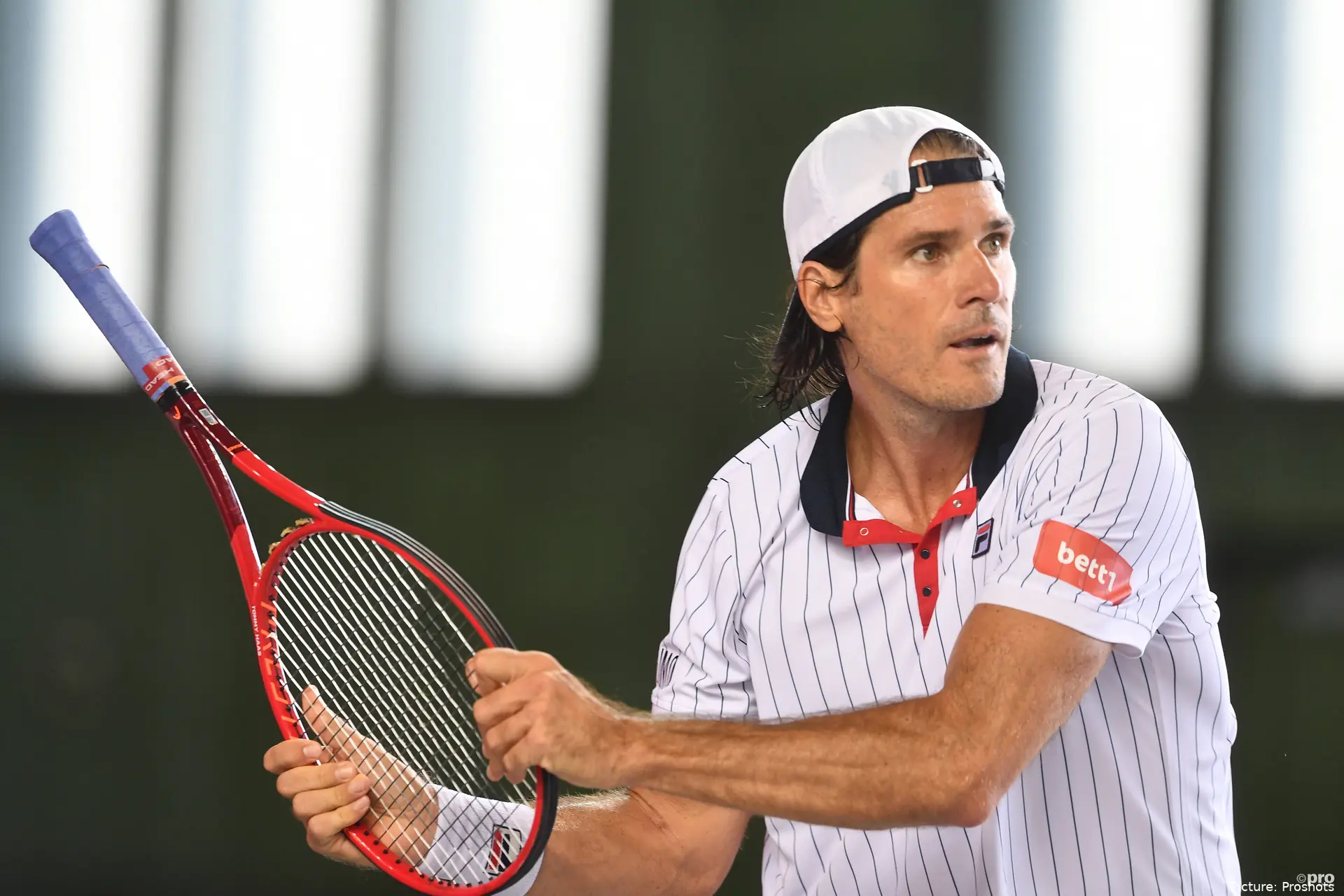
Tommy Haas was once a top German player threatening to challenge for all the major accolades and become a mainstay among the best competitors in the world. His talent was undeniable, but his stop-start career blighted any chance of this reality.
A four-time Grand Slam semi-finalist, Haas also won an Olympic silver medal and has success on the Masters 1000 circuit. He collected a grand total of 15 ATP titles from 28 finals between 1997 and 2014. He began his career in his teens and finished it just on the right side of 40.
Over two decades he fought and battled, wishing for a body that would stay in tact. This aspiration would not be realised, making for what would ultimately be years of ups and downs, ending with a resume which would have been a lot more decorated if his availability was more consistent.
Tommy Haas - Career at a glance
| Achievement | Haas' result |
| Highest ranking | World No. 2 |
| ATP singles titles | 15 |
| ATP finals | 28 |
| Masters 1000 titles | 1 |
| Masters 1000 final | Rome 2002 |
| Grand Slam semi-finals | 4 |
| Grand Slam quarter-finals | 8 |
| Olympics | Silver medal, Sydney 2000 |
| Grand Slam Cup | Runner-up, 1999 |
| Career wins | 569 |
| Career prize money | More than $13.6m |
| Davis Cup | Germany semi-finalist, 2007 |
| Doubles ranking | No. 82 |
| ATP Comeback Player of the Year | 2012 |
Making a name for himself
Haas first made his breakthrough on the ATP Tour in 1997 on
home soil, reaching the semi-finals of the Hamburg Open, formerly a Masters
1000 event. That same year he also reached an ATP final in Lyon, breaking into the
top 50.
His potential continued to be showcased, defeating Andre Agassi
at Wimbledon in 1998 before his first deep Grand Slam run emerged in the 1999
Australian Open. That year also finally saw him triumph on the big stage,
sealing a first piece of silverware in Memphis against Jim Courier, another big
name defeated.
An Olympic silver medal was one of his crowning moments, defeating
a young Roger Federer in the process before losing to Yevgeny Kafelnikov in the
gold medal match. The first season where he truly threatened to break into the
elite came in 2001. While his form at major level left space for improvement,
he won four ATP titles. The biggest coming at the Stuttgart Masters, the
biggest accolade he would win in his professional career. A daunting thought despite
his potential in the sport.
His progress would not stop, finding himself in the
semi-finals of the Australian Open for the second time in his career, but after
leading 2-1, things did not go his way, and Marat Safin dropped just two games
for the rest of the match. Agassi pipped him at the Rome Open, which culminated
in another landmark being reached. On the 13th May 2002, Haas
reached a career high of second in the world. The No.1 spot was in sight, but
it would never be seized.

Tommy Haas was a force to be reckoned with on his day
The first big setbacks - blueprint of his tennis career
From those prosperous heights at the top of the rankings, Haas would not even be ranked in 2003. This tremendous and disastrous fall from grace came through injuries. Two major surgeries prevented him from competing in that season. The tennis roadshow continued without him, with a lot of catching up to do.
This would be a theme of his career. The reactions when re-entering the fray were commendable and grabbed the attention of many. After 15 months away from the court, he won titles in Houston and Los Angeles while also reaching the quarter-finals of the US Open. He clambered back into the top 20, culminating 2004 in 17th.
2005 was another difficult year where injuries conjured up another slide. From 2006 to 2007, he collected four ATP titles, all coming in the States, and recorded another major last-eight appearance at Flushing Meadows. His run to the Australian Open semi-finals for the second time in his career showed that he still had the talent to battle for the biggest titles. He fluttered around the top 10 mark, but the biggest question was not about his ability. It was about his health.
2008 brought more devastating news and setbacks. He failed to reach a final thanks to shoulder issues and was outside the top 80 come year's end. Now in his 30s, his peak game was starting to be a thing of the past, with the feeling that he did not live up to those glorified expectations. That would be tested at Wimbledon in 2009, defeating Marin Cilic and the fourth seed, Novak Djokovic, in four sets to compete in a third slam semi-final. He failed to take a set off Federer, who went on to win another title at SW19.
Injuries kept coming before one last hurrah
The same old tale occurred in 2010. Coming off another positive season with a foundation to build off from, Haas did not play a single match from mid-February onwards. Right hip and right shoulder surgeries came at a cost, tumbling outside the top 300.
He spent the next year battling to just get back onto the tour. A far cry from the distant peaks that he had once achieved. This was a different Haas. The young, flourishing German had the world at his feet, not knowing what would hit him. Everytime an injury setback came his way, he found a way to combat it. 2012 was another example of his resilience.
There was a reason he was named ATP Comeback Player of the Year. Starting in 205th, he dragged and clawed himself to finish up in 21st. Aged 34, this was a late burst for someone whose supposed best days had long gone. The most notable incident was returning to the Halle Open three years after winning his most recent ATP title. He sealed another one on home soil, incredibly against Federer in straight sets. He also made it to quarter-finals in Canada and Hamburg.
The quarter-final lineup of the 2013 French Open also had Hass' name involved for the first time. He defeated Djokovic en route to the semi-finals of the Miami Open while collecting titles in Munich and Vienna at 250 level. Back as a regular in the top 20 again, it would be the final time he could be a part of this coveted group.
The twilight of his career was again started up by injuries. Another issue with his right shoulder did not stop him from reaching his final ever ATP final in Zagreb, but his appearances on court would become more limited with the seldom-seen Haas rarely being able to feature in 2015, back outside the top 400.
This would not stop him in his tracks. A nine-month layoff in 2016 for toe surgery was just another bump in the road, and in 2017 he became the oldest player since Jimmy Connors in 1995 to win an ATP match at the age of 39. The talent was evident, with another win being conjured up against Federer. He eventually called it quits in March of 2018, having played his last tournament in August 2017.
Haas' main injuries
| Period | Main injury | Impact |
| 2002–03 | Right shoulder injury / surgeries | Required two operations and forced Haas to miss the entire 2003 season. |
| 2005 | Ankle ligament tear | Significant ankle injury disrupted his season. |
| 2007 | Right shoulder injury | Another major shoulder problem requiring surgery; contributed to further time away. |
| 2007 | Torn abdominal muscle | Forced him to withdraw from Wimbledon. |
| 2009 | Shoulder problems | Came during his strong comeback season, although he still won Halle and reached the Wimbledon semi-finals. |
| 2010–11 | Right hip and elbow injuries | Required surgery and caused another lengthy absence; his ranking collapsed outside the Top 200. |
| 2014 | Severe right shoulder injury | Fourth operation on the shoulder after damage to multiple tendons; effectively ended his full-time career at the top level. |
| 2015–17 | Recurring physical problems | Repeated setbacks prevented him from establishing another sustained comeback, although he continued playing until 2017. |
Was Haas' career a failure?
There is no doubt that Haas was a fabulous tennis player. Comfortable with taking the ball early, his huge forehand was partnered with a synonymous one-handed backhand. He made opponents uncomfortable on court while happy to roam and play whatever style was needed to counter his opponent. This was one of the reasons why his game aged like fine wine. Still in his late 30s, he was defeating the best players in the world and making unexpected runs in big tournaments.
Haas and German tennis will look back on the career with fondness, but it could have been so much better. That 2003 injury was the blueprint for his years in tennis. A major setback, climb his way back up the rankings and get back to competing with the best. However, he never reached those heights of World No.2 in 2002, nor ever made a Grand Slam final or even Masters 1000 final after 2002.
From one perspective, this can be classed as a failed tennis career based off the potential once shown. Would Haas have been a Grand Slam champion and World No.1 if he had not been injured in 2003? Possibly. However, we will never know for sure.
Read also
The compelling argument around his tennis career being a success was that he always navigated back among the top players following each injury problem. This deserves huge praise. It was unfortunate that seemingly every few years he was due a drop in the order, dashing any hope of him cementing his name among the elite.
Overall, there is no doubt that Haas would have been good enough to be in a category of great tennis players. Injuries are a part of the sport, and he regularly got inflicted by them. Not niggling issues, but season-ending ones. This places him in a list of players who were good enough to challenge for the major honours but never got the chance to properly or consistently show it.
Lucas MichaelTennis Journalist
Lucas Michael is a tennis journalist based in Cambridge, UK, specializing in comprehensive coverage of the ATP and WTA tours. For the past 1.5 years, he has been a core contributor to TennisUpToDate, where he has authored more than 3,000 data-driven match reports, deep-dive analysis pieces, and engaging liveblogs.
Lucas pairs real-time statistical analysis with on-the-ground reporting, frequently traveling to tournaments to cover the action firsthand from the press box and player press conferences. This blend of advanced metrics and direct access allows him to provide sharp context regarding player form, tactical trends, and breaking tour developments.
He holds a BA (Hons) in Sports Journalism. Grounded in core journalistic ethics, Lucas places a strict emphasis on meticulous sourcing, editorial accuracy, and a commitment to updating live content swiftly as verified information emerges.
claps 0visitors 0
Just In



Popular News
Latest Comments
- Apparently still refusing to seek 'help' ...and still playing Dress-Up like a 10 year-old.
 mandoist27-10-2026
 - Lena... Takin' care of businessmandoist25-10-2026
- Can you please stop publishing this nonsense? Stick to Tennis.mandoist25-10-2026
- Does Sinner need that 4.5 mil? I doubt it. He can make that with three modelling gigs!😅🤣Rapunzel21-10-2026
- Did "People Magazine" purchase this website? This nonstop storyline is bullshit.mandoist21-10-2026
- Listen... this is of no concern to anyone but these two. Deal with your own issues -- most of us have our own. Thanks, media, for these insignificant follow-ups which are meaningless.mandoist21-10-2026
- This is so very very sad, for all three of them. I truly thought they had an unbreakable bond, but life throws up so many differing challenges. Having your homeland suffering in such a terrible way, makes happiness lose out to guilt as well. Our thoughts are with them. X💔bjsexton20-10-2026
- I have lost all respect for Svitolina! Could she not have waited until he had played at the Paris Masters!!! She is selfish and don't give a damn about Gael. That is NOT how love is demonstrated Elina!!Rapunzel19-10-2026
- Perhaps convenient tennis tour sex is not a strong enough experience in which to base a marriage?mandoist19-10-2026
- Fight the Good Fight... Tennis (sports in general) need more Humans such as yourself.mandoist18-10-2026

Loading