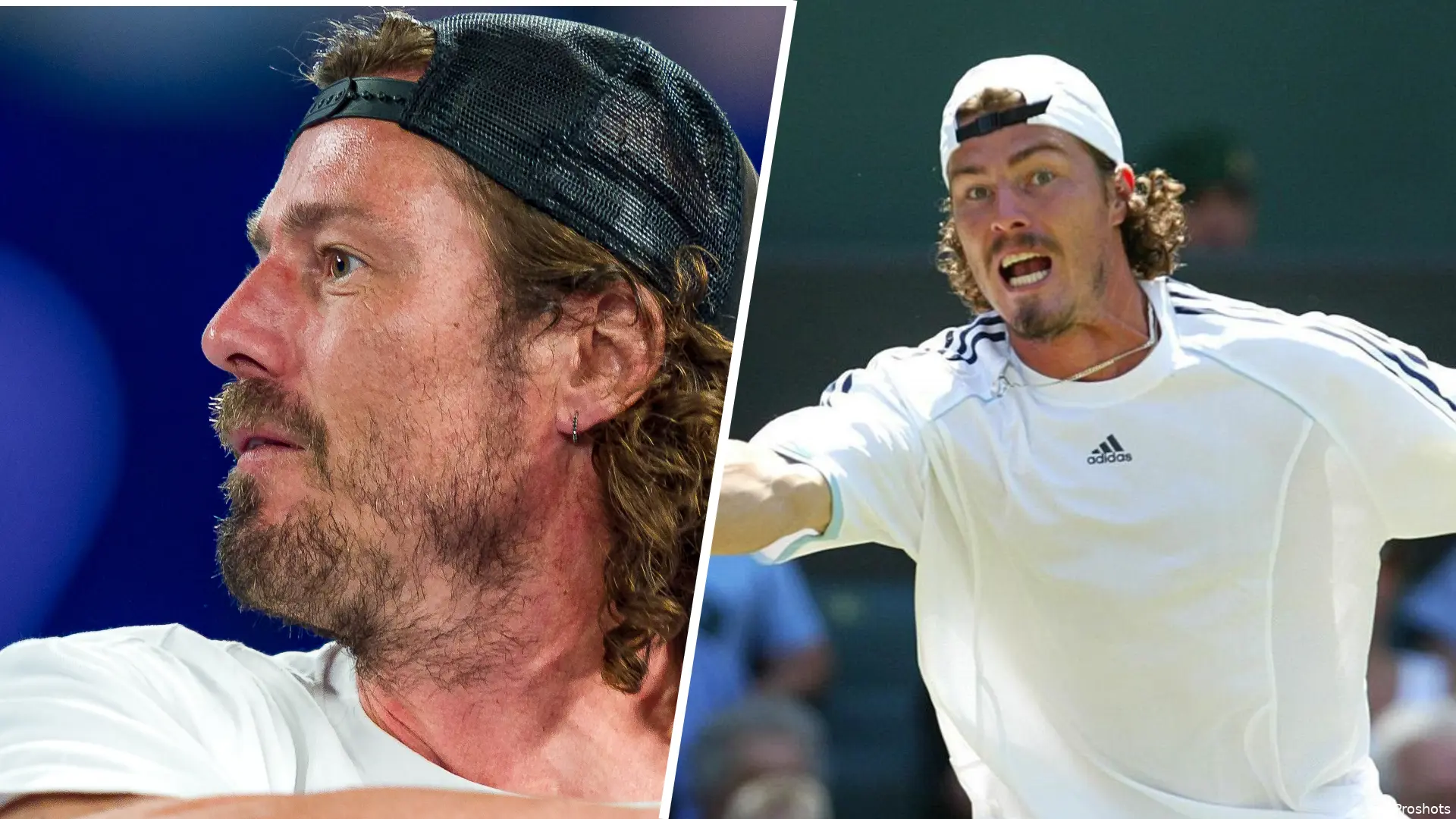
Marat Safin was a mercurial talent good enough to win a brace of Grand Slams but with such natural talent it felt a relatively light return for the combustible Russian.
Born in Moscow on January 27th 1980 in the Russian capital Moscow to parents Mubin Safin and Rauza Islanova. Both his parents are former players and coaches. Marat’s sister Dinara was once a world number one herself. They're the only brother and sister combination to be ranked world number one.
Safin initially trained at the Spartan Tennis Club owned by his father. At the age of 14, he moved to Valencia to enhance his tennis education.
Upset win over Gustavo Kuerten at Roland Garros puts Safin name on the tennis map
The first year for Safin on the ATP Tour saw him make quick strides. On his Grand Slam debut, at the French Open, Safin stunned the defending champion Gustavo Kuerten in the second round. He eventually lost in the last 16.
Safin claimed his inaugural ATP title in 1999, defeating Britain's Greg Rusedski in a final played on the hard courts of Boston.
He later this year lost to Andre Agassi in a four-set loss in Chicago. His best major run was a repeat of his round-of-16 appearance at Roland Garros.
Safin’s magnificent seven
The 2000 season began with Safin now ranked in the world's top 25. It would be a campaign that turned out to be unquestionably the finest of his career.
Safin amassed seven titles in 2000. The first two of this septet, materialised on Spanish clay, winning in Barcelona and Majorca. He followed this strong claycourt form by reaching a maiden Grand Slam quarter-final at Roland Garros.
Victory at the Canadian Open gave Safin his biggest title to date. His triumph in Toronto was then backed up by a run to the title match in Indianapolis. His form heading into the US Open positioned himself as a contender.
Safin's march to glory in New York accelerated when he bested Germany's Nicolas Kiefer in the quarters and then enjoyed a straight sets victory over American Todd Martin in the semis. Waiting for him in the final was the defining player of the 1990s, Pete Sampras.

Marat Safin at his pomp.
The showpiece match witnessed an astonishing destruction of the great Sampras. Safin brutalised the reigning Wimbledon champion in front of his home crowd. He became the first Russian to win the US Open.
Safin was now the world number one, holding top spot for nine weeks. He pocketed three more titles after New York. The Muscovite narrowly missed finishing the season as world number one following a loss to Kuerten at the season-ending ATP Masters Cup.
Struggles to maintain heady heights of 2000
The 2001 season witnessed Safin suffer a relative drop-off in standards. He mustered a couple of titles - in Tashkent and St Petersburg - but failed to reach a major final.
A run to the quarters at Wimbledon this year was a bright spot as Safin declared an aversion to playing on grass. He also reached the last four of the US Open.
The failure to match the heights of 2000 saw Safin end the year outside the world's top ten at number 11.
Reaches another major final but wins only one title in the next two seasons
Safin began 2002 with a run to the Australian Open final. He outlasted Tommy Haas, of Germany, in a five set semi-final to reach his second major final.
In the title match, Safin started favourite, but was downed in four sets by Swede Thomas Johansson. The Russian has been on record saying nervousness overcame him in this particular final.
Safin made two Masters finals in 2002, losing to Roger Federer in Hamburg before defeating Lleyton Hewitt to win the indoor Paris Masters late in the campaign.
The 2003 season proved a difficult one for Safin, drawing a blank in terms of silverware. Injuries forced him to miss three of the four Grand Slams. His only final this term was a loss in Barcelona.
Resurgent Safin in the mid 2000s makes back-to-back Aussie Open finals winning the second one
Safin ascended to a second Australian Open final in 2004 where he was outclassed by Federer in straight sets. He cited exhaustion as a factor in the defeat.
It was a catalyst for a major resurrection in his form. By the season's end, having begun it ranked 77, Safin ended it firmly established amongst the world’s top ten.
A highlight of the 2004 season was capturing a third Paris Masters title in five years. This victory was preceded by wins on the hardcourts of Beijing and Madrid.
Four years after his first major glory, Safin reigned supreme Down Under to win a second
His 2005 semi-final win over Federer sent shockwaves through tennis as the Swiss had now become the game's dominant force and was experiencing a 26-game unbeaten run. It set up a final with home favourite and fierce patriot Lleyton Hewitt.
Safin silenced the crowd with a four set victory over Hewitt. This would surprisingly be the last of Safin's 15 ATP titles. They came from 27 finals.
The remainder of the season for Safin was a little frustrating. He made only one further final in Halle, losing to Federer. And despite it being a major winning season, Safin ended it outside the top ten, eight places lower than when he started the campaign.
Final years see few highlights aside from best ever run at Wimbledon
Safin failed to progress beyond the fourth round at any of the Grand Slams in 2006. His only tour final was a defeat to compatriot Nikolay Davydenko on home soil in Moscow.
The 2007 campaign saw a further weakening in Safin’s standing within the game as he finished it outside the world's top 50 and didn't reach a single ATP final.
A mini-resurgence in 2008 was highlighted by progression to the last four at Wimbledon, a best run for Safin at SW19. Federer stopped him in the semi-final.
Safin's final season was 2009, concluding his career at the Paris Masters. Those three wins in the French capital were part of five Masters wins from eight finals.
Dual Davis Cup winner
Safin was a member of two winning Davis Cup squads for Russia. The victories in 2002 and 2006 were the first two won by a nation now banned from the competition due to their invasion of Ukraine.
The 2002 success came in a classic final with France. Safin won both of his singles rubbers against Paul Henri-Mathieu and Sebastian Grosjean. The second of these facilitated a decisive fifth rubber where Mikhail Youzhny came from two sets down to beat Mathieu and provide Russia with a maiden Davis Cup success. Four years later Safin was a member of another Davis Cup winning squad against Argentina. Safin played in three rubbers, losing the first, partnering Dimitri Tursunov to win the doubles rubber, before clinching a decisive fifth rubber in four sets over Jose Acasuso.
In tandem with sister Dinara, they led Russia to the final of the 2009 Hopman Cup. The siblings were beaten 2-0 by Slovakia. Safin pocketed two doubles titles in his career, winning in Gstaad teaming up with Federer and Tursunov in Moscow. He lost an additional four doubles finals.
Personal life including religious beliefs
In December 2011, Safin was elected as a member of the Russian Parliament as a member of United Russia party under the brutal Vladimir Putin. He resigned from the role in 2017.
Safin has previously been an ambassador for the Russian Olympic Committee. The 6ft 4in Safin has never married and has openly stated how much he enjoys the single life and the freedom that comes with that lifestyle. He did once have a relationship with Russian model Anna Druzyaka.
Safin is a Muslim but in an interview conducted in 2018 he believed in something creating the world but not in a personal God.
Since 2025, Safin has coached fellow Russian Andrey Rublev. The volcanic temper Safin often displayed is matched by Rublev. It's hoped that Safin being able to relate would enable Rublev to channel his anger more effectively.
Although results for Rublev have stayed at a similar level before their association began, the younger man has declared Safin has been a positive influence on his overall direction in life.
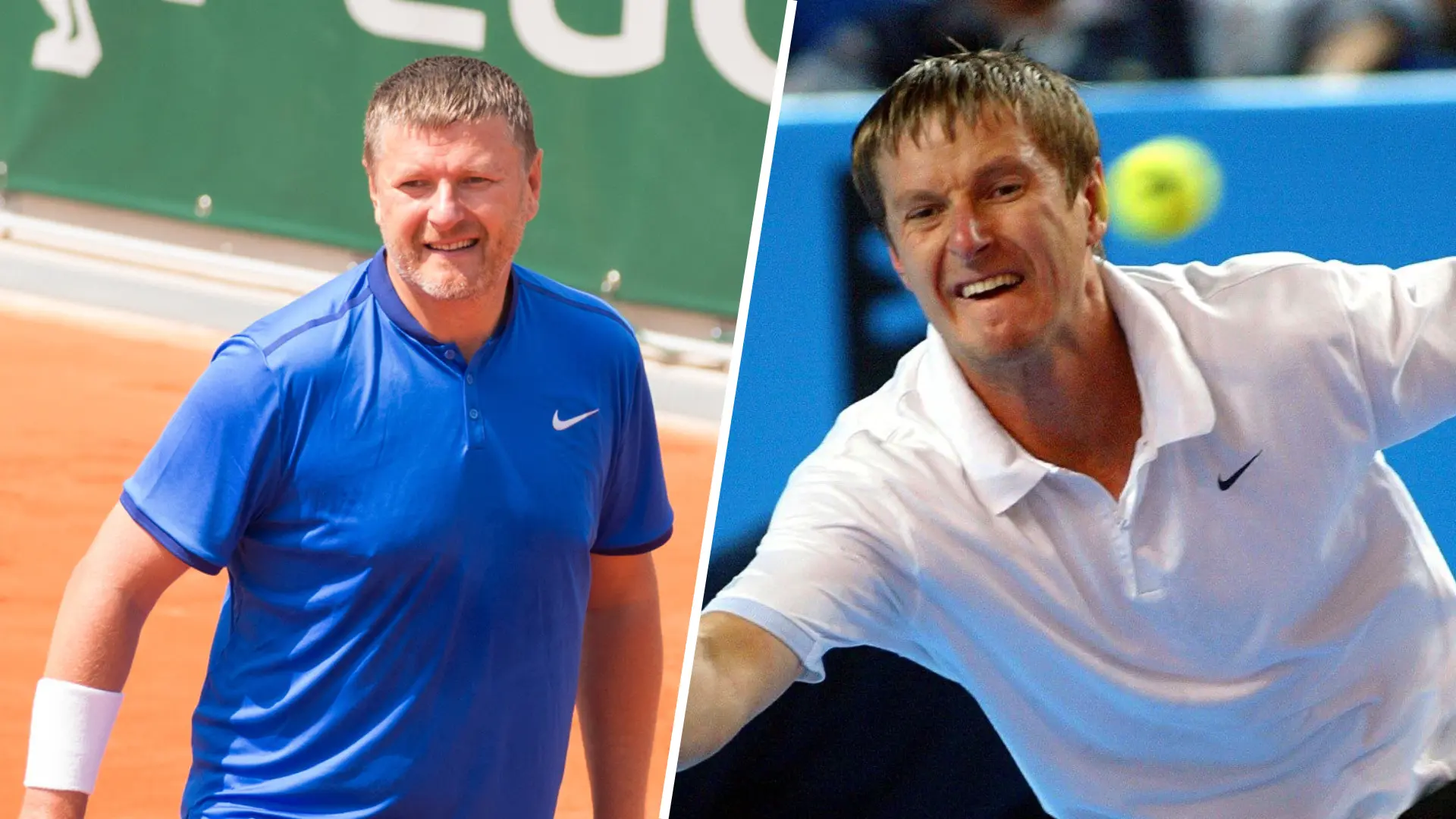
Legacy - did he underachieve?
He became the first Russian to be inducted into the International Tennis Hall of Fame in 2016. Safin is often revered for the talent he possessed. His A-game took apart Sampras and Federer on the biggest stages. The feeling was that his temperament betrayed his natural ability and easy power.
Sampras, following his 2000 US Open final loss, thought we'd seen a new era born, Sampras said Safin “was the tennis of the future.”
There's no denying winning seven titles in 2000 and then managing only a further seven in the final nine years of career was a slight return, but he still triumphed in a number of big occasions and is one of only 29 official men's world number ones. When he brought his best, any opponent knew they could be left a passenger on the court.

Samuel GillEditor-in-Chief
Samuel Gill is the Chief Content Officer (CCO) of TennisUpToDate.com, a role he has held since 2020. He is responsible for editorial governance across the platform, including setting content standards, overseeing accuracy and consistency, and guiding long-term editorial strategy. Since joining, he has contributed more than 10,000 articles and editorial pieces across the TennisUpToDate network, playing a central role in the daily operation and development of the site.
Based in Leicester, Samuel has a broad background in tennis media. In his current role, he works closely with editors and writers to ensure coverage meets clear journalistic standards, with particular attention to verification, consistency, and timely updates when new information becomes available.
claps 0visitors 0
Just In

Popular News
Latest Comments
- Boss move, Sinner !Rapunzel27-10-2026
- Apparently still refusing to seek 'help' ...and still playing Dress-Up like a 10 year-old.
 mandoist27-10-2026
 - Lena... Takin' care of businessmandoist25-10-2026
- Can you please stop publishing this nonsense? Stick to Tennis.mandoist25-10-2026
- Does Sinner need that 4.5 mil? I doubt it. He can make that with three modelling gigs!😅🤣Rapunzel21-10-2026
- Did "People Magazine" purchase this website? This nonstop storyline is bullshit.mandoist21-10-2026
- Listen... this is of no concern to anyone but these two. Deal with your own issues -- most of us have our own. Thanks, media, for these insignificant follow-ups which are meaningless.mandoist21-10-2026
- This is so very very sad, for all three of them. I truly thought they had an unbreakable bond, but life throws up so many differing challenges. Having your homeland suffering in such a terrible way, makes happiness lose out to guilt as well. Our thoughts are with them. X💔bjsexton20-10-2026
- I have lost all respect for Svitolina! Could she not have waited until he had played at the Paris Masters!!! She is selfish and don't give a damn about Gael. That is NOT how love is demonstrated Elina!!Rapunzel19-10-2026
- Perhaps convenient tennis tour sex is not a strong enough experience in which to base a marriage?mandoist19-10-2026

Loading