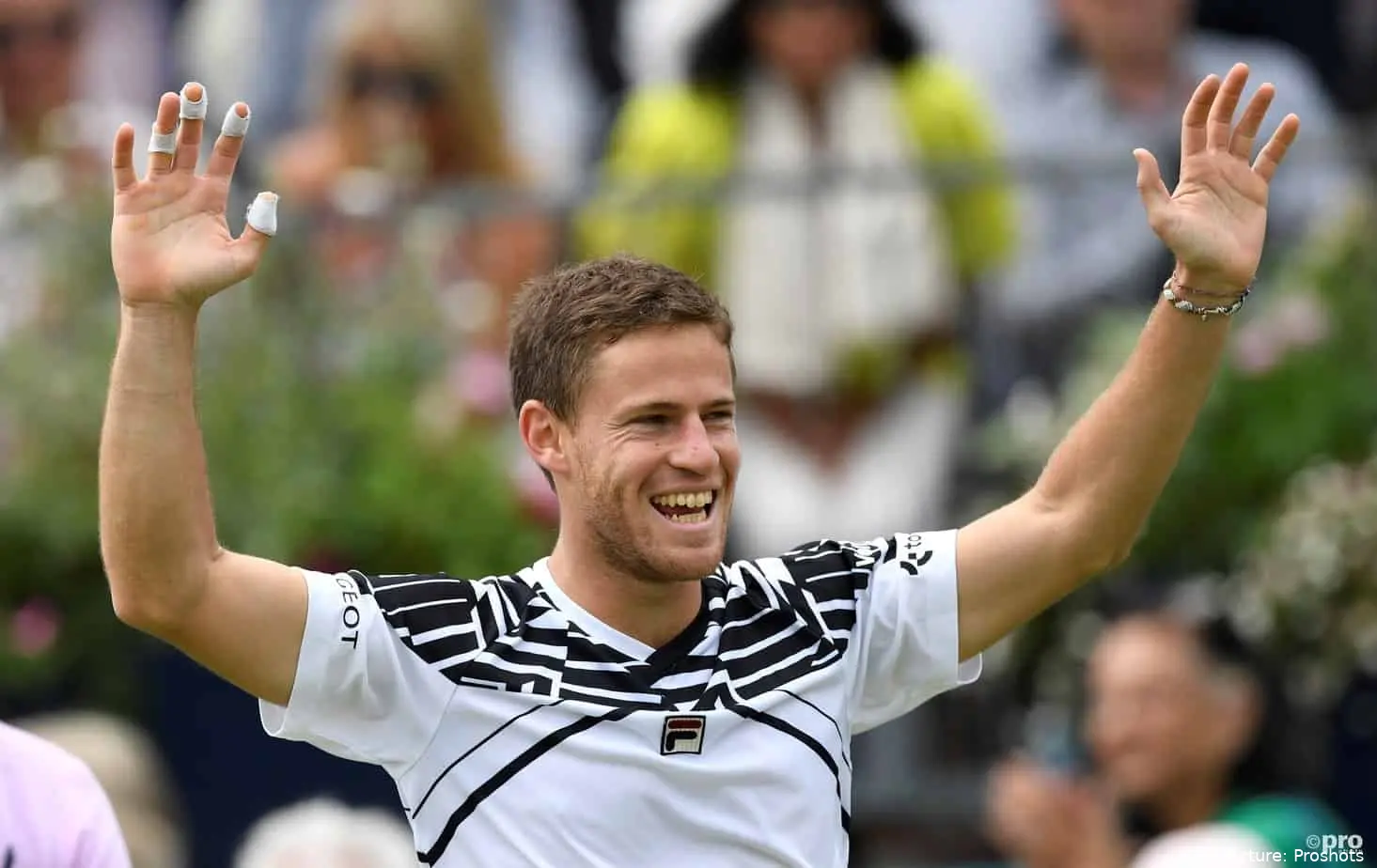
Diego Schwartzman, former World No. 8 and Roland Garros semi-finalist in 2020, has delivered a pointed critique of the ATP Tour’s structure, arguing that both players and fans are struggling to navigate an increasingly complex calendar. Speaking to CLAY Magazine, the Argentine framed the current system as disjointed, with recent changes compounding long-standing issues.
Now transitioning away from full-time competition after more than a decade on tour, Schwartzman offers a perspective shaped by consistency at the top level. He spent multiple seasons inside the top 20, won four ATP titles, and built a reputation as one of the most reliable performers on clay despite physical limitations relative to his peers.
His comments come amid ongoing debate over the expansion of Masters 1000 events and potential calendar changes linked to new tournaments. For Schwartzman, the central issue is not a single decision but a broader lack of structure affecting scheduling, workload and accessibility.
At the core of his argument is a simple premise: the product has become harder to follow, both for players managing an extended season and for viewers trying to understand what they are watching week to week.
“The calendar is a bit of a mess”: Extended Masters and structural imbalance
Schwartzman identified the shift to two-week Masters 1000 events as a key factor in the calendar’s expansion. While the format increases commercial opportunities, he argued it has stretched the season without delivering clear benefits to players.
He pointed to the cumulative effect of additional days across multiple tournaments, effectively adding weeks to an already dense schedule. In his view, this has increased physical and mental strain while reducing the coherence of the season.
“I think players have clearly shown their discontent with two-week Masters 1000 events. The calendar has been extended by almost a month because of those extra five days per tournament. Obviously it represents much bigger revenue for tournaments, and the ATP says that in theory that goes to players, but it’s a lot of days and I don’t think it was a great decision.”
Beyond the Masters format, Schwartzman addressed wider restructuring proposals, including reducing the number of lower-tier events. He suggested a more hierarchical model, with clearer prioritisation of major tournaments.
“I think the calendar needs to be restructured into something shorter, with fewer tournaments, where Masters 1000 and Grand Slams have priority, followed by 500s and 250s. It makes some sense so the calendar is more organised, because today it’s a bit of a mess.”
“Even fans don’t know what tournament they’re watching”: A fragmented product
Schwartzman extended his criticism to the fan experience, arguing that the current structure lacks clarity and consistency. He highlighted how difficult it has become for audiences to follow tournaments, particularly with varying formats and points distributions.
The issue, he suggested, is compounded by fragmented broadcasting. Unlike other global sports with centralised platforms, tennis remains split across different rights holders, often changing from week to week. “Today it’s crazy. Even people watching on TV don’t know what tournament they’re watching or how many points each one gives. It needs to be organised somehow, and hopefully that happens in the coming years.”
He also clarified the structural divide within the sport, noting that Grand Slams operate independently from the ATP despite their central role in the calendar. “Maybe people don’t know this, but the Grand Slams have nothing to do with the ATP, they are completely separate things. The Slams are part of the calendar, but the decisions the ATP makes about tournaments and scheduling are theirs, we just observe them.”
A post-career role and South American perspective
Since stepping back from regular competition, Schwartzman has taken on a liaison role with Tennis Australia, acting as a bridge between players and tournament organisers at the Australian Open. The position has given him insight into the commercial and operational side of the sport.
He described the role as facilitating communication, particularly in situations where player expectations do not align with organisational constraints. That perspective, he said, has helped him better understand decisions he once questioned as a player. “To put it simply, my job is to be an intermediary between the players—mainly the men—and the people who make decisions at the tournament. I’m there for whatever they need, for complaints or improvements.”
“As a player, you only see the sporting side and what suits you. The tournament has a whole private side you don’t see. It needs revenue from fans, broadcasters and rights holders, so there are many decisions that sustain the event and what players receive.”
Looking ahead, Schwartzman expressed interest in applying that experience to South American tennis, a region he believes remains underdeveloped within the global structure. With ongoing discussions about calendar changes, he sees an opportunity for improvement—provided the sport moves toward a more coherent model.
“Yes, and that’s partly why they hired me. They have a big idea to grow and expand the brand in South America. Hopefully that happens so South American tennis can have better conditions.”

Cristhián AvilaTennis Journalist
Cristhián Ávila is a tennis journalist based in Santiago, Chile, and has been part of the TennisUpToDate team since early 2023. He covers the ATP and WTA Tours as well as all four Grand Slams, producing breaking news, match reports, analysis, and regular liveblogs from major tournaments.
His reporting combines statistical analysis with clear explanation, helping readers understand tactical developments, player form, and broader storylines across the tour. Working fluently in both Spanish and English, Cristhián collaborates with an international editorial team and contributes to comprehensive global coverage. As part of his work, he has conducted interviews and media interactions with leading figures in the sport, including Caroline Wozniacki and John McEnroe.
In his journalism, Cristhián places strong emphasis on careful sourcing, editorial accuracy, and updating articles promptly when new, verified information becomes available. His coverage is grounded in research, context, and direct engagement with professional tennis.
claps 0visitors 0
Just In


Popular News
Latest Comments
- Does Sinner need that 4.5 mil? I doubt it. He can make that with three modelling gigs!😅🤣Rapunzel21-10-2026
- Did "People Magazine" purchase this website? This nonstop storyline is bullshit.
 mandoist21-10-2026
 - Listen... this is of no concern to anyone but these two. Deal with your own issues -- most of us have our own. Thanks, media, for these insignificant follow-ups which are meaningless.mandoist21-10-2026
- This is so very very sad, for all three of them. I truly thought they had an unbreakable bond, but life throws up so many differing challenges. Having your homeland suffering in such a terrible way, makes happiness lose out to guilt as well. Our thoughts are with them. X💔bjsexton20-10-2026
- I have lost all respect for Svitolina! Could she not have waited until he had played at the Paris Masters!!! She is selfish and don't give a damn about Gael. That is NOT how love is demonstrated Elina!!Rapunzel19-10-2026
- Perhaps convenient tennis tour sex is not a strong enough experience in which to base a marriage?mandoist19-10-2026
- Fight the Good Fight... Tennis (sports in general) need more Humans such as yourself.mandoist18-10-2026
- When is WTA going to mandate Genetic Testing (DNA) ???mandoist18-10-2026
- Hey, Dan... you just wake up from a coma? Regardless -- Thanks for the comedy this morning!mandoist18-10-2026
- Two Things: 1. Stop allowing these Spoiled Trust-Fund Elitists to behave badly. Your little hand-slaps do not deter them. 2. STOP the incessantly annoying "towel wiping" nonsense!!!!mandoist15-10-2026

Loading