"We’re not in the NBA and you are independent contractors”: Tommy Paul’s coach rips players over schedule criticism
ATP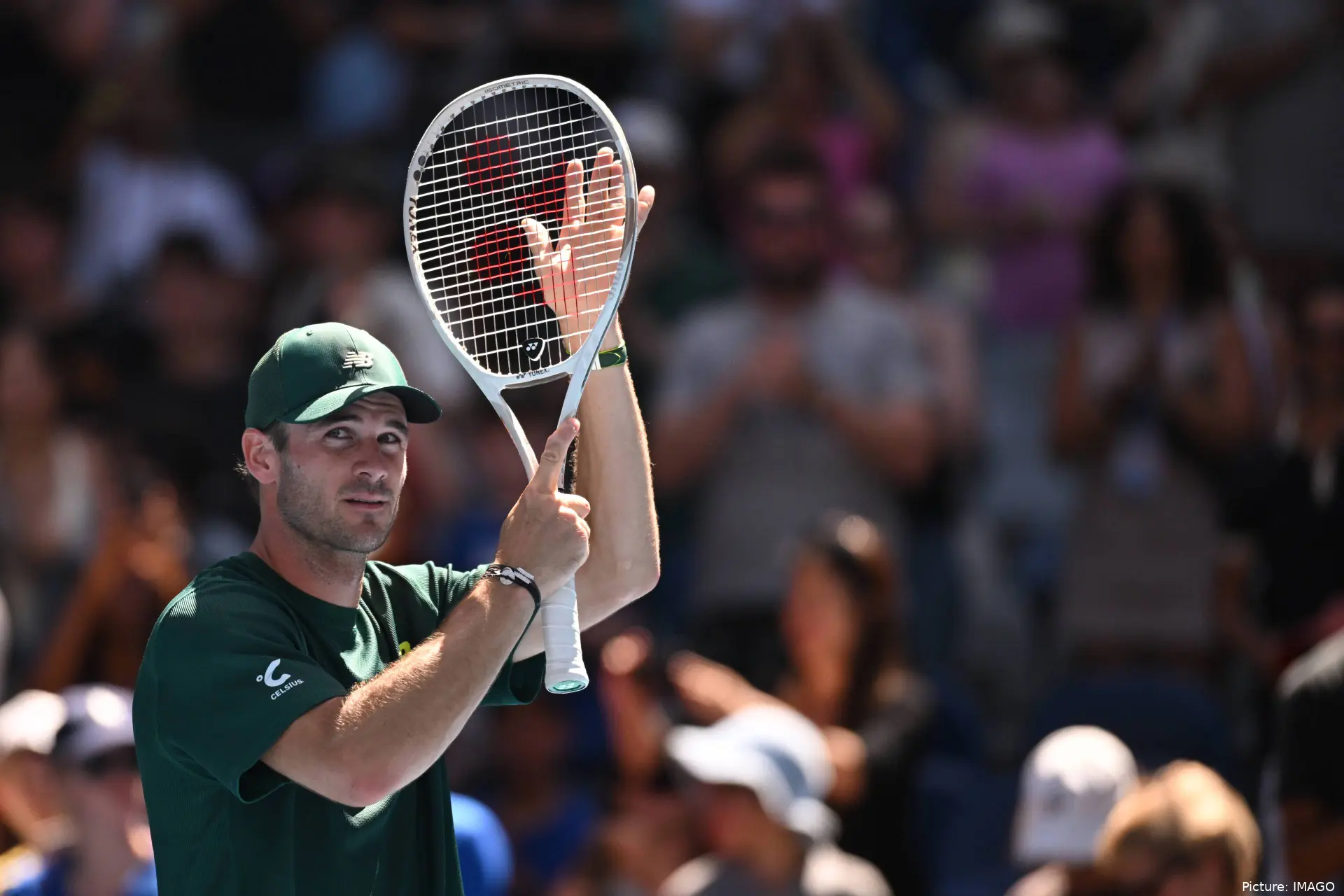
Player frustration with the current ATP calendar has been a recurring theme in recent seasons, and coach Brad Stine—mentor of Tommy Paul and one of the most respected voices on the circuit—did not hesitate to delve into the topic. For him, much of the recent narrative, especially coming from American and Canadian players, ignores a fundamental reality of professional tennis: players are independent contractors who choose when to compete. His criticism is directed both at the attitude of some figures and at the calendar design itself.
Stine applauds the firm stance of Félix Auger-Aliassime, who recently questioned the idea that there is so much to complain about. The Canadian, according to the coach, "hit the bullseye" by recalling that tennis players have a privileged life and a wide margin to manage their schedules.
The Canadian world No. 5 asserted a few weeks ago during the ATP Finals that he does not share the criticism regarding the large number of mandatory tournaments on the ATP calendar: “I don't know how guys don't enjoy it, to be honest. I think they lost perspective completely,” he said during press conference in Turin. “I mean, we're just lucky and blessed. In my humble opinion, every day I wake up and I enjoy. I enjoy that I'm here. Even if I lose matches, it's okay, I'm pissed for a day. I don't know. If you want to play less tournaments, stay home. Nobody's forcing you to be here.”
Stine agrees and believes that many forget that the tennis player is independent and can make their own decisions regarding the tournaments they attend. “I think people on the ATP tour players forget that this is not a team sport. We’re not in a league like the NBA and you are independent contractors. And it’s a free market… No one’s holding a gun to their head and saying they absolutely have to play. You can take any week off that you want to take off. Are there ramifications? Of course. And there should be.”
Read also
That logic, according to Stine, should also guide the debate on the calendar’s length and density. The circuit is long and demanding, yes, but he insists that the structure allows for breaks, rotation, and strategic pauses. “We hear mostly the top players complaining about the schedule because they feel like it is extremely long year,” the coach commented.
“At the end of the day they're making enough money, that even if they're skipping one Masters 1000 or two, yeah, they might lose some percentage of the year end prize money, or they're going to miss that tournament's prize money. But it's OK. Like you say, it's a job. The guys who are on the Challenger Tour or at the bottom of the ATP, they're working every week and because they have to.”
The Masters 1000 problem: “This elongated format is damaging the sport”
One of the most contentious points for Stine is the expansion of the Masters 1000 format, which since 2023 adopted a duration similar to the Grand Slams. Unlike tournament directors or the ATP—who see more days as more revenue—the coach assures that the model not only diminishes excitement but also disrupts the competitive rhythm. “The tournaments are too long, in my opinion, now with too many days off… it goes on for such a period of time now that you almost lose interest, at least through the middle section of it.”

Tommy Paul at 2025 Madrid Open.
His main criticism is that tennis is a sport built on traditions, not on constant commercial adjustments. The current weeks, with unnecessary days off—in events where they play best-of-three sets—generate exhaustion, disconnection, and a sense of stagnation. “I'm a big believer in the fact that our sport has been built around tradition and the most successful tournaments that we have in our sport are the ones with the greatest tradition, the greatest history... And you build tradition by maintaining things, not by changing everything.”
Another point that directly affects the player is the accumulated duration of tours, such as the European clay swing. “Madrid and Rome is now the you you play two tournaments in a month because because of the way they're structured,” he added. “It just gets drawn out… and that mental drain tends to lead to some sense of physical fatigue in a way. Which potentially leads to more injuries.”

Cristhián AvilaTennis Journalist
Cristhián Ávila is a tennis journalist based in Santiago, Chile, and has been part of the TennisUpToDate team since early 2023. He covers the ATP and WTA Tours as well as all four Grand Slams, producing breaking news, match reports, analysis, and regular liveblogs from major tournaments.
His reporting combines statistical analysis with clear explanation, helping readers understand tactical developments, player form, and broader storylines across the tour. Working fluently in both Spanish and English, Cristhián collaborates with an international editorial team and contributes to comprehensive global coverage. As part of his work, he has conducted interviews and media interactions with leading figures in the sport, including Caroline Wozniacki and John McEnroe.
In his journalism, Cristhián places strong emphasis on careful sourcing, editorial accuracy, and updating articles promptly when new, verified information becomes available. His coverage is grounded in research, context, and direct engagement with professional tennis.
claps 0visitors 0
Just In

Popular News
Latest Comments
- A healthy Qinwen may be hard to stop next season. She was already scaring her opponents before her medical leave(s). Unfortunately, Zheng insisted on singing again. On the positive side -- Mirra did not sing!! ;~}
 mandoist11-10-2026
 - Where is it written that athletes, entertainers... People in general... are mandated to keep looking at -- or even using [anti]Social Media? Public & private figures consistently complain and reveal their concerns about negativity and violence thrown at them -- yet they insist on participating. Avoid it, don't use it, don't read it. It's okay to occasionally look up at the World instead beating your eyes & thumbs to death on The Inventions out there.mandoist11-10-2026
- great articlestennisseserver07-10-2026
- Medvedev was leading Djokovic 7-5, 3-5 when an attempted return..' NO you ignorants, Djokovic was leading .weiss05-10-2026
- No more bullshit "Wildcards" to these two. Qualify like everyone else -- there will be cameras there, too. Time to scream... WTF ????!!!!mandoist29-09-2026
- Let's not BS the general public -- Sabalenka started showing cracks in her game last season. Her losses and near-losses started at about the same time she began being distracted by Fame (constant Selfies, making TV commercials, magazine shoots, endless Social Media nonsense, etc., etc.) One would think even Saba could recognize the parallels with others who failed before her -- Raducanu, Giorgi, Bouchard to name a few.mandoist25-09-2026
- Gross!! Hey Raducanu, Giorgi, and Bouchard -- reserve a seat at your Social Media Selfie table for Saba + Naomi. They're heading in your direction soon enough.mandoist24-09-2026
- And then these same players will complain about how lengthy their season’s were and need more time-off. I’m all for more tennis but the amount of tennis we get now is actually kind of crazy! We all need a break, especially the players.DaveyWavey23-09-2026
- You should do a comparison article for "different kinds of justice" the courts decide for tennis players. I can think of at least three players who received very small bans of a few months, however Tara Moore has been fighting for her literal survival the past few years. It seems odd considering she is not a "name" player, unlike the other cases.DaveyWavey22-09-2026
- PRIZE MONEY & POINTS Winner - $185,500 Finalist - $114,500 Semi-Finalist - $66,003 Quarter-Finalist - $35,000 Round of 16 - $18,045 Round of 32 - $13,005 Winner - 500 Finalist - 325 Semi-Finalist - 195 Quarter-Finalist - 108 Round of 16 - 60 Round of 32 - 1DaveyWavey20-09-2026

Loading