"What’s the solution? Add another week. Brilliant." - Andy Roddick highlights 'mess' caused by upcoming Saudi Arabia Masters 1000 event
ATP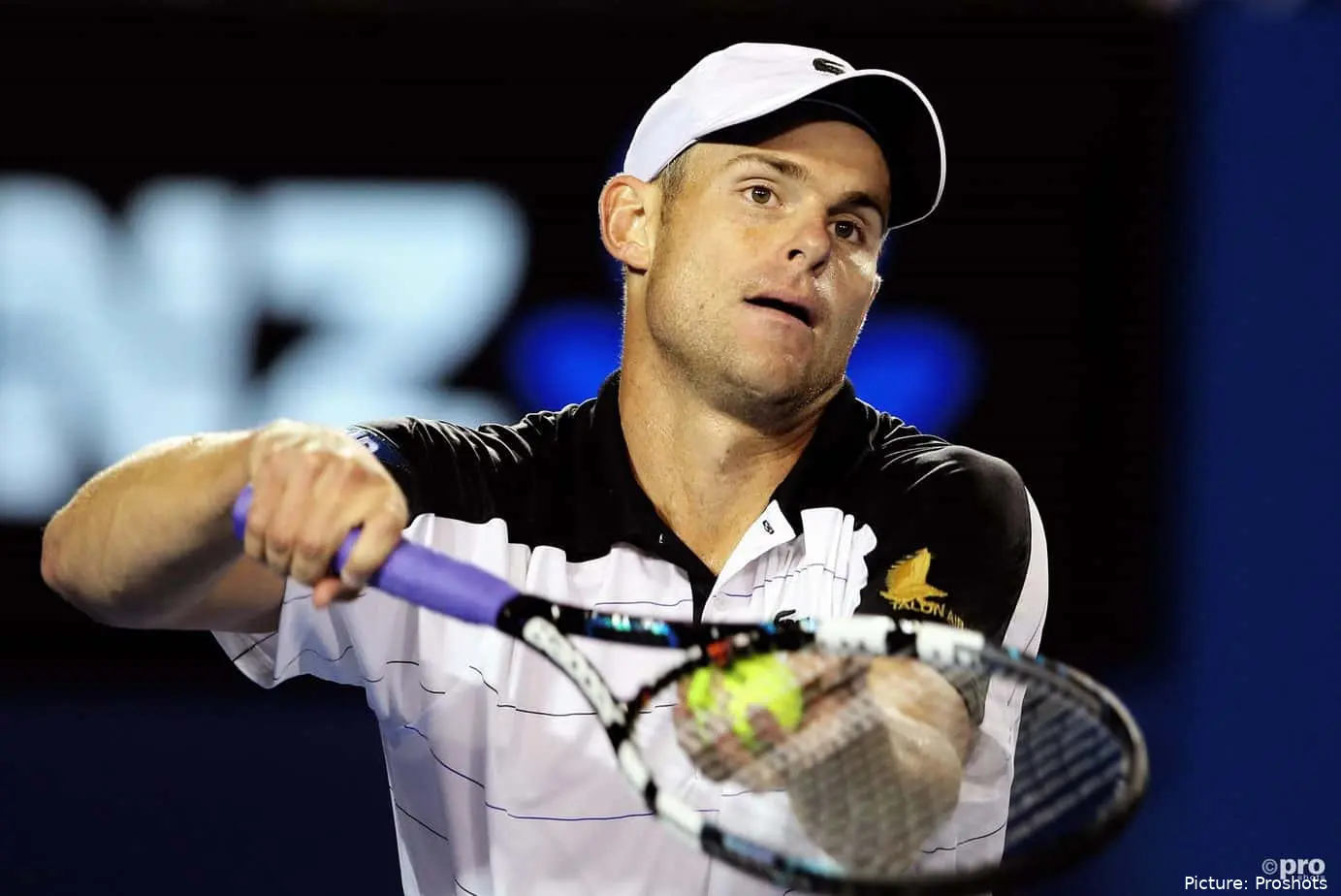
The news that Saudi Arabia will host a Masters 1000 event from 2028 onwards has caused a stir in the tennis world, which has contradicted the recent debate about how packed the calendar is. Former US Open champion Andy Roddick has had his say on the situation, voicing his concerns over the amount of tennis being put on, and questioning when it will be held, and the resulting implication it will have on smaller events.
When will it be held?
With the tennis calendar already packed with events, it may be quite hard to find a definitive spot for this new event without it leading to more disruption or affecting other big events. It does have the whole year to choose from, with the event being held on indoor courts, meaning you do not have to factor in the brutal Middle East climate.
"So, pre-empting Australia is one possibility. I think that’s difficult — I’m not sure you can take the thunder away from the Australian Open," Roddick said on his podcast Quick Served. "It’s probably the only thing in tennis that benefits from people actually having time to look forward to it. If you do that, are you shifting the entire Middle Eastern swing before that? Or screwing over the other Middle Eastern tournaments in February or March — before Indian Wells? I think it has to slot into February. Then you’re competing with Rotterdam and those 500s — that’s easier than going against the Aussie summer."
Scheduling issues
Producer Mike Hayden described the situation as a 'mess', stating the possible scenario if slotted in February. "Just to level set — when we talk about February, on the men’s side right now you’ve got Doha, Rio, Delray Beach, Rotterdam, Buenos Aires… The women already have Qatar and Dubai that month. So there’s no need for a co-ed event there. But still — how are they going to fit this in? Do you start midweek? Do you bump existing 500s? It’s a mess."
"Yeah, and if it’s non-mandatory, could a 500 go head-to-head with a 1000 for the first time ever?" Roddick followed up with. "Could someone like Fonseca stay in Brazil to play for 500 points instead of flying to Saudi? If we’re just making up rules, who knows?"
How to get players to compete
A lot of the events on the tennis calendar are mandatory for players to compete in, specifically the Masters 1000 events for the best athletes in the world. Financial ramifications are the punishment for not turning up. The new event in Saudi Arabia will go against this, becoming the second event behind the Monte-Carlo Masters not to be mandatory. While this seems like good news, Roddick still has his doubts.
"The fine print matters here. We’re creating a Masters 1000 out of thin air, right? So now we can just print money," he said. "Here’s another one — great, let’s make a new one! That sets a precedent. And it’s non-mandatory. So let me throw this out there: If I’m a player — and I roll back the clock to when I was one — the protection for the Masters 1000s is that they’re mandatory. You opt into the tour schedule as an independent contractor, but those events are compulsory. If this one’s non-mandatory, that means players don’t have to play it contractually. That means appearance fees — and they’re going to be massive. Saudi isn’t going to want a Masters 1000 without Sinner or Alcaraz showing up. No chance."

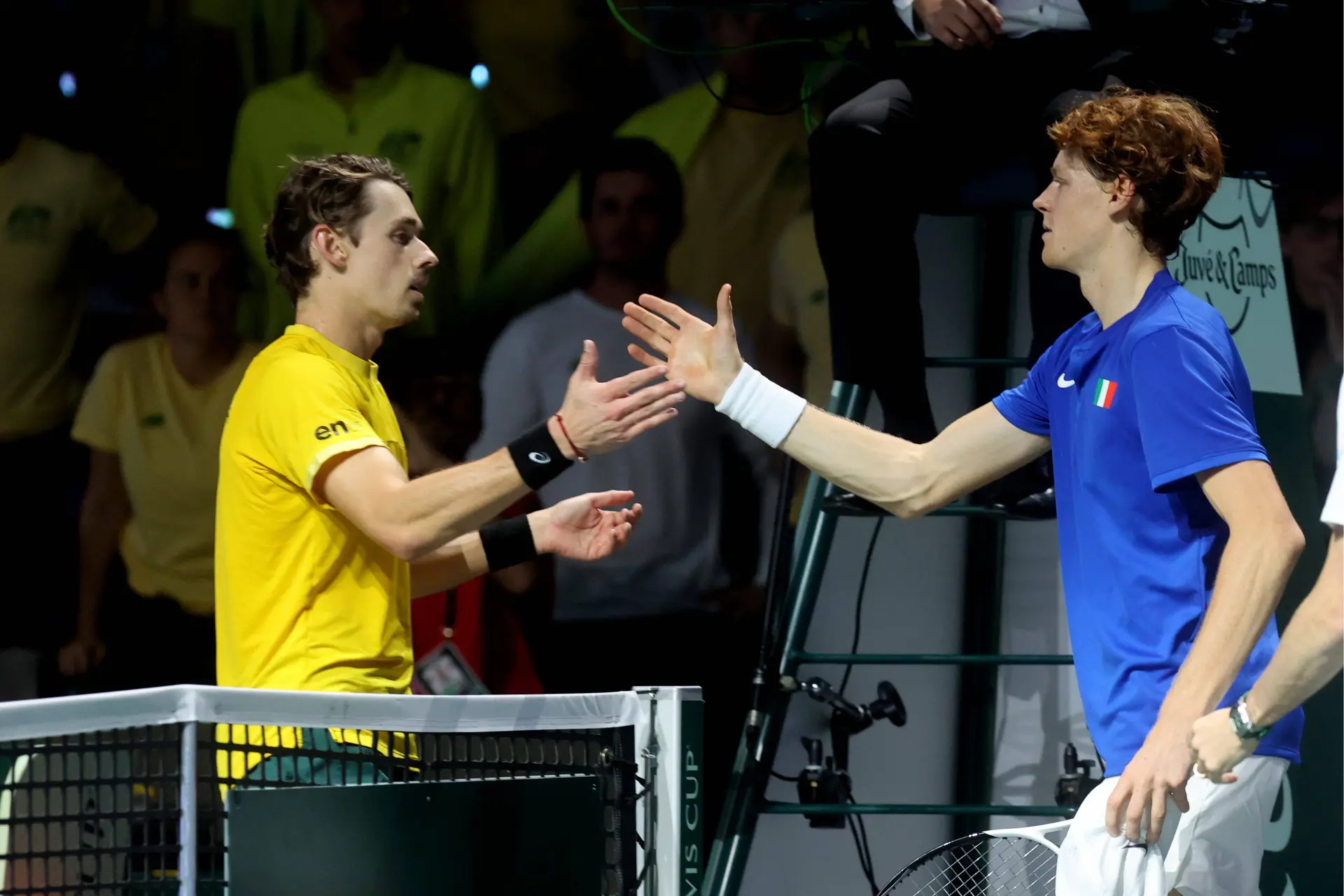
Jannik Sinner and Carlos Alcaraz at the Six Kings Slam held in Riyadh, Saudi Arabia
He went deeper into this, revealing some news he got off someone he knew which shows that despite it being non-mandatory, a lot of players will still turn up for the money. "I was texting with an agent friend of ours — he said it’s open season on appearance fees for this tournament. They’re celebrating the “non-mandatory” label like it’s cool — 'Oh, we’re flexible, we’re modern.' But really, it’s going to be chaos. It’ll be the Wild West in terms of money. Which, I guess, is good for players."
Sports journalist Jon Wertheim pinpointed the smaller events, and how they would be overshadowed. "Right now, Masters events aren’t supposed to pay appearance fees — at least, not officially," Wertheim said. "But there’s so much money in play here that there’s essentially a buyback fund. The ATP will probably use some of that cash to buy out and shutter other tournaments. If this is in February — which seems likely — then Craig Tiley keeps January clean, and South America loses out. That’s bad news for South American events — and for some promising up-and-coming players there."
Too much tennis
At the end of the podcast, they reverted back to the amount of tennis being played in a calendar year, with the top players forced to play an excessive number of tournaments. "Exactly. They’re all saying the same thing — the schedule’s too long. Players are exhausted mentally and physically. And what’s the solution? Add another week. Brilliant," Roddick said.
Backed by @PIF_en, #SURJSports’ partnership with @ATPTour marks a defining moment in 🎾
— SURJ Sports Investment (@surj_sports) October 23, 2025
Joining an elite list of hosts for the #ATPMasters1000 tournaments, Saudi Arabia continues to strengthen its ambition and help shape the future of the global game.#PIF pic.twitter.com/OEUMDGcOMZ
Lucas MichaelTennis Journalist
Lucas Michael is a tennis journalist based in Cambridge, UK, specializing in comprehensive coverage of the ATP and WTA tours. For the past 1.5 years, he has been a core contributor to TennisUpToDate, where he has authored more than 3,000 data-driven match reports, deep-dive analysis pieces, and engaging liveblogs.
Lucas pairs real-time statistical analysis with on-the-ground reporting, frequently traveling to tournaments to cover the action firsthand from the press box and player press conferences. This blend of advanced metrics and direct access allows him to provide sharp context regarding player form, tactical trends, and breaking tour developments.
He holds a BA (Hons) in Sports Journalism. Grounded in core journalistic ethics, Lucas places a strict emphasis on meticulous sourcing, editorial accuracy, and a commitment to updating live content swiftly as verified information emerges.
claps 0visitors 0
Just In

Popular News
Latest Comments
- A healthy Qinwen may be hard to stop next season. She was already scaring her opponents before her medical leave(s). Unfortunately, Zheng insisted on singing again. On the positive side -- Mirra did not sing!! ;~}
 mandoist11-10-2026
 - Where is it written that athletes, entertainers... People in general... are mandated to keep looking at -- or even using [anti]Social Media? Public & private figures consistently complain and reveal their concerns about negativity and violence thrown at them -- yet they insist on participating. Avoid it, don't use it, don't read it. It's okay to occasionally look up at the World instead beating your eyes & thumbs to death on The Inventions out there.mandoist11-10-2026
- great articlestennisseserver07-10-2026
- Medvedev was leading Djokovic 7-5, 3-5 when an attempted return..' NO you ignorants, Djokovic was leading .weiss05-10-2026
- No more bullshit "Wildcards" to these two. Qualify like everyone else -- there will be cameras there, too. Time to scream... WTF ????!!!!mandoist29-09-2026
- Let's not BS the general public -- Sabalenka started showing cracks in her game last season. Her losses and near-losses started at about the same time she began being distracted by Fame (constant Selfies, making TV commercials, magazine shoots, endless Social Media nonsense, etc., etc.) One would think even Saba could recognize the parallels with others who failed before her -- Raducanu, Giorgi, Bouchard to name a few.mandoist25-09-2026
- Gross!! Hey Raducanu, Giorgi, and Bouchard -- reserve a seat at your Social Media Selfie table for Saba + Naomi. They're heading in your direction soon enough.mandoist24-09-2026
- And then these same players will complain about how lengthy their season’s were and need more time-off. I’m all for more tennis but the amount of tennis we get now is actually kind of crazy! We all need a break, especially the players.DaveyWavey23-09-2026
- You should do a comparison article for "different kinds of justice" the courts decide for tennis players. I can think of at least three players who received very small bans of a few months, however Tara Moore has been fighting for her literal survival the past few years. It seems odd considering she is not a "name" player, unlike the other cases.DaveyWavey22-09-2026
- PRIZE MONEY & POINTS Winner - $185,500 Finalist - $114,500 Semi-Finalist - $66,003 Quarter-Finalist - $35,000 Round of 16 - $18,045 Round of 32 - $13,005 Winner - 500 Finalist - 325 Semi-Finalist - 195 Quarter-Finalist - 108 Round of 16 - 60 Round of 32 - 1DaveyWavey20-09-2026

Loading