“You can’t put in your head that Carlos is invincible”: Andrey Rublev confident after pushing Alcaraz in Doha
ATP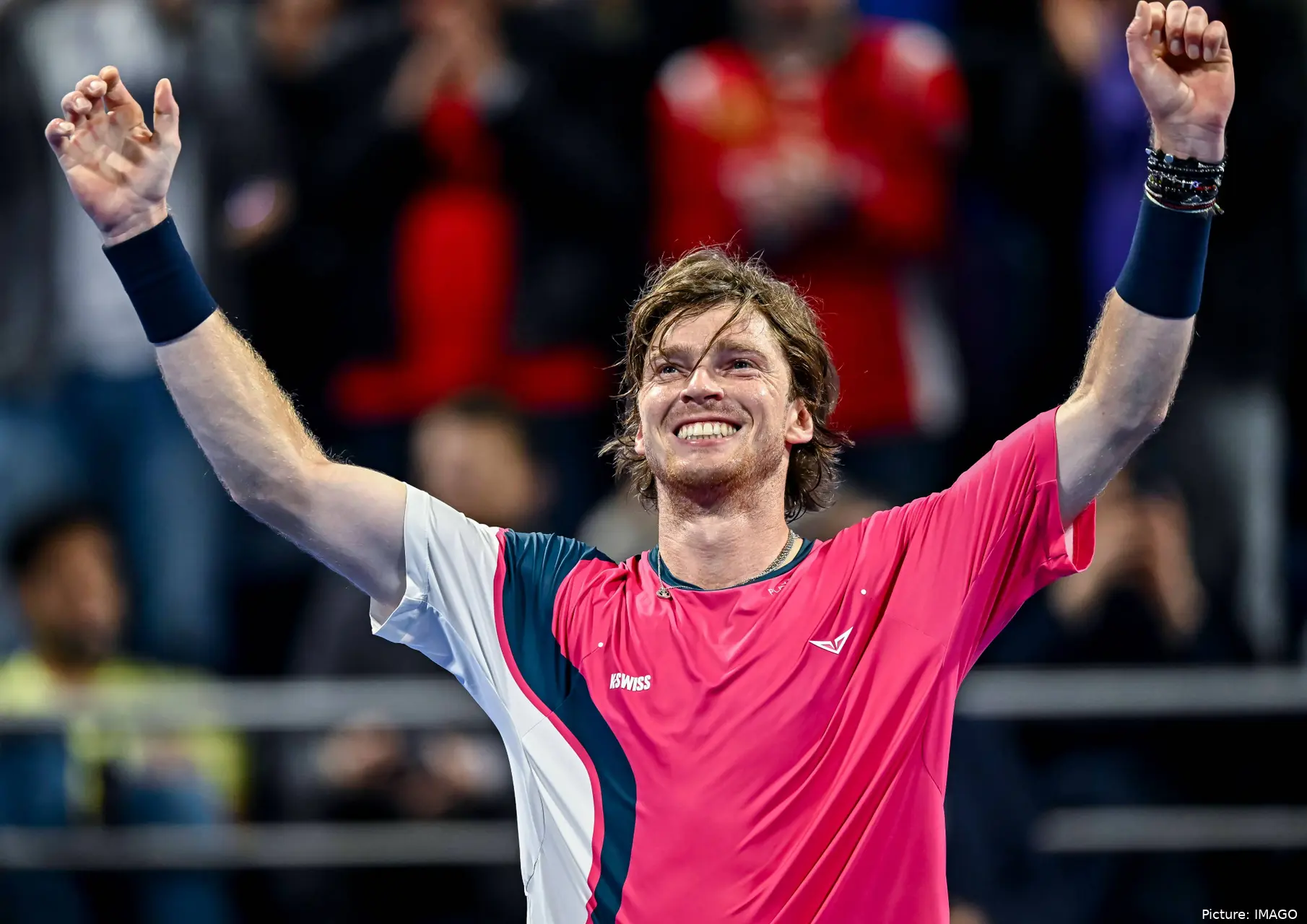
Andrey Rublev does not believe Carlos Alcaraz is invincible. That was his immediate conclusion after their semi-final clash at the Qatar Open last week, where the Russian pushed the world No. 1 before falling 7-6, 6-4. More important than the scoreline, for Rublev, was the feeling that he was “competitive from the baseline” in a way he had not experienced before.
He admitted the Doha match was a reference point — a moment to measure “where I really stand.” In previous meetings, including his win over Alcaraz at the Madrid Masters in 2024, he felt the outcome depended either on Alcaraz underperforming or on brief stretches where he played at unsustainable intensity. In Qatar, he described it as “completely different.”
Rublev currently trails Alcaraz in their head-to-head, but the Doha semi-final marked a shift in the dynamic between them. For the first time, he said he could “hold his rhythm, his power, his intensity” over sustained exchanges. In an era defined by baseline durability, that internal shift carries more weight than the narrow straight-sets defeat.
That belief has carried into Dubai, where Rublev, the fifth seed and former champion, has defeated Valentin Royer (6-3, 6-4) and Ugo Humbert (6-4, 6-7, 6-3) to reach the quarter-finals. He now faces Arthur Rinderknech, the 2025 Shanghai Masters runner-up, who advanced after eliminating Jack Draper.
“I’m on the right path”
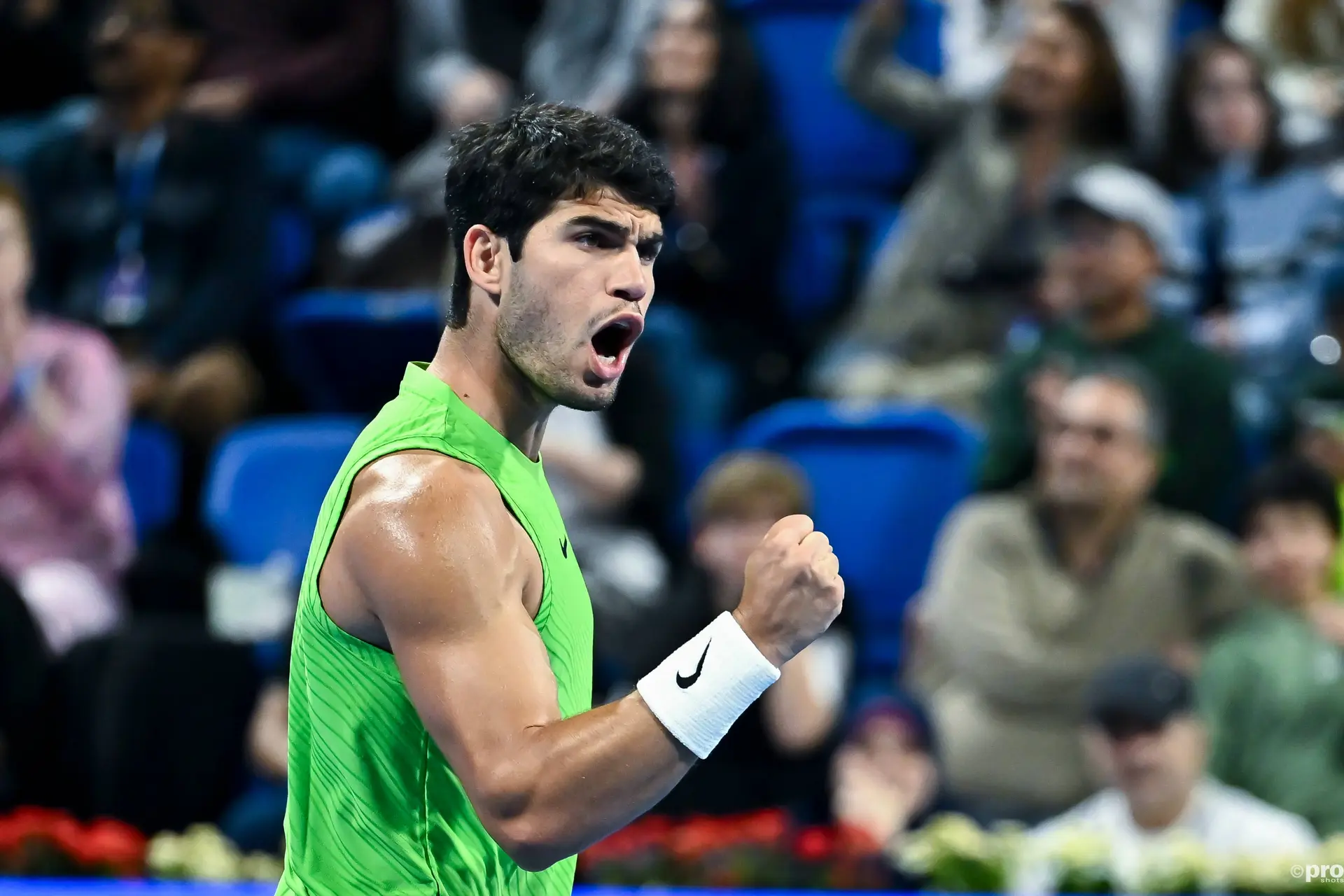
Rublev was direct when assessing what he learned from facing Alcaraz in Doha. The loss did not alter his ambition; it clarified his trajectory. “I learned many things. The first is that I’m on the right path,” Rublev told MARCA. “It’s the first match where I felt competitive playing against him from the baseline. In previous matches, including the one I won in Madrid or when I took a set, it was more because Carlos played badly or because I, at moments, played very well. The Doha match was completely different.”
The most significant development, in his view, was tactical patience. Earlier in their rivalry, rallies extending beyond three or four shots usually tilted decisively toward Alcaraz. In Doha, Rublev felt that no longer applied. “It’s true that he was good, without doing anything incredible, but I was able to compete with him from the baseline,” said the former world No. 5. “I felt I could hold his rhythm, his power, his intensity. And it’s the first time I felt that with Alcaraz on the other side of the net.”
“Before, the only tactic that worked was to hit a winner early because if we got into a rally, he would take full control. In the recent semi-final, I felt there was no need to play so fast and I could defend long points. Then to beat him, it’s also a matter of details that he does better than me.”
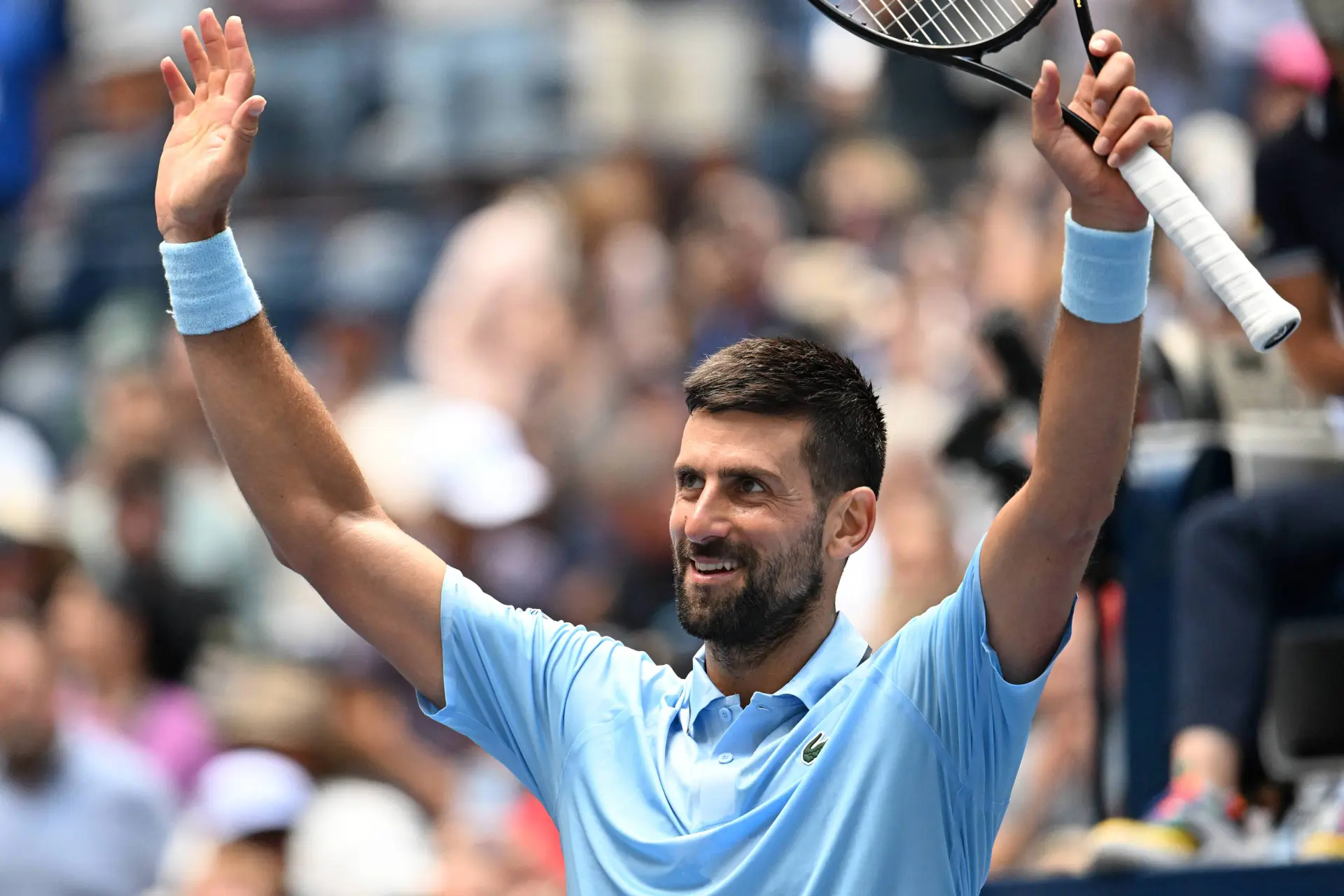
Rublev also addressed the psychological dimension of competing against a dominant No. 1. His language was deliberate. “You can’t put in your head that Carlos is invincible. You have to respect Carlos and any other opponent, but at the same time believe in yourself and think you can win. If you don’t believe it, it’s better not to go on court.”
Momentum in Dubai and perspective
That baseline stability has resurfaced in Dubai. Against Humbert, Rublev recovered from losing a second-set tie-break and controlled the physical exchanges in the deciding set. The patience he referenced in Doha — avoiding rushed winners — has been evident again this week.
Read also

Rublev is a two-time Doha champion and former Dubai title-holder, and he has consistently produced strong results in the Gulf swing. Still, he resisted attributing success to geography alone, framing performance as cyclical rather than predictable. “It’s about streaks that happen. You can’t control where you’re going to play well or badly. What you can control is how you accept victories and defeats.”
Dubai carries additional emotional value. Though he owns an apartment in the emirate, he stays at the tournament hotel for logistical reasons. The support, particularly from Russian fans, creates a familiar environment. “Of course Dubai is special for me because it’s the event where you see the most Russian fans in the stands. I feel a bit like it’s my second home. Even local fans support me, and that doesn’t usually happen. In Doha and Dubai I feel more support, without a doubt.”
Another stabilising presence is Marat Safin, the former US Open and Australian Open champion who now works alongside Fernando Vicente on Rublev’s coaching team. For Rublev, that partnership still carries emotional weight. “If you had told me as a junior that my idol Marat would be my coach, I would have exploded with emotion. It would have been an incredible feeling. He has given me many pieces of advice. The best one: go on court and let nothing else matter.”

Cristhián AvilaTennis Journalist
Cristhián Ávila is a tennis journalist based in Santiago, Chile, and has been part of the TennisUpToDate team since early 2023. He covers the ATP and WTA Tours as well as all four Grand Slams, producing breaking news, match reports, analysis, and regular liveblogs from major tournaments.
His reporting combines statistical analysis with clear explanation, helping readers understand tactical developments, player form, and broader storylines across the tour. Working fluently in both Spanish and English, Cristhián collaborates with an international editorial team and contributes to comprehensive global coverage. As part of his work, he has conducted interviews and media interactions with leading figures in the sport, including Caroline Wozniacki and John McEnroe.
In his journalism, Cristhián places strong emphasis on careful sourcing, editorial accuracy, and updating articles promptly when new, verified information becomes available. His coverage is grounded in research, context, and direct engagement with professional tennis.
claps 0visitors 0
Just In

Popular News
Latest Comments
- A healthy Qinwen may be hard to stop next season. She was already scaring her opponents before her medical leave(s). Unfortunately, Zheng insisted on singing again. On the positive side -- Mirra did not sing!! ;~}
 mandoist11-10-2026
 - Where is it written that athletes, entertainers... People in general... are mandated to keep looking at -- or even using [anti]Social Media? Public & private figures consistently complain and reveal their concerns about negativity and violence thrown at them -- yet they insist on participating. Avoid it, don't use it, don't read it. It's okay to occasionally look up at the World instead beating your eyes & thumbs to death on The Inventions out there.mandoist11-10-2026
- great articlestennisseserver07-10-2026
- Medvedev was leading Djokovic 7-5, 3-5 when an attempted return..' NO you ignorants, Djokovic was leading .weiss05-10-2026
- No more bullshit "Wildcards" to these two. Qualify like everyone else -- there will be cameras there, too. Time to scream... WTF ????!!!!mandoist29-09-2026
- Let's not BS the general public -- Sabalenka started showing cracks in her game last season. Her losses and near-losses started at about the same time she began being distracted by Fame (constant Selfies, making TV commercials, magazine shoots, endless Social Media nonsense, etc., etc.) One would think even Saba could recognize the parallels with others who failed before her -- Raducanu, Giorgi, Bouchard to name a few.mandoist25-09-2026
- Gross!! Hey Raducanu, Giorgi, and Bouchard -- reserve a seat at your Social Media Selfie table for Saba + Naomi. They're heading in your direction soon enough.mandoist24-09-2026
- And then these same players will complain about how lengthy their season’s were and need more time-off. I’m all for more tennis but the amount of tennis we get now is actually kind of crazy! We all need a break, especially the players.DaveyWavey23-09-2026
- You should do a comparison article for "different kinds of justice" the courts decide for tennis players. I can think of at least three players who received very small bans of a few months, however Tara Moore has been fighting for her literal survival the past few years. It seems odd considering she is not a "name" player, unlike the other cases.DaveyWavey22-09-2026
- PRIZE MONEY & POINTS Winner - $185,500 Finalist - $114,500 Semi-Finalist - $66,003 Quarter-Finalist - $35,000 Round of 16 - $18,045 Round of 32 - $13,005 Winner - 500 Finalist - 325 Semi-Finalist - 195 Quarter-Finalist - 108 Round of 16 - 60 Round of 32 - 1DaveyWavey20-09-2026

Loading