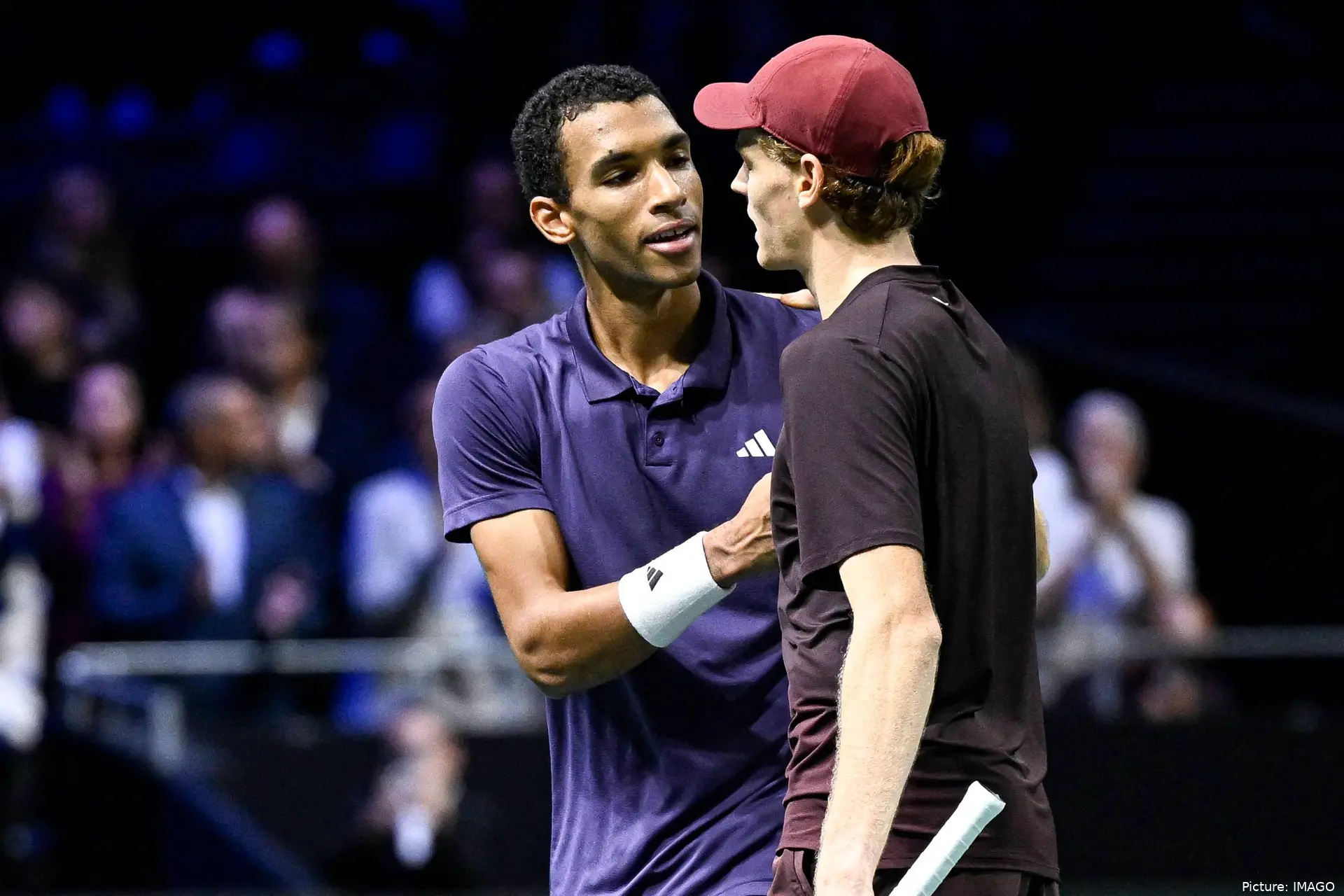
Félix Auger-Aliassime framed his Monte-Carlo quarterfinal defeat as a problem of control rather than effort, pointing to the structure of rallies and the difficulty of imposing his game against Jannik Sinner. The Canadian identified the opening phases of exchanges as decisive, where he consistently found himself reacting instead of dictating against one of the Tour’s most efficient baseline players.
Auger-Aliassime was eliminated from the Monte-Carlo Masters after a 6-3, 6-4 loss to the world No. 2 on Court Rainier III. The sixth seed was broken once in each set in a 92-minute match, unable to convert pressure into scoreboard momentum despite stretches of competitive baseline play.
The statistical gap reflected the dynamic he described. Sinner won 71 per cent of second-serve points compared to 47 per cent for Auger-Aliassime, limiting the Canadian’s ability to establish neutral rallies on his terms. Both players finished with 23 unforced errors, but Sinner’s depth and consistency ensured greater control of the key exchanges.
The result leaves Auger-Aliassime trailing 2-5 in the head-to-head, while Sinner extended his ATP Masters 1000 winning streak to 20 matches, joining Roger Federer, Rafael Nadal and Novak Djokovic in reaching that mark. For Auger-Aliassime, however, the focus post-match centred on identifying the tactical gaps exposed over the course of the contest.
Read also
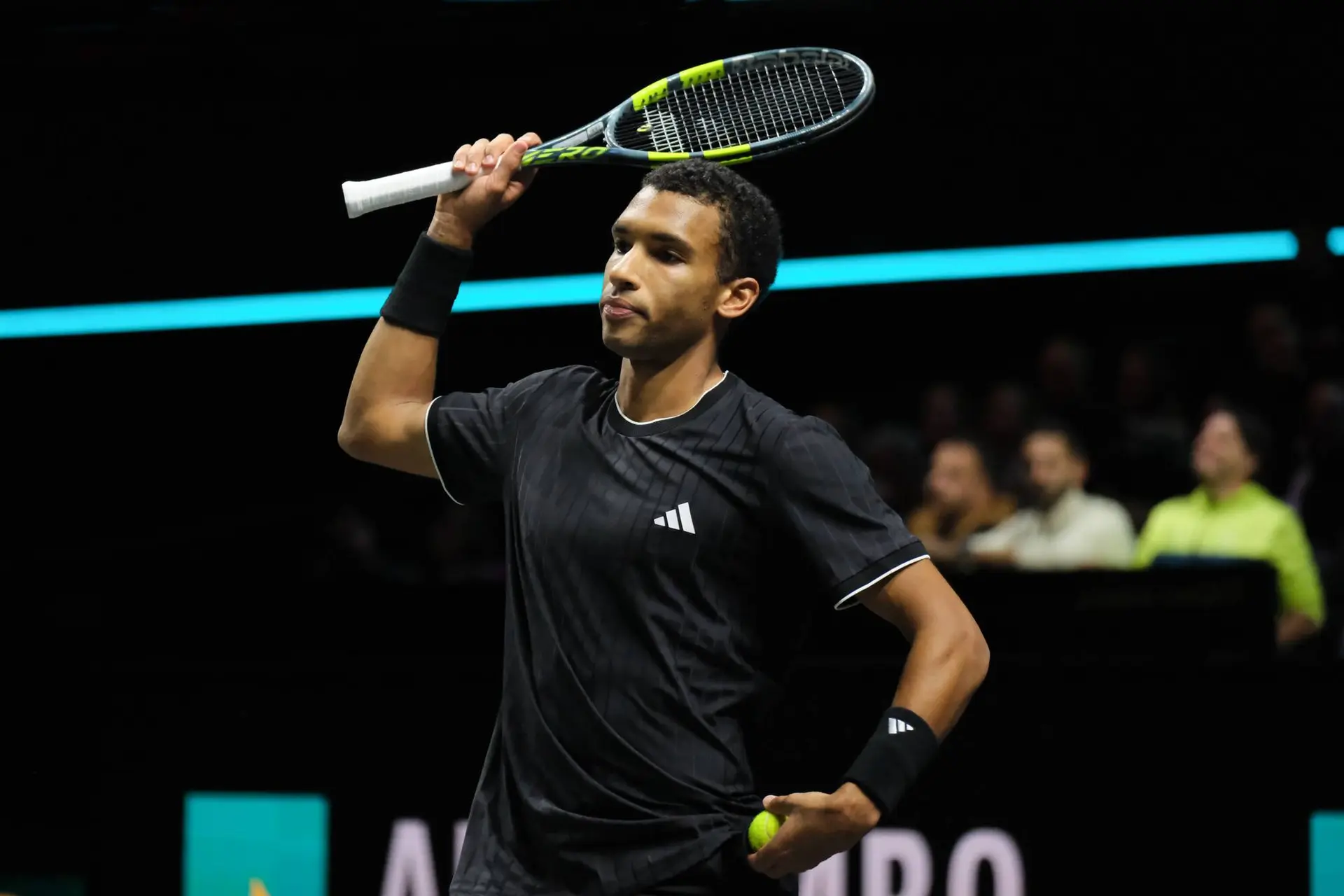
“I didn’t start rallies well”: the battle for early control
Auger-Aliassime’s analysis centred on the opening phase of rallies, where he felt the match was consistently decided. Despite identifying sequences where exchanges were competitive, he acknowledged that the initial shots often placed him at an immediate disadvantage. “With him, the rallies are very fast, it’s a bit like ping-pong. I also try to play fast, but he is very good at that.”
That tempo, he suggested, exposed a recurring issue: failure to establish control from the first strike. Even when rallies extended, the Canadian found himself recovering from a compromised position rather than building the point on his own terms. “I think the rallies overall were not bad," the world No. 7 said. "I even managed to do some good things, but I didn’t start them well. He was better than me in that sense.”
The consequence was sustained pressure tied to court positioning. Sinner’s depth and pace reduced available time, forcing Auger-Aliassime into a constant trade-off between stepping back to gain time and holding ground to avoid conceding space. “When he plays deep and fast from the baseline, he takes your time away. If you are further back, you have a bit more time to hit, but at the same time you lose ground.”
“You’re always on the defensive”: positioning and tactical pressure
Beyond the opening shots, Auger-Aliassime pointed to positioning as the central tactical constraint. Without the ability to secure a favourable court position early in rallies, he described a pattern of reacting to Sinner’s patterns rather than shaping them. “I like to have time to see the game and build it, but with him it’s difficult. You have to find the right position, otherwise you’re always on the defensive.”
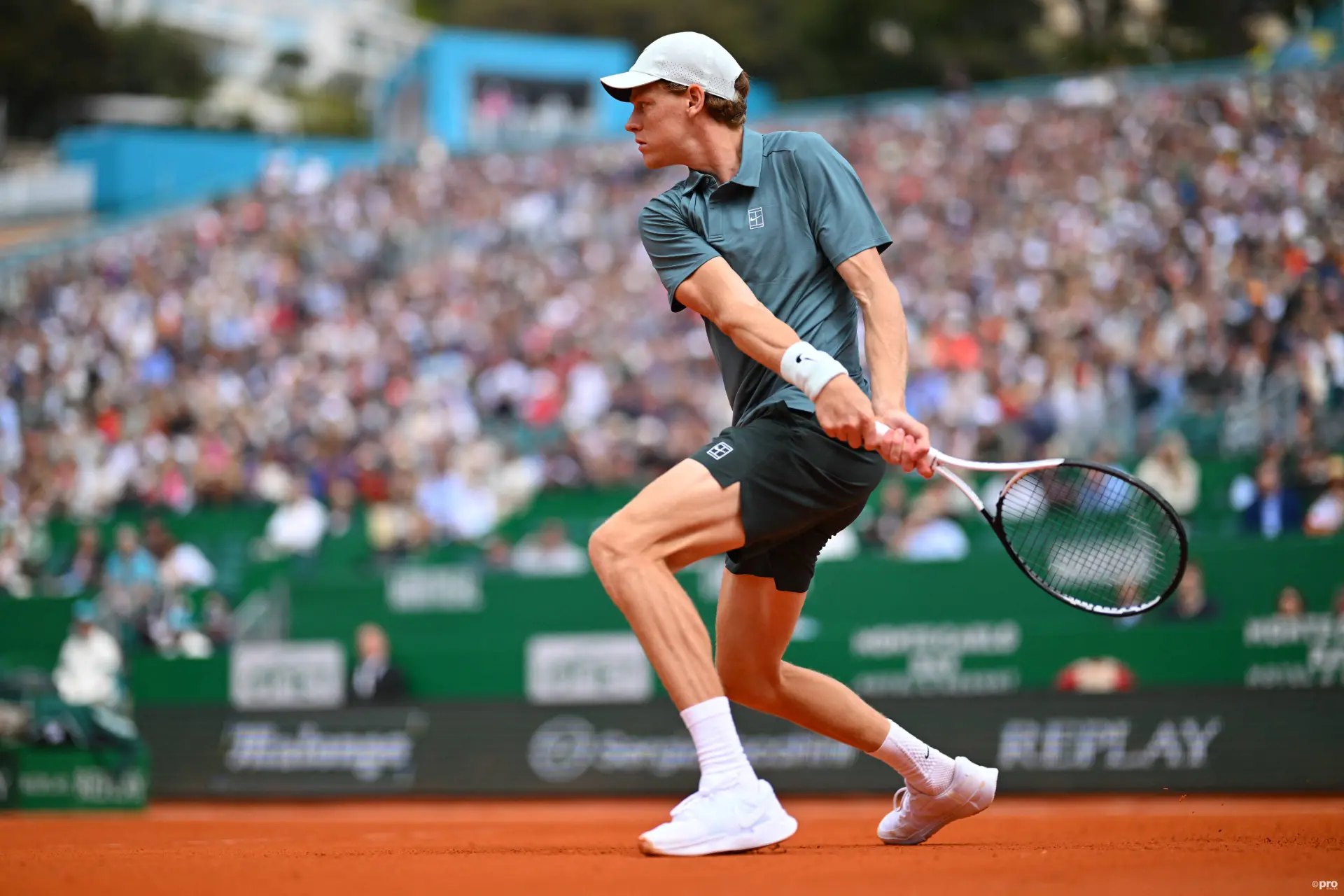
Sinner’s evolving use of the drop shot further complicated that dynamic. While no longer a surprise element, it became effective precisely because of the pressure generated in earlier phases of the rally. “He has worked a lot on that shot, it’s no longer a surprise. He uses it well, even in difficult situations.”
For Auger-Aliassime, the drop shot was not the root problem but a consequence of imbalance. When forced out of position or rushed on initial shots, he was more vulnerable to variation, particularly against an opponent capable of executing under pressure.
“If you don’t have enough depth or speed in the first shots, you give him the chance to play the drop shot. It’s more a question of position: if you’re off balance, that shot becomes very effective.”
Fine margins, errors and forward outlook
Despite the straight-sets scoreline, Auger-Aliassime identified moments where he had opportunities to apply pressure. He suggested there were passages where he was “inside the rally” and capable of pushing Sinner, but those phases were not sustained. “In a way, yes, I think I could have done better. There were moments when I was inside the rally, when I could push him.”
The turning points, in his view, came through lapses in execution. Errors at key moments disrupted any momentum he built and allowed Sinner to reassert control without facing prolonged pressure on serve or in extended games. “I made too many mistakes and the match changed. In some games I didn’t have enough quality.”
Read also
While acknowledging missed chances, Auger-Aliassime framed the loss within a broader competitive context. With the clay season continuing, he pointed to future opportunities to refine his approach against top-level opposition. “I would have liked another chance, but there will be other weeks to try again.”

Cristhián AvilaTennis Journalist
Cristhián Ávila is a tennis journalist based in Santiago, Chile, and has been part of the TennisUpToDate team since early 2023. He covers the ATP and WTA Tours as well as all four Grand Slams, producing breaking news, match reports, analysis, and regular liveblogs from major tournaments.
His reporting combines statistical analysis with clear explanation, helping readers understand tactical developments, player form, and broader storylines across the tour. Working fluently in both Spanish and English, Cristhián collaborates with an international editorial team and contributes to comprehensive global coverage. As part of his work, he has conducted interviews and media interactions with leading figures in the sport, including Caroline Wozniacki and John McEnroe.
In his journalism, Cristhián places strong emphasis on careful sourcing, editorial accuracy, and updating articles promptly when new, verified information becomes available. His coverage is grounded in research, context, and direct engagement with professional tennis.
claps 0visitors 0
Just In



Popular News
Latest Comments
- A healthy Qinwen may be hard to stop next season. She was already scaring her opponents before her medical leave(s). Unfortunately, Zheng insisted on singing again. On the positive side -- Mirra did not sing!! ;~}
 mandoist11-10-2026
 - Where is it written that athletes, entertainers... People in general... are mandated to keep looking at -- or even using [anti]Social Media? Public & private figures consistently complain and reveal their concerns about negativity and violence thrown at them -- yet they insist on participating. Avoid it, don't use it, don't read it. It's okay to occasionally look up at the World instead beating your eyes & thumbs to death on The Inventions out there.mandoist11-10-2026
- great articlestennisseserver07-10-2026
- Medvedev was leading Djokovic 7-5, 3-5 when an attempted return..' NO you ignorants, Djokovic was leading .weiss05-10-2026
- No more bullshit "Wildcards" to these two. Qualify like everyone else -- there will be cameras there, too. Time to scream... WTF ????!!!!mandoist29-09-2026
- Let's not BS the general public -- Sabalenka started showing cracks in her game last season. Her losses and near-losses started at about the same time she began being distracted by Fame (constant Selfies, making TV commercials, magazine shoots, endless Social Media nonsense, etc., etc.) One would think even Saba could recognize the parallels with others who failed before her -- Raducanu, Giorgi, Bouchard to name a few.mandoist25-09-2026
- Gross!! Hey Raducanu, Giorgi, and Bouchard -- reserve a seat at your Social Media Selfie table for Saba + Naomi. They're heading in your direction soon enough.mandoist24-09-2026
- And then these same players will complain about how lengthy their season’s were and need more time-off. I’m all for more tennis but the amount of tennis we get now is actually kind of crazy! We all need a break, especially the players.DaveyWavey23-09-2026
- You should do a comparison article for "different kinds of justice" the courts decide for tennis players. I can think of at least three players who received very small bans of a few months, however Tara Moore has been fighting for her literal survival the past few years. It seems odd considering she is not a "name" player, unlike the other cases.DaveyWavey22-09-2026
- PRIZE MONEY & POINTS Winner - $185,500 Finalist - $114,500 Semi-Finalist - $66,003 Quarter-Finalist - $35,000 Round of 16 - $18,045 Round of 32 - $13,005 Winner - 500 Finalist - 325 Semi-Finalist - 195 Quarter-Finalist - 108 Round of 16 - 60 Round of 32 - 1DaveyWavey20-09-2026

Loading