What Is the ATP & WTA Heat Rule? Explained – Roland Garros (French Open), Indian Wells, Miami Open, Wimbledon, US Open, Australian Open & More
FAQ
The whole of Europe including England where Wimbledon is taking place is going through a huge heatwave right now as qualifying in particular affected going into the first week of the tournament. But how does the heat rule work at Wimbledon and other such tournaments.
The Extreme Heat Policy of the Australian Open was instituted in 1998 after deliberations with several players. Its current iteration was introduced in 2019 and operates on a scale of 1 to 5 that accounts for the physiological differences between adults, wheelchair and junior competitors. It factors in a quartet of climate factors - air temperature, radiant heat, or the strength of the sun, humidity and wind speed - as these affect a player's capacity to disperse heat from their body. In this article, we will explore the history of heat protocols in tennis tournaments, as well as reflect on the current Grand Slam heat rules and those used in other tournaments.
How Wimbledon handles the heat
Already the 2026 Wimbledon Championships has dealt with the heat rule. It has seen players leave the court with temperatures over 35 degrees. The heat rules allows for a 10-minute break to be taken between the second and third set for best-of-five set matches where the heat stress index is at or above 30.1 degrees Celcius. Only one of the players participating in the match needs to request the break for it to be implemented.
This is for matches including those that have already started. The heat stress monitor readings are taken 30 minutes prior to the start of play and then at 2pm and 5pm.
If there is a change, those matches already in progress will be played with the rule in place. The heat rule will not apply to matches played under a roof. The heat rule will not be introduced for matches that were suspended overnight if one set has been completed or two in a best of five.
Albeit during qualifying there was a differentiation to the rule as they suddenly left court without notice and the heat rule was applied as the UK deals with extremities.
Read also
Current heat rule thresholds
| Organization / Tournament | Primary Metric | Cooling Break Trigger | Suspension / Roof Closure Trigger |
| Australian Open | 1–5 HSS | Level 4.0: 10-min break (after 2nd set for Women; 3rd for Men) | Level 5.0: Play suspended on outdoor courts; roofs closed on show courts |
| US Open | WBGT | 30.1°C: 10-min break (after 2nd set for Women; 3rd for Men) | 32.2°C+: Referee's discretion to suspend play on all courts |
| French Open | WBGT | 30.1°C: 10-min break allowed at player request | 32.2°C: Discretionary suspension; Chatrier/Lenglen roofs may close |
| Wimbledon | WBGT | 30.1°C: 10-min break (after 2nd set for Women; 3rd for Men) | Variable: Roofs typically remain open for heat; the medical team monitors humidity |
| ATP Tour | WBGT | 30.1°C: 10-min break (after 2nd set) | 32.2°C: Mandatory suspension of play |
| WTA Tour | WBGT | 30.1°C: 10-min break (after 2nd set) | 32.2°C: Mandatory suspension of play |
| Olympics (ITF) | 1–5 Scale | Level 4.0: 10-min break introduced | Level 5.0: Complete halt of all outdoor competition |
Heavy criticism led to alterations in 2015
Following a significant backlash over how the heat situation was handled at the 2014 Australian Open, organisers decided to increase the temperature threshold from the 2003 mark of 35 to 40 degrees Celsius. They also increased the wet-bulb globe temperature threshold from 28 to 32.5 Celsius to allow for more uninterrupted play.
This threshold has been questioned due to WBGT charts suggesting that even if temperatures reached 50 Celsius, we might not see it triggered when there's an absence of humidity. This year also saw a roof added to the second showcourt, Margaret Court Arena, to the already existing one on Rod Laver Arena, which opened in 1988 (under the name National Tennis Centre), making it the first Grand Slam to feature a retractable roof.
Potted history of heat issues at the Melbourne Slam
The initial heat policy only permitted the roof to be closed when the temperature exceeded 39 degrees Celsius or, alternatively, at the referee's discretion if the temperature passed 35 degrees Celsius, but only for daytime games and once all singles matches could be played in the Rod Laver Arena. As a consequence of these restrictions, organisers could only invoke the policy once the event had reached the quarter-final stage. Tournament officials had contemplated closing the roof for the 1993 Men's Singles final, but Jim Courier threatened to boycott the contest if it was closed. This meant the heat rule wasn't activated until the 1997 quarter-finals.
In 1998, a new policy was implemented, calling for play on all courts to be paused if the temperature surpassed 40 degrees Celsius. This was later reduced, in 2002, to 38 degrees Celsius. The women's final that year allowed for a longer break than usual between the second and third sets due to temperatures peaking at 35 Celsius.

Roger Federer was one of the first to debate the heat policy.
The Extreme Heat Policy was invoked in both 2006 and 2007. A change to policy came in 2008, where play had to be halted at the denouement of a set. The 2009 edition witnessed a record average temperature of 34.7 degrees Celsius, forcing the policy to be invoked on multiple occasions.
The 2014 Australian Open led to a plethora of criticisms as ball boys, attendants in the stands and players were suffering numerous heat-related issues. Temperatures exceeded 41 degrees Celsius on four consecutive days. Canadian pro Frank Dancevic began to hallucinate during a loss to Benoit Paire. He described the conditions as "inhumane”. Five-time finalist Andy Murray voiced concerns, “it only takes one bad thing to happen”. Daniel Gimeno-Traver carried off a ball boy who fainted, and Croatian player Ivan Dodig collapsed during his match, fearing he might die. Extreme heat forced a record nine withdrawals in round one.
A few offered a contradictory stance, including Roger Federer, who endorsed the referee's decision to allow play to continue.
Lessons learned for 2026?
It's fair to say lessons learned from this controversial edition were implemented during the 2026 edition. When the Extreme Heat Policy was invoked at this year's event, play was halted without hesitation on the outside courts as soon as the temperature edged past the accepted level. A delayed start to the wheelchair events took into account the physiological differences of those competing in wheelchairs. Andy Lapthorne, a leading Quad tennis player, acknowledged the importance of this delay, “There are players in our category within our category that can't sweat if they've got a spinal cord injury.”
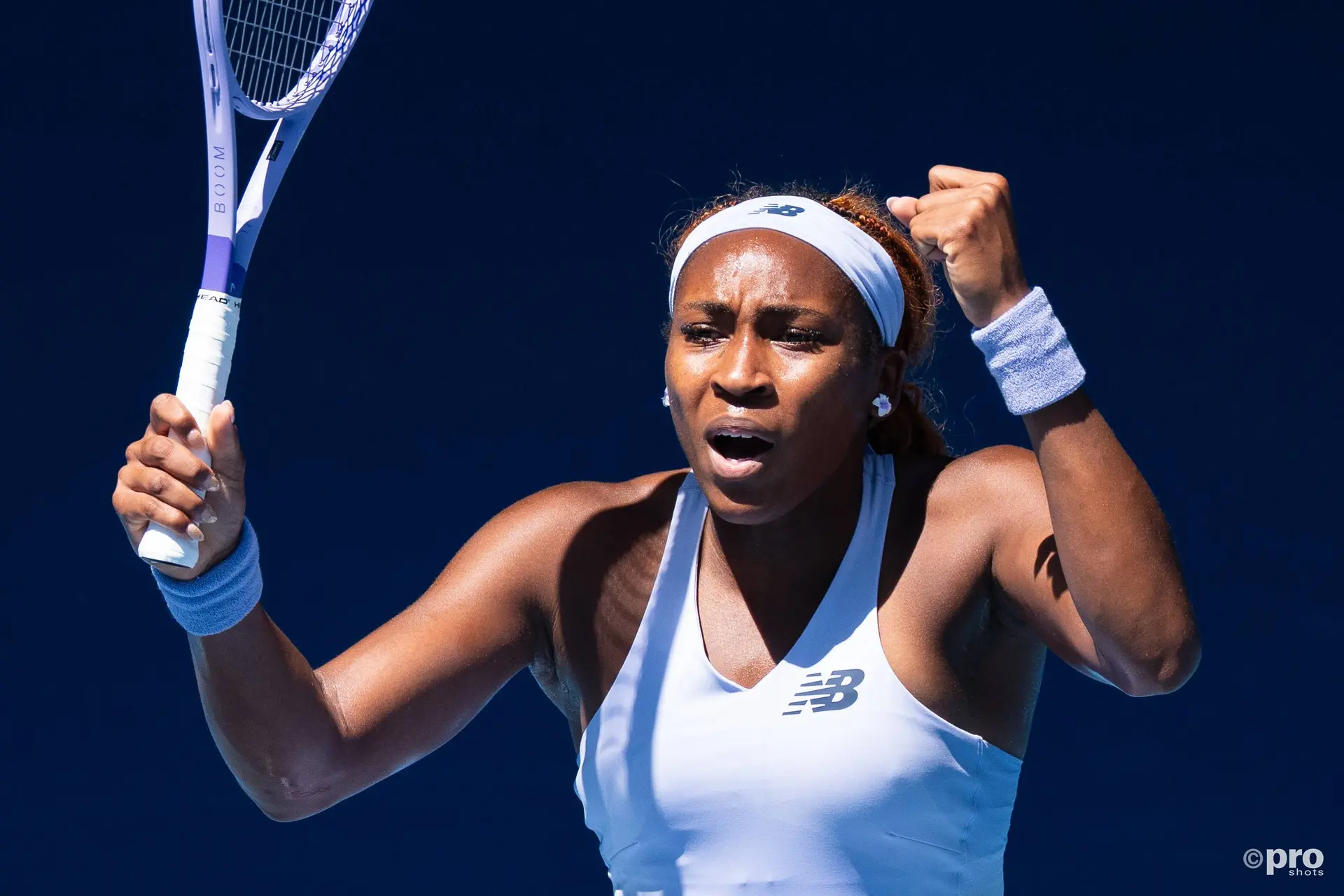
The fans were also thought of more considerately with a greater number of water facilities placed around the Melbourne complex. It's often fans who are not protected by the shade like players and umpires.
This is not to say these changes go far enough. Is an earlier start time by an additional 30 minutes going to make a significant difference when the temperature differential is fractional compared to the original story time? Would it also help to create a greater product if the level required for the roof to come on, aided by the air conditioning being switched on, was lower than the current 40 degrees Celsius? I think in five-set matches this would prove beneficial.
A wider issue than just the Australian Open
The French Open and Wimbledon are not immune to excessive heat, but it's the two hard-court Grand Slams that remain most prone to incurring the wrath of players for letting tennis continue when the heat goes above tolerable levels. Many of the 1000 events, particularly those in the USA, have been susceptible to playing in savage conditions.
At the US Open, temperatures can often exceed 35 degrees Celsius in New York. The situation is often further complicated by a higher humidity than is often experienced in Melbourne.
The 2023 edition of the US Open saw the heat issue become a big talking point after an all-Russian quarter-final between Daniil Medvedev and Andrey Rublev left both men exhausted physically and mentally. Medvedev didn't mince his words after saying, “a player could die because of the sweltering conditions”.
Watching the game as a commentator, former four-time US Open champion John McEnroe opined, “These poor guys today…they looked like they're going to fall over. It's not humane in a way.”
In a discussion on BBC Radio Five Live, from 2023, Mike Tipton, a professor of human and applied physiology at Portsmouth University, felt we're close to a tipping point, saying conditions “are regarded as on the edge of a serious risk to health.”
A person's average body temperature is 37 degrees Celsius, but when athletes push themselves to the limit in excessive temperatures, heat exhaustion can materialise.
Symptoms of this can include breathlessness, cramp, and nausea. If not treated properly, heatstroke can set in and potentially trigger a medical emergency.
The US Open was a lot later than its Australian equivalent to implant a heat policy, only introducing one in 2018. They'd previously aired discretion on policies associated with the ATP and WTA tours. This displayed an unwillingness on the USTA's part to take decisive action.
At the 2018 edition, Novak Djokovic and Marton Fucsovics used a longer break between sets than usual by sitting next to each other in an ice bath.

The heat got that much for Novak Djokovic at one juncture, he sat with his opponent in an ice bath.
How other ATP and WTA Tournaments deal with extreme heat protocols
1. The ATP Tour (New 2026 Protocol)
Starting January 1, 2026, the ATP introduced a mandatory heat policy for all men's professional events (ATP 250, 500, and Masters 1000). This move was triggered by several high-profile incidents during the 2025 Asian swing, including players fainting and retiring in Shanghai.
- The Rule: The ATP uses the Wet Bulb Globe Temperature (WBGT) index.
- Cooling Breaks: If the WBGT reaches 30.1°C (86.2°F) during the first two sets of a best-of-three match, any player can request a 10-minute cooling break after the second set.
- Suspension of Play: Play is automatically suspended if the WBGT exceeds 32.2°C (90.0°F).
- Permitted Activities: During the break, players can shower, change clothes, and receive medical/coaching advice under supervision.
2. The WTA Tour (The Pioneer)
The WTA has been the leader in heat safety, having implemented its first policy back in 1992. Their rules serve as the blueprint for the new ATP regulations.
- The Rule: Also based on the WBGT index reaching 30.1°C.
- Cooling Breaks: A 10-minute break is allowed between the second and third sets in all singles matches.
- Unique Provision: Unlike some men's events, the WTA often allows for "Heat Rule" implementation even if the threshold hasn't quite been met if the humidity is exceptionally high (often referred to as the "Feels Like" temperature).
3. Olympic Tennis (ITF Rules)
Because the Olympics often take place in the height of summer (Tokyo 2020/2021 and Paris 2024), the International Tennis Federation (ITF) maintains a rigorous protocol.
- The Rule: Uses a color-coded 1–5 Heat Stress Scale.
- Modification of Play: When the scale hits Level 4, 10-minute breaks are introduced.
- Suspension: When the scale reaches Level 5, the "Extreme Heat Policy" is enacted, and play on all outdoor courts is halted.
- Brisbane 2032 Prep: Following the extreme heat of Tokyo, the ITF and the Brisbane 2032 committee have already begun planning for "Heat Deck" medical stations—dedicated air-conditioned zones specifically for treating exertional heat stroke.
4. The Miami Open and Indian Wells (Masters 1000)
While these tournaments follow ATP/WTA guidelines, they often implement "Local Conditions" rules due to their desert and tropical climates.
- Miami Open: Due to the extreme humidity in Florida, tournament officials often utilize "Extended Changeovers." Instead of the standard 90 seconds, changeovers may be extended to 120 seconds to allow for extra icing and heart-rate recovery.
- Indian Wells: The dry heat of the California desert presents a different risk (dehydration). They often utilize on-court misting fans and mandatory electrolyte stations at every court, even when the "Suspension" threshold hasn't been reached.
5. LTA (United Kingdom) Events
Even in cooler climates like the UK, the LTA has introduced an Extreme Heat Policy for summer grass-court events (like Queen's Club or Eastbourne).
- Modification: If the Heat Stress Index reaches 34.0°C, a 10-minute break is allowed.
- Suspension: Play is suspended if the index reaches 40.1°C.
- Practical Changes: The LTA has the authority to reduce scoring formats (e.g., playing a Match Tie-break instead of a full third set) to shorten the duration of time players spend in direct sunlight.
Possible solutions to a persistent problem
A possible solution to the increasing heat issue, one which is only going to be exacerbated by the continual warming of the planet, is to consider switching up the tennis calendar to be more aligned with when countries are less prone to excessive heat.
An Australian Open in the early throes of an Australian autumn could not only facilitate a better chance of avoiding the most brutal heat, but offer an opportunity to allow players the chance to be battle hardened as opposed to the current situation, when many players have only featured in one tournament of the new season.
A long talked about merger between the ATP and WTA circuits would make it easier to align the calendar, and cooperation from the organisers of the four majors.
A reduction in sets for men's matches would be a potential solution, but it's something I'd be loath to see, as the narrative of these matches is all the richer for how a classic five-set match creates pronounced shifts in momentum. It's also the ultimate test of a player.
Longer breaks between sets or during sets when the heat reaches a certain level is never going to be sanctioned as the game is reliant on television contracts and wouldn't accept the delays.
At certain tournaments, where a lot of courts are available with the use of floodlights, opportunities arise to stage more matches in the evening when temperatures are inevitably receding from the daytime peak. All Grand Slams, outside Wimbledon, have this option available, especially in the second week where there's less matches to schedule.
There's no doubt this issue is never going to achieve a perfect set of regulations for playing in extreme heat, but action can still seem a little casual in taking on board the health of players, fans and officials. The desire to satisfy television contracts should never come at the expense of safety. I hope we don't have to wait for a tragic incident before all tournaments adopt a strict approach to an increasingly pressing situation for tennis to deal with.

Jay Brannon is a sports journalist from Sutton Coldfield, England, with a lifelong passion for athletic competition and storytelling. For the past 1.5 years, he has been a prominent voice at TennisUpToDate.com, where he has authored more than 3,000 articles, specializing in deep-dive columns, tactical analyses, liveblogs, and comprehensive match reports for the ATP and WTA tours.
Jay’s tennis reporting blends rigorous, real-time statistical analysis with on-the-ground coverage. He frequently travels to tournaments to cover the action firsthand from the press box and player press conferences. This direct access allows him to deliver sharp insight into player form and tour developments—a dedication sparked by his earliest sporting memory of the iconic 1991 Wimbledon final between Michael Stich and Boris Becker.
Beyond the court, Jay brings a versatile background in live broadcasting and media. His professional experience includes serving as a sports reporter for BHBN Hospital Radio—where he delivered live updates and analysis for West Bromwich Albion and Wolverhampton Wanderers matches—as well as working as a match reporter for Sutton Coldfield Town.
Jay holds a degree in Music Journalism and Broadcasting from Staffordshire University, a foundational training that shaped his voice as a thoughtful, authentic storyteller. Grounded in core journalistic ethics, he places a strict emphasis on careful sourcing, editorial accuracy, and swift, verified updates.
claps 4visitors 2
Just In


Popular News
Latest Comments
- great articlestennisseserver07-10-2026
- Medvedev was leading Djokovic 7-5, 3-5 when an attempted return..' NO you ignorants, Djokovic was leading .weiss05-10-2026
- No more bullshit "Wildcards" to these two. Qualify like everyone else -- there will be cameras there, too. Time to scream... WTF ????!!!!
 mandoist29-09-2026
 - Let's not BS the general public -- Sabalenka started showing cracks in her game last season. Her losses and near-losses started at about the same time she began being distracted by Fame (constant Selfies, making TV commercials, magazine shoots, endless Social Media nonsense, etc., etc.) One would think even Saba could recognize the parallels with others who failed before her -- Raducanu, Giorgi, Bouchard to name a few.mandoist25-09-2026
- Gross!! Hey Raducanu, Giorgi, and Bouchard -- reserve a seat at your Social Media Selfie table for Saba + Naomi. They're heading in your direction soon enough.mandoist24-09-2026
- And then these same players will complain about how lengthy their season’s were and need more time-off. I’m all for more tennis but the amount of tennis we get now is actually kind of crazy! We all need a break, especially the players.DaveyWavey23-09-2026
- You should do a comparison article for "different kinds of justice" the courts decide for tennis players. I can think of at least three players who received very small bans of a few months, however Tara Moore has been fighting for her literal survival the past few years. It seems odd considering she is not a "name" player, unlike the other cases.DaveyWavey22-09-2026
- PRIZE MONEY & POINTS Winner - $185,500 Finalist - $114,500 Semi-Finalist - $66,003 Quarter-Finalist - $35,000 Round of 16 - $18,045 Round of 32 - $13,005 Winner - 500 Finalist - 325 Semi-Finalist - 195 Quarter-Finalist - 108 Round of 16 - 60 Round of 32 - 1DaveyWavey20-09-2026
- Pegula withdrew from this Singapore event
 tennishappens19-09-2026
 - Serena Williams chose her tournaments. It's not such a bad idea.MuswellHillbilly17-09-2026

Loading