
If you think what’s happening with LIV Golf is just a golf story, you’re missing the point. It’s a warning. Reports that Saudi Arabia’s Public Investment Fund will pull funding from LIV after the 2026 season—after pouring more than $5 billion into the league—should hit tennis like a cold shock. Not because Saudi Arabia is leaving sports. It isn’t. But because it may be done subsidizing sports properties that don’t deliver enough in return.
That distinction matters more than anything else. Because professional tennis has spent the last two years quietly reorganizing itself around the assumption that Saudi money is not just available, but dependable. That’s a dangerous assumption. The sport isn’t dabbling with Saudi investment. It’s leaning on it. The ATP Tour didn’t just take a sponsorship. It put PIF branding on its rankings and started shaping its future calendar with Saudi Arabia in mind. The WTA Tour went even further, placing its most important event, the Finals, in Riyadh through 2026 and treating that deal as a foundation rather than a bridge.
Then there’s everything around it. The outsized exhibition money. The talk of a Saudi Masters 1000. The slow but steady normalization of Saudi Arabia as a central pillar of the tennis economy. This isn’t opportunistic. This is structural. And structure creates risk. LIV Golf shows exactly how that risk plays out. That league had everything tennis now assumes is enough. Unlimited funding. Star power. Global ambition. A clear mandate to reshape the sport.
What it didn’t have was a real business model. It didn’t build a sustainable audience. It didn’t secure meaningful media value. It didn’t justify its cost. And if the reporting is even partially accurate, that’s why the funding may be going away. Not because the money disappeared. Because the patience did. Tennis should not assume it’s different.
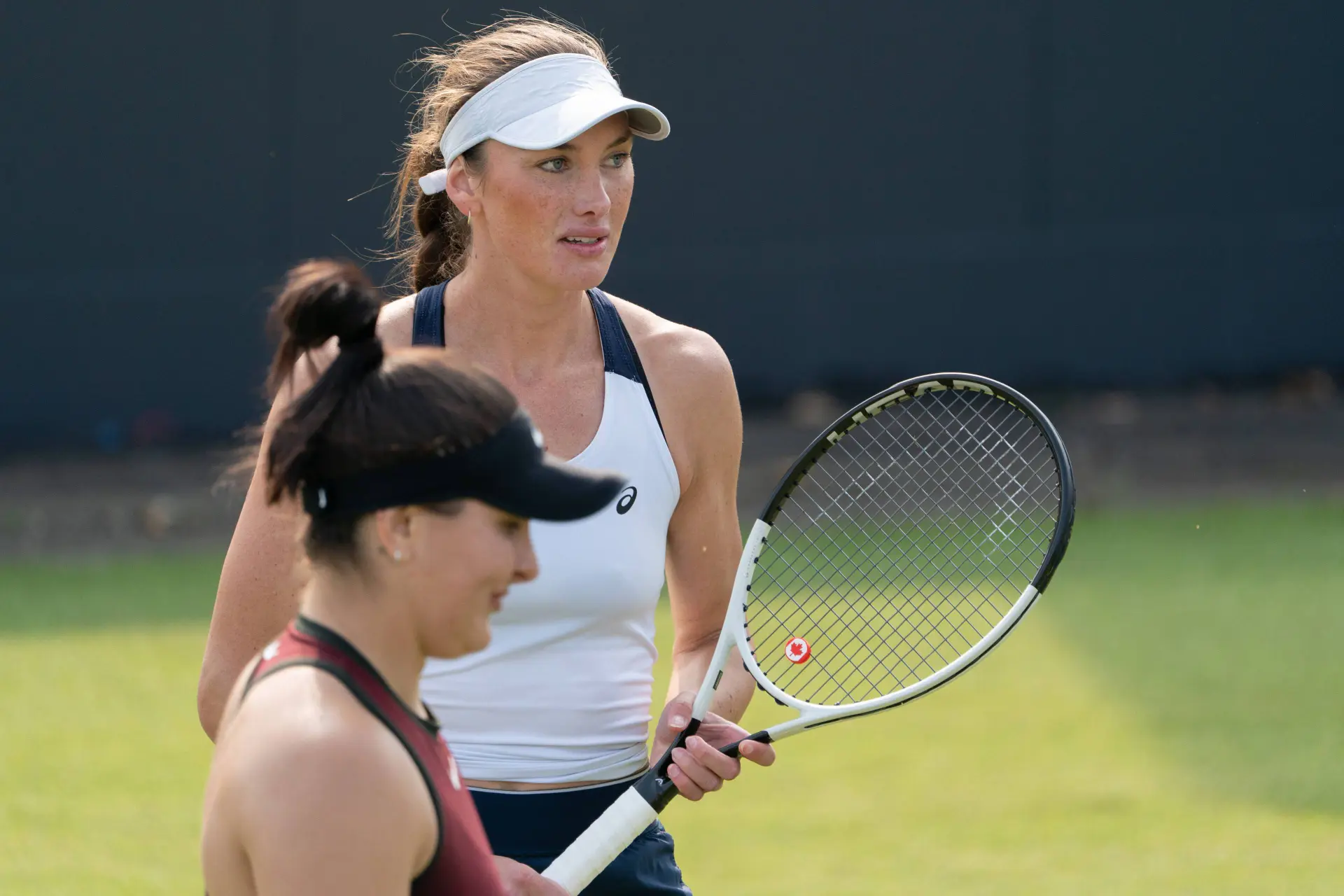
A tennis future reliant on it
In fact, tennis may be more exposed. Golf created a rival product that could be turned off. Tennis has allowed Saudi investment to seep into its core product. Rankings, calendar, prestige events. These are not things you can easily unwind without consequences. So what happens if the strategy shifts? Not a dramatic exit. That’s not how this works.
It looks like a Masters 1000 that doesn’t quite materialize when it’s supposed to. It looks like a WTA Finals deal that is ended prematurely, forcing the tour back into the same instability it thought it had escaped. It looks like exhibitions that quietly stop paying absurd money because the point of paying it no longer exists. It looks like tennis having to stand on its own again. And that’s the part no one seems ready for.

Elena Rybakina sitting on her bench resting in the 2025 WTA Final
Because Saudi investment has given tennis something it has lacked for decades: financial breathing room. It has allowed both tours to avoid harder, more uncomfortable decisions about structure, scheduling, and how to actually grow a consistent global audience. That breathing room may not last forever. If Saudi Arabia starts treating sports investments the way every serious investor eventually does—demanding return, alignment, and proof of concept—tennis will have to answer questions it has successfully avoided.
What is the ATP’s growth model without external capital propping it up? What is the WTA’s long-term anchor if Riyadh disappears overnight? What does the sport actually look like when the biggest checks are no longer automatic? Those questions aren’t hypothetical anymore.
LIV Golf just showed everyone how quickly the premise can change. And here’s the uncomfortable truth tennis needs to confront: It hasn’t been building a future with Saudi money. It’s been building a future that depends on it. That’s a very different bet. And it’s one that could go wrong a lot faster than anyone in tennis wants to admit.
Saudi Arabia will withdraw its multi-billion dollar backing of LIV Golf at the end of the season, plunging the future of the series into further doubt. pic.twitter.com/9N7hKDq7uV
— BBC Sport (@BBCSport) April 30, 2026

Aron SolomonGuest Author
A Pulitzer Prize-nominated journalist for his groundbreaking op-ed in The Independent exposing the NFL’s “race-norming” policies, Aron Solomon, JD, is a globally recognized thought leader in law, media, and strategy.
As Chief Strategy Officer for AMPLIFY, he leverages his deep expertise to shape the future of legal marketing. Aron has taught entrepreneurship at McGill University and the University of Pennsylvania and was honored as a Fastcase 50 recipient, recognizing him among the world’s top legal innovators. A prolific commentator on law, business, and culture, his insights regularly appear in Newsweek, The Hill, Crunchbase News, and Literary Hub.
He has also been featured in The New York Times, Fast Company, Fortune, Forbes, CBS News, CNBC, USA Today, ESPN, TechCrunch, BuzzFeed, Venture Beat and countless other leading global media outlets. We are proud to have Aron on board at TennisUpToDate, where his deep tennis expertise enriches the site with sharp, original columns that connect the sport to wider cultural debates.
claps 2visitors 1
Just In

Popular News
Latest Comments
- A healthy Qinwen may be hard to stop next season. She was already scaring her opponents before her medical leave(s). Unfortunately, Zheng insisted on singing again. On the positive side -- Mirra did not sing!! ;~}
 mandoist11-10-2026
 - Where is it written that athletes, entertainers... People in general... are mandated to keep looking at -- or even using [anti]Social Media? Public & private figures consistently complain and reveal their concerns about negativity and violence thrown at them -- yet they insist on participating. Avoid it, don't use it, don't read it. It's okay to occasionally look up at the World instead beating your eyes & thumbs to death on The Inventions out there.mandoist11-10-2026
- great articlestennisseserver07-10-2026
- Medvedev was leading Djokovic 7-5, 3-5 when an attempted return..' NO you ignorants, Djokovic was leading .weiss05-10-2026
- No more bullshit "Wildcards" to these two. Qualify like everyone else -- there will be cameras there, too. Time to scream... WTF ????!!!!mandoist29-09-2026
- Let's not BS the general public -- Sabalenka started showing cracks in her game last season. Her losses and near-losses started at about the same time she began being distracted by Fame (constant Selfies, making TV commercials, magazine shoots, endless Social Media nonsense, etc., etc.) One would think even Saba could recognize the parallels with others who failed before her -- Raducanu, Giorgi, Bouchard to name a few.mandoist25-09-2026
- Gross!! Hey Raducanu, Giorgi, and Bouchard -- reserve a seat at your Social Media Selfie table for Saba + Naomi. They're heading in your direction soon enough.mandoist24-09-2026
- And then these same players will complain about how lengthy their season’s were and need more time-off. I’m all for more tennis but the amount of tennis we get now is actually kind of crazy! We all need a break, especially the players.DaveyWavey23-09-2026
- You should do a comparison article for "different kinds of justice" the courts decide for tennis players. I can think of at least three players who received very small bans of a few months, however Tara Moore has been fighting for her literal survival the past few years. It seems odd considering she is not a "name" player, unlike the other cases.DaveyWavey22-09-2026
- PRIZE MONEY & POINTS Winner - $185,500 Finalist - $114,500 Semi-Finalist - $66,003 Quarter-Finalist - $35,000 Round of 16 - $18,045 Round of 32 - $13,005 Winner - 500 Finalist - 325 Semi-Finalist - 195 Quarter-Finalist - 108 Round of 16 - 60 Round of 32 - 1DaveyWavey20-09-2026

Loading