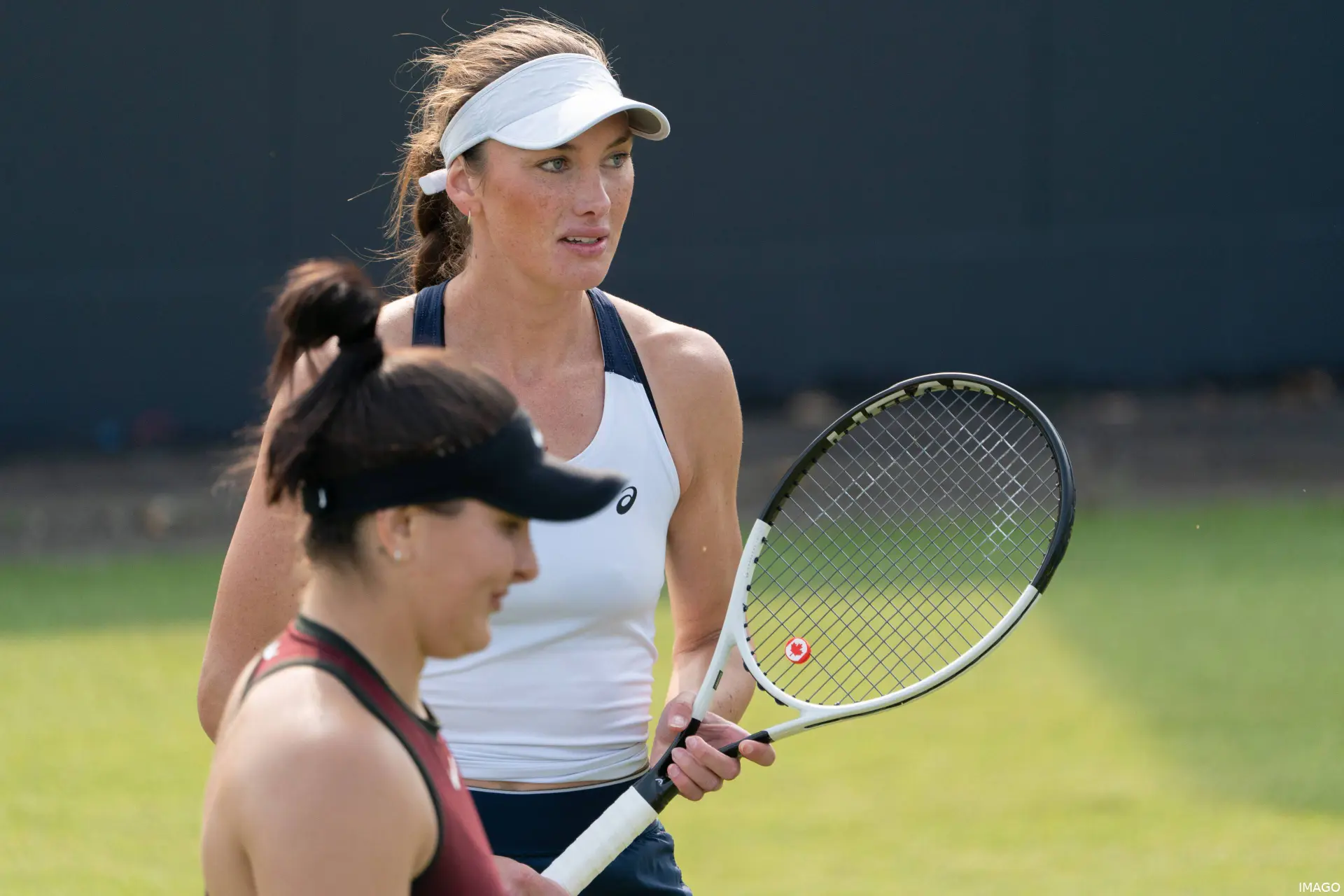
The tennis social media airwaves have gone viral this week with Canadian Carson Branstine taking to her popular TikTok to justifiably slam professional tennis for how it treats their non-elite players. Watch it, then ask yourself exactly what I asked myself: how many more young women like Carson Branstine need to say it out loud before anyone in power actually listens?
Not whisper it. Not hint at it. Say it. Because Branstine didn’t just vent on TikTok. She pulled the curtain back on a system that everyone inside tennis understands, and almost no one in charge is willing to confront. And here’s the part that should make people uncomfortable: she is far from alone. She’s just one of the few with enough visibility and independence to speak without fear of being quietly frozen out. That’s the real story here.
We keep framing this as a fairness issue, as if tennis just needs a few tweaks. A little more prize money here. A slightly better schedule there. Maybe a wellness initiative to make it all feel more humane. That’s not the problem. The problem is that the system is working exactly as designed. The Women's Tennis Association doesn’t accidentally leave lower-ranked players scrambling to survive. It structurally depends on it. The sport markets global glamour at the top while outsourcing risk, cost, and instability to everyone else.
Branstine’s “you have to pay for your own flight” line is not a joke. It’s the business model. So is the schedule that pretends to have an offseason while quietly punishing anyone who takes one. So is the financial reality that forces players ranked outside the top 100 to make impossible choices between health and ranking points.
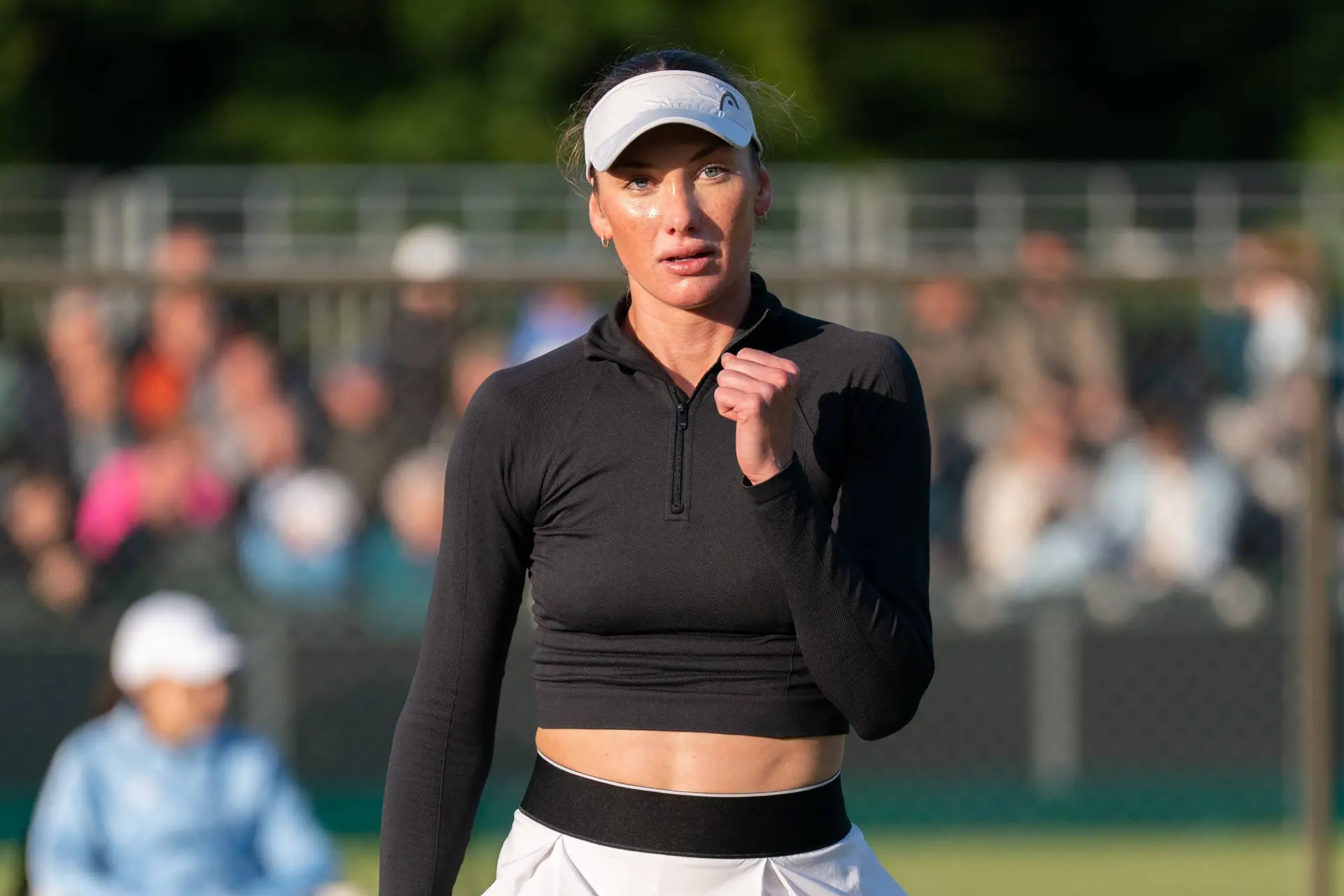
The Swiatek v Moore of it all
And then we get to the part everyone tiptoes around. Selective seriousness. When Iga Świątek faces a doping issue, the system slows down, contextualizes, explains. When Tara Moore finds herself in a similar storm, the consequences land very differently. No, the cases are not identical. They never are. But the outcomes feel familiar.
Stars are protected. Everyone else is replaceable. Tennis will deny that. Quietly, insistently. But players see it. Agents see it. Coaches see it. And now, increasingly, fans see it too. That’s why Branstine’s video hit a nerve. Not because it revealed something new, but because it confirmed what too many people have been told to ignore. And let’s talk about what it actually takes for a player like her to even get to that point.

Was Swiatek protected as Branstine claims?
She’s talented. She’s worked her way toward the top 100. She’s marketable enough to fund part of her own career through modelling. She has a platform. And still, one injury can wipe out her income for months. No safety net. No meaningful support. No real protection. If that’s the reality for someone like Carson Branstine, what do we think it looks like for the hundreds of players behind her? That’s the question the WTA never answers. Instead, we get messaging. Growth narratives. Strategic plans. Carefully worded commitments to player welfare.
What we don’t get is accountability. Because accountability would require admitting something the sport is not ready to say out loud: this is not a level playing field, and it never has been. It is a pyramid. And pyramids only work when enough people at the bottom keep climbing without asking too many questions. Branstine asked the question anyway. So again, how many more?
How many more young women need to risk their careers, their relationships within the sport, their future opportunities, just to describe what their daily reality looks like? At some point, this stops being about courage from players. And starts being about the absence of it from leadership. Tennis doesn’t need another panel discussion about player welfare. It doesn’t need another glossy campaign about opportunity. It needs people in positions of power to stop pretending that this is acceptable. Until that happens, the next Carson Branstine is already out there. Grinding. Paying her own way. Staying quiet. At least for now.

Aron SolomonGuest Author
A Pulitzer Prize-nominated journalist for his groundbreaking op-ed in The Independent exposing the NFL’s “race-norming” policies, Aron Solomon, JD, is a globally recognized thought leader in law, media, and strategy.
As Chief Strategy Officer for AMPLIFY, he leverages his deep expertise to shape the future of legal marketing. Aron has taught entrepreneurship at McGill University and the University of Pennsylvania and was honored as a Fastcase 50 recipient, recognizing him among the world’s top legal innovators. A prolific commentator on law, business, and culture, his insights regularly appear in Newsweek, The Hill, Crunchbase News, and Literary Hub.
He has also been featured in The New York Times, Fast Company, Fortune, Forbes, CBS News, CNBC, USA Today, ESPN, TechCrunch, BuzzFeed, Venture Beat and countless other leading global media outlets. We are proud to have Aron on board at TennisUpToDate, where his deep tennis expertise enriches the site with sharp, original columns that connect the sport to wider cultural debates.
claps 3visitors 2
Just In

Popular News
Latest Comments
- A healthy Qinwen may be hard to stop next season. She was already scaring her opponents before her medical leave(s). Unfortunately, Zheng insisted on singing again. On the positive side -- Mirra did not sing!! ;~}
 mandoist11-10-2026
 - Where is it written that athletes, entertainers... People in general... are mandated to keep looking at -- or even using [anti]Social Media? Public & private figures consistently complain and reveal their concerns about negativity and violence thrown at them -- yet they insist on participating. Avoid it, don't use it, don't read it. It's okay to occasionally look up at the World instead beating your eyes & thumbs to death on The Inventions out there.mandoist11-10-2026
- great articlestennisseserver07-10-2026
- Medvedev was leading Djokovic 7-5, 3-5 when an attempted return..' NO you ignorants, Djokovic was leading .weiss05-10-2026
- No more bullshit "Wildcards" to these two. Qualify like everyone else -- there will be cameras there, too. Time to scream... WTF ????!!!!mandoist29-09-2026
- Let's not BS the general public -- Sabalenka started showing cracks in her game last season. Her losses and near-losses started at about the same time she began being distracted by Fame (constant Selfies, making TV commercials, magazine shoots, endless Social Media nonsense, etc., etc.) One would think even Saba could recognize the parallels with others who failed before her -- Raducanu, Giorgi, Bouchard to name a few.mandoist25-09-2026
- Gross!! Hey Raducanu, Giorgi, and Bouchard -- reserve a seat at your Social Media Selfie table for Saba + Naomi. They're heading in your direction soon enough.mandoist24-09-2026
- And then these same players will complain about how lengthy their season’s were and need more time-off. I’m all for more tennis but the amount of tennis we get now is actually kind of crazy! We all need a break, especially the players.DaveyWavey23-09-2026
- You should do a comparison article for "different kinds of justice" the courts decide for tennis players. I can think of at least three players who received very small bans of a few months, however Tara Moore has been fighting for her literal survival the past few years. It seems odd considering she is not a "name" player, unlike the other cases.DaveyWavey22-09-2026
- PRIZE MONEY & POINTS Winner - $185,500 Finalist - $114,500 Semi-Finalist - $66,003 Quarter-Finalist - $35,000 Round of 16 - $18,045 Round of 32 - $13,005 Winner - 500 Finalist - 325 Semi-Finalist - 195 Quarter-Finalist - 108 Round of 16 - 60 Round of 32 - 1DaveyWavey20-09-2026

Loading