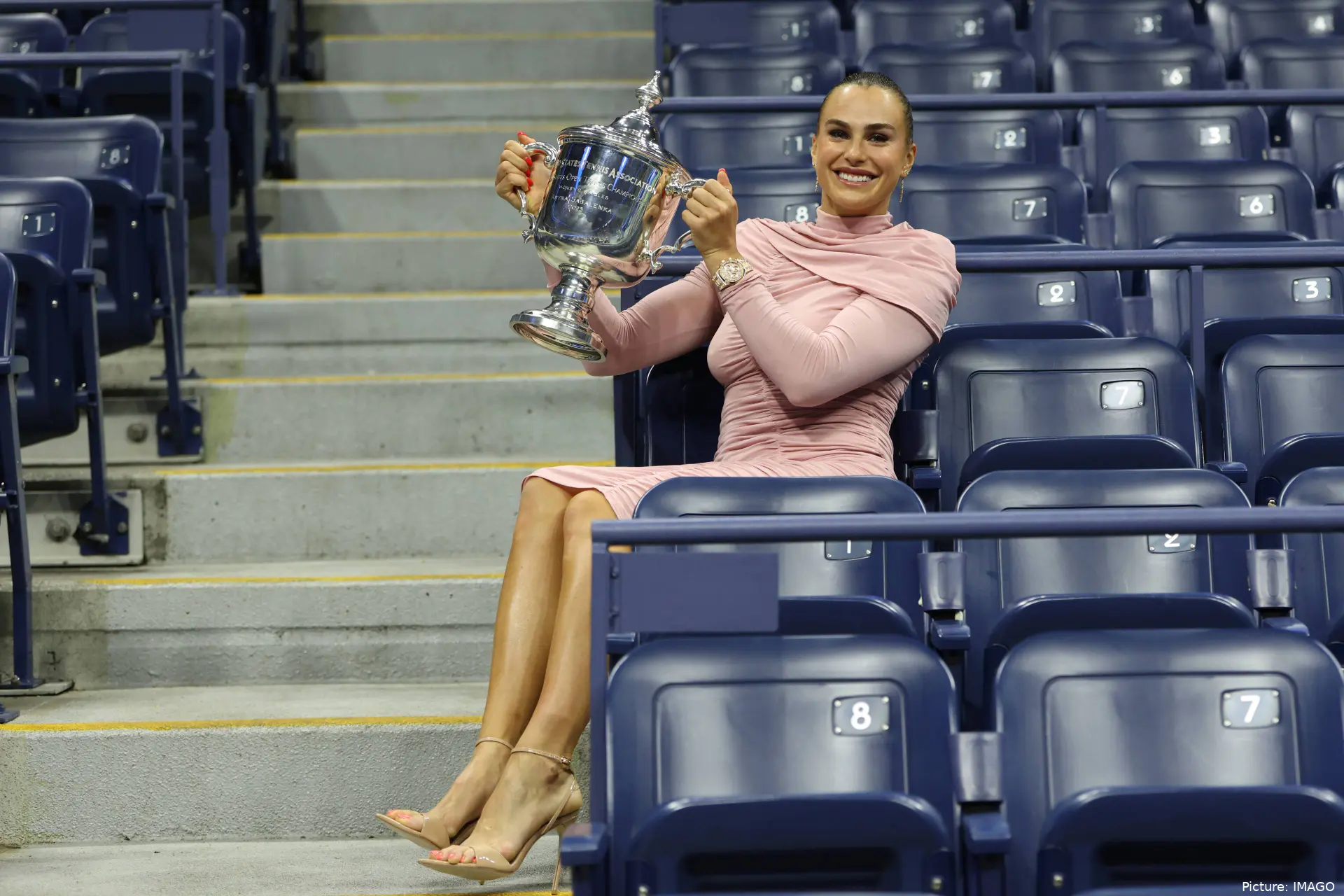
I know. It’s ridiculous. There is still a week left at Roland Garros. Major matches are still ahead of us. Somebody is going to win the French Open. Most tennis fans are focused on what is happening in Paris.
But this is the time of year when a certain type of tennis fan starts doing something different. We start doing points-defense math. If that sounds absurd, that’s because it is.
Before we go any further, a disclaimer. Points-defense math is one of those exercises that looks scientific until you actually sit down and try to do it. Unless you’re rebuilding every player’s ranking ledger tournament by tournament, you’re estimating. That’s exactly what I’ve done here.
I went back through the tournaments from the conclusion of the 2025 French Open through the end of the 2025 US Open and calculated what appears to be the approximate number of points each player will be defending over the next three months. Are the numbers perfect? Almost certainly not. Are they close enough to tell us who is carrying the most pressure? I think so.
My math landed here:
| Player | Approximate Points |
| Iga Swiatek | 3,875 |
| Aryna Sabalenka | 3,190 |
| Amanda Anisimova | 3,188 |
| Elena Rybakina | 1,450 |
| Naomi Osaka | 1,430 |
| Jessica Pegula | 1,420 |
| Victoria Mboko | 1,100 |
| Jasmine Paolini | 1,045 |
| Marketa Vondrousova | 930 |
| Barbora Krejcikova | 860 |
Who's in trouble?
Again, the exact numbers aren’t really the point. The story they tell is. And to me, one name jumps off the page. Amanda Anisimova.
Last summer wasn’t just good. It was transformational. She reached the Wimbledon final. She followed that with another run to the US Open final. For several months she looked like a player finally cashing in on years of potential and expectation.
The talent was never the issue. Anyone who has watched Anisimova play knows she possesses the kind of shot-making ability that can overwhelm almost anyone in the world. The challenge was always sustaining it.
Last summer she did. Now she has to do it again. That’s why I think Anisimova has the toughest assignment among the top players on tour. Not because she has the most points to defend. Swiatek probably owns that distinction. But because repeating a career-defining summer is one of the hardest tasks in professional sports.
Breakthroughs happen every season. Repeating them is a different matter entirely.The expectations are higher. The draws get tougher. Opponents prepare differently. Every tournament comes with a target attached to your back.

Amanda Anisimova looking frustrating at WTA Finals.
Could Anisimova defend all of those points? Absolutely. Would I bet on another Wimbledon final and another US Open final? I would not. The other player I keep circling is Swiatek.
To her credit, she looks much better than she did a few months ago. The confidence seems to be returning. The body language is improving. The results are starting to follow. There are moments again where she looks like the player who spent years making life miserable for the rest of the tour.
But the math doesn’t care. When you’re defending a Wimbledon title and a Cincinnati title in the same summer, you’re asking for perfection.
Even a very successful summer can look disappointing in the rankings. A semifinal instead of a championship. A quarterfinal instead of a title. Those are excellent results for almost everyone else. For a player defending trophies, they’re costly.
My guess is that Swiatek plays well. My guess is also that she finishes the summer with fewer points than she started it with.
Whether that’s a few hundred points or considerably more, I don’t know. But I would be surprised if she managed to defend more than half of the points she earned during that remarkable stretch last season.
The player I trust most remains Aryna Sabalenka. That’s not because her job is easy. Defending a US Open title never is. It’s because she has developed a level of consistency that few players in the game can match. Even when she doesn’t win tournaments, she’s usually still around deep into the second week. That gives her a margin for error most players simply don’t possess.
But here’s the thing. Points-defense season isn’t just about who has the most to lose. It’s also about who has the most to gain. And that’s where things become really interesting.
Who could thrive?
While Swiatek, Sabalenka, and Anisimova are trying to protect thousands of points, several players enter the summer carrying relatively little baggage.
The first name that stands out is Elina Svitolina. It feels like people keep forgetting about her until she starts beating elite players again. Then everyone remembers. Svitolina has quietly put together another strong season and enters this stretch with an opportunity that many players above her don’t have. She isn’t trying to defend a mountain of points. She’s trying to build one.
She’s experienced, healthy, battle-tested, and capable of making deep runs on every surface. If we reach Labor Day and she’s suddenly back in the middle of the Top 5 conversation, I won’t be surprised at all.
The second name is Iva Jovic. Every year there is a player who makes the leap from promising young talent to legitimate contender.
Jovic feels like a strong candidate. One of the advantages of youth is that there often aren’t many points coming off the board. Almost everything becomes additive.
Every round won matters. Every breakthrough matters. Every quarterfinal feels like found money.

Iva Jovic continues to flourish
For players defending major finals, a quarterfinal can sometimes feel disappointing. For Jovic, it could completely change her ranking trajectory.
Then there is Sorana Cirstea. If you’ve followed tennis long enough, you’ve learned not to write off veterans. Cirstea has spent much of her career reminding people of that lesson. She has the experience. She has the weapons. She has the kind of game that can suddenly catch fire for two weeks and leave everyone wondering why they didn’t see it coming.
She doesn’t need a miracle. She needs a couple of very good tournaments. That’s often enough. In fact, if I had to pick one player outside the obvious contenders to make a surprising jump by the end of the US Open, Cirstea might be my choice.
And that’s why this stretch between Paris and New York is so fascinating. Some players arrive carrying a backpack full of points they need to defend. Others arrive carrying almost nothing at all. One player is trying desperately not to lose ground.
Another is trying to gain it. They’re entering the same tournaments, but they’re playing entirely different ranking games. That’s what makes the summer so compelling.
The French Open champion hasn’t even been crowned yet. Most fans are still focused on what’s happening in Paris. But some of us are already looking ahead.
And if history is any guide, the math we’re doing today will look completely wrong by the time the US Open is over. That’s the fun part.

Aron SolomonGuest Author
A Pulitzer Prize-nominated journalist for his groundbreaking op-ed in The Independent exposing the NFL’s “race-norming” policies, Aron Solomon, JD, is a globally recognized thought leader in law, media, and strategy.
As Chief Strategy Officer for AMPLIFY, he leverages his deep expertise to shape the future of legal marketing. Aron has taught entrepreneurship at McGill University and the University of Pennsylvania and was honored as a Fastcase 50 recipient, recognizing him among the world’s top legal innovators. A prolific commentator on law, business, and culture, his insights regularly appear in Newsweek, The Hill, Crunchbase News, and Literary Hub.
He has also been featured in The New York Times, Fast Company, Fortune, Forbes, CBS News, CNBC, USA Today, ESPN, TechCrunch, BuzzFeed, Venture Beat and countless other leading global media outlets. We are proud to have Aron on board at TennisUpToDate, where his deep tennis expertise enriches the site with sharp, original columns that connect the sport to wider cultural debates.
claps 3visitors 1
Just In

Popular News

Latest Comments
- Does Sinner need that 4.5 mil? I doubt it. He can make that with three modelling gigs!😅🤣Rapunzel21-10-2026
- Did "People Magazine" purchase this website? This nonstop storyline is bullshit.
 mandoist21-10-2026
 - Listen... this is of no concern to anyone but these two. Deal with your own issues -- most of us have our own. Thanks, media, for these insignificant follow-ups which are meaningless.mandoist21-10-2026
- This is so very very sad, for all three of them. I truly thought they had an unbreakable bond, but life throws up so many differing challenges. Having your homeland suffering in such a terrible way, makes happiness lose out to guilt as well. Our thoughts are with them. X💔bjsexton20-10-2026
- I have lost all respect for Svitolina! Could she not have waited until he had played at the Paris Masters!!! She is selfish and don't give a damn about Gael. That is NOT how love is demonstrated Elina!!Rapunzel19-10-2026
- Perhaps convenient tennis tour sex is not a strong enough experience in which to base a marriage?mandoist19-10-2026
- Fight the Good Fight... Tennis (sports in general) need more Humans such as yourself.mandoist18-10-2026
- When is WTA going to mandate Genetic Testing (DNA) ???mandoist18-10-2026
- Hey, Dan... you just wake up from a coma? Regardless -- Thanks for the comedy this morning!mandoist18-10-2026
- Two Things: 1. Stop allowing these Spoiled Trust-Fund Elitists to behave badly. Your little hand-slaps do not deter them. 2. STOP the incessantly annoying "towel wiping" nonsense!!!!mandoist15-10-2026

Loading