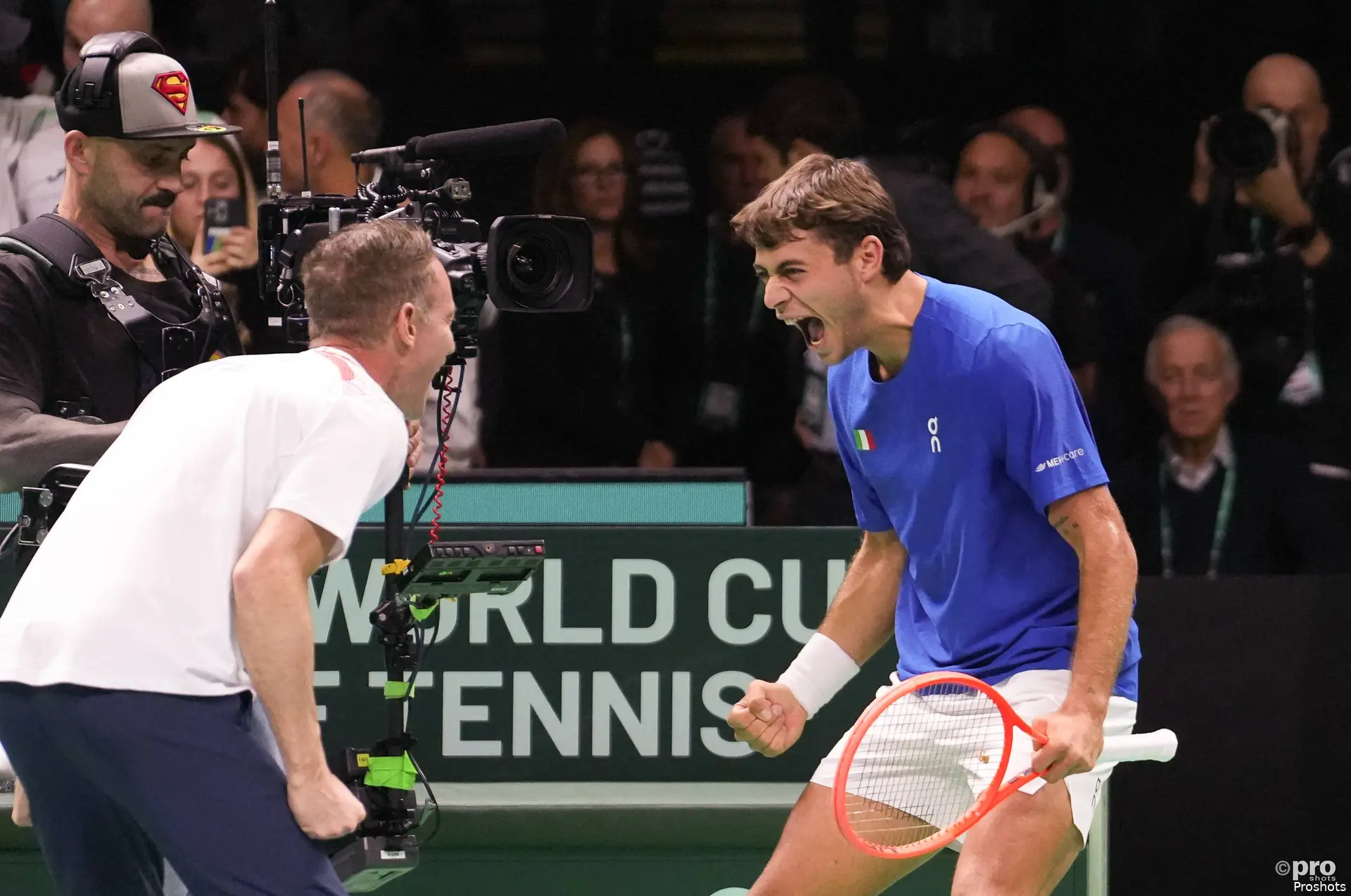
When I was a kid, the Davis Cup felt enormous. It was not just another competition squeezed into the tennis calendar. It was a spectacle. Flags draped over railings. Crowds roaring for players they had watched all year on television, now suddenly clothed in national colors.
The very best in the world showed up, and they showed up because representing their country meant something that went beyond ranking points or prize money.
There was celebrity in the air. Drama, too. You tuned in because you expected to see legends. You stayed because you knew something chaotic and patriotic and unforgettable might happen.
Today, Davis Cup often feels like something else entirely. For too many ties, the question is no longer “Which stars are playing?” but “Who is willing, ready, and available?” And those are not the same thing. Not even close.

Griekspoor blunt in assessment of Davis Cup
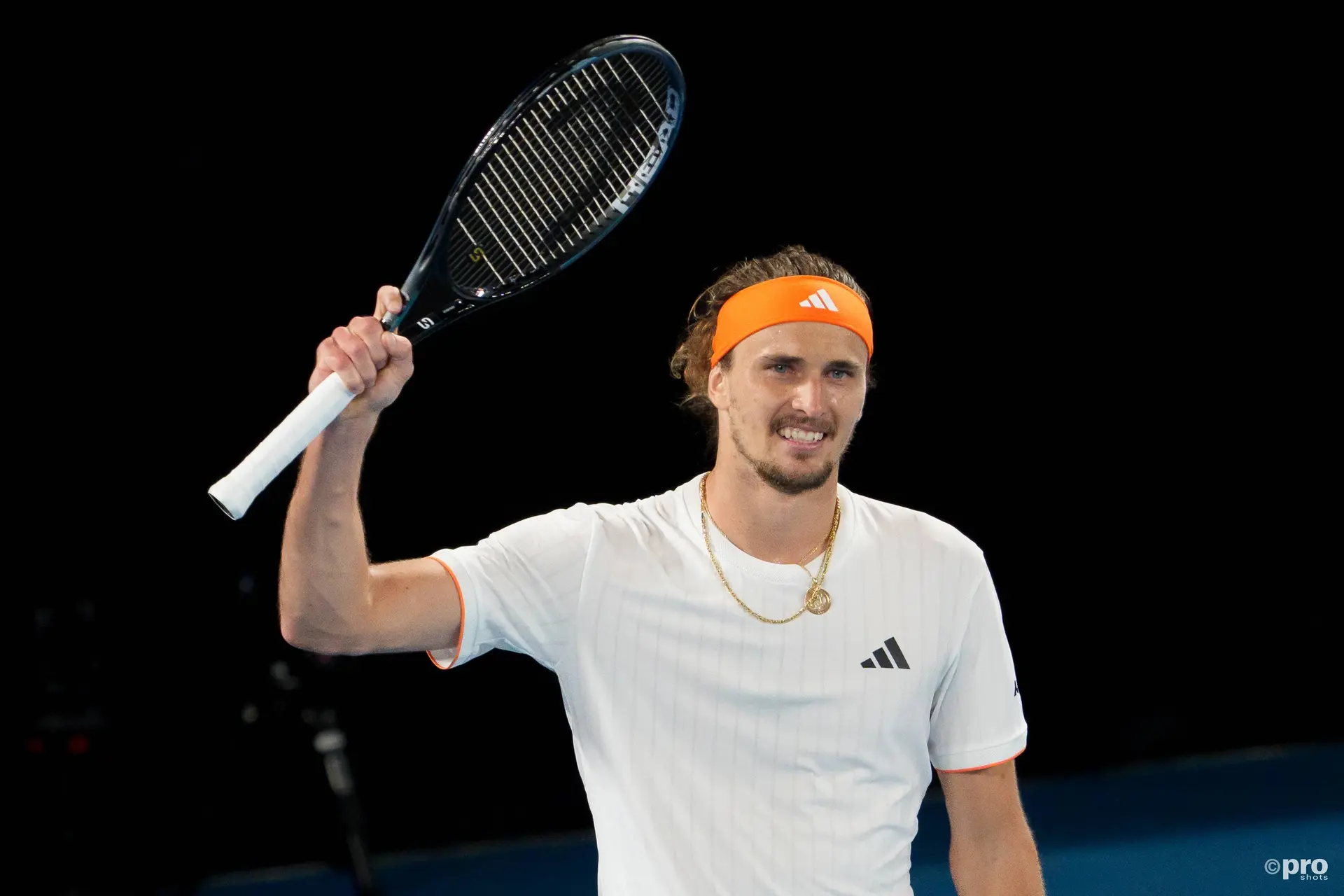
That reality surfaced again today in comments from Tallon Griekspoor, who told SpilXperten that while his relationship with the Dutch federation is “fine,” he simply decided not to play Davis Cup. On criticism he has received for competing in Russia, he was equally blunt: “I couldn’t care less to be honest. As long as the politicians do their job, I’ll do mine.”
Those quotes are not outrageous. In fact, they are refreshingly honest. They capture the modern professional mindset with startling clarity. Players are independent contractors navigating crowded schedules, political scrutiny, surface changes, injuries, travel, and the constant need to protect their ranking and earning power. From that vantage point, Davis Cup is not sacred. It is a calculation. That, more than any reminder of the format changes or the relocation to neutral venues, is what has truly altered the competition’s soul.

Tallon Griekspoor who dates Russian now Austrian tennis star Anastasia Potapova simply didn't want to play Davis Cup and bats away criticism about his play in a Russian exhibition.
Once upon a time, the best players almost always turned up. Now, in many early rounds, we can and sometimes do get matchups between someone ranked in the 500s and someone ranked in the 200s. That may be wonderful for development. It can be inspiring for emerging nations and fringe tour pros who suddenly find themselves on an international stage.
But let’s be honest about something else too. From a fan’s perspective, that is clearly not the same show. When you grow up watching the Davis Cup as a clash of titans, it is difficult to summon the same excitement for a tie headlined by players most casual followers have never seen. Youthful experience is valuable. National depth is admirable. Neither is a substitute for star power.
This is not nostalgia for nostalgia’s sake. It is a recognition that sport’s biggest events depend on the presence of its biggest names. Wimbledon without the greats would feel smaller. So would the World Cup without its superstars. The Davis Cup was once in that category. It felt essential. Non-negotiable. Now, even players with solid relationships with their federations can opt out without controversy. That alone tells you how much the cultural gravity has shifted.
Griekspoor’s comments about Russia open another window into the modern game. His position is pragmatic to the point of bluntness: politics is not his department, tennis is. That stance will anger some and resonate with others, but either way it reflects how players increasingly separate their professional obligations from broader geopolitical debates. In the Davis Cup’s earlier eras, national representation and political symbolism were often inseparable. Today, many players are trying to keep those worlds apart.
That, too, dilutes the old mystique. The problem is not that players are selfish. The problem is that the incentives no longer align. The tour calendar is, as I have written many times, absolutely brutal. The format has changed. The event no longer unfolds over long weekends in packed home arenas where fans camp overnight for tickets and visiting teams walk into hostile, unforgettable environments. When those elements disappear, so does part of the emotional pull that once made participation automatic.
So what is Davis Cup now?
In some ways, it has become an opportunity. For younger players, it can be a first taste of pressure tennis with something larger than themselves at stake. For nations without top-ten stars, it offers rare visibility. Those are not small things.
But it has also become something less predictable and, often, less compelling. It is no longer guaranteed that the best will show up simply because the event exists. They must want to. They must believe it is worth the physical cost, the scheduling disruption, and the potential controversy. Increasingly, many decide it is not.
That is the tension at the heart of modern Davis Cup. It wants to be a grand, nation-against-nation spectacle in an era when tennis careers are ruthlessly individualized. It wants to trade on history while operating inside a sport that now revolves around optimization, not obligation.
Maybe that is just the way of elite athletics in 2026. Romanticism gives way to spreadsheets. Flags compete with flight itineraries. Still, I cannot help missing the version of Davis Cup that felt unavoidable. The one where the question was not who was willing, but who would rise to the moment. The one where the early rounds were stacked with household names and the atmosphere crackled from the first ball.
Today, too often, it feels like a tournament that has to ask players to care, rather than one that makes caring inevitable.
And for an event that once defined what it meant to play for something bigger than yourself, that might be the most telling change of all.


Aron SolomonGuest Author
A Pulitzer Prize-nominated journalist for his groundbreaking op-ed in The Independent exposing the NFL’s “race-norming” policies, Aron Solomon, JD, is a globally recognized thought leader in law, media, and strategy.
As Chief Strategy Officer for AMPLIFY, he leverages his deep expertise to shape the future of legal marketing. Aron has taught entrepreneurship at McGill University and the University of Pennsylvania and was honored as a Fastcase 50 recipient, recognizing him among the world’s top legal innovators. A prolific commentator on law, business, and culture, his insights regularly appear in Newsweek, The Hill, Crunchbase News, and Literary Hub.
He has also been featured in The New York Times, Fast Company, Fortune, Forbes, CBS News, CNBC, USA Today, ESPN, TechCrunch, BuzzFeed, Venture Beat and countless other leading global media outlets. We are proud to have Aron on board at TennisUpToDate, where his deep tennis expertise enriches the site with sharp, original columns that connect the sport to wider cultural debates.
claps 0visitors 0
Just In

Popular News
Latest Comments
- A healthy Qinwen may be hard to stop next season. She was already scaring her opponents before her medical leave(s). Unfortunately, Zheng insisted on singing again. On the positive side -- Mirra did not sing!! ;~}
 mandoist11-10-2026
 - Where is it written that athletes, entertainers... People in general... are mandated to keep looking at -- or even using [anti]Social Media? Public & private figures consistently complain and reveal their concerns about negativity and violence thrown at them -- yet they insist on participating. Avoid it, don't use it, don't read it. It's okay to occasionally look up at the World instead beating your eyes & thumbs to death on The Inventions out there.mandoist11-10-2026
- great articlestennisseserver07-10-2026
- Medvedev was leading Djokovic 7-5, 3-5 when an attempted return..' NO you ignorants, Djokovic was leading .weiss05-10-2026
- No more bullshit "Wildcards" to these two. Qualify like everyone else -- there will be cameras there, too. Time to scream... WTF ????!!!!mandoist29-09-2026
- Let's not BS the general public -- Sabalenka started showing cracks in her game last season. Her losses and near-losses started at about the same time she began being distracted by Fame (constant Selfies, making TV commercials, magazine shoots, endless Social Media nonsense, etc., etc.) One would think even Saba could recognize the parallels with others who failed before her -- Raducanu, Giorgi, Bouchard to name a few.mandoist25-09-2026
- Gross!! Hey Raducanu, Giorgi, and Bouchard -- reserve a seat at your Social Media Selfie table for Saba + Naomi. They're heading in your direction soon enough.mandoist24-09-2026
- And then these same players will complain about how lengthy their season’s were and need more time-off. I’m all for more tennis but the amount of tennis we get now is actually kind of crazy! We all need a break, especially the players.DaveyWavey23-09-2026
- You should do a comparison article for "different kinds of justice" the courts decide for tennis players. I can think of at least three players who received very small bans of a few months, however Tara Moore has been fighting for her literal survival the past few years. It seems odd considering she is not a "name" player, unlike the other cases.DaveyWavey22-09-2026
- PRIZE MONEY & POINTS Winner - $185,500 Finalist - $114,500 Semi-Finalist - $66,003 Quarter-Finalist - $35,000 Round of 16 - $18,045 Round of 32 - $13,005 Winner - 500 Finalist - 325 Semi-Finalist - 195 Quarter-Finalist - 108 Round of 16 - 60 Round of 32 - 1DaveyWavey20-09-2026

Loading