Craig Tiley has been appointed chief executive officer of the United States Tennis Association, marking a major leadership shift for the organization that oversees the US Open and grassroots tennis development in the United States. The move ends weeks of speculation and brings one of the sport’s most experienced administrators back to American tennis.
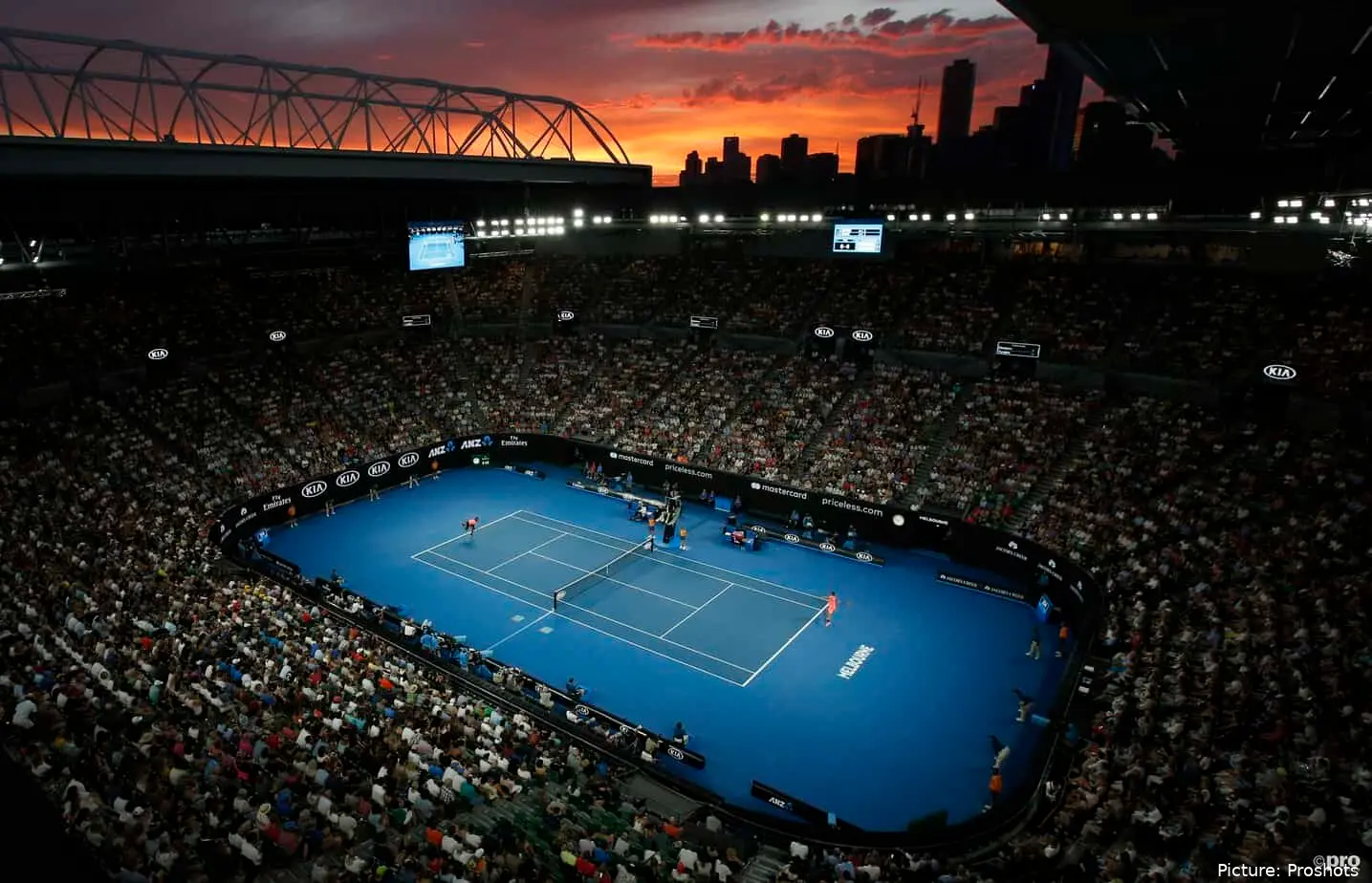
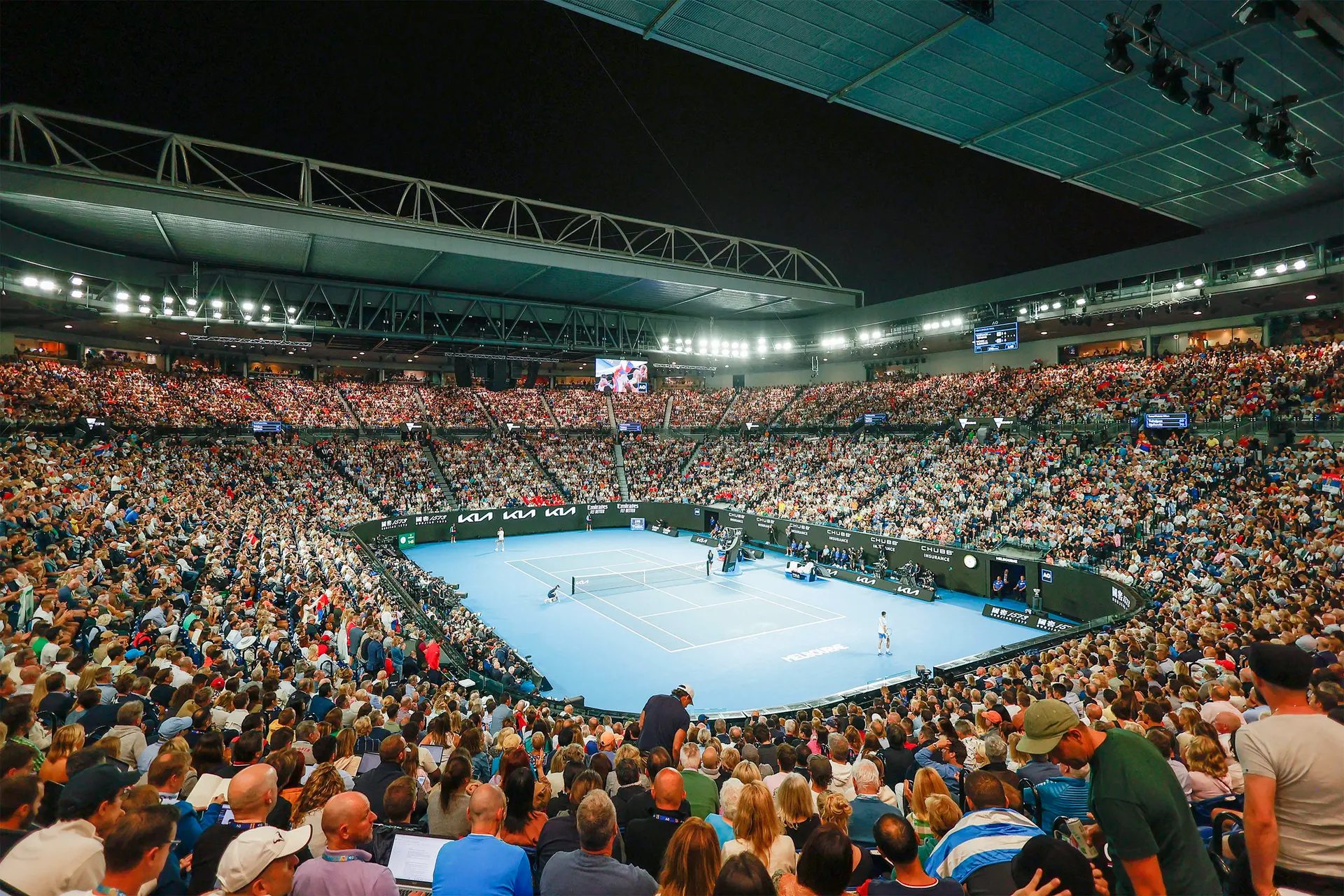
The 64-year-old currently serves as chief executive of Tennis Australia and has been tournament director of the Australian Open since 2006. During his tenure, the Melbourne Grand Slam repeatedly set attendance and revenue records while expanding its global reach.
In a statement released by the USTA, Tiley said he was “truly honored to step into the role of CEO of the USTA later this year,” adding that he had “long admired the organization’s leadership in growing the game across the United States and the extraordinary success of the US Open.” He described the appointment as a “full-circle moment,” having begun his American journey as an NCAA coach.
Tiley will assume his responsibilities in the coming months, working with Tennis Australia’s board to ensure a smooth transition. He replaces Lew Sherr, who departed the USTA last year to join Major League Baseball’s New York Mets.
A mandate focused on participation growth
The USTA framed the appointment around a clear objective: expanding participation nationwide. The organization has set a target of reaching 35 million players by 2035, building on momentum that has pushed tennis participation to a record 27.3 million players in 2025. That marks six consecutive years of growth and a 54 percent increase since 2019.
USTA Board Chair and interim Co-CEO Brian Vahaly said the search focused on “identifying the right leader to accelerate participation growth and help us achieve our goal of reaching 35 million players by 2035.” He added that Tiley brings “a rare combination of global credibility at the highest level of the sport and a proven commitment to growing the game at the grassroots.”
“Tennis has shaped my life — personally and professionally — and having begun my tennis journey in the U.S. as an NCAA championship coach, this opportunity feels like a full-circle moment. I’m excited to return to American tennis and to work alongside our leadership locally and nationally to continue building the sport’s reach, impact, and future.”
The US Open remains central to the USTA’s strategy, serving as both a commercial engine and a platform to drive participation. Tiley’s experience aligning elite events with grassroots growth is expected to shape that approach.
A track record of growth and innovation
Tiley’s background spans collegiate coaching, community development and Grand Slam administration. As head coach of the University of Illinois men’s tennis team from 1994 to 2005, he led the program to an NCAA Division I national championship in 2003 with a perfect 32–0 season, earning national coach of the year honors twice.
Since becoming CEO of Tennis Australia in 2013, he has overseen sustained participation growth. Over the past five years, overall participation in Australia increased by 30 percent, coach membership rose by 44 percent, and female coach representation grew by 60 percent, now accounting for one-third of the coaching workforce.
Tiley has consistently positioned tennis as a global sport with long-term digital potential. “Tennis is one of the few truly global sports that you can play for a lifetime, at any level, and that’s part of its magic. It has an incredible ability to bring people together — players, fans, communities — across countries and cultures. I firmly believe the opportunity ahead for our sport is enormous.”
He added that tennis is “moving from engaging millions who attend events live to connecting with billions of fans around the world digitally, year-round,” pointing to broader commercial and technological ambitions.
Tiley arrives at the USTA during a period of strong domestic growth but heightened competition for attention in the U.S. sports market. His task will be to translate his Australian success into sustained expansion and long-term stability for American tennis.

Cristhián AvilaTennis Journalist
Cristhián Ávila is a tennis journalist based in Santiago, Chile, and has been part of the TennisUpToDate team since early 2023. He covers the ATP and WTA Tours as well as all four Grand Slams, producing breaking news, match reports, analysis, and regular liveblogs from major tournaments.
His reporting combines statistical analysis with clear explanation, helping readers understand tactical developments, player form, and broader storylines across the tour. Working fluently in both Spanish and English, Cristhián collaborates with an international editorial team and contributes to comprehensive global coverage. As part of his work, he has conducted interviews and media interactions with leading figures in the sport, including Caroline Wozniacki and John McEnroe.
In his journalism, Cristhián places strong emphasis on careful sourcing, editorial accuracy, and updating articles promptly when new, verified information becomes available. His coverage is grounded in research, context, and direct engagement with professional tennis.
claps 0visitors 0
Just In

Popular News
Latest Comments
- A healthy Qinwen may be hard to stop next season. She was already scaring her opponents before her medical leave(s). Unfortunately, Zheng insisted on singing again. On the positive side -- Mirra did not sing!! ;~}
 mandoist11-10-2026
 - Where is it written that athletes, entertainers... People in general... are mandated to keep looking at -- or even using [anti]Social Media? Public & private figures consistently complain and reveal their concerns about negativity and violence thrown at them -- yet they insist on participating. Avoid it, don't use it, don't read it. It's okay to occasionally look up at the World instead beating your eyes & thumbs to death on The Inventions out there.mandoist11-10-2026
- great articlestennisseserver07-10-2026
- Medvedev was leading Djokovic 7-5, 3-5 when an attempted return..' NO you ignorants, Djokovic was leading .weiss05-10-2026
- No more bullshit "Wildcards" to these two. Qualify like everyone else -- there will be cameras there, too. Time to scream... WTF ????!!!!mandoist29-09-2026
- Let's not BS the general public -- Sabalenka started showing cracks in her game last season. Her losses and near-losses started at about the same time she began being distracted by Fame (constant Selfies, making TV commercials, magazine shoots, endless Social Media nonsense, etc., etc.) One would think even Saba could recognize the parallels with others who failed before her -- Raducanu, Giorgi, Bouchard to name a few.mandoist25-09-2026
- Gross!! Hey Raducanu, Giorgi, and Bouchard -- reserve a seat at your Social Media Selfie table for Saba + Naomi. They're heading in your direction soon enough.mandoist24-09-2026
- And then these same players will complain about how lengthy their season’s were and need more time-off. I’m all for more tennis but the amount of tennis we get now is actually kind of crazy! We all need a break, especially the players.DaveyWavey23-09-2026
- You should do a comparison article for "different kinds of justice" the courts decide for tennis players. I can think of at least three players who received very small bans of a few months, however Tara Moore has been fighting for her literal survival the past few years. It seems odd considering she is not a "name" player, unlike the other cases.DaveyWavey22-09-2026
- PRIZE MONEY & POINTS Winner - $185,500 Finalist - $114,500 Semi-Finalist - $66,003 Quarter-Finalist - $35,000 Round of 16 - $18,045 Round of 32 - $13,005 Winner - 500 Finalist - 325 Semi-Finalist - 195 Quarter-Finalist - 108 Round of 16 - 60 Round of 32 - 1DaveyWavey20-09-2026

Loading