“They start to feel they’re only valued if they win”: Judy Murray warns parents about conditional love in tennis
Tennis News
Judy Murray’s message to tennis parents is not about technique, rankings or pathways. It is about responsibility and long-term development. Speaking on Tennis Insider Club, the former captain of Great Britain Fed Cup (currently Billie Jean King Cup), reduced the role of a parent to a simple principle: “That’s the job of a parent, isn’t it? You give them wings so they can fly.” In her view, the objective is not to engineer champions, but to raise independent, resilient adults.
Her argument is shaped by experience at every level of the sport. As the mother of former world No.1 players Andy Murray (singles) and Jamie Murray (doubles), and as a former national coach, she has seen how easily performance metrics become emotional currency. Children, she warned, can “start to feel that they’re only valued if they win.” When approval and results become intertwined, the damage may surface years later, often when the stakes are far higher.
Murray consistently returned to independence as the foundation. Young players, she said, “have to become independent. They have to be able to think for themselves. They have to be able to solve their own problems.” Packing their own bags, managing equipment, navigating travel — these are not minor details but building blocks for competitive maturity.
She also situated the conversation within modern tennis realities. The professional calendar, she described as “so stacked,” leaves little room to process success or failure. Reflecting on her son’s career, she noted that Andy once admitted he “wished he’d had more time to enjoy the successes.” In a system that moves immediately to the next event, perspective can disappear.
Conditional love and the fear of losing
Murray was direct about the psychological risk of linking affection to outcomes. What may feel like encouragement can subtly become conditional approval. “If you’re a parent that, ‘Oh, we have McDonald’s on the way home because you won.’ No, you’re not getting McDonald’s because you lost. They start to feel that they’re only valued… and that there’s a reward if you win and there’s almost like a punishment if you don’t win.”
For Murray, this pattern reshapes how a child competes. Instead of exploring solutions or learning through failure, the player becomes preoccupied with avoiding disappointment. She has observed juniors who play “with fear and caution,” scanning the stands after every mistake, searching for reassurance.
Her warning extended beyond isolated comments. “Parents can ruin everything with a wrong word or a wrong behaviour, a wrong gesture or what they’re saying to them at home.”
In her experience, young players often confide in coaches about dreading post-match conversations. The car ride home becomes more intimidating than the opponent. Over time, that emotional weight distorts identity and self-perception.
Andy Murray: Pressure and the signals Players Read
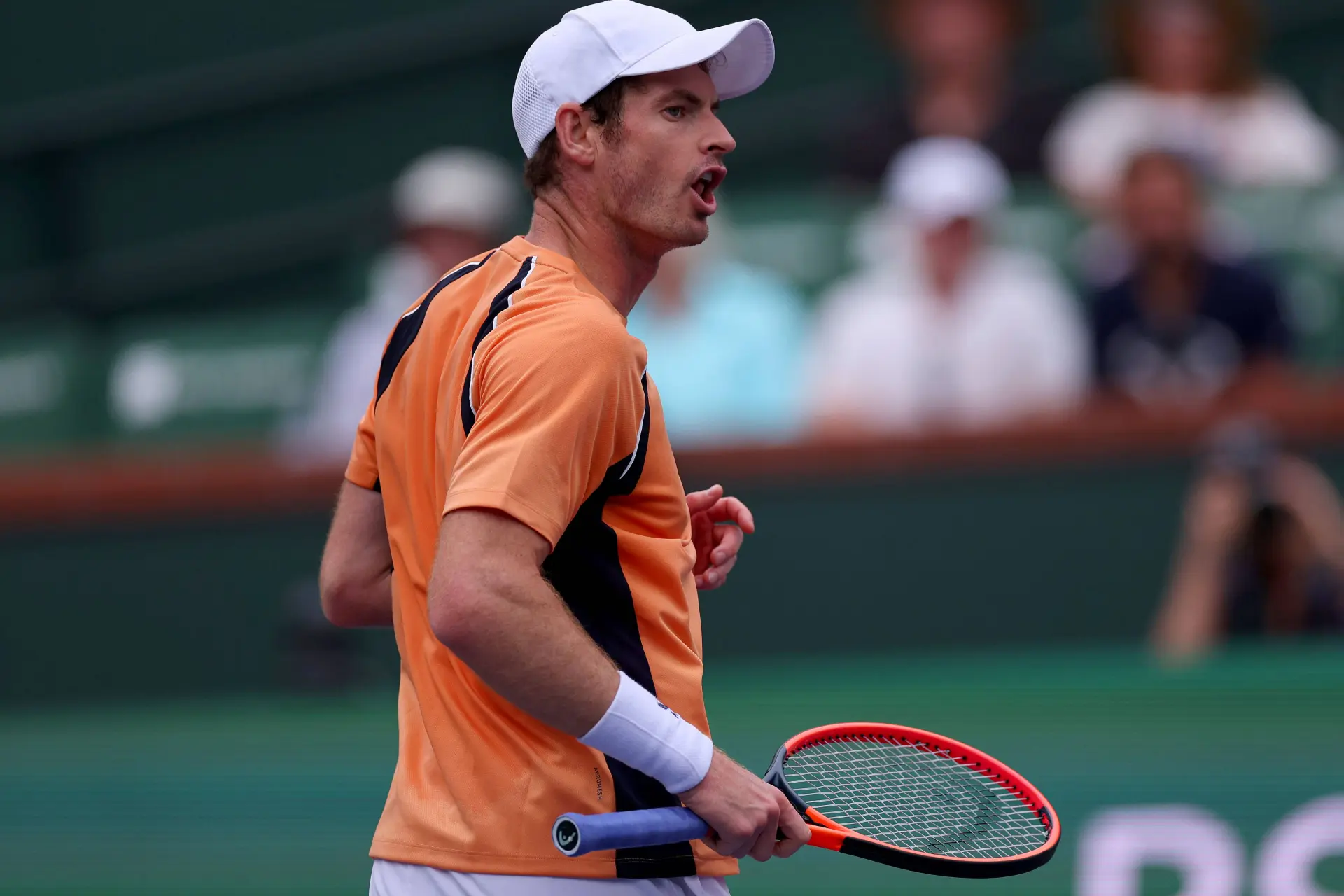
Murray illustrated her argument with a vivid example from the 2008 US Open semifinal between Andy Murray and Rafael Nadal. Weather delays forced the match from Arthur Ashe Stadium to the tighter Louis Armstrong court, heightening tension in an already significant moment of her son’s career.
During the match, Andy sent a pointed message. “Andy was playing Rafa, 2008 US Open semi-final… Andy came to the back of the court and he went, ‘Tell grandpa to sit on his hands.’” She explained that her father’s visible frustration — gestures, sighs, reactions — was registering with Andy in real time. “Our kids pick up on everything from us and it makes you anxious.”
Even at Grand Slam level, family dynamics remain present. Murray admitted she avoids sitting beside her father because of his critical tendencies and deliberately chose a different tone with her own children. She also referenced the 2012 Wimbledon final, describing how she stepped away on the morning of the match because she knew her nerves would show. “I recognised it and just left him with the team.”
For Murray, such decisions are part of responsible parenting. Independence, she insisted, begins long before the tour. Juniors must handle practical responsibilities themselves. “When they’re on the court, they have to think for themselves. You’re not doing them any favors by doing everything for them.”
Identity beyond tennis and the Alcaraz example
Murray broadened the discussion to identity formation. When tennis becomes the sole defining feature of a child’s life, the consequences of failure can be destabilizing. “If that is the mindset of ‘I failed at it’… my identity was ‘I’m a tennis player’ — not a tennis player, what am I?”
She has seen former juniors struggle with that transition. Years of being introduced as the “tennis player” create a narrow self-concept. If progression stalls, the loss feels existential rather than competitive.
This concern informs her admiration for Carlos Alcaraz’s public embrace of balance. “I have really enjoyed watching Carlos Alcaraz… go to Ibiza because ‘I celebrate with my friends.’ I go and play golf. I love that because there is more to life than just tennis.”
To Murray, structured enjoyment is not a lack of professionalism but a safeguard against burnout. The modern calendar, she said, allows little space for celebration. “You win on a Sunday, you pack your bag, you ship out that night. You don’t even have time to go out for dinner to celebrate.”
She reinforced the point with Andy’s reflection. “One of the things that Andy said after his career was he wished he’d had more time to enjoy the successes.”
In her assessment, perspective is performance protection.
The Triangle: Parents, coaches and power
Murray concluded by emphasizing structure rather than blame. She described the “triangle” between coach, parent and player as essential to healthy development. “You need open communication… Everybody needs to understand their role.”
The imbalance of influence is clear in her view. “The parent will always have the biggest say, always. They’re 99% with the child, coach only 1%," she said. “They have to become independent. They have to be able to think for themselves. They have to be able to solve their own problems.”
In a sport defined by individual accountability, Judy Murray’s argument is consistent: independence is not just a competitive advantage — it is a parental obligation.

Cristhián AvilaTennis Journalist
Cristhián Ávila is a tennis journalist based in Santiago, Chile, and has been part of the TennisUpToDate team since early 2023. He covers the ATP and WTA Tours as well as all four Grand Slams, producing breaking news, match reports, analysis, and regular liveblogs from major tournaments.
His reporting combines statistical analysis with clear explanation, helping readers understand tactical developments, player form, and broader storylines across the tour. Working fluently in both Spanish and English, Cristhián collaborates with an international editorial team and contributes to comprehensive global coverage. As part of his work, he has conducted interviews and media interactions with leading figures in the sport, including Caroline Wozniacki and John McEnroe.
In his journalism, Cristhián places strong emphasis on careful sourcing, editorial accuracy, and updating articles promptly when new, verified information becomes available. His coverage is grounded in research, context, and direct engagement with professional tennis.
claps 0visitors 0
Just In

Popular News
Latest Comments
- A healthy Qinwen may be hard to stop next season. She was already scaring her opponents before her medical leave(s). Unfortunately, Zheng insisted on singing again. On the positive side -- Mirra did not sing!! ;~}
 mandoist11-10-2026
 - Where is it written that athletes, entertainers... People in general... are mandated to keep looking at -- or even using [anti]Social Media? Public & private figures consistently complain and reveal their concerns about negativity and violence thrown at them -- yet they insist on participating. Avoid it, don't use it, don't read it. It's okay to occasionally look up at the World instead beating your eyes & thumbs to death on The Inventions out there.mandoist11-10-2026
- great articlestennisseserver07-10-2026
- Medvedev was leading Djokovic 7-5, 3-5 when an attempted return..' NO you ignorants, Djokovic was leading .weiss05-10-2026
- No more bullshit "Wildcards" to these two. Qualify like everyone else -- there will be cameras there, too. Time to scream... WTF ????!!!!mandoist29-09-2026
- Let's not BS the general public -- Sabalenka started showing cracks in her game last season. Her losses and near-losses started at about the same time she began being distracted by Fame (constant Selfies, making TV commercials, magazine shoots, endless Social Media nonsense, etc., etc.) One would think even Saba could recognize the parallels with others who failed before her -- Raducanu, Giorgi, Bouchard to name a few.mandoist25-09-2026
- Gross!! Hey Raducanu, Giorgi, and Bouchard -- reserve a seat at your Social Media Selfie table for Saba + Naomi. They're heading in your direction soon enough.mandoist24-09-2026
- And then these same players will complain about how lengthy their season’s were and need more time-off. I’m all for more tennis but the amount of tennis we get now is actually kind of crazy! We all need a break, especially the players.DaveyWavey23-09-2026
- You should do a comparison article for "different kinds of justice" the courts decide for tennis players. I can think of at least three players who received very small bans of a few months, however Tara Moore has been fighting for her literal survival the past few years. It seems odd considering she is not a "name" player, unlike the other cases.DaveyWavey22-09-2026
- PRIZE MONEY & POINTS Winner - $185,500 Finalist - $114,500 Semi-Finalist - $66,003 Quarter-Finalist - $35,000 Round of 16 - $18,045 Round of 32 - $13,005 Winner - 500 Finalist - 325 Semi-Finalist - 195 Quarter-Finalist - 108 Round of 16 - 60 Round of 32 - 1DaveyWavey20-09-2026

Loading