COLUMN - The Associated Press didn't cover the Wimbledon Women's Final, it reduced it to a "meltdown"
WTATuesday, 14 July 2026 at 13:23
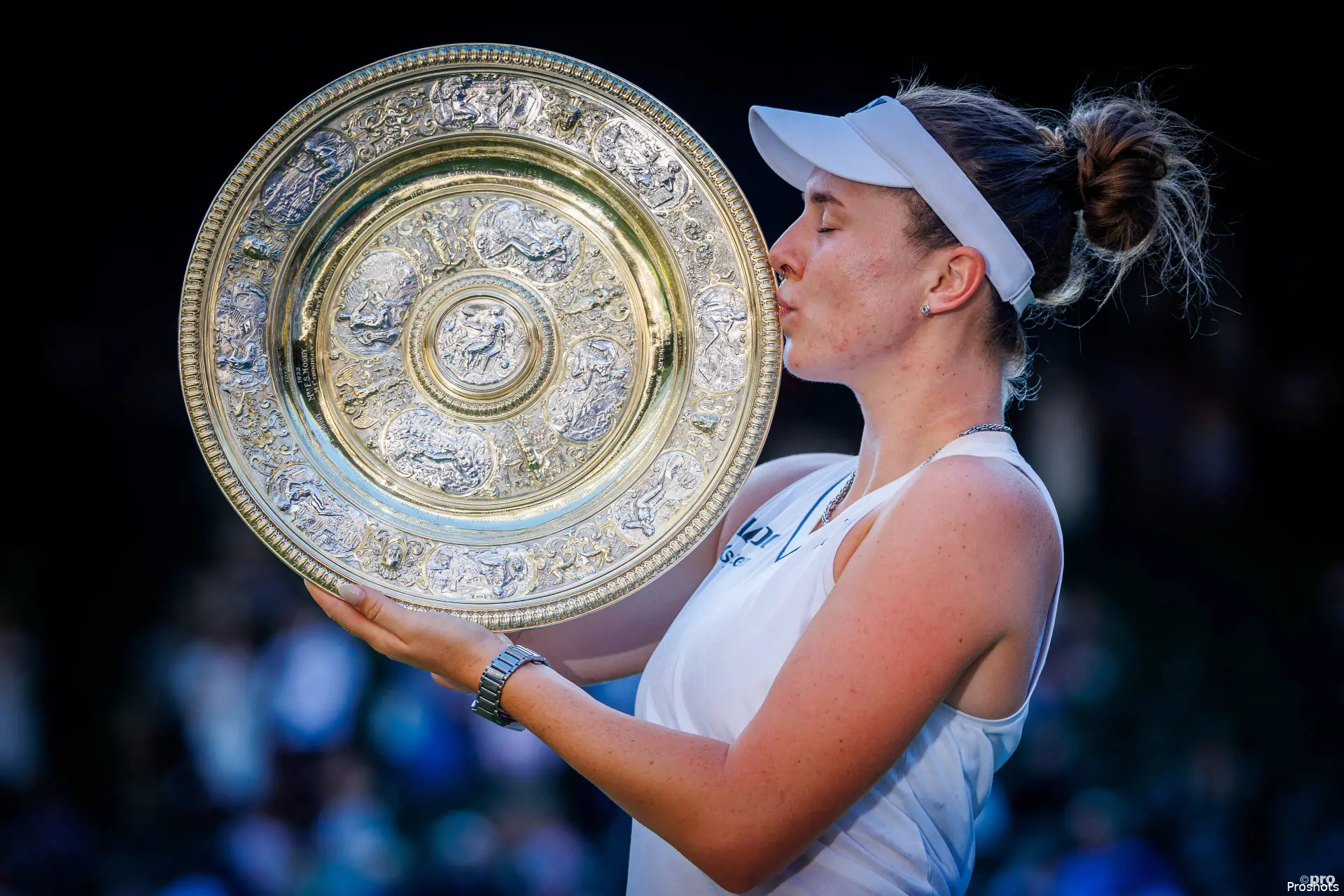
I read the viral, syndicated Associated Press headline twice because I assumed I had misunderstood it. "Linda Noskova recovers from 2nd-set meltdown to win Wimbledon and claim her 1st Grand Slam title."
Meltdown? Had we watched the same match? Millions of people around the world rely on the Associated Press to tell them what happened in sports. They don't watch every match. They don't have time. They read a headline on NBC News or in their local newspaper or on one of the countless websites that syndicate AP coverage, and they assume they're getting an accurate account of what took place.
On Saturday, they didn't. What they got was a headline that fundamentally misunderstood one of the finest women's Grand Slam finals we've seen in years.
For roughly the first hour, Linda Noskova wasn't simply playing well. She was producing the kind of tennis that only a handful of players in the world can produce maybe once each decade. She served beautifully, struck the ball with remarkable authority, dictated rallies against one of the sport's most creative players, and looked every bit like a future major champion. By my count, she made two mistakes (TWO) in the first hour of the match.
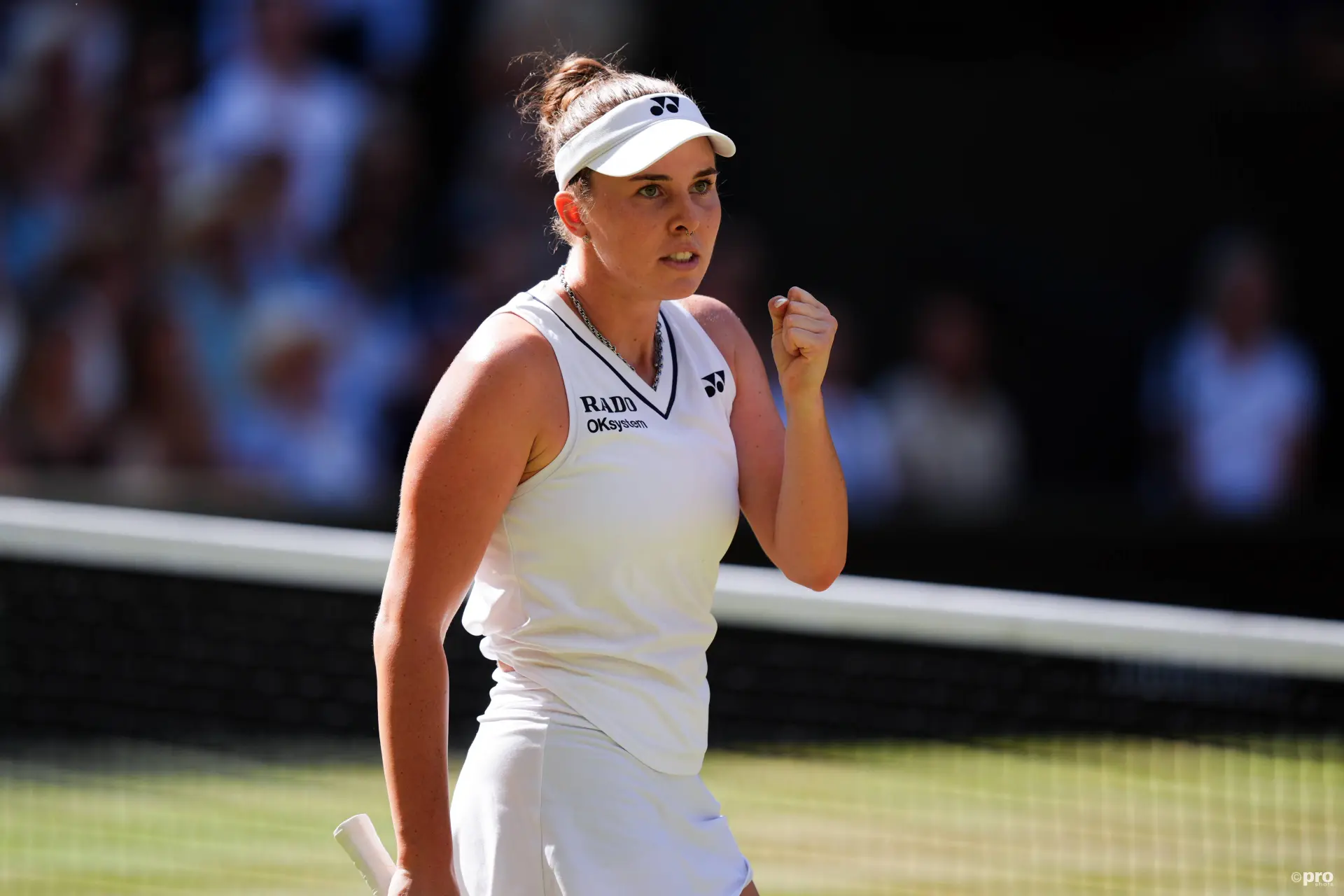
Karolina Muchova wasn't playing poorly. Noskova was simply playing that well. Then the match changed. Not because Noskova suddenly forgot how to play tennis, but because Muchova elevated her own game to an extraordinary level. She began taking the ball earlier. She defended with greater purpose. She found angles that had been unavailable to her for much of the match. She started winning the tactical battle.
That's what great players do. The second set became fascinating precisely because both women were now producing championship-level tennis. Yes, Noskova had chances to finish the match. She held multiple match points and couldn't convert them. That's painful for any player, and it's undeniably dramatic.
It also happens. Roger Federer failed to convert championship points in a Wimbledon final. Novak Djokovic has let opportunities slip away. Rafael Nadal has. Carlos Alcaraz has. Jannik Sinner has. Tennis history is full of matches where the finish line appears within reach before suddenly moving farther away. We don't normally describe those moments as meltdowns. We call them pressure. We call them momentum shifts.
Doesn't just diminish Noskova's performance, it erases Muchova's
We call them the razor-thin margins that separate the very best players in the world, especially in Grand Slam finals. Most importantly, we acknowledge the role played by the opponent. That's what bothered me most about the headline.
Calling it a meltdown doesn't simply diminish Noskova's performance. It erases Muchova's. Karolina Muchova didn't inherit that second set because her opponent collapsed. She earned it. She raised her level, found solutions, and forced Noskova to play an entirely different match than the one she had controlled for the opening hour.
That's what elite tennis looks like. When Noskova regrouped in the third set, steadied herself, and closed out the biggest victory of her career, the match became something even better: a classic between two remarkable Czech players who pushed each other to exceptional heights.
Unfortunately, that wasn't the story many readers encountered. Instead, they were introduced to a narrative of psychological collapse.

A report that diminishes both Muchova and Noskova.
Which raises a question worth asking. If this had been the Wimbledon men's final—with two players following the exact same scoreline, the same missed opportunities, the same comeback, and the same eventual result—would the Associated Press have chosen the word meltdown?
I'm not convinced it would have. Perhaps it would have described the winner as surviving a scare. Perhaps it would have praised the loser for mounting an inspired comeback before falling short.
Perhaps it would have celebrated the extraordinary quality of the tennis. I'm not certain. But I'm certain enough to ask the question. Women's sports have fought for decades not simply to receive more coverage, but to receive better coverage. Coverage that recognizes excellence without reducing competition to emotion. Coverage that appreciates tactics, resilience, adjustments, and execution instead of reaching for the most dramatic psychological explanation available.
This matters even more when the coverage comes from the Associated Press. The AP isn't just another media outlet. Its words become the words of thousands of newspapers, broadcasters, and digital publications around the world. One headline doesn't stay one headline. It becomes the version of history that millions of readers absorb.
That's an enormous responsibility. On Saturday, the story wasn't a meltdown. The story was that a 21-year-old won her first Grand Slam title by defeating one of the most gifted players of her generation after surviving one of the highest-quality stretches of women's tennis we've seen all year.
That deserves to be remembered. More importantly, it deserves to be reported that way. As an endnote, AP knows they messed up. badly.
Here's the original headline on their site from Saturday morning (yes, the same headline that publications around the world picked up)

The original headline from Associated Press that they soon changed.
And here's what you get when you click on that link now:

What AP changed the headline to.
I'll leave it at that and assume that The Associated Press will follow up with an apology. Let's also see if they choose their words more carefully for their postmortem of the men's final today.

Aron SolomonGuest Author
A Pulitzer Prize-nominated journalist for his groundbreaking op-ed in The Independent exposing the NFL’s “race-norming” policies, Aron Solomon, JD, is a globally recognized thought leader in law, media, and strategy.
As Chief Strategy Officer for AMPLIFY, he leverages his deep expertise to shape the future of legal marketing. Aron has taught entrepreneurship at McGill University and the University of Pennsylvania and was honored as a Fastcase 50 recipient, recognizing him among the world’s top legal innovators. A prolific commentator on law, business, and culture, his insights regularly appear in Newsweek, The Hill, Crunchbase News, and Literary Hub.
He has also been featured in The New York Times, Fast Company, Fortune, Forbes, CBS News, CNBC, USA Today, ESPN, TechCrunch, BuzzFeed, Venture Beat and countless other leading global media outlets. We are proud to have Aron on board at TennisUpToDate, where his deep tennis expertise enriches the site with sharp, original columns that connect the sport to wider cultural debates.
claps 4visitors 4
Just In




Popular News
Latest Comments
- Snorting hard drugs is not an "accident" nor a "mistake". That is a Choice.
 mandoist28-08-2026
 - No... athletes retire and that's it. No 'giftng' Wildcards -- QUALIFY LIKE EVERYONE ELSE NOT RANKED HIGH ENOUGH or stay home and cherish yourselves in the mirrors all over your houses!. This shitshow needs to be stopped... the "Look At Me" nonsense has gone on far too long.mandoist28-08-2026
- Great article! I began cheering for the “real” doubles specialists at the beginning but once they all lost their respective matches I really didn’t care who actually won the whole tournament. I liked the last four teams in the semifinals and would have enjoyed seeing any of them win the trophy! Not sure it really feels like a TRUE Grand Slam win however (and I know history will say it is!). Happy for Muchova/Mensik. Karolina is now a Grand Slam winner.DaveyWavey27-08-2026
- …and Foseca ;)DaveyWavey25-08-2026
- All the men dropping like flies. Something’s gotta be done with the tournament calendar or many more players will be on the sidelines in the near future. Surprised Carlos is back as soon as he is. Get well soon Sinner, Draper, Fokina, Rune, etc. etc. etc……DaveyWavey25-08-2026
- I want Pegula to surprise as a one-slam wonder winning in New York. She would then jump over the other three ladies for a number one ranking! I’d put my money on the two American girlies, Jessica and Coco to win in New York. Rybakina cannot seem to perform under this kind of pressure and Sabalenka appears in an anger fog ATM.DaveyWavey24-08-2026
- Well said, Andy. I got sick of Nick carrying on and on and on about Sinner. He absolutely refused to look at the facts. Now look at him. Karma is real!!!Rapunzel23-08-2026
- The fact that ANDY RODDICK of all people has become the voice of “reason” is interesting. He’s absolutely correct about Kyrgios too. He’s become a tennis influencer who is a total hypocrite and bully! I agree with RODDICK 100%DaveyWavey23-08-2026
- Great article! Thiem was similar to Del Potro in that both men had won Grand Slams and injured wrists each stole their careers away. Sad really.DaveyWavey22-08-2026
- I’m not quite sure what’s happening with Sabalenka but she is horrible on court when she’s losing (which is a lot lately). If you cannot control your self at all once you start losing matches - especially at 28 - you need to see a therapist or take a break from the sport. Terrible attitude. This is what represents the women’s tennis tour? Yikes!DaveyWavey20-08-2026

Loading