"Even now, there’s nothing displayed in our house. My kids laugh and say, 'Mom, you were such a boss—why don’t you put anything up?'" - Davenport proud of tennis career as son follows in footsteps
WTA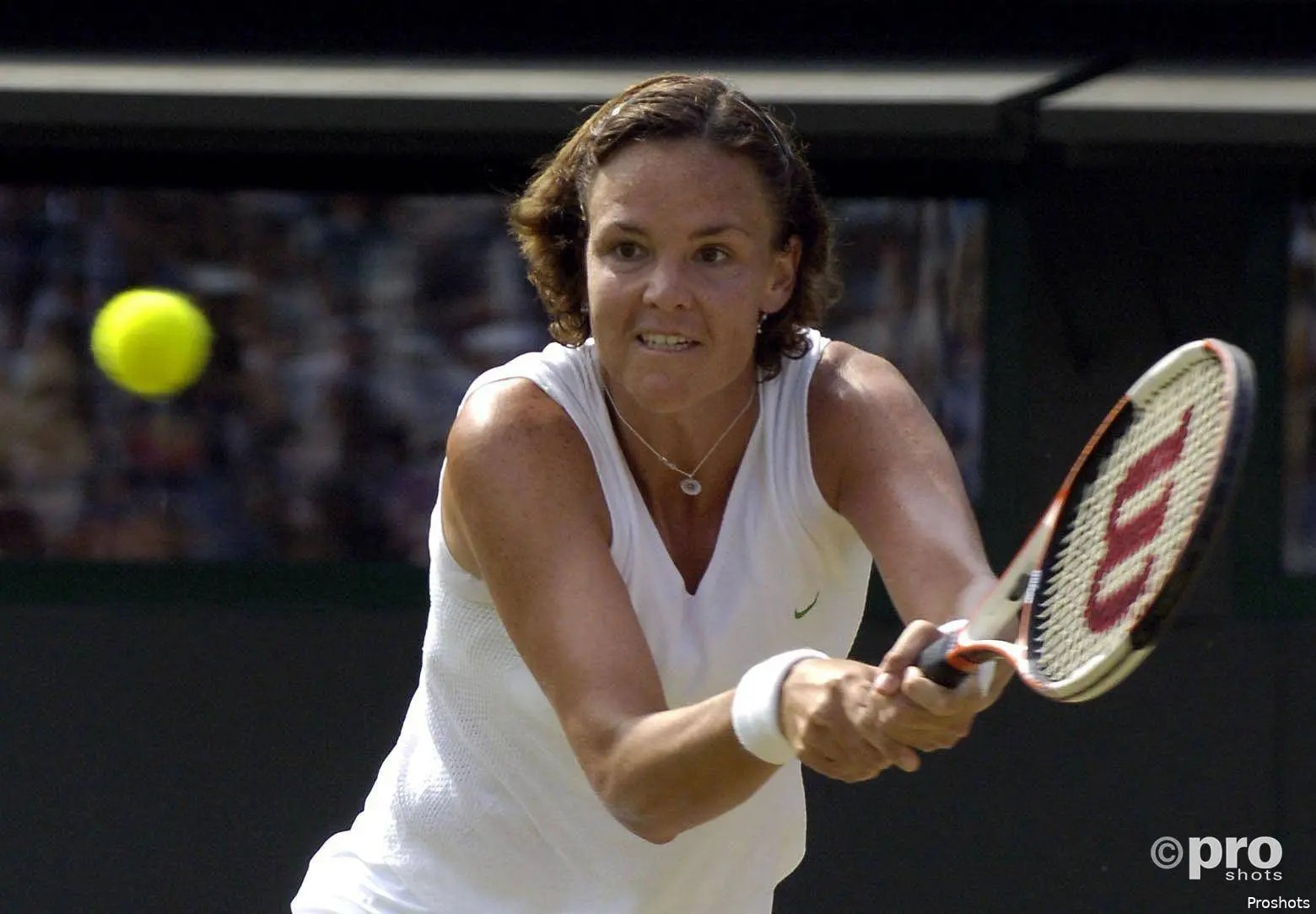
Lindsay Davenport is widely recognised as a phenomenal but down-to-earth and grounded tennis champion. She won a number of accolades in her time at the top of the sport and now enjoys a career away from it. When invited on The Sit-Down podcast, she discussed her greatest achievements and the life she has built after her tennis career had finished.
Why Serena Williams was her toughest opponent
She pinpointed mid-1999 through to mid-2000 as the time when she was in her pomp. "I won here [Australian Open] in 2000 and reached the finals of Wimbledon and the US Open that year," she said. "But that’s also when Venus Williams really started to hit her stride. She was always talented, but something clicked in 2000."
Rivalry was always a key factor, especially with this being the period when the Williams sisters started to make a name for themselves. "For me, she was a tough matchup—she hit as hard as I did, had a better serve, and moved better. Then Serena Williams came into her own soon after. That whole era was incredibly tough. You had the Williams sisters, then the Belgians, then the Russians—it was relentless competition."
She was in complete awe of Serena Williams, labelling her as the toughest opponent she has ever faced. "Everything about her game was better—especially her serve," she explained. "She could hit every serve with the same toss, and that was something I had never seen before. I prided myself on reading serves—studying opponents, recognising patterns—but with Serena, I had no idea where the ball was going. Against Venus, you might get a few errors here and there. Against Serena, it felt like every shot was perfect. It was an incredibly tough matchup for me."

Comparing her game to now
In a completely different era to tennis 20-30 years from Davenport's time, the relenting physical improvements boasted by the top players make them impenetrable at the top, which is why they would succeed in a prior generation of tennis.
"The level today is incredibly high," she admitted. "Players like Aryna Sabalenka would be successful in any era because of her physicality and all-around game. Iga Świątek is doing everything possible to keep improving. I also think Elena Rybakina has been playing at an incredibly high level recently. I’m really in awe of the current generation—they’re all-in when it comes to improving and competing."
She was asked whether there were any similarities between her and the Australian Open champion Rybakina. "I can see some similarities, especially in mindset," she stated. "I love that she has a server’s mentality—that’s something that’s often missing in women’s tennis. She steps up thinking, 'I control this point.'”

Elena Rybakina won the 2026 Australian Open
Davenport put herself below the Kazakh in terms of quality. "Rybakina is probably a better version of me, honestly. I love how she’s always working on her game—her forehand has improved a lot recently. But in terms of how she approaches the game, I think we had a similar outlook."
Looking back on a decorated career
Three major singles titles, an Olympic gold medal, Fed Cup titles, a WTA Finals triumph, 11 WTA 1000 wins and world No. 1 in both singles and doubles. It was quite a career experienced by the American, who in total won 55 singles titles between 1993 and 2008.
To just pick one highlight was hard enough, so she opted for two in an illustrious tennis career. "First, I was raised in a very sports-centric family," she said. "I have two sisters, and growing up in the early ’80s—since I was born in 1976—my dad was really into his daughters playing sports. He was an Olympian; he played volleyball. My parents both worked the 1984 Summer Olympics when they came to Los Angeles."
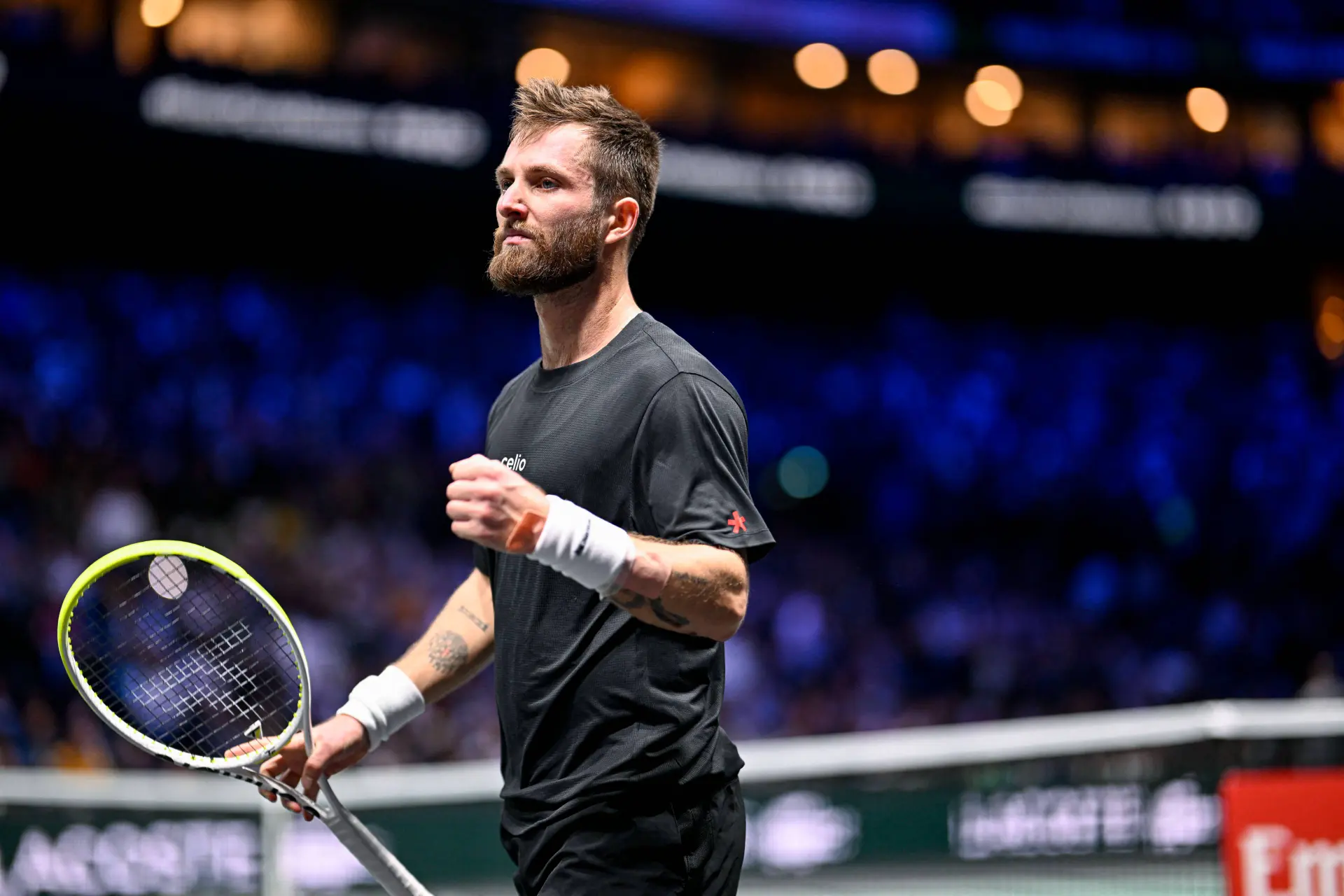
To not only make it to the Olympics but stand on the top of the podium at the end was incredible for Davemport and her family. "So for them, and my entire family, the fact that I even made the Olympic team in 1996 was unbelievable. I had just turned 20, and I was representing the USA in the Olympics. It felt like everything came together—I wasn’t expected to win, I think I was outside the top 10—and I walked away with the gold medal. That was huge, and it meant so much to my family."
Second was her first and only US Open triumph, winning a maiden major title on home soil. "Then the US Open—I grew up dreaming of winning that major. When it happened, it was overwhelming. I look back sometimes and see match point, and I couldn’t even smile—I was just crying. It was beyond my wildest imagination. So those two moments are really similar in my mind. Both were overwhelming to process."
She was in utter 'disbelief' at what had happened, and emotionally found it hard to keep herself afloat. "One of my greatest moments ever was at the US Open," she touched on. "You’re waiting for the trophy ceremony, and at the time the USTA president would come down. I had finally gotten myself together and stopped crying, and I walked up to receive the trophy from Harry Marmy. He was crying—and that made me start bawling again. He hugged me and said, 'There’s no one I’d rather give this to.' Then I lifted the trophy—something I had always said I’d only do for a Grand Slam—and I just lost it emotionally. It was such a perfect moment. It felt like a childhood dream come to life."
Life after tennis
All tennis careers have to come to a halt at some point, whether due to injury or age or just believing that was the right time to hang up your racket. However, Davenport is still hugely involved with the sport.
"I’ve always loved tennis. Growing up, it wasn’t easy to find on TV, but I’d watch it whenever I could. I ended up marrying someone who played tennis too, and all four of our kids learned to play—although only one stuck with it. It’s an honour to stay involved."
She has a huge role in American tennis, guiding the best women's players from the USA in the Billie Jean King Cup. "Being captain of the Billie Jean King Cup is amazing," she exclaimed. "American women’s tennis is in a fantastic place right now—not just in performance, but the personalities too."
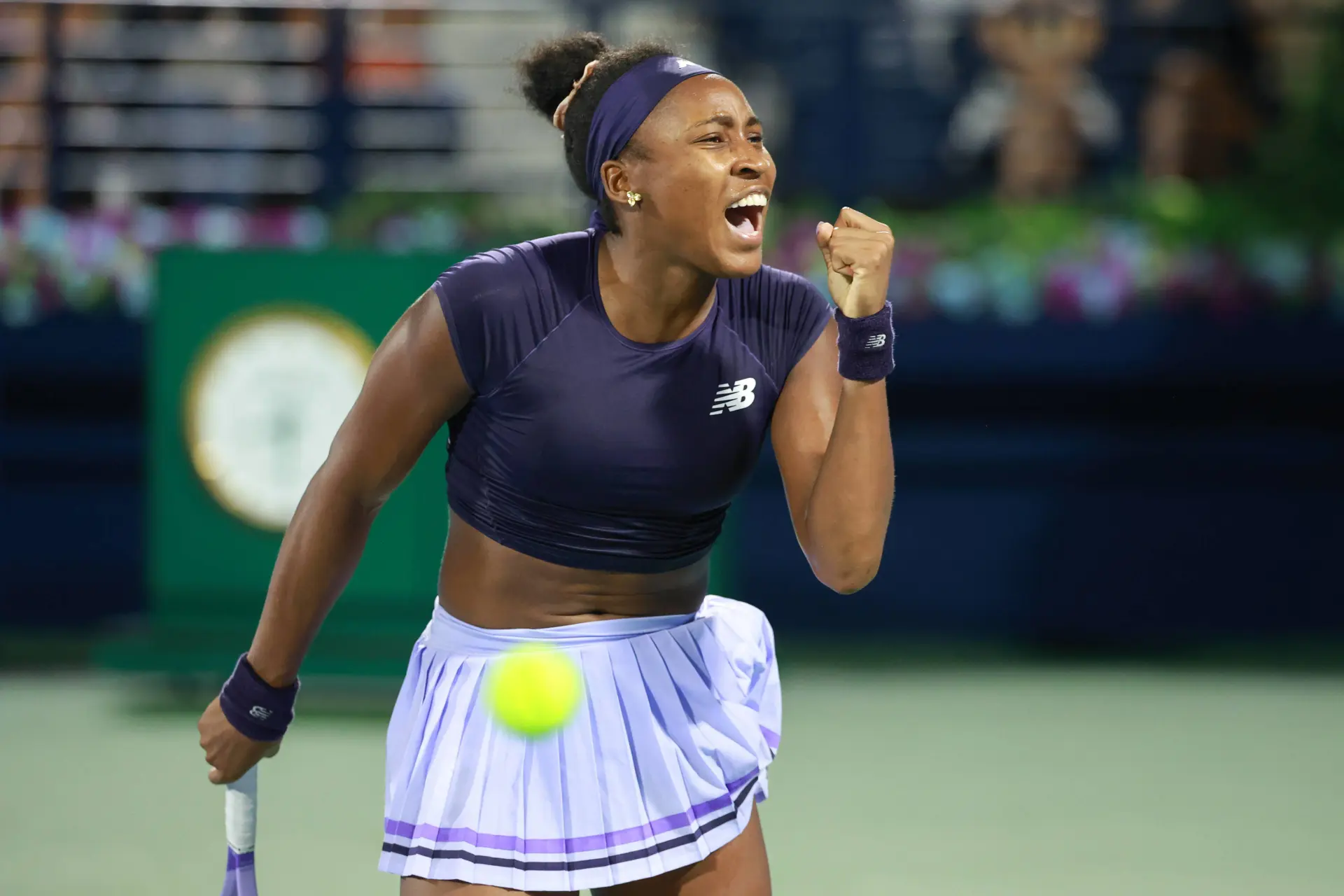
She had also built up a very close and wonderful relationship with Madison Keys. She was on the edge of her seat when following her progress in the 2025 Australian Open, and was delighted when she got over the line. "It was incredible. Last year I was working from a studio in Los Angeles while she was making a run," she said. "At the same time, my son was playing in the juniors. I couldn’t travel because my passport wasn’t available, so I stayed up all night watching her matches. I was texting her agent—we were both so nervous. When she won, I couldn’t believe it. I was so happy for her. I filmed a show the next day with my eyes swollen from crying. She’s a wonderful person, and we’ve been close for over a decade."
Davenport's oldest child, Jagger, continues to play tennis and has ambitions for the future, something she will be closely following. She opened up about being a tennis parent. "It’s actually pretty easy," she admitted. "My son is a great kid and works hard. Sometimes parent-coach relationships can get complicated, but that hasn’t been our experience. He had an elbow injury that kept him out for over six months, which was tough. But now he’s back and playing at Stanford University. He wants to go pro, so we’ll see. It’s been fun—from local junior tournaments to travelling the world with him. Of course, I still get nervous watching him play—but I try to stay relaxed."
One thing she will be remembered for is staying the same way she has always been. A humble and unassuming champion who does not want to focus on her achievements and accolades won during her time at the top of tennis.
She unveiled that it came naturally to her. "For sure. I was the youngest of three girls, and I didn’t want everything to revolve around me," she commented. "My parents treated us all the same, so we never really talked about my achievements at home. It actually made me uncomfortable. I didn’t like reading articles about myself. I don’t think I would have survived in the social media age."
This continues at home around her family. "Even now, there’s nothing displayed in our house. My kids laugh and say, 'Mom, you were such a boss—why don’t you put anything up?' They didn’t even know for the first 10 years of their lives. But my life revolves around them now. I’m proud of what I accomplished, but it never defined me."
Lucas MichaelTennis Journalist
Lucas Michael is a tennis journalist based in Cambridge, UK, specializing in comprehensive coverage of the ATP and WTA tours. For the past 1.5 years, he has been a core contributor to TennisUpToDate, where he has authored more than 3,000 data-driven match reports, deep-dive analysis pieces, and engaging liveblogs.
Lucas pairs real-time statistical analysis with on-the-ground reporting, frequently traveling to tournaments to cover the action firsthand from the press box and player press conferences. This blend of advanced metrics and direct access allows him to provide sharp context regarding player form, tactical trends, and breaking tour developments.
He holds a BA (Hons) in Sports Journalism. Grounded in core journalistic ethics, Lucas places a strict emphasis on meticulous sourcing, editorial accuracy, and a commitment to updating live content swiftly as verified information emerges.
claps 0visitors 0
Just In



Popular News
Latest Comments
- Two Things: 1. Stop allowing these Spoiled Trust-Fund Elitists to behave badly. Your little hand-slaps do not deter them. 2. STOP the incessantly annoying "towel wiping" nonsense!!!!
 mandoist15-10-2026
 - A healthy Qinwen may be hard to stop next season. She was already scaring her opponents before her medical leave(s). Unfortunately, Zheng insisted on singing again. On the positive side -- Mirra did not sing!! ;~}mandoist11-10-2026
- Where is it written that athletes, entertainers... People in general... are mandated to keep looking at -- or even using [anti]Social Media? Public & private figures consistently complain and reveal their concerns about negativity and violence thrown at them -- yet they insist on participating. Avoid it, don't use it, don't read it. It's okay to occasionally look up at the World instead beating your eyes & thumbs to death on The Inventions out there.mandoist11-10-2026
- great articlestennisseserver07-10-2026
- Medvedev was leading Djokovic 7-5, 3-5 when an attempted return..' NO you ignorants, Djokovic was leading .weiss05-10-2026
- No more bullshit "Wildcards" to these two. Qualify like everyone else -- there will be cameras there, too. Time to scream... WTF ????!!!!mandoist29-09-2026
- Let's not BS the general public -- Sabalenka started showing cracks in her game last season. Her losses and near-losses started at about the same time she began being distracted by Fame (constant Selfies, making TV commercials, magazine shoots, endless Social Media nonsense, etc., etc.) One would think even Saba could recognize the parallels with others who failed before her -- Raducanu, Giorgi, Bouchard to name a few.mandoist25-09-2026
- Gross!! Hey Raducanu, Giorgi, and Bouchard -- reserve a seat at your Social Media Selfie table for Saba + Naomi. They're heading in your direction soon enough.mandoist24-09-2026
- And then these same players will complain about how lengthy their season’s were and need more time-off. I’m all for more tennis but the amount of tennis we get now is actually kind of crazy! We all need a break, especially the players.DaveyWavey23-09-2026
- You should do a comparison article for "different kinds of justice" the courts decide for tennis players. I can think of at least three players who received very small bans of a few months, however Tara Moore has been fighting for her literal survival the past few years. It seems odd considering she is not a "name" player, unlike the other cases.DaveyWavey22-09-2026

Loading