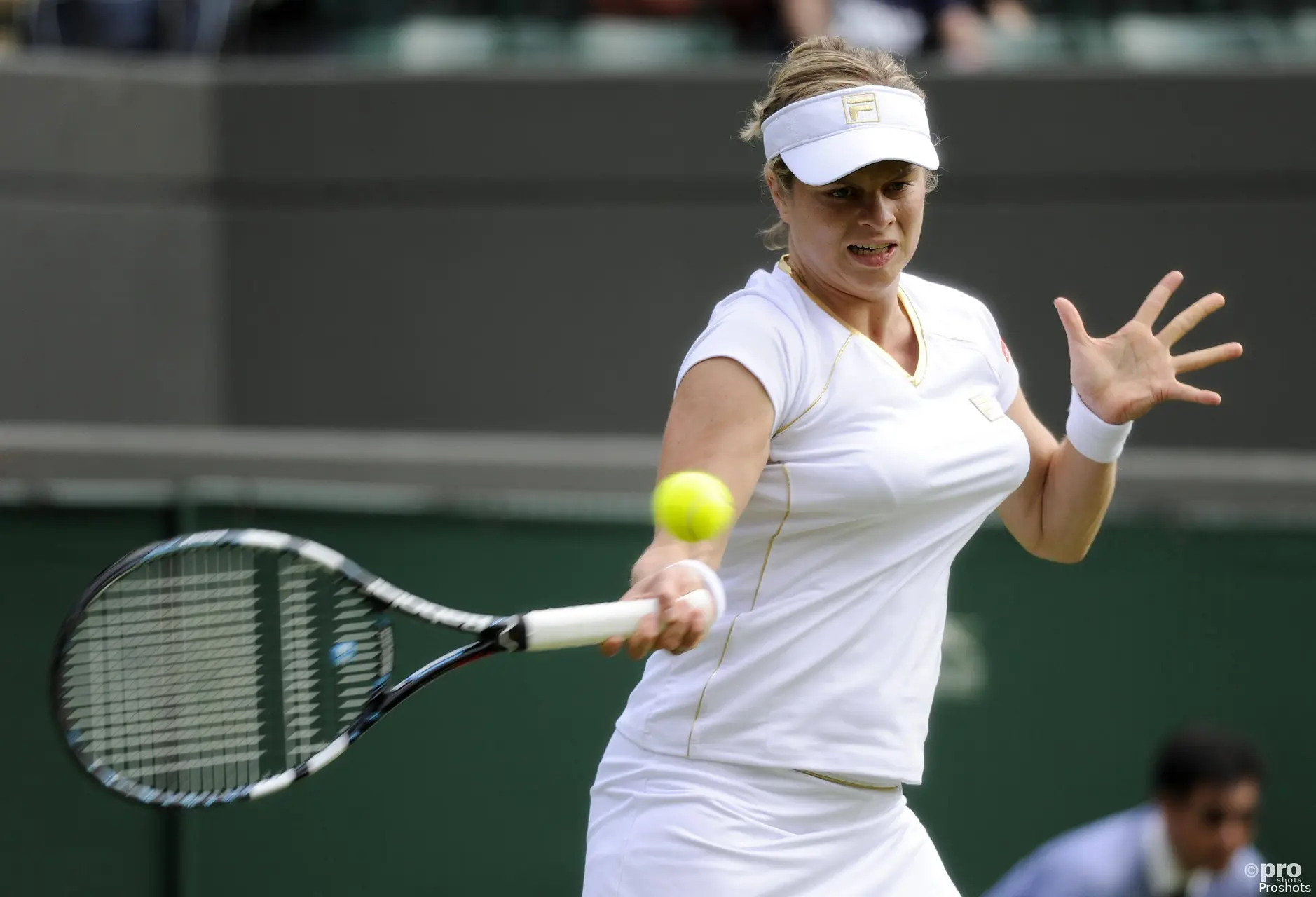
Kim Clijsters’ perspective on handling defeat is shaped by one of the clearest arcs in modern tennis. The former world No.1 lost her first four Grand Slam finals before returning to win her next four, a sequence that continues to frame how she reads the mental demands of the sport today.
Speaking on the Love All podcast, Clijsters addressed how players process losses and why the reset between tournaments—particularly ahead of the clay swing—often determines results more than form alone. Her comments come at a point in the calendar where margins tighten and momentum can shift quickly.
Clijsters, a four-time Grand Slam champion and one of the most consistent performers of her era, pointed to mindset as the key variable. The Belgian’s own experience—moving from repeated near-misses to sustained success—anchors her view that performance alone is not enough without the ability to reset.
Her conclusion was direct and rooted in experience. “You can stay down on yourself and be very disappointed, but the longer you stay in that kind of negative mindset, it’s not going to help you in the next tournament.”
!["Maybe Wim [Fissette] or somebody could be the next step for Amanda” - Kim Clijsters believes Iga Swiatek's former coach could be perfect match for Anisimova](https://r.testifier.nl/Acbs8526SDKI/resizing_type:fill/width:1920/height:1280/plain/https://s3-newsifier.ams3.digitaloceanspaces.com/tennisuptodate.com/images/2026-01/anisimovaauso-697286d245fa2.jpg@webp)
From four final defeats to four titles: the defining shift
Clijsters’ early Grand Slam record illustrates the point. Between 2001 and 2004, she reached four major finals and lost all of them, including three to Justine Henin and one to Jennifer Capriati. Those defeats established a pattern that could have defined her career differently. “The Grand Slam losses early on in my career, especially the finals, they stick with you for a few days, even longer. They’re on the back of your mind a little bit longer.”
The pressure extended beyond the court. Clijsters described how even her closest support system could unintentionally amplify the weight of those losses, particularly in an era before social media dominated the conversation. “What I found the hardest was going over to my grandparents after a trip. They were my biggest fans, but they would just ask, ‘why did you lose?’
And I’m like, well, she was good, I didn’t play well. But they were so heartbroken. They wanted it so badly for me.”
That phase ended without a title, but it set the context for what followed. When Clijsters broke through at the 2005 US Open, she did so having already experienced repeated high-level setbacks.
Kim Clijsters – Grand Slam Finals (Singles)
| Year | Tournament | Opponent | Result | Score |
| 2001 | Roland Garros | Jennifer Capriati | Loss | 1–6, 6–4, 10–12 |
| 2003 | Roland Garros | Justine Henin | Loss | 0–6, 4–6 |
| 2003 | US Open | Justine Henin | Loss | 5–7, 1–6 |
| 2004 | Australian Open | Justine Henin | Loss | 3–6, 6–4, 3–6 |
| 2005 | US Open | Mary Pierce | Win | 6–3, 6–1 |
| 2009 | US Open | Caroline Wozniacki | Win | 7–5, 6–3 |
| 2010 | US Open | Vera Zvonareva | Win | 6–2, 6–1 |
| 2011 | Australian Open | Li Na | Win | 3–6, 6–3, 6–3 |
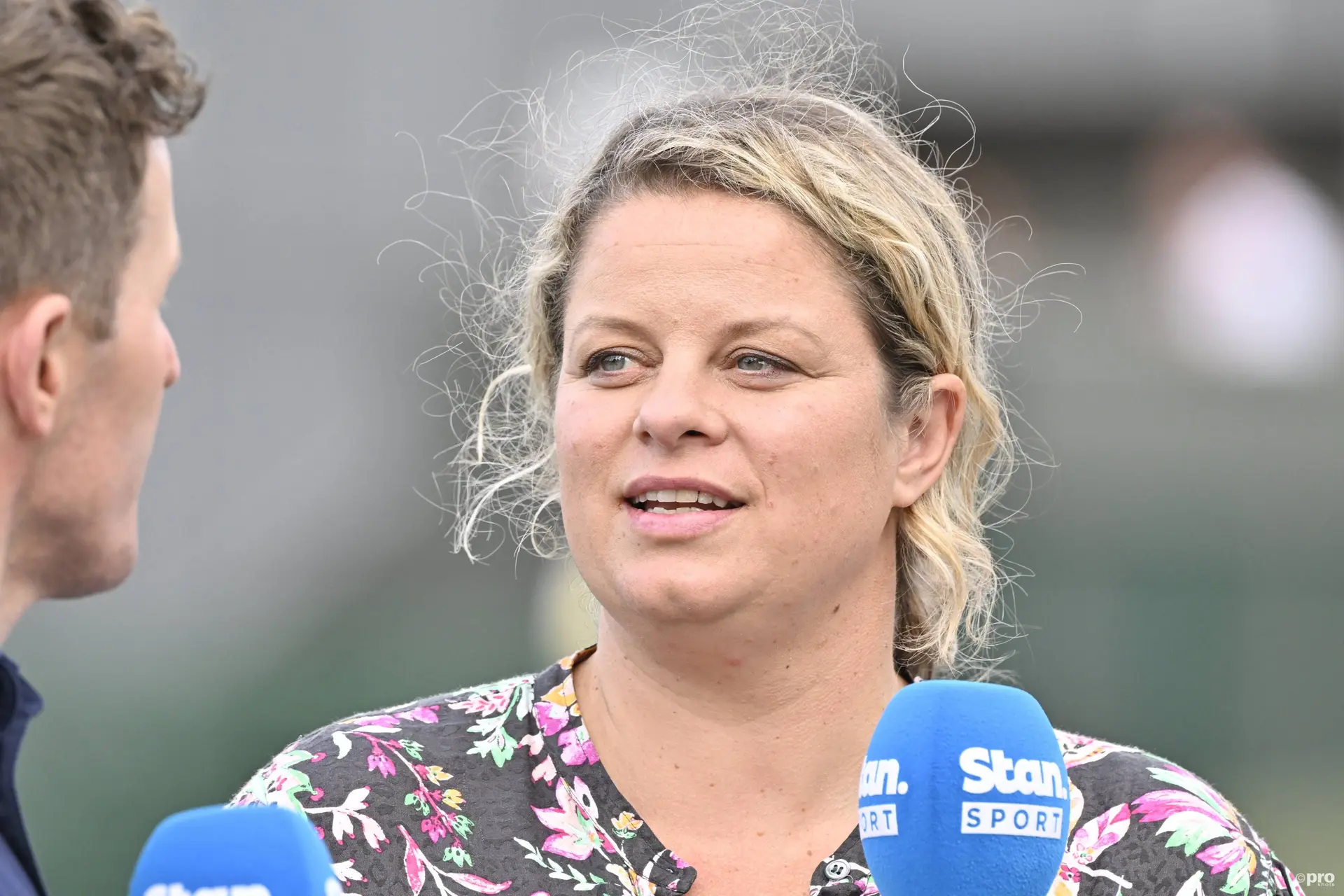
Resetting quickly: the edge that defines champions
Clijsters’ career trajectory—0–4 in her first Grand Slam finals, then 4–0 in her next four—underpins her broader argument. Progress at the top level is rarely linear, but the response to defeat determines how quickly that trajectory changes. “The good thing about tennis is that you could still have the next opportunity literally a few weeks later.
Getting back out on the practice court and approaching what was coming up was always kind of my go-to move to try and forget about it as soon as possible.”
That approach remains central in today’s game. With short gaps between tournaments and constant surface changes, players are required to reset quickly or risk carrying negative momentum into the next event.
Clijsters also connected that principle to current tour dynamics, where results can shift rapidly within a matter of weeks. “Losing a final, frustration… and then seeing where someone is a few weeks later—that’s basically what tennis is about.”
As the clay season begins, that pattern becomes more pronounced. Conditions change, matches extend, and the ability to adapt—mentally as much as physically—often separates contenders from the rest of the field.
Clijsters’ message remains consistent and grounded in her own path through the sport’s highest level. “The longer you stay in that kind of negative mindset, it’s not going to help you in the next tournament.”

Cristhián AvilaTennis Journalist
Cristhián Ávila is a tennis journalist based in Santiago, Chile, and has been part of the TennisUpToDate team since early 2023. He covers the ATP and WTA Tours as well as all four Grand Slams, producing breaking news, match reports, analysis, and regular liveblogs from major tournaments.
His reporting combines statistical analysis with clear explanation, helping readers understand tactical developments, player form, and broader storylines across the tour. Working fluently in both Spanish and English, Cristhián collaborates with an international editorial team and contributes to comprehensive global coverage. As part of his work, he has conducted interviews and media interactions with leading figures in the sport, including Caroline Wozniacki and John McEnroe.
In his journalism, Cristhián places strong emphasis on careful sourcing, editorial accuracy, and updating articles promptly when new, verified information becomes available. His coverage is grounded in research, context, and direct engagement with professional tennis.
claps 0visitors 0
Just In


Popular News


Latest Comments
- Does Sinner need that 4.5 mil? I doubt it. He can make that with three modelling gigs!😅🤣Rapunzel21-10-2026
- Did "People Magazine" purchase this website? This nonstop storyline is bullshit.
 mandoist21-10-2026
 - Listen... this is of no concern to anyone but these two. Deal with your own issues -- most of us have our own. Thanks, media, for these insignificant follow-ups which are meaningless.mandoist21-10-2026
- This is so very very sad, for all three of them. I truly thought they had an unbreakable bond, but life throws up so many differing challenges. Having your homeland suffering in such a terrible way, makes happiness lose out to guilt as well. Our thoughts are with them. X💔bjsexton20-10-2026
- I have lost all respect for Svitolina! Could she not have waited until he had played at the Paris Masters!!! She is selfish and don't give a damn about Gael. That is NOT how love is demonstrated Elina!!Rapunzel19-10-2026
- Perhaps convenient tennis tour sex is not a strong enough experience in which to base a marriage?mandoist19-10-2026
- Fight the Good Fight... Tennis (sports in general) need more Humans such as yourself.mandoist18-10-2026
- When is WTA going to mandate Genetic Testing (DNA) ???mandoist18-10-2026
- Hey, Dan... you just wake up from a coma? Regardless -- Thanks for the comedy this morning!mandoist18-10-2026
- Two Things: 1. Stop allowing these Spoiled Trust-Fund Elitists to behave badly. Your little hand-slaps do not deter them. 2. STOP the incessantly annoying "towel wiping" nonsense!!!!mandoist15-10-2026

Loading