"He’s almost superhuman": Jennifer Capriati lauds inspirational Novak Djokovic on surprise return to Australian Open
WTA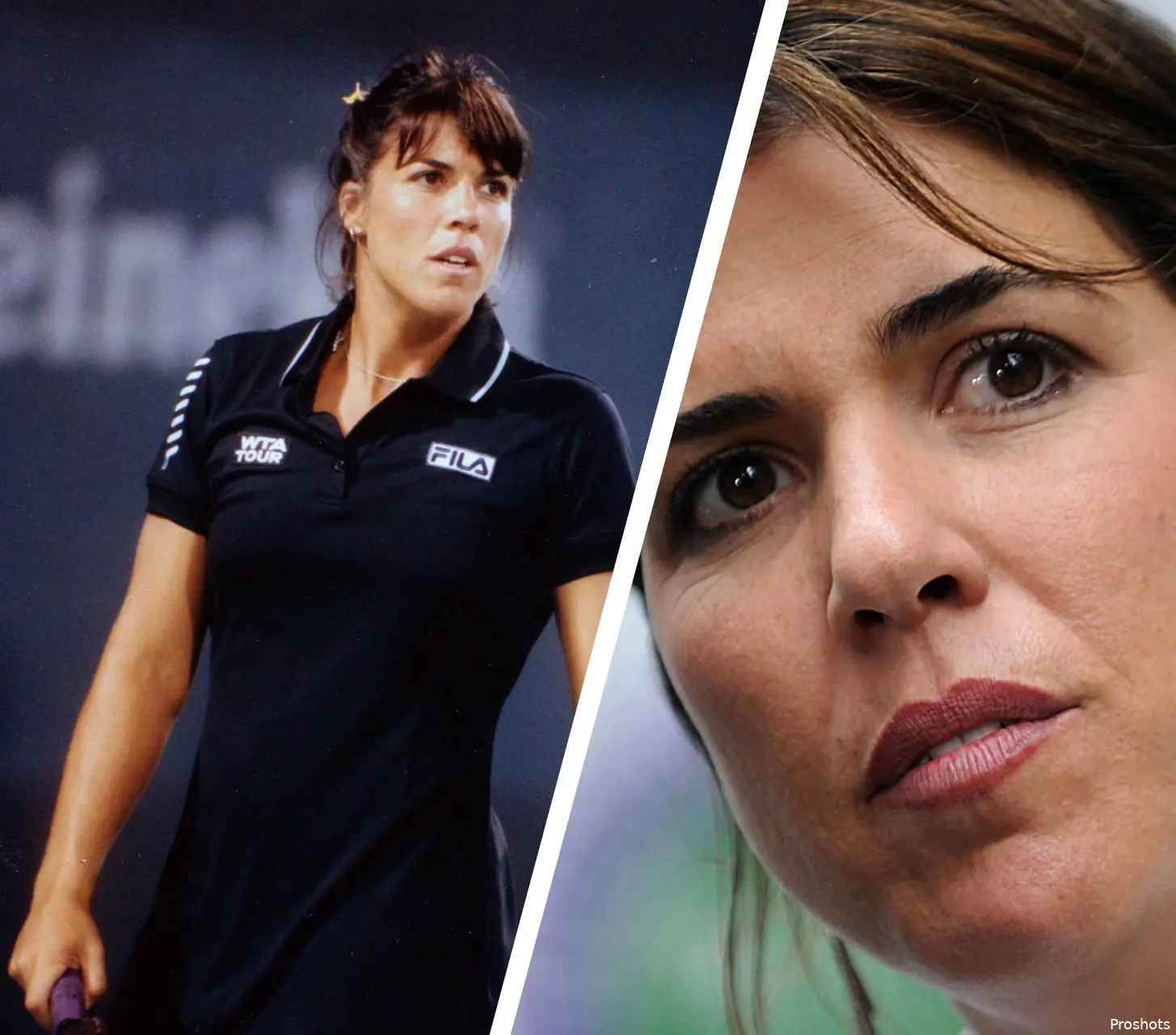
More than two decades after last competing at Melbourne Park, Jennifer Capriati has returned to the Australian Open — and even for a Hall of Famer, the moment feels overwhelming.
Speaking on TC Live during the 2026 Australian Open, Capriati reflected on her history with the tournament, her defining victories, the evolution of the women’s game and her admiration for Novak Djokovic, as she prepares to present the trophy following the women’s final.
“It’s taken a bit, right? Too long,” Capriati said with a smile. “It’s surreal. I actually feel really surreal to be back here. Everything looks totally different. I’m totally overwhelmed with how unbelievable the transformation is.”
A perfect fit in Melbourne
Few players have been as naturally suited to Melbourne Park as Capriati, who won back-to-back Australian Open titles in 2001 and 2002. Watching footage of her first Grand Slam triumph brought back powerful memories.
“I always loved playing here,” she said. “It just suited my game. Everything was perfect — the conditions. I think the year before, in 2000, I’d gotten close. I think I lost in the semi-finals. But in 2001, I was ready — as ready as I’d ever felt — and everything really clicked for me.”
While her first title marked a long-awaited breakthrough, it was the second that truly defined her resilience. The 2002 final against Martina Hingis, played in searing heat, remains one of the most dramatic comebacks in Australian Open history.
“It was crazy,” Capriati recalled. “The heat was intense. I probably don’t even remember the match points. Maybe I was so exhausted from the heat that I was honestly too tired to be nervous, and I just went for it.”
Olympic gold at 16
Beyond Grand Slam success, Capriati’s career includes one of the most remarkable Olympic achievements in tennis history. At just 16 years old, she captured gold at the 1992 Barcelona Games, defeating Steffi Graf in the final.
“That was one of the most exciting things — the Olympics, and who I beat in the final too,” she said. “Playing for my country, the team environment — I was so motivated. That was one of the most special wins of my career.”
The atmosphere, she explained, was unlike anything else she experienced in tennis.
“It was so motivational. I felt this tremendous will to win. You had all these different athletes from different sports cheering. It felt like so much more — it wasn’t just about me. I was representing the U.S., so I really played my best tennis.”
Capriati added with a laugh: “I guess I have a pretty good track record in big finals — I just need to get to the finals, right?”
A Hall of Famer watching history continue
Inducted into the International Tennis Hall of Fame at the age of 36, Capriati now watches a new generation push boundaries — none more so than Novak Djokovic, who at 38 continues to defy time.
“I didn’t get to see the match, but I’m amazed,” she said after Djokovic’s latest major victory. “Seeing him still playing finals — it’s unbelievable. He’s almost superhuman. Such an inspiration for everyone, and the physicality he’s brought. He’s still going strong — he’s just right there.”
Power tennis and evolution
Capriati is widely regarded as one of the pioneers of power tennis in the women’s game, helping usher in a more aggressive, early-ball style that now dominates the tour.
“I think there were a few of us at the start of that,” she said. “Monica and I were among the first ones. It was the beginning of the evolution — taking the ball early, big serving.”
While proud of that legacy, she also notes how the game has shifted.
“Now it’s progressed so much that a bit of the variety has gone out of the game. It’s mostly power tennis. It might be good to bring some of that style back, but it’s hard to go up against these big ball bashers.”
Gratitude, reflection and coming full circle
With more than 20 years of distance from her playing career, returning to Melbourne has given Capriati a deeper sense of appreciation for what she achieved.
“I have so much gratitude,” she said. “I’ve had 20 years to reflect on it, and it’s just great to be back. I’m really honoured to be here.”
Reconnecting with former rivals and champions has only added to that feeling.
“I hope to see more and more of it,” she added. “I came a little late in the tournament, but it’s great to catch up, see everyone again, and be part of it again.”
Now back at Melbourne Park — this time as a presenter rather than a competitor — Capriati’s presence is a reminder of an era that helped shape the modern women’s game, and of a champion whose impact continues to be felt long after her final match.

Samuel GillEditor-in-Chief
Samuel Gill is the Chief Content Officer (CCO) of TennisUpToDate.com, a role he has held since 2020. He is responsible for editorial governance across the platform, including setting content standards, overseeing accuracy and consistency, and guiding long-term editorial strategy. Since joining, he has contributed more than 10,000 articles and editorial pieces across the TennisUpToDate network, playing a central role in the daily operation and development of the site.
Based in Leicester, Samuel has a broad background in tennis media. In his current role, he works closely with editors and writers to ensure coverage meets clear journalistic standards, with particular attention to verification, consistency, and timely updates when new information becomes available.
claps 0visitors 0
Just In


Popular News

Latest Comments
- Lena... Takin' care of business
 mandoist25-10-2026
 - Can you please stop publishing this nonsense? Stick to Tennis.mandoist25-10-2026
- Does Sinner need that 4.5 mil? I doubt it. He can make that with three modelling gigs!😅🤣Rapunzel21-10-2026
- Did "People Magazine" purchase this website? This nonstop storyline is bullshit.mandoist21-10-2026
- Listen... this is of no concern to anyone but these two. Deal with your own issues -- most of us have our own. Thanks, media, for these insignificant follow-ups which are meaningless.mandoist21-10-2026
- This is so very very sad, for all three of them. I truly thought they had an unbreakable bond, but life throws up so many differing challenges. Having your homeland suffering in such a terrible way, makes happiness lose out to guilt as well. Our thoughts are with them. X💔bjsexton20-10-2026
- I have lost all respect for Svitolina! Could she not have waited until he had played at the Paris Masters!!! She is selfish and don't give a damn about Gael. That is NOT how love is demonstrated Elina!!Rapunzel19-10-2026
- Perhaps convenient tennis tour sex is not a strong enough experience in which to base a marriage?mandoist19-10-2026
- Fight the Good Fight... Tennis (sports in general) need more Humans such as yourself.mandoist18-10-2026
- When is WTA going to mandate Genetic Testing (DNA) ???mandoist18-10-2026

Loading