
What would Maria Sakkari's career look like without Iga Swiatek, Aryna Sabalenka and Coco Gauff? The answer isn't simply “better”. It is more complicated than that.
Sakkari has spent much of her career occupying the uncomfortable space just below the very top of women's tennis. She reached world No. 3, made two Grand Slam semifinals and appeared in 10 tour-level finals, but the biggest titles repeatedly slipped away.
Swiatek, Sabalenka and Gauff have all played a part in that story. Sakkari has lost major matches to all three, including two Indian Wells finals against Swiatek and the 2023 Washington final against Gauff. Remove those three players from her career and the record looks different. The interesting question is just how different.
Maria Sakkari's career in numbers
| Achievement | Record |
| Career-high ranking | No. 3 |
| Grand Slam semifinals | 2 (Roland Garros, US Open — both 2021) |
| Grand Slam finals | 0 |
| WTA 1000 titles | 1 (Guadalajara, 2023) |
| Career tour-level finals | 10 (2 titles, 8 runner-ups) |
| H2H vs Iga Swiatek | 4–6 |
| H2H vs Aryna Sabalenka | 3–7 |
| H2H vs Coco Gauff | 5–7 |
Sakkari's rise — and an early pattern of near-misses
Sakkari's climb to the top of the sport was gradual. She broke into the top 100 in 2017, won her first title in Rabat in 2019, and by 2021 was a genuine top-20 fixture. That season brought her biggest results yet: back-to-back Grand Slam semifinals at Roland Garros and the US Open. Both ended in defeat — to Barbora Krejcikova in Paris, then to teenage qualifier Emma Raducanu in New York — but the pattern of reaching the brink of something historic, only to fall just short, was already forming.
By 2022, Sakkari had climbed to world No. 3. That year alone brought three runner-up finishes, and it's here that the era's dominant players start appearing on the other side of the net with uncomfortable regularity.
Read also

The Swiatek barrier
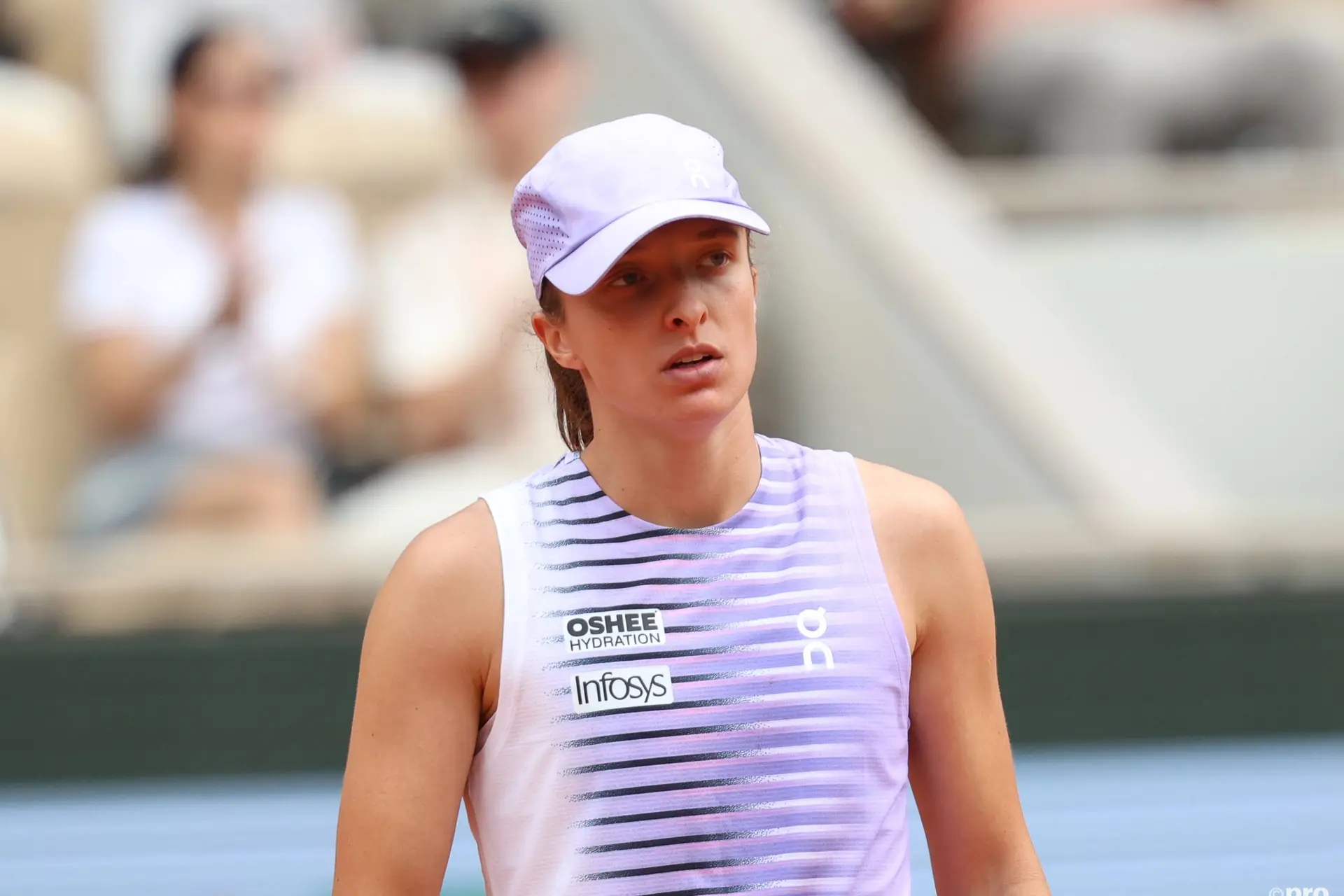
No player has cost Sakkari more big occasions than Iga Swiatek. In March 2022, Sakkari reached the Indian Wells final — one of the biggest events outside the Grand Slams — and ran straight into a rampant Swiatek, who beat her 6-4, 6-1 in the middle of the streak that defined her own breakout year. Two years later, in 2024, Sakkari reached the same final again. The result was almost identical: another straight-sets loss to Swiatek.
Their head-to-head sits at 6-4 in Swiatek's favour, but the number understates how costly the losses have been relative to the wins. Sakkari's victories over Swiatek — a 2021 Roland Garros quarter-final and a stunning 2026 Doha upset — came in rounds that led to more tennis. Her defeats came in the finals that would have defined entire seasons. The Swiatek rivalry is therefore more complicated than the 4-6 head-to-head suggests. Sakkari has beaten her in a Grand Slam and in 2026, but two of their most consequential meetings came in Indian Wells finals that could have transformed Sakkari's résumé.
Read also
Sakkari against the WTA's biggest names
| Year | Tournament | Round | Opponent | Result |
| 2021 | Roland Garros | QF | Iga Swiatek | Win |
| 2021 | Roland Garros | SF | Barbora Krejcikova | Loss |
| 2021 | US Open | SF | Emma Raducanu | Loss |
| 2021 | WTA Finals | RR | Aryna Sabalenka | Win |
| 2022 | Indian Wells | F | Iga Swiatek | Loss |
| 2023 | Madrid | SF | Aryna Sabalenka | Loss |
| 2023 | Washington DC | F | Coco Gauff | Loss |
| 2023 | WTA Finals | RR | Aryna Sabalenka | Loss |
| 2024 | Indian Wells | F | Iga Swiatek | Loss |
| 2026 | Doha | QF | Iga Swiatek | Win |
The Sabalenka factor
Sabalenka leads their head-to-head 7-3, and several of those wins came at moments that mattered. In 2023, she beat Sakkari in the Madrid semifinal on her way to the title, then closed out the season by demolishing her 6-0, 6-1 in their WTA Finals round-robin meeting — their most recent encounter to date.
Sakkari's lone big win in the rivalry, ironically, also came at the WTA Finals: a three-set victory in the 2021 round robin that helped send her through to the semifinals.
The Sabalenka matches follow their own version of the Swiatek pattern — competitive, occasionally decided by fine margins, but almost always settled in the Belarusian's favour whenever the stakes were highest.
Gauff: from a player she used to beat to the player who owns the rivalry
The most interesting name on this list is Coco Gauff, because the story here isn't just about losses — it's about a rivalry that flipped entirely. Early in Gauff's career, Sakkari had the clear upper hand, beating her in Cincinnati in 2020, Abu Dhabi in 2021, and twice more in 2022, including a win at the Qatar Open. At that stage, Sakkari was the established top-10 player and Gauff the rising teenager still finding her level.
Read also
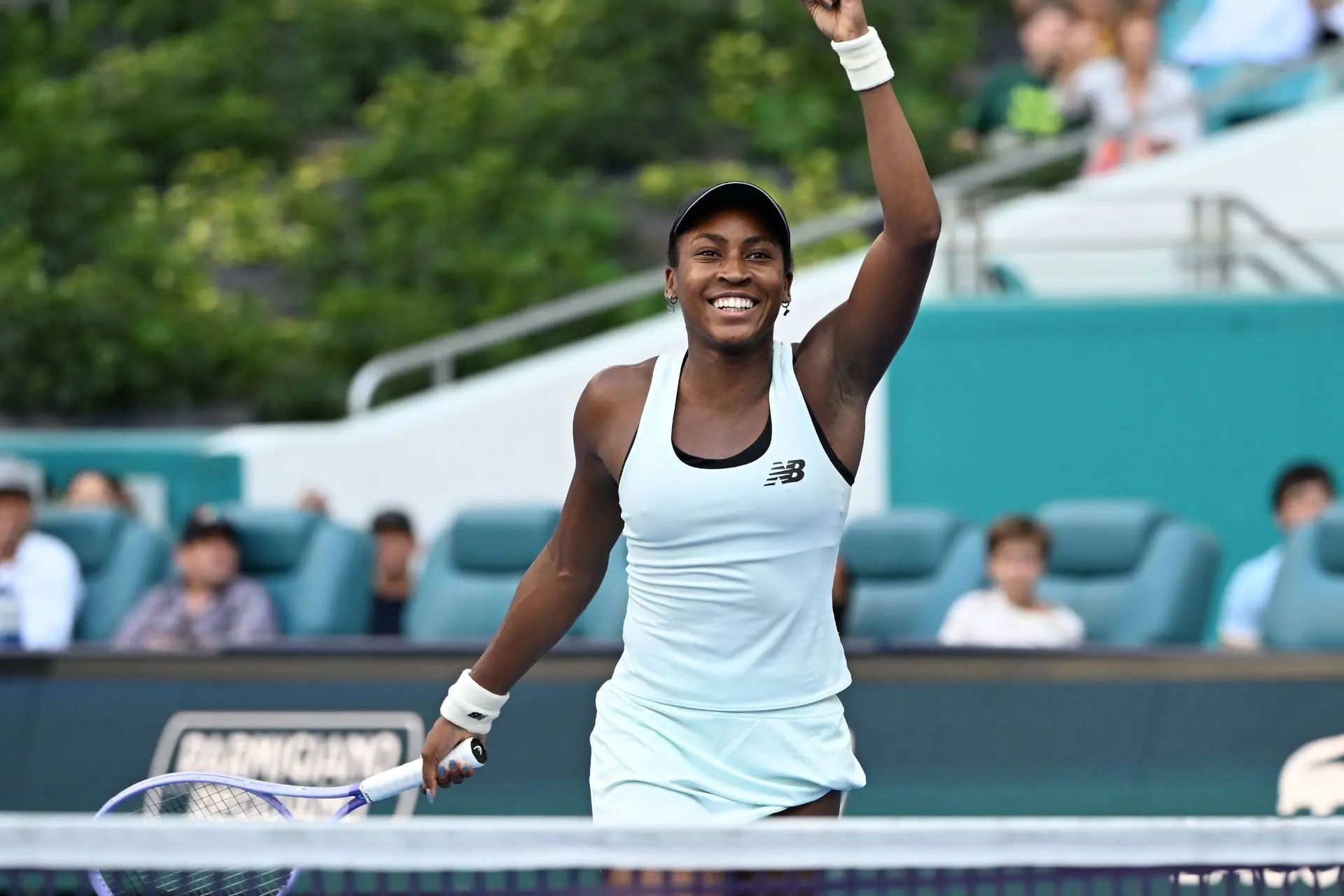
That dynamic reversed almost completely from 2023 onward. Gauff beat Sakkari in the final of the Washington Open that year — turning what had been a routine result for the veteran a few seasons earlier into a lost title — then added further wins in Indian Wells in 2025, at the United Cup in January 2026, and again in Toronto this August. Gauff now leads the head-to-head, and the shift says as much about the changing of the guard at the top of the WTA as it does about any single match.
Maria Sakkari's most frequent opponents
| Opponent | Wins | Losses | Win % |
| Anett Kontaveit | 6 | 7 | 46.2% |
| Coco Gauff | 5 | 7 | 41.7% |
| Jessica Pegula | 5 | 7 | 41.7% |
| Donna Vekić | 4 | 7 | 36.4% |
| Elise Mertens | 6 | 5 | 54.5% |
| Iga Świątek | 4 | 6 | 40.0% |
| Aryna Sabalenka | 3 | 7 | 30.0% |
| Karolína Plíšková | 3 | 5 | 37.5% |
| Ekaterina Alexandrova | 6 | 2 | 75.0% |
| Petra Kvitová | 5 | 3 | 62.5% |
| Elena Rybakina | 1 | 6 | 14.3% |
| Caroline Garcia | 4 | 3 | 57.1% |
What the numbers show
Sakkari's record against her most frequent opponents highlights a clear pattern: she has been remarkably consistent against players outside the very top tier, but her record becomes much more difficult against the biggest names. She is below 50% against Gauff, Pegula, Świątek, Sabalenka and Rybakina - arguably the 'big-5' during this decade.
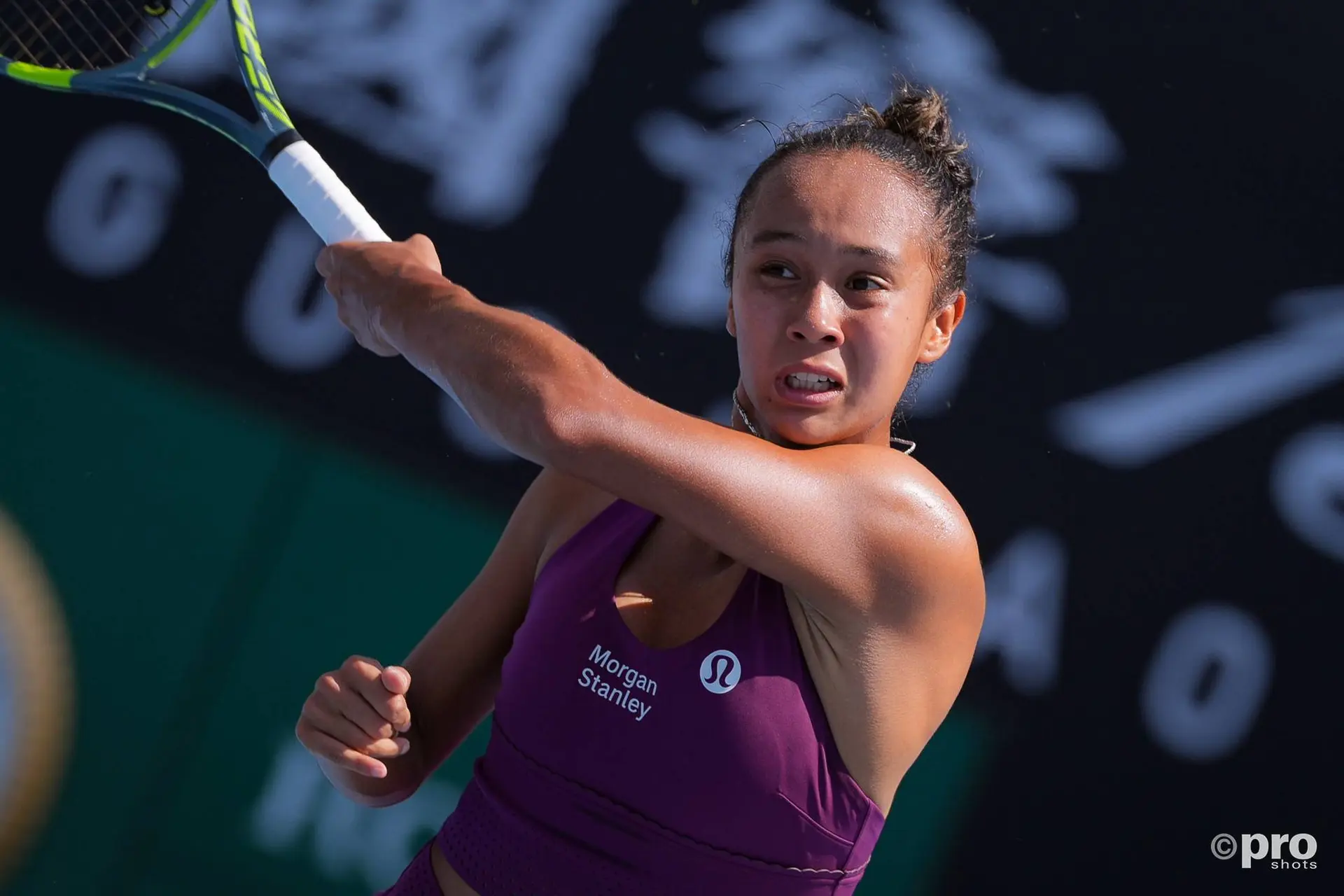
The contrast is even more striking against the elite. Sakkari has won only 3 of 10 against Sabalenka and 1 of 7 against Rybakina, while her records against Świątek and Gauff are also negative. Against the players she has faced most often, this suggests that her consistency was less about regularly beating the very best and more about reliably taking care of business against lower-ranked opposition, particularly during her strongest years when she established herself as a perennial top-10 player.
Her record is not uniformly poor against established stars — she leads Kvitová, Alexandrova and Garcia — but the overall pattern helps explain the gap between her long-term consistency and her difficulty converting that consistency into the biggest titles and breakthrough wins.
Read also
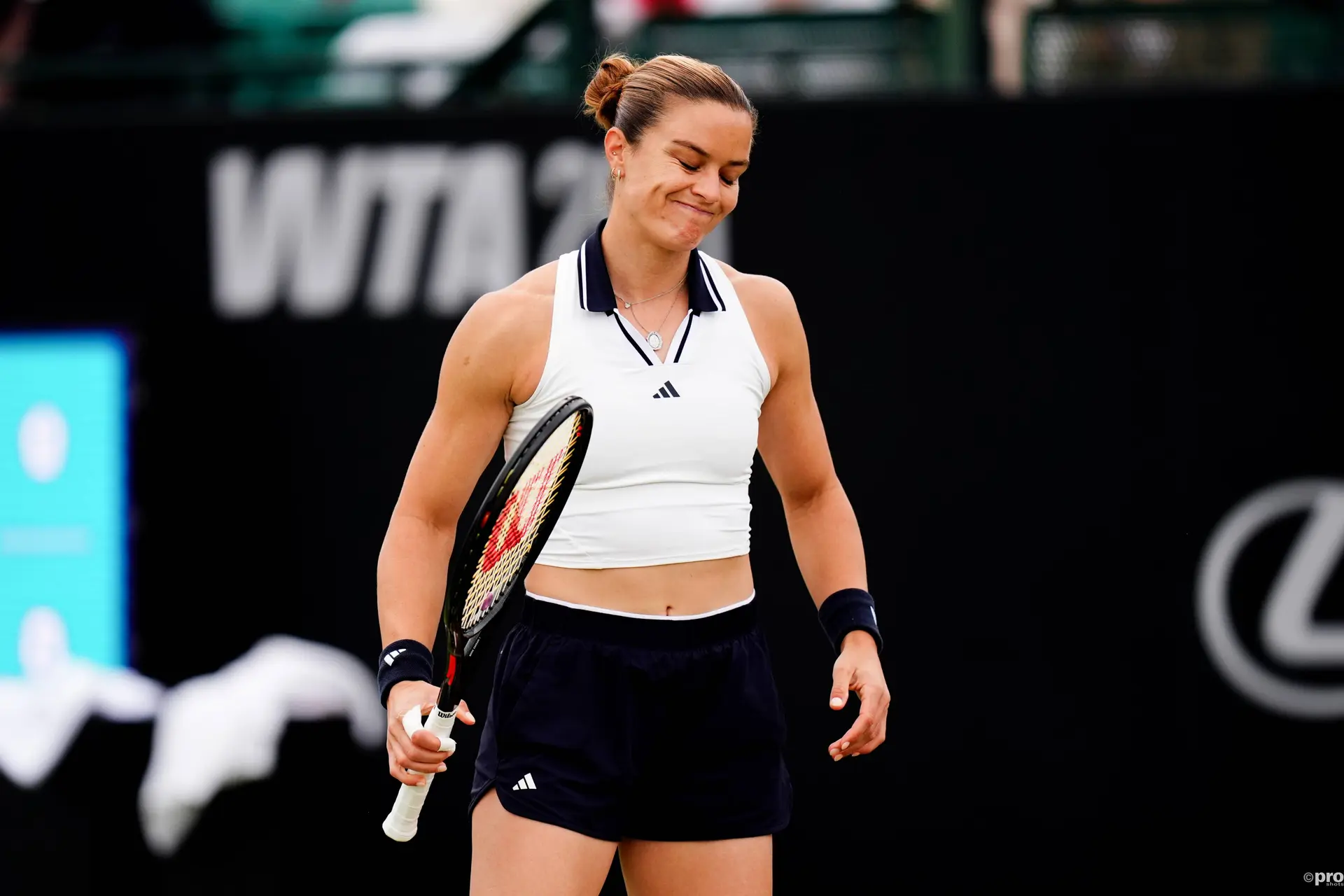
So, what would Sakkari's career look like without them?
Removing Swiatek, Sabalenka and Gauff would almost certainly change the shape of Sakkari's résumé, but it would be impossible to say exactly how many extra titles she would have won. The clearest difference would come at WTA 1000 level. Her two Indian Wells finals against Swiatek in 2022 and 2024 would have been enormous opportunities without the eventual champion standing across the net. The 2023 Washington final against Gauff would also have had a different complexion.
Her Grand Slam record is harder to rewrite. Sakkari's two semifinals in 2021 already show that she was capable of going deep at the majors, but neither Swiatek nor Sabalenka was responsible for both defeats. Emma Raducanu beat her in New York, while Barbora Krejcikova ended her run in Paris.
That is why the counterfactual should not be taken too far. Sakkari was good enough to reach the top three and consistently compete deep into major tournaments, but removing three of the defining players of her generation would not automatically turn her into a multiple Grand Slam champion. What it does reveal is how narrow the margins were.
Sakkari's career was built around consistency, physicality and an ability to remain among the world's best for years. The missing piece was converting enough of those deep runs into titles. Swiatek, Sabalenka and Gauff repeatedly occupied the other side of the net when those opportunities appeared. Without them, Sakkari's trophy cabinet would probably look different. How different is the part we can never know.

Cristhián AvilaTennis Journalist
Cristhián Ávila is a tennis journalist based in Santiago, Chile, and has been part of the TennisUpToDate team since early 2023. He covers the ATP and WTA Tours as well as all four Grand Slams, producing breaking news, match reports, analysis, and regular liveblogs from major tournaments.
His reporting combines statistical analysis with clear explanation, helping readers understand tactical developments, player form, and broader storylines across the tour. Working fluently in both Spanish and English, Cristhián collaborates with an international editorial team and contributes to comprehensive global coverage. As part of his work, he has conducted interviews and media interactions with leading figures in the sport, including Caroline Wozniacki and John McEnroe.
In his journalism, Cristhián places strong emphasis on careful sourcing, editorial accuracy, and updating articles promptly when new, verified information becomes available. His coverage is grounded in research, context, and direct engagement with professional tennis.
claps 0visitors 0
Just In



Popular News
Latest Comments
- great articlestennisseserver07-10-2026
- Medvedev was leading Djokovic 7-5, 3-5 when an attempted return..' NO you ignorants, Djokovic was leading .weiss05-10-2026
- No more bullshit "Wildcards" to these two. Qualify like everyone else -- there will be cameras there, too. Time to scream... WTF ????!!!!
 mandoist29-09-2026
 - Let's not BS the general public -- Sabalenka started showing cracks in her game last season. Her losses and near-losses started at about the same time she began being distracted by Fame (constant Selfies, making TV commercials, magazine shoots, endless Social Media nonsense, etc., etc.) One would think even Saba could recognize the parallels with others who failed before her -- Raducanu, Giorgi, Bouchard to name a few.mandoist25-09-2026
- Gross!! Hey Raducanu, Giorgi, and Bouchard -- reserve a seat at your Social Media Selfie table for Saba + Naomi. They're heading in your direction soon enough.mandoist24-09-2026
- And then these same players will complain about how lengthy their season’s were and need more time-off. I’m all for more tennis but the amount of tennis we get now is actually kind of crazy! We all need a break, especially the players.DaveyWavey23-09-2026
- You should do a comparison article for "different kinds of justice" the courts decide for tennis players. I can think of at least three players who received very small bans of a few months, however Tara Moore has been fighting for her literal survival the past few years. It seems odd considering she is not a "name" player, unlike the other cases.DaveyWavey22-09-2026
- PRIZE MONEY & POINTS Winner - $185,500 Finalist - $114,500 Semi-Finalist - $66,003 Quarter-Finalist - $35,000 Round of 16 - $18,045 Round of 32 - $13,005 Winner - 500 Finalist - 325 Semi-Finalist - 195 Quarter-Finalist - 108 Round of 16 - 60 Round of 32 - 1DaveyWavey20-09-2026
- Pegula withdrew from this Singapore event
 tennishappens19-09-2026
 - Serena Williams chose her tournaments. It's not such a bad idea.MuswellHillbilly17-09-2026

Loading