“I don’t think I’ve ever enjoyed this sport”: Destanee Aiava opens up on why she’s walking away from tennis
WTA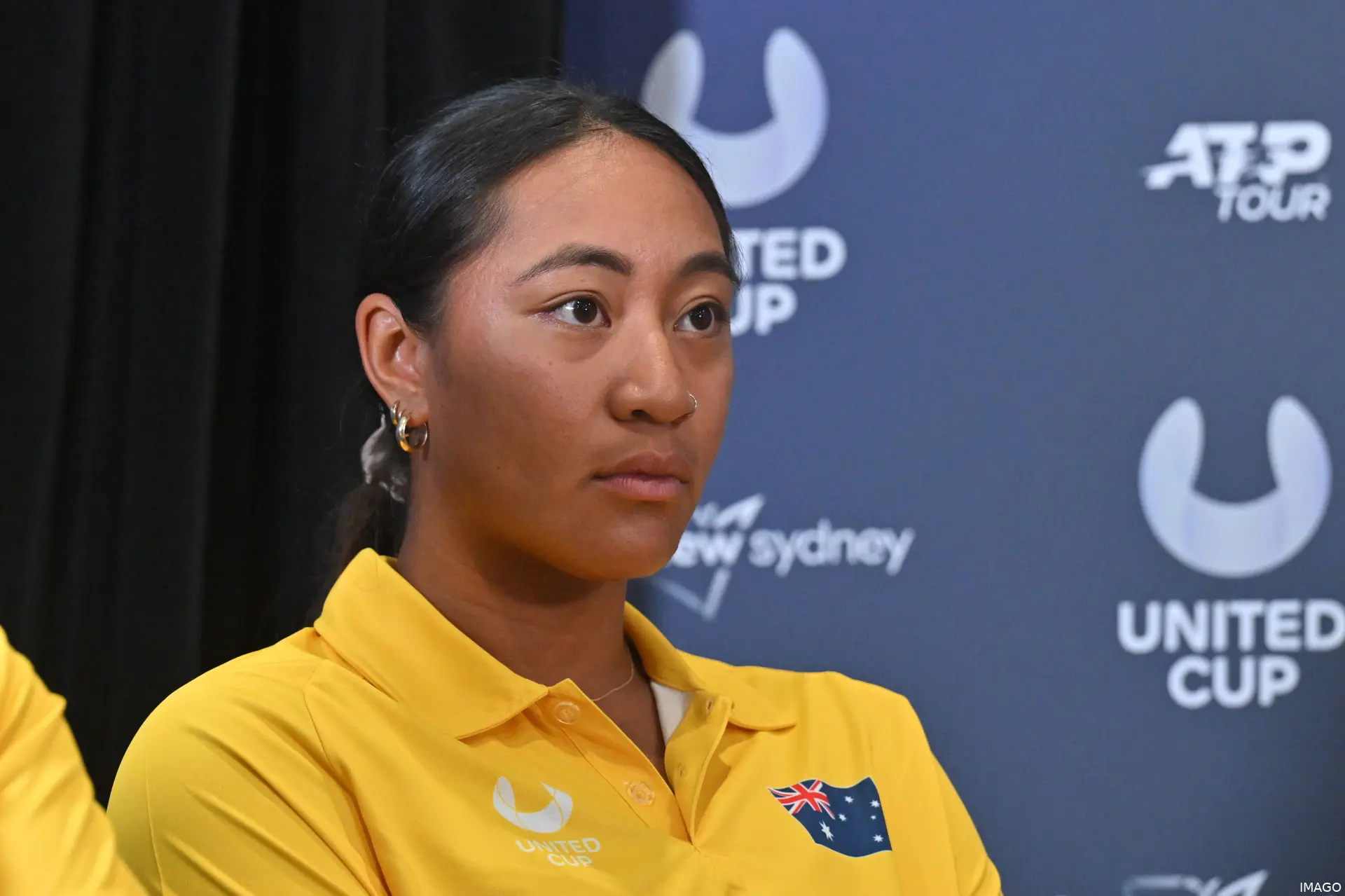
Several weeks after confirming that 2026 will be her final season on the professional Tour, Destanee Aiava has expanded on the motivations behind her decision. The 25-year-old Australian, who reached a career-high ranking of world No. 147 and has hovered outside the Top 300 in recent months, first made headlines by describing tennis culture as “racist, misogynistic, homophobic and hostile to anyone who doesn’t fit its mold.”
Aiava, the first player of Samoan descent to compete in the main draw of the US Open and the youngest Pacific Islander to feature in a Grand Slam main draw, has been part of the Australian tennis landscape since her teenage years. She debuted at the Australian Open main draw at 16 and later represented her country at the United Cup in 2024.
While her initial retirement statement was brief and direct — including references to being called a “monkey” and “transgender” on court and labelling tennis her “toxic boyfriend” — her recent interview with Clay Magazine offered a more detailed and personal reflection.
“I don’t think I’ve ever enjoyed this sport”
Asked by Clay Magazine why she chose to step away despite still being in her mid-twenties, Aiava delivered a stark assessment. “I don’t think I’ve ever enjoyed this sport. The only reason I enjoyed it was because of the good things that came with it. And for me personally, that’s not worth waking up every day and hating my job and basically living a lie,” she said.
Despite reaching the Top 150 and competing at multiple Grand Slam events, she suggested that external milestones never translated into internal fulfillment. “I’m getting hundreds of people coming up to me saying, ‘You must love it.’ Some days, honestly, I would have rather done anything else but hit on a tennis court.”
Her “toxic boyfriend” metaphor, posted on Valentine’s Day, was not designed for shock value but as a reflection of a long emotional cycle. “The way I kept going back and forth with tennis and just battling my own demons within this sport — wanting to quit or wanting to keep going — I felt like even in my own relationship everyone has their own ups and downs with their partner. So I just felt like that was the equivalent of what I was going through, which was my relationship with my own job. It was basically toxic,” Aiava told Clay Magazine.
Race, identity and representation
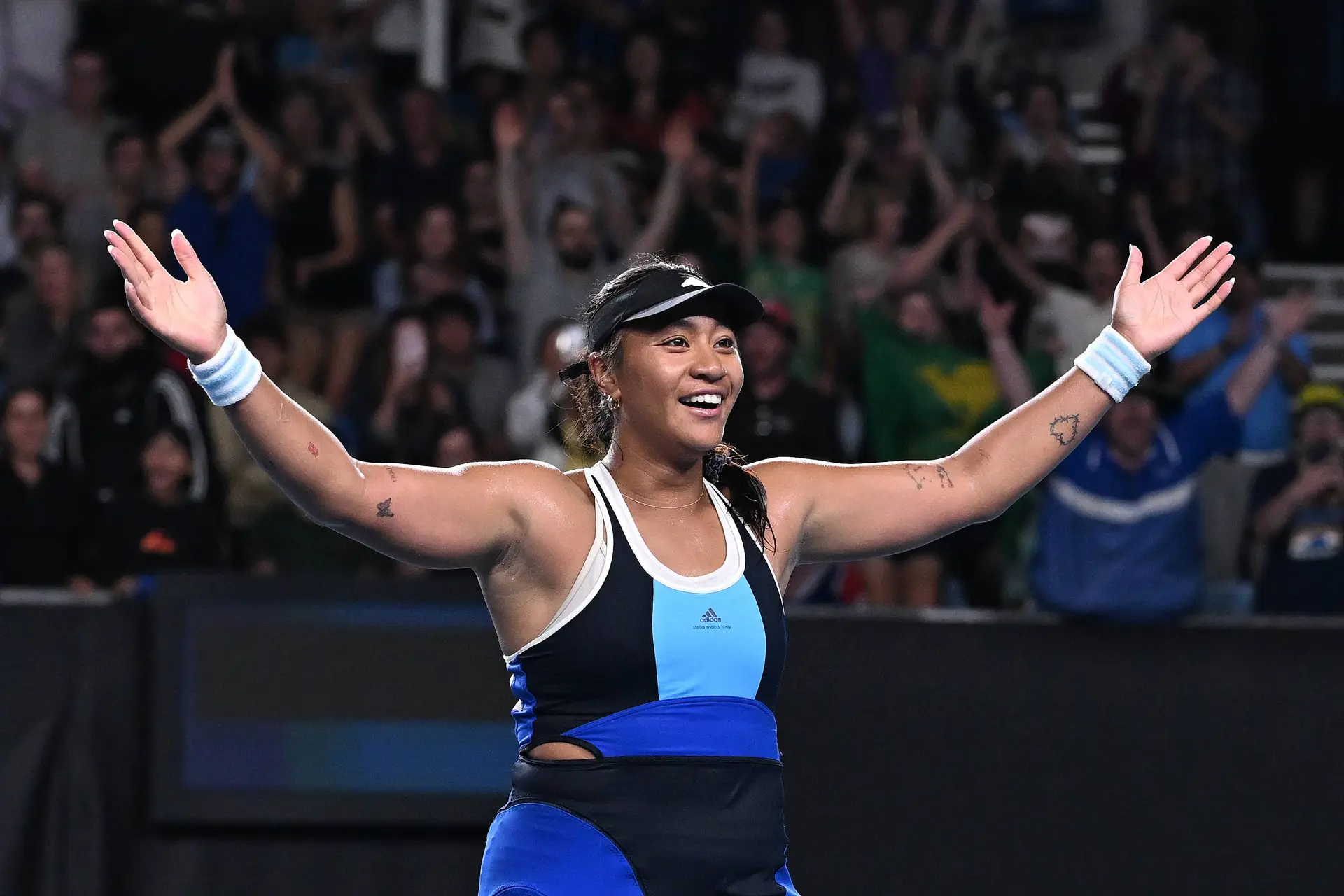
Aiava’s career has also carried symbolic weight. As a Samoan-Australian competing in a predominantly white sport, she said the sense of difference was constant from junior level onward.
“Being a woman of color in this sport that’s predominantly white, it’s been a big struggle from the get-go. There’s not been one time where I felt like I belonged in this sport because of my color. It’s always going to be harder for us and that’s just the reality. Even if I wasn’t a woman, it’s still going to be harder if I was Brown or Asian or Black.”
When asked for concrete examples, she recalled incidents from her early years on tour. “When I was little, there were crazy tennis parents at the tournaments and they would not be too shy to express how they felt out loud by calling me a ‘man’ or a ‘monkey.’”
Online abuse continued into her professional career, even as she broke into the Top 150 and competed regularly at WTA and ITF level. “I’ve gotten comments online from people calling me ‘fat,’ calling me a ‘man.’ Even seeing gay tennis players and how they’re treated, it’s such an important thing for me to also advocate for them because I see firsthand how they’ve been treated in tennis. I really just didn’t want to speak for myself. I wanted to speak for everyone else who had or who has had a very similar experience to me.”
“It was very lonely”
Beyond discrimination, Aiava described the structural realities of professional tennis — its individual nature and financial demands — as factors in her decision.
Reflecting on her experience at the United Cup in 2024, she said the atmosphere felt “weird and hostile,” adding: “Everyone’s kind of competing against each other, and especially women. I feel like we don’t really know how to put that aside as well as the men do… That’s just not how women are. It felt very high school.”
Inside locker rooms, she described what she viewed as performative cordiality. “They all just talk behind each other’s backs… and then gives you a fake smile when you’re passing each other. I’m very big on energy and for the most part, whenever I was in that environment, the energy was just terrible.”
Aiava stressed to Clay Magazine that rankings or results would not have altered her path. “I don’t think anyone could have done anything for me to have changed my mind. My decision wasn’t based on the fact of what I’ve received whenever I lose or outside noise and people commenting hate. That wasn’t why I made this decision. I feel like I wasn’t very fulfilled in this sport. It was very lonely. It’s an individual sport. It’s very expensive. It just made sense for me to explore other things and find something that I actually do love.”
For a player whose career included Grand Slam appearances, national representation and a place in Australian tennis history, the conclusion was not about potential left unrealised, but about personal alignment.

Cristhián AvilaTennis Journalist
Cristhián Ávila is a tennis journalist based in Santiago, Chile, and has been part of the TennisUpToDate team since early 2023. He covers the ATP and WTA Tours as well as all four Grand Slams, producing breaking news, match reports, analysis, and regular liveblogs from major tournaments.
His reporting combines statistical analysis with clear explanation, helping readers understand tactical developments, player form, and broader storylines across the tour. Working fluently in both Spanish and English, Cristhián collaborates with an international editorial team and contributes to comprehensive global coverage. As part of his work, he has conducted interviews and media interactions with leading figures in the sport, including Caroline Wozniacki and John McEnroe.
In his journalism, Cristhián places strong emphasis on careful sourcing, editorial accuracy, and updating articles promptly when new, verified information becomes available. His coverage is grounded in research, context, and direct engagement with professional tennis.
claps 0visitors 0
Just In

Popular News
Latest Comments
- A healthy Qinwen may be hard to stop next season. She was already scaring her opponents before her medical leave(s). Unfortunately, Zheng insisted on singing again. On the positive side -- Mirra did not sing!! ;~}
 mandoist11-10-2026
 - Where is it written that athletes, entertainers... People in general... are mandated to keep looking at -- or even using [anti]Social Media? Public & private figures consistently complain and reveal their concerns about negativity and violence thrown at them -- yet they insist on participating. Avoid it, don't use it, don't read it. It's okay to occasionally look up at the World instead beating your eyes & thumbs to death on The Inventions out there.mandoist11-10-2026
- great articlestennisseserver07-10-2026
- Medvedev was leading Djokovic 7-5, 3-5 when an attempted return..' NO you ignorants, Djokovic was leading .weiss05-10-2026
- No more bullshit "Wildcards" to these two. Qualify like everyone else -- there will be cameras there, too. Time to scream... WTF ????!!!!mandoist29-09-2026
- Let's not BS the general public -- Sabalenka started showing cracks in her game last season. Her losses and near-losses started at about the same time she began being distracted by Fame (constant Selfies, making TV commercials, magazine shoots, endless Social Media nonsense, etc., etc.) One would think even Saba could recognize the parallels with others who failed before her -- Raducanu, Giorgi, Bouchard to name a few.mandoist25-09-2026
- Gross!! Hey Raducanu, Giorgi, and Bouchard -- reserve a seat at your Social Media Selfie table for Saba + Naomi. They're heading in your direction soon enough.mandoist24-09-2026
- And then these same players will complain about how lengthy their season’s were and need more time-off. I’m all for more tennis but the amount of tennis we get now is actually kind of crazy! We all need a break, especially the players.DaveyWavey23-09-2026
- You should do a comparison article for "different kinds of justice" the courts decide for tennis players. I can think of at least three players who received very small bans of a few months, however Tara Moore has been fighting for her literal survival the past few years. It seems odd considering she is not a "name" player, unlike the other cases.DaveyWavey22-09-2026
- PRIZE MONEY & POINTS Winner - $185,500 Finalist - $114,500 Semi-Finalist - $66,003 Quarter-Finalist - $35,000 Round of 16 - $18,045 Round of 32 - $13,005 Winner - 500 Finalist - 325 Semi-Finalist - 195 Quarter-Finalist - 108 Round of 16 - 60 Round of 32 - 1DaveyWavey20-09-2026

Loading