"I don’t want tennis kicking me out and saying you’re not useful anymore": Sorana Cirstea wants to end career in 2026 on her own terms
WTA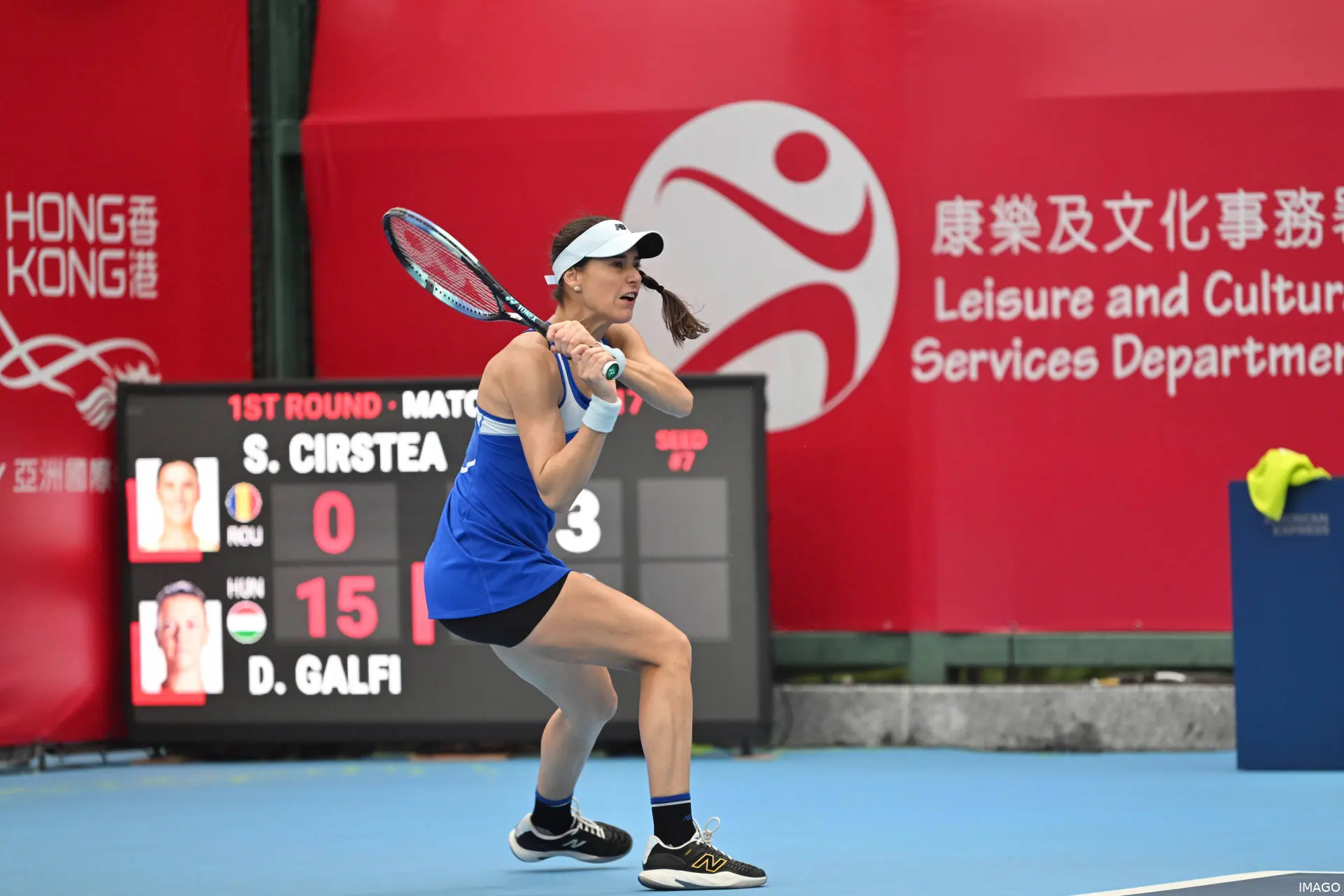
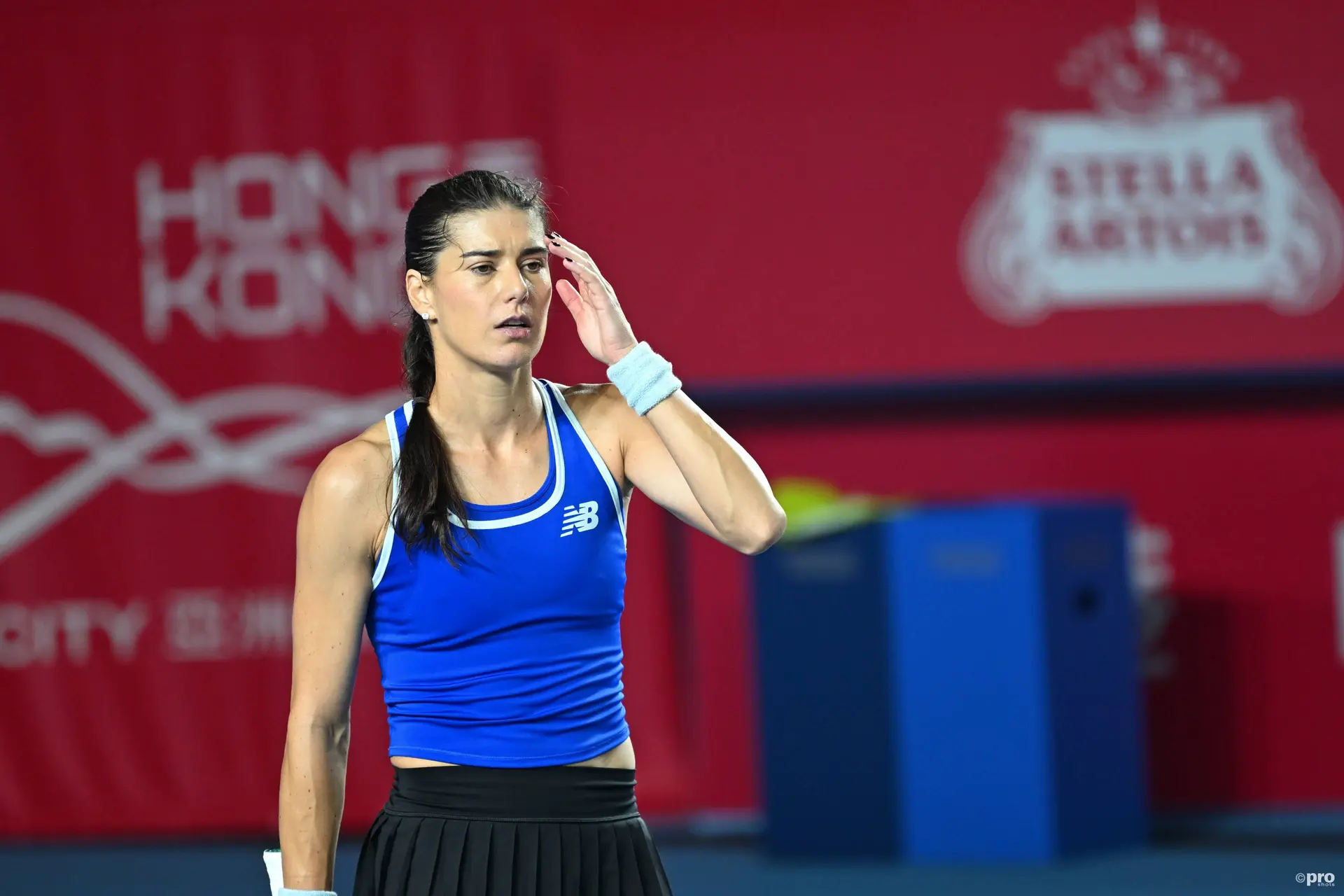
After nearly two decades on the WTA Tour, Sorana Cîrstea has made peace with something that once felt impossible: closing the chapter on her tennis career. Speaking candidly on the Tennis Insider Club podcast with hosts Borja Duran and Caroline Garcia, the 34-year-old Romanian revealed why 2026 will be her final season — and how she wants to walk away not defeated, but fulfilled.
A career stalled by pain: “It’s very hard to find joy when you’re constantly in pain.”
Cîrstea recalls the moment the warning signs became impossible to ignore. During a strong run in Dubai in early 2024, she first felt a familiar but worrying sensation in her foot. What seemed like routine inflammation turned out to be a stubborn case of plantar fasciitis. “It wasn’t getting better. It was getting worse and worse,” she explained. “By the time I got to clay, it was constant pain every single day.”
Eventually, she underwent surgery and stepped away for six months — time she hoped would answer whether she could still find joy in the sport.
But the break also offered clarity. She still wanted to compete. She still wanted to feel adrenaline. And she wanted to finish her way. “I want to end it with dignity, walking out the front door of the sport with my head held high,” she said. “I don’t want tennis kicking me out and saying, ‘You’re not useful anymore.’” 2026, she decided, will be her last year.
Unfinished dreams and new perspective
When asked whether she thinks about the dreams she had at 20 — being No.1, winning Grand Slams — Cîrstea didn’t hesitate. “This is the toughest question,” she admitted. “Anything less than No.1 or winning Slams felt like failure.”
For years, she carried that weight. The belief that anything she didn’t achieve at 20 or 25 was a permanent mark against her. Now, she sees that pressure differently. "I’ve had a beautiful career, but I didn’t win Grand Slams and I wasn’t No.1. I’ve made peace with that,” she said. “I cannot change the past — but I can change today.”
Her regrets aren’t dramatic turning points or missed strategic decisions. It’s the small things: being too hard on herself, isolating after losses, letting perfectionism drown out joy. “If I had done everything perfectly, maybe I would have been No.1,” she said. “I’ve made plenty of mistakes. But I cannot live my life thinking only about what I didn’t do.”
Finding gratitude without losing passion
Cîrstea spent much of her career in an environment where praise was withheld in favor of relentless improvement. Match wins were analyzed for what went wrong, not what went right. Success was something to be immediately pushed aside in search of the next goal.
But that mindset has changed.“You don’t need to say, ‘I’m a piece of shit’ to improve,” she joked. “You can work very hard and still be proud and happy.”
Her gratitude is grounded in perspective. “My best ranking was 21. People would give anything for that,” she said. “What you're complaining about is someone else's dream.”
The team behind the player and why a psychologist changed everything
One of the defining features of Cîrstea’s late-career stability has been her long-term relationship with her psychologist — a woman now in her 80s. “I always tell her, ‘I’m 35, I’m so old,’” Cîrstea laughed. “And she says, ‘Sorana, you are a baby. You haven’t even started living.’”
Those sessions helped remove the shame Cîrstea once attached to being “over 30” on tour. They helped her understand why she’s still here — not because she has no life, but because she loves the life tennis has given her. “People ask, ‘Why are you still playing?’” she said. “Because it makes me happy.”
A 20-year career built on balance, not burnout
Cîrstea’s longevity — she will enter her 20th season in 2026 — is something she takes deep pride in. She credits, in part, her childhood: staying in school, playing other sports, and having space to grow as a person before becoming a professional.
“My mom made me stay in school and I’m so grateful,” she said. “School teaches structure, discipline, and to use your brain. Tennis ends one day — school prepares you for life.”
She’s passionate about parents avoiding early specialization, pointing to players like Iga Świątek, Petra Kvitová, and Jannik Sinner as examples that there is no single path to greatness.
“Everyone has their own timing,” she said. “Don’t compare. Don’t make your kid live like a little adult.”
Choosing her exit — and what comes next
Cîrstea is remarkably at peace with her decision. Not because she’s slowed down — she insists she still has goals for 2026 — but because she wants to leave with intention, clarity, and pride.
“It’s not tennis leaving me,” she said. “It’s me choosing to leave.”
She wants fans to remember her not for rankings or trophies, but for something more intimate: her resilience, her honesty, her love of the game, and the joy she rediscovered after years of pressure.
“I still want to give back something to the sport and to the fans,” she said. “When I finish, I want to feel proud of the person I became.”

Samuel GillEditor-in-Chief
Samuel Gill is the Chief Content Officer (CCO) of TennisUpToDate.com, a role he has held since 2020. He is responsible for editorial governance across the platform, including setting content standards, overseeing accuracy and consistency, and guiding long-term editorial strategy. Since joining, he has contributed more than 10,000 articles and editorial pieces across the TennisUpToDate network, playing a central role in the daily operation and development of the site.
Based in Leicester, Samuel has a broad background in tennis media. In his current role, he works closely with editors and writers to ensure coverage meets clear journalistic standards, with particular attention to verification, consistency, and timely updates when new information becomes available.
claps 0visitors 0
Just In


Popular News

Latest Comments
- A healthy Qinwen may be hard to stop next season. She was already scaring her opponents before her medical leave(s). Unfortunately, Zheng insisted on singing again. On the positive side -- Mirra did not sing!! ;~}
 mandoist11-10-2026
 - Where is it written that athletes, entertainers... People in general... are mandated to keep looking at -- or even using [anti]Social Media? Public & private figures consistently complain and reveal their concerns about negativity and violence thrown at them -- yet they insist on participating. Avoid it, don't use it, don't read it. It's okay to occasionally look up at the World instead beating your eyes & thumbs to death on The Inventions out there.mandoist11-10-2026
- great articlestennisseserver07-10-2026
- Medvedev was leading Djokovic 7-5, 3-5 when an attempted return..' NO you ignorants, Djokovic was leading .weiss05-10-2026
- No more bullshit "Wildcards" to these two. Qualify like everyone else -- there will be cameras there, too. Time to scream... WTF ????!!!!mandoist29-09-2026
- Let's not BS the general public -- Sabalenka started showing cracks in her game last season. Her losses and near-losses started at about the same time she began being distracted by Fame (constant Selfies, making TV commercials, magazine shoots, endless Social Media nonsense, etc., etc.) One would think even Saba could recognize the parallels with others who failed before her -- Raducanu, Giorgi, Bouchard to name a few.mandoist25-09-2026
- Gross!! Hey Raducanu, Giorgi, and Bouchard -- reserve a seat at your Social Media Selfie table for Saba + Naomi. They're heading in your direction soon enough.mandoist24-09-2026
- And then these same players will complain about how lengthy their season’s were and need more time-off. I’m all for more tennis but the amount of tennis we get now is actually kind of crazy! We all need a break, especially the players.DaveyWavey23-09-2026
- You should do a comparison article for "different kinds of justice" the courts decide for tennis players. I can think of at least three players who received very small bans of a few months, however Tara Moore has been fighting for her literal survival the past few years. It seems odd considering she is not a "name" player, unlike the other cases.DaveyWavey22-09-2026
- PRIZE MONEY & POINTS Winner - $185,500 Finalist - $114,500 Semi-Finalist - $66,003 Quarter-Finalist - $35,000 Round of 16 - $18,045 Round of 32 - $13,005 Winner - 500 Finalist - 325 Semi-Finalist - 195 Quarter-Finalist - 108 Round of 16 - 60 Round of 32 - 1DaveyWavey20-09-2026

Loading