“I lost in the final and went very hard on myself”: Mirra Andreeva details Madrid emotional fallout
WTA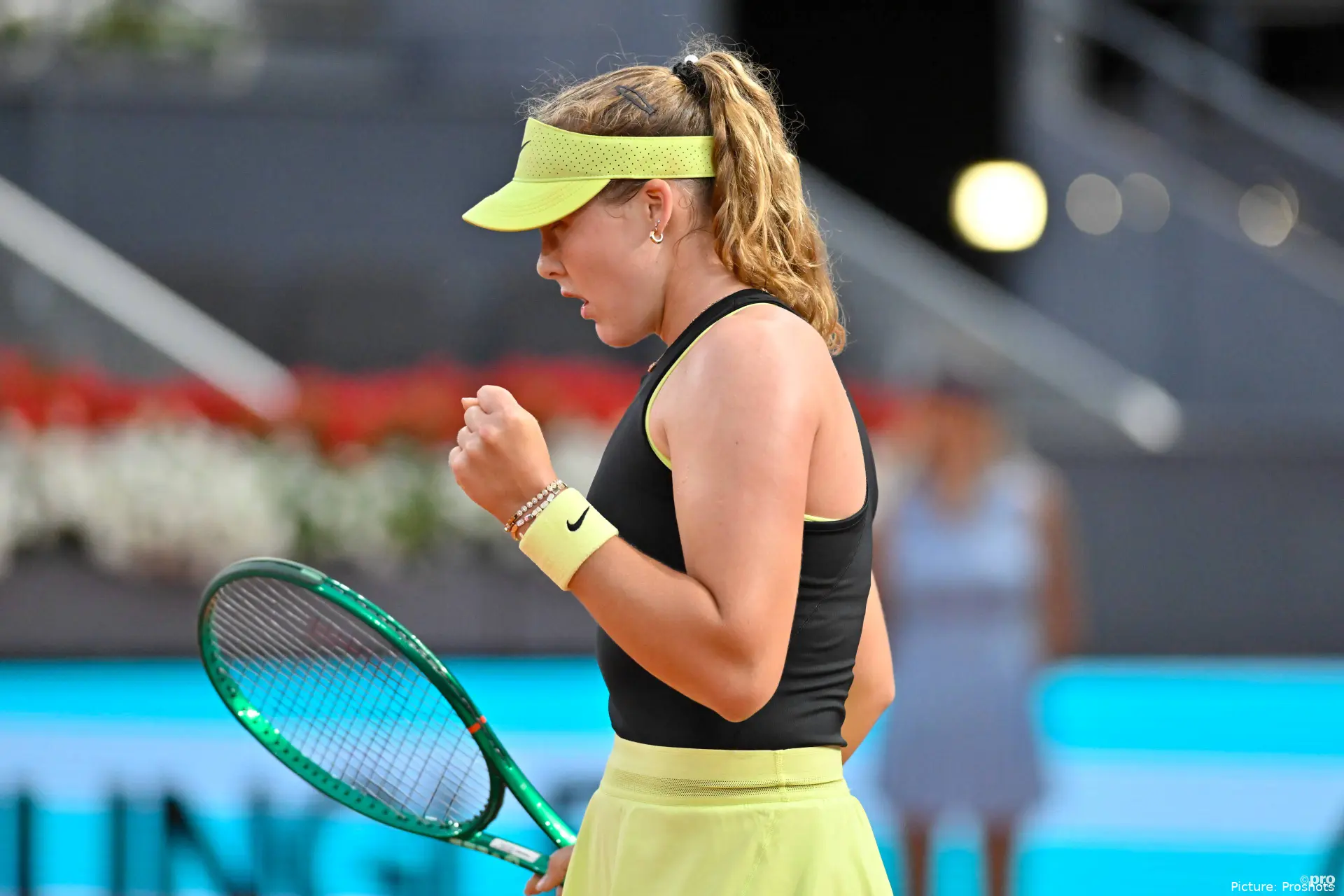
Mirra Andreeva arrived at the Rome Open 2026 after a clay-court swing that included a title in Linz, a semifinal in Stuttgart and a run to the final in Madrid, where she lost the decisive match at WTA 1000 level. In Rome, she opened with a 6-1, 6-0 win over Antonia Ruzic, a match that highlighted a clear shift in conditions compared to Madrid.
Despite the result in her opening round, the focus of her comments remained on what followed Madrid. She described an immediate emotional reaction after the final loss, which she characterised in direct terms. “I lost in the final. Oh, my God, I’m playing very bad right now. What is that?” the world No. 7 said to Tennis Channel.
The contrast between tournaments was also central to her explanation of early adjustments in Rome. She pointed to the difference between Madrid’s fast conditions and Rome’s heavier clay, which altered her shot production and timing during practice sessions.
“Honestly, like first two practices that I had here, I was pretty nervous because the conditions obviously are very different,” Andreeva added. “And as soon as I started hitting with girls and we played points, I want to finish the point and I feel like the ball just doesn't fly.”
Self-criticism after Madrid and emotional reset through competition
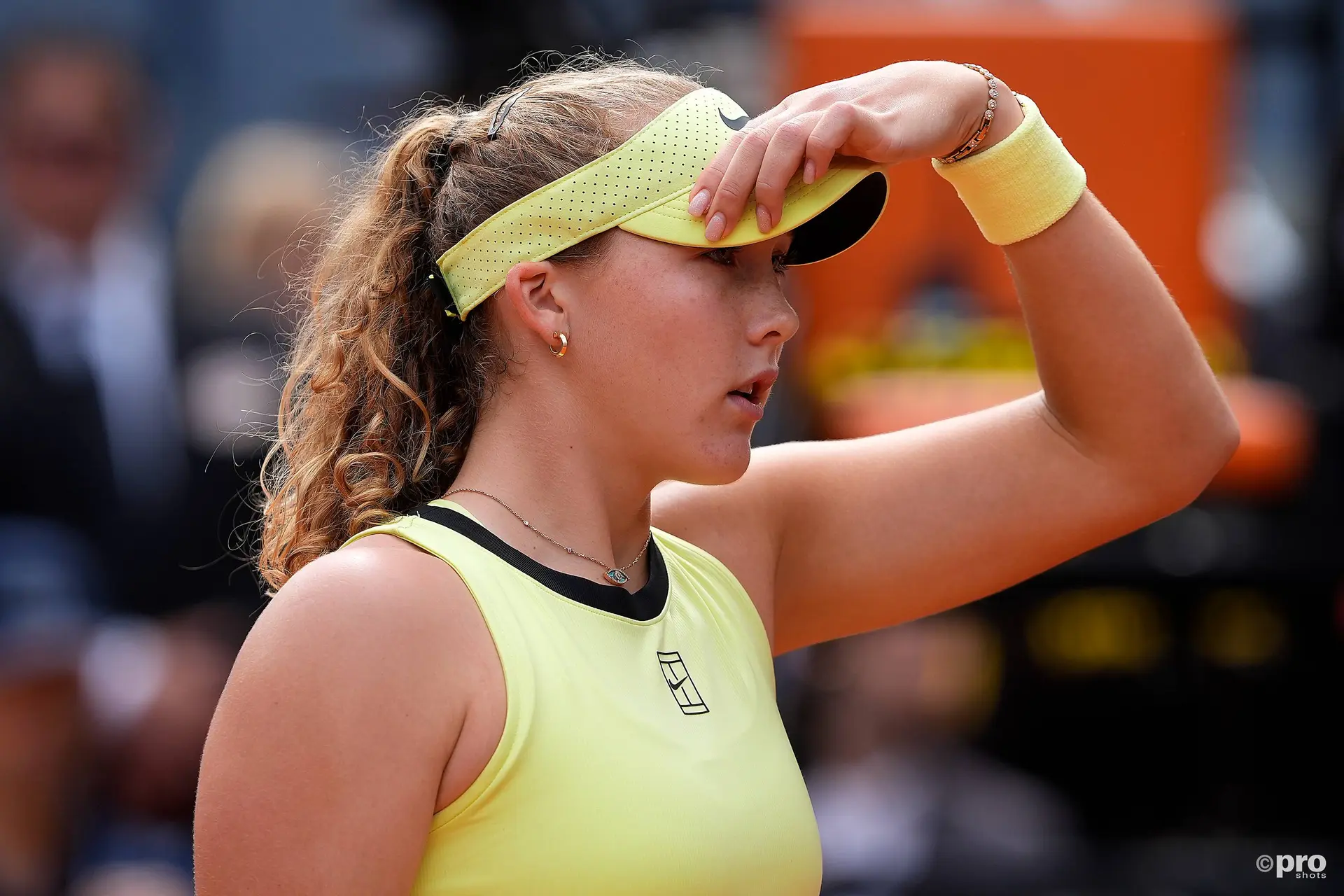
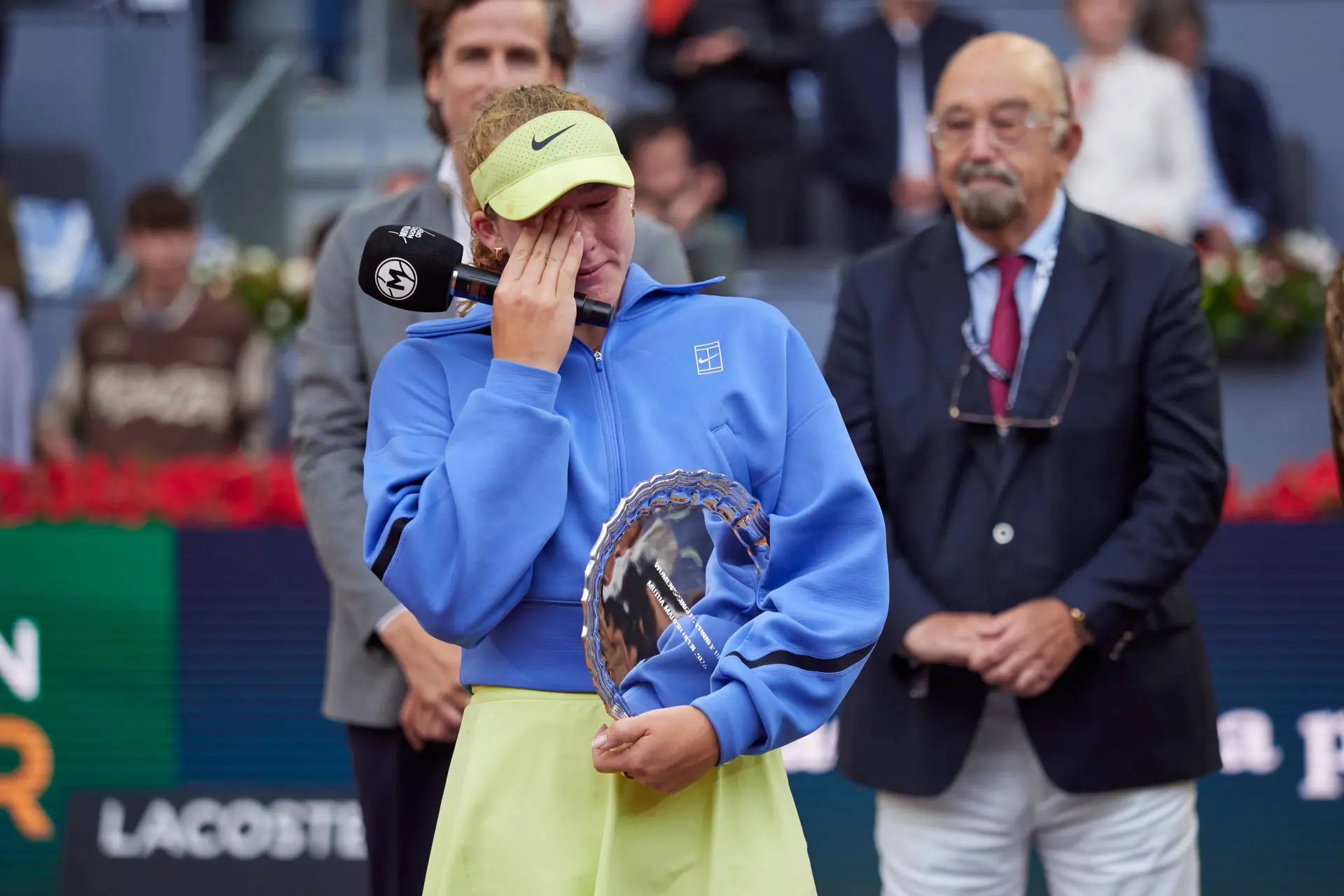
Andreeva expanded on the emotional reaction after her Madrid final loss, where she reached the title match at WTA 1000 level before falling short.
She was explicit about the internal response she had in the immediate aftermath. “I was really being hard on myself. After the final that I lost, obviously all I could think of how bad I was playing. I lost in the final. Oh, my God, I’m playing very bad right now. What is that?”

Mirra Andreeva celebrating the victory in the game, she raises her arms during the Mutua Madrid Open reaching her first Madrid semifinal
She also explained how quickly that mindset began to shift once she was back in competition the following day, when she played the doubles final. The need to refocus on performance altered her emotional state.
“But then the next day I can be very thankful that we were in the doubles final because it got me into another mindset that I couldn't just really be sad about losing the final. I really needed to focus on how to win the doubles final.”
Andreeva placed the Madrid result within the broader context of her clay season, which has included multiple deep runs and consistent results across events. “It was a great start to the clay season. I won a lot of matches and OK, wasn’t meant to be on this one. But we have Rome, we have Roland-Garros in a couple of weeks as well.”
Conditions shift in Rome and Conchita Martínez’s tactical input
The transition from Madrid to Rome required immediate technical adjustment due to contrasting playing conditions. Madrid’s altitude accelerates ball speed, while Rome’s slower clay surface extends rallies and reduces direct winners.
Andreeva described how quickly that difference affected her game in practice sessions. “My serve is slower. I cannot hit winners from the baseline. I feel like the ball just doesn't fly. And it all lands on the service line,” the 19-year-old player claimed. “Honestly, like first two practices that I had here, I was pretty nervous because the conditions obviously are very different. And as soon as I started hitting with girls and we played points, I want to finish the point and I feel like the ball just doesn't fly.”

The adjustment process included input from coach Conchita Martínez, whose past success in Rome provided a reference point for tactical changes. Martínez is a four-time champion at the tournament.
“We talked with Conchita. Obviously she has some experience playing on these courts. So we had a little talk and we were able to adjust my game just in time before my first round match.”
She also reacted to discovering Martínez’s historical record at the venue through visuals around the tournament site. “And then I see pictures in that tunnel when we go to the other gym. And I see her pictures like four times in a row. And I'm like looking there. And then I look at her and I'm like, wow.”
Andreeva also addressed the broader challenge of managing expectations during a season already marked by deep runs at major events. At 19, she has consistently reached late stages of WTA tournaments, increasing scrutiny and internal pressure.
“I’m learning on how to be nicer to myself and how to understand and accept that sometimes, obviously, you’re not going to be perfect,” Mirra Andreeva reflected. “Sometimes things are just going to go different ways, not just according to your plan. And you know, with time, I’m kind of learning how to accept all of that.”

Cristhián AvilaTennis Journalist
Cristhián Ávila is a tennis journalist based in Santiago, Chile, and has been part of the TennisUpToDate team since early 2023. He covers the ATP and WTA Tours as well as all four Grand Slams, producing breaking news, match reports, analysis, and regular liveblogs from major tournaments.
His reporting combines statistical analysis with clear explanation, helping readers understand tactical developments, player form, and broader storylines across the tour. Working fluently in both Spanish and English, Cristhián collaborates with an international editorial team and contributes to comprehensive global coverage. As part of his work, he has conducted interviews and media interactions with leading figures in the sport, including Caroline Wozniacki and John McEnroe.
In his journalism, Cristhián places strong emphasis on careful sourcing, editorial accuracy, and updating articles promptly when new, verified information becomes available. His coverage is grounded in research, context, and direct engagement with professional tennis.
claps 0visitors 0
Just In

Popular News


Latest Comments
- Does Sinner need that 4.5 mil? I doubt it. He can make that with three modelling gigs!😅🤣Rapunzel21-10-2026
- Did "People Magazine" purchase this website? This nonstop storyline is bullshit.
 mandoist21-10-2026
 - Listen... this is of no concern to anyone but these two. Deal with your own issues -- most of us have our own. Thanks, media, for these insignificant follow-ups which are meaningless.mandoist21-10-2026
- This is so very very sad, for all three of them. I truly thought they had an unbreakable bond, but life throws up so many differing challenges. Having your homeland suffering in such a terrible way, makes happiness lose out to guilt as well. Our thoughts are with them. X💔bjsexton20-10-2026
- I have lost all respect for Svitolina! Could she not have waited until he had played at the Paris Masters!!! She is selfish and don't give a damn about Gael. That is NOT how love is demonstrated Elina!!Rapunzel19-10-2026
- Perhaps convenient tennis tour sex is not a strong enough experience in which to base a marriage?mandoist19-10-2026
- Fight the Good Fight... Tennis (sports in general) need more Humans such as yourself.mandoist18-10-2026
- When is WTA going to mandate Genetic Testing (DNA) ???mandoist18-10-2026
- Hey, Dan... you just wake up from a coma? Regardless -- Thanks for the comedy this morning!mandoist18-10-2026
- Two Things: 1. Stop allowing these Spoiled Trust-Fund Elitists to behave badly. Your little hand-slaps do not deter them. 2. STOP the incessantly annoying "towel wiping" nonsense!!!!mandoist15-10-2026

Loading