"You’re so young and talented, it’s so annoying": Maja Chwalinska hilariously laments youthful exuberance of Mirra Andreeva after Roland Garros final loss
WTA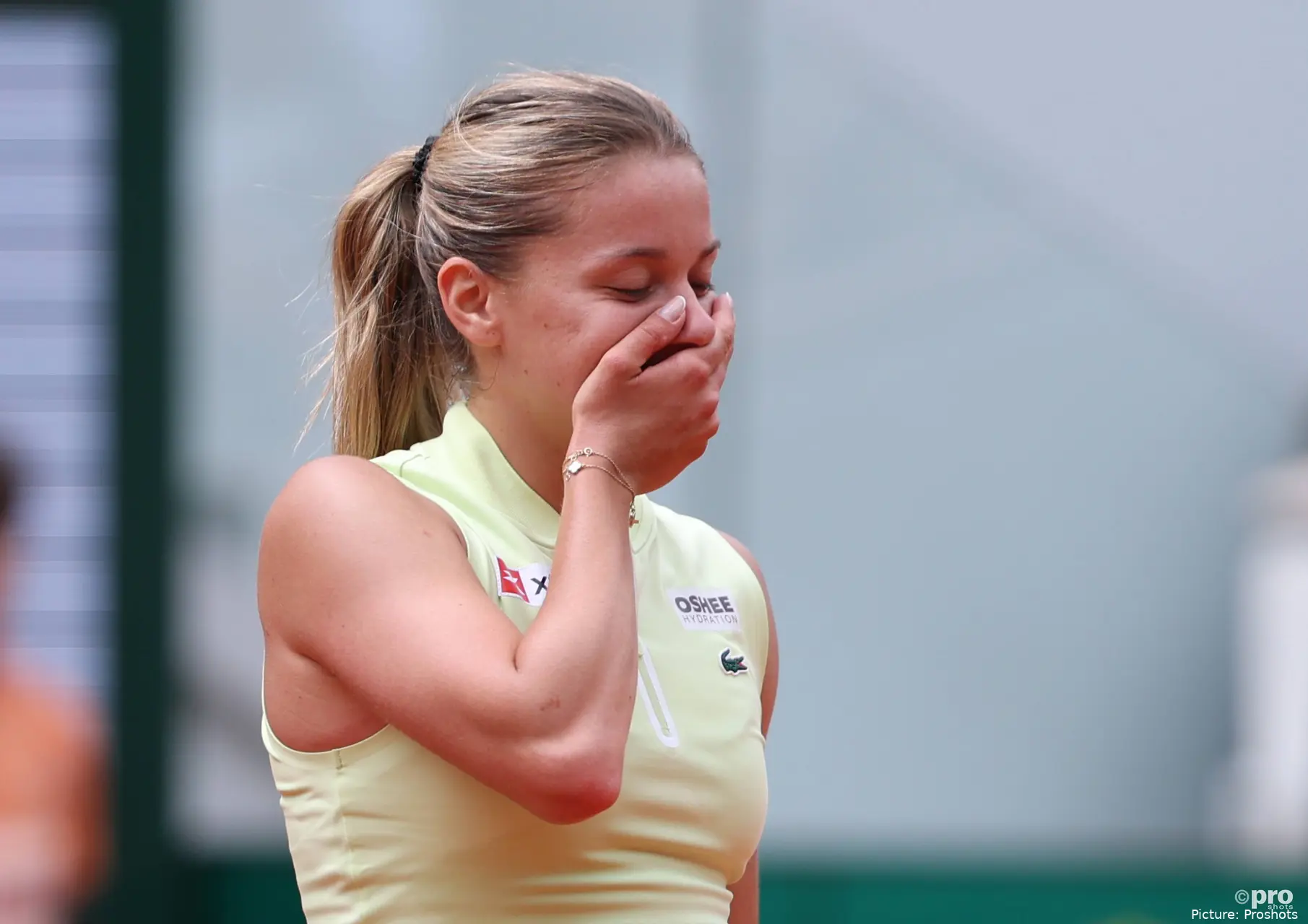
Maja Chwalinska finished her Roland-Garros campaign with a defeat in the final, ending a run that began in qualifying and carried her to her first Grand Slam title match. The Polish player entered the tournament as world No.114 and leaves projected to reach No.21 in the WTA rankings after a sequence of wins over established opposition.
Her path included a main-draw debut at a major and an opening-round upset over Olympic gold medallist Zheng Qinwen, achieved on the same courts where the Chinese player won Olympic gold in Paris 2024. From there, she built a series of victories over seeded and experienced players.
The run continued with wins over Elise Mertens, Maria Sakkari, Anna Kalinskaya and Diana Shnaider, confirming consistency across all stages of the event. The final, however, went to Mirra Andreeva, who handled conditions more effectively in a match decided under difficult wind.
Chwalinska’s tournament also reshaped her season trajectory, with a jump into the top 25 and a rise to No.14 in the Race, positioning her for direct entry into the biggest events on the WTA calendar.
“I will never forget these three weeks”
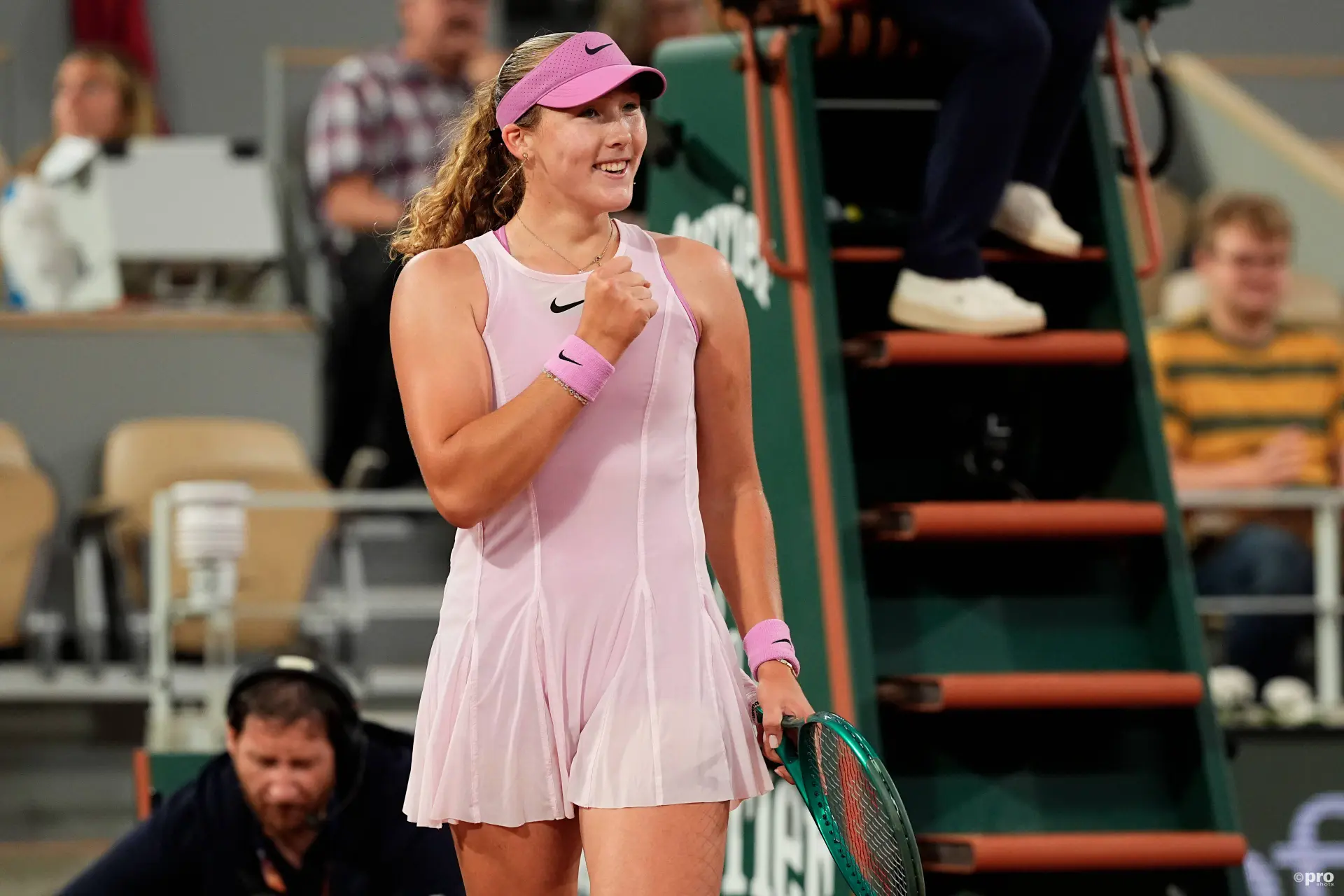
She joked on court afterwards about how talented Andreeva was for being so young. "First of all congrats to Mirra. You’re such an incredible player. You’re so young and talented, it’s so annoying. Congrats to you and your team for an amazing job. I wish you all the best for the future.”
“I’d like to thank all of you guys who came today. Not only today but these 3 weeks. Thank you for supporting me. I really felt your love. I’m very grateful. I wish you could see a better match today, but Mirra was just too good for me so I guess it’s her fault. I tried my best I’m sorry. Thank you so much. Paris will stay forever in my heart.”
Chwalinska framed the tournament primarily through its duration and emotional weight, repeatedly returning to the same central idea of continuity and effort across matches.
“Yeah, definitely an unforgettable three weeks for me. I’ll never forget these three weeks for sure,” the 24-year-old Polish player said. “Very challenging one today. Mira was a much better player today and she deserved to win. But definitely I’m proud of my effort. I obviously gave my all. Yeah, and I think I can be proud of myself too.”

Maja Chwalinska -Pologne at Roland Garros
She maintained the same tone when discussing the final itself, placing emphasis on acceptance of the result and the level of her opponent.
“I obviously gave my all. Mirra was a much better player today and she deserved to win,” said Chwalinska, who stated she felt stress at the end of the high demands of the last weeks of competition. “I was definitely stressed, but I was stressed before every single match, to be honest. I couldn’t eat for the last three weeks. My coaches were eating pizza and I was like, no.”
Ranking rise, adaptation and what comes next
Chwalinska addressed the impact of her ranking jump directly, moving from outside the top 100 into projected top-25 territory after Roland-Garros. “It will be different for sure. I guess I’ll see. I think and I hope I’ll adapt. I will definitely work hard as I am working hard. I’ll give my all to be better each and every day and I’ll see what the results will be.”
She placed emphasis on process rather than outcome when asked about sustaining the level achieved in Paris, especially after admitting she did not feel she played her best tennis during the tournament.
“Honestly, I didn’t feel like I’m playing my best tennis, which is kind of weird. But I feel like I gained a lot of confidence because I’ve never really played against high ranked players before. It was the very first time that I faced them.”
The Polish player — outside the top 100 at the beginning of the tournament — stated that there is a high level among players who are not among the highest ranked, and that the differences are not as large as perceived from the outside. “It’s such a thin line now. I feel like a lot of things need to click, but yeah, for sure there are so many great players.”

Maja Chwalinska of Poland at Roland Garros
Looking ahead to scheduling decisions and Wimbledon, she was direct about her immediate plans and recovery priorities after the longest run of her career.
“I’m not going to play anything before Wimbledon. That’s for sure. I definitely need some time to recharge. I will play only Wimbledon this year.”
Chwalinska will have to play Wimbledon qualifying, since the entry cut-off was made before Roland-Garros. In any case, she will be the first seed in qualifying, where she will have to win three matches before reaching the main draw — just as she did at Roland-Garros in the week prior to the tournament.
Mental toughness, learning curve and match reading
Chwalinska addressed the mental demands of professional tennis and the structural pressure of competing week after week from a very early age, especially in an individual sport environment.
“Tennis is such a tough sport,” the new world No. 21 stated. “It’s so individual. We start so early, we are basically kids when we start and we are teenagers, and people are expecting that we are going to behave like adults already and we’re just kids, really. The pressure is huge because every match we are exposed and people can judge us however they want.”
She also expanded on the unpredictability of performance progression, linking her own breakthrough to long-term development rather than a sudden change in level during the tournament.
“It’s such a huge jump all of a sudden, but really it’s been 18 years of hard work and patience and perseverance. I had to go through so much to be in this position. Life’s weird sometimes and you just gotta do your thing and believe that it will click someday. And I’m happy that it did.”
On the tactical phase of the final, she described the loss of momentum and conditions as decisive factors, particularly Andreeva’s adaptation to wind and court dynamics.
“I felt like I have no weapon against her today. She definitely handled wind much better than me and she played so smart. The wind was crazy. I was not surprised. I admire how she handled it. I know I need to work on it.”
Maja Chwalinska – Roland Garros 2026 Final Run
| Round | Result | Opponent | Opponent Rank | Score |
| Q1 | W | Alice Rame | 200 | 6-0, 6-3 |
| Q2 | W | Carole Monnet | 196 | 6-0, 6-1 |
| Q3 | W | Suzan Lamens | 128 | 7-6, 7-5 |
| R128 | W | Qinwen Zheng | 56 | 6-4, 6-0 |
| R64 | W | Elise Mertens | 23 | 6-4, 6-0 |
| R32 | W | Maria Sakkari | 49 | 1-6, 6-3, 6-2 |
| R16 | W | Diane Parry | 92 | 6-3, 6-2 |
| QF | W | Anna Kalinskaya | 22 | 7-6, 6-3 |
| SF | W | Diana Shnaider | 23 | 7-6, 6-4 |
| F | L | Mirra Andreeva (8) | 8 | 3-6, 2-6 |

Cristhián AvilaTennis Journalist
Cristhián Ávila is a tennis journalist based in Santiago, Chile, and has been part of the TennisUpToDate team since early 2023. He covers the ATP and WTA Tours as well as all four Grand Slams, producing breaking news, match reports, analysis, and regular liveblogs from major tournaments.
His reporting combines statistical analysis with clear explanation, helping readers understand tactical developments, player form, and broader storylines across the tour. Working fluently in both Spanish and English, Cristhián collaborates with an international editorial team and contributes to comprehensive global coverage. As part of his work, he has conducted interviews and media interactions with leading figures in the sport, including Caroline Wozniacki and John McEnroe.
In his journalism, Cristhián places strong emphasis on careful sourcing, editorial accuracy, and updating articles promptly when new, verified information becomes available. His coverage is grounded in research, context, and direct engagement with professional tennis.
claps 3visitors 2
Just In


Popular News
Latest Comments
- great articlestennisseserver07-10-2026
- Medvedev was leading Djokovic 7-5, 3-5 when an attempted return..' NO you ignorants, Djokovic was leading .weiss05-10-2026
- No more bullshit "Wildcards" to these two. Qualify like everyone else -- there will be cameras there, too. Time to scream... WTF ????!!!!
 mandoist29-09-2026
 - Let's not BS the general public -- Sabalenka started showing cracks in her game last season. Her losses and near-losses started at about the same time she began being distracted by Fame (constant Selfies, making TV commercials, magazine shoots, endless Social Media nonsense, etc., etc.) One would think even Saba could recognize the parallels with others who failed before her -- Raducanu, Giorgi, Bouchard to name a few.mandoist25-09-2026
- Gross!! Hey Raducanu, Giorgi, and Bouchard -- reserve a seat at your Social Media Selfie table for Saba + Naomi. They're heading in your direction soon enough.mandoist24-09-2026
- And then these same players will complain about how lengthy their season’s were and need more time-off. I’m all for more tennis but the amount of tennis we get now is actually kind of crazy! We all need a break, especially the players.DaveyWavey23-09-2026
- You should do a comparison article for "different kinds of justice" the courts decide for tennis players. I can think of at least three players who received very small bans of a few months, however Tara Moore has been fighting for her literal survival the past few years. It seems odd considering she is not a "name" player, unlike the other cases.DaveyWavey22-09-2026
- PRIZE MONEY & POINTS Winner - $185,500 Finalist - $114,500 Semi-Finalist - $66,003 Quarter-Finalist - $35,000 Round of 16 - $18,045 Round of 32 - $13,005 Winner - 500 Finalist - 325 Semi-Finalist - 195 Quarter-Finalist - 108 Round of 16 - 60 Round of 32 - 1DaveyWavey20-09-2026
- Pegula withdrew from this Singapore event
 tennishappens19-09-2026
 - Serena Williams chose her tournaments. It's not such a bad idea.MuswellHillbilly17-09-2026

Loading