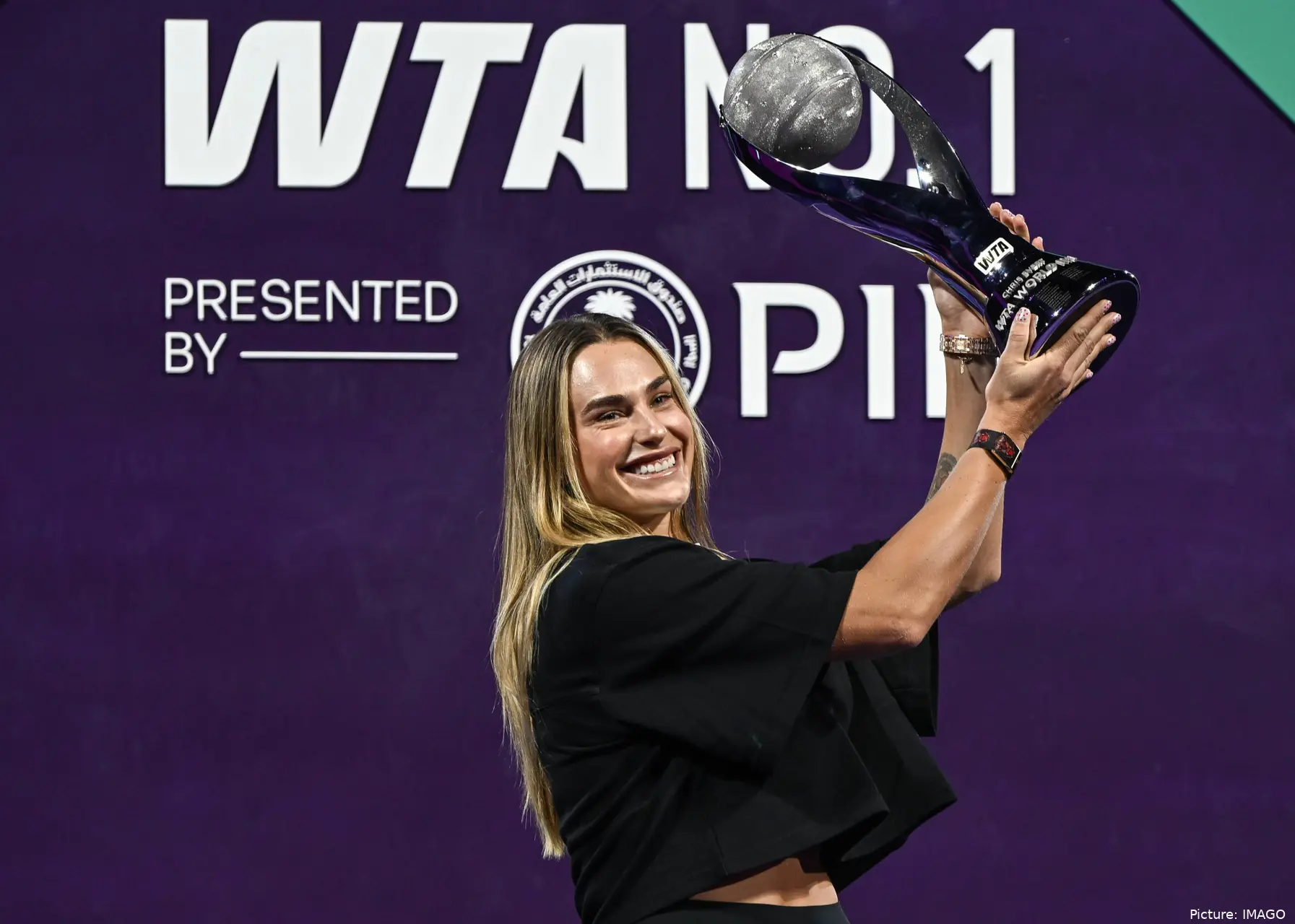
Aryna Sabalenka’s time at the top of the rankings continues to extend, but her latest milestone arrives alongside a stretch of form that reinforces why she has remained there. The Belarusian has now reached 83 weeks as World No. 1, a figure that reflects sustained dominance during last couple of seasons.
“I mean, the ranking is that thing that is important, but not really important," the 4-time Grand Slam champion said to Tennis Channel. "I think it’s all about how you improve your game, how you focus on getting better, basically, as a player and the person every day. I think it’s all about that. I’m trying to focus on the right thing.”
That perspective has been reflected in her current campaign at the Miami Open, where Sabalenka has moved into the quarterfinals without dropping a set. Wins over Ann Li, Caty McNally and Zheng Qinwen have underlined her control across different matchups, combining baseline authority with improved decision-making in key moments.
The broader context further strengthens the narrative. Sabalenka arrives in Miami on a nine-match winning streak, having lifted the title at Indian Wells with a victory over Elena Rybakina in the final. Across the opening months of the season, she holds a 20-1 record, with titles in Brisbane and Indian Wells, as well as a runner-up finish at the Australian Open.
As the tournament enters its decisive phase, Sabalenka’s position is defined by both consistency and opportunity — not only to extend her current run, but to place herself within a select group of players who have completed the Sunshine Double.

Sustained dominance backed by current form
Sabalenka’s 83 weeks at World No. 1 are not built on isolated peaks, but on continuity across surfaces and tournaments. Her current sequence in Miami reflects that pattern, with performances that have combined control and efficiency.
“I definitely feel much better today on court. Better rhythm, better serving, better actually everything. I feel like I’m getting used to these conditions, which is really tough and tricky. But getting more and more comfortable with every match I’m playing. So I hope that it’s going to be progressing.”
That sense of progression has been evident in her ability to manage matches without conceding momentum. In Miami, she has yet to drop a set, navigating each round with a level of authority that limits extended swings in play. The nine-match winning streak, carried over from Indian Wells, further highlights her current level.
Her performance in California, where she defeated Rybakina in the final, provided a benchmark. In Miami, she has maintained that standard, translating form into results without visible drop-off, even against opponents capable of disrupting rhythm.
Marginal gains and evolving approach
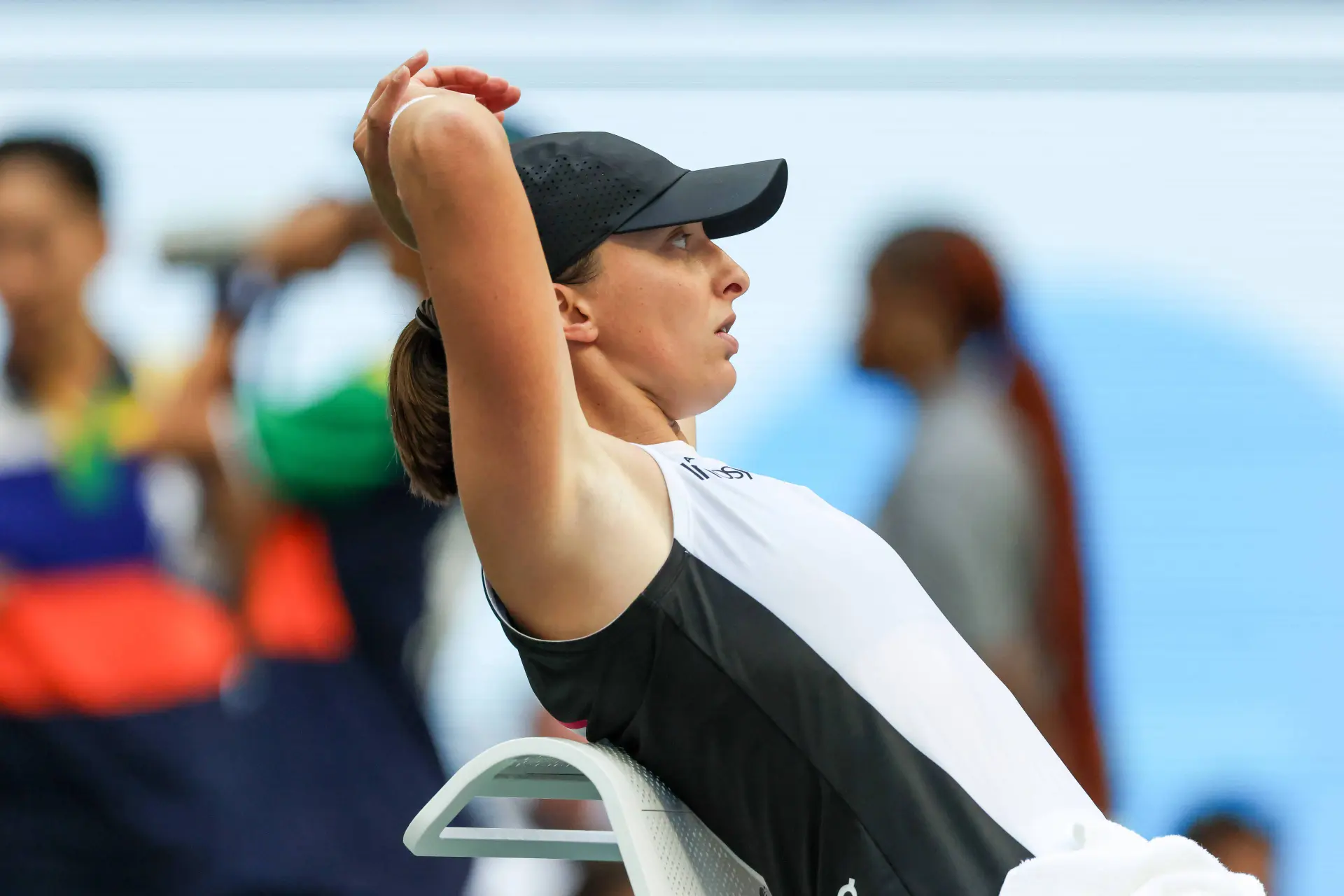
Despite her position at the top, Sabalenka continues to operate within a framework of incremental improvement. That approach has included recent technical adjustments, particularly with equipment, aimed at refining aspects of her game rather than overhauling them.
“Maybe I did a small adjustment on my racket. But you know what? I just became more comfortable doing this actually recently. I feel like there’s always going to be the moment where you feel like, 'OK, I can improve a little bit in this little'... little, but not little things."
The impact of those adjustments is reflected in her consistency on serve and her ability to dictate from the baseline. In Miami, she has combined power with controlled aggression, avoiding the fluctuations that can arise in faster conditions. "I was brave enough before in Indian Wells to do a small adjustment on my racket," the world No. 1 said. "And I’m super happy that I did it. I can see how much advantage it brings in my game. I’m not going to open all the cards, but I’m really enjoying this.”
Opportunity for history in Miami
Beyond extending her winning streak, Sabalenka’s current position opens the possibility of joining a limited group of players to complete the Sunshine Double. Only Steffi Graf, Kim Clijsters, Victoria Azarenka and Iga Swiatek have previously achieved the feat.
Standing in her path is Hailey Baptiste, who has emerged as one of the breakout performers of the tournament. The 25-year-old American has defeated Liudmila Samsonova, Elina Svitolina and Jelena Ostapenko — the latter in straight sets — to reach her first WTA 1000 quarterfinal.
“I really thought that we played somewhere, but I’ve been watching her game, especially here in Miami. Yeah, she was playing incredible tennis, serving well. She has a great variety in the game. Not an easy opponent, but I’m really looking forward to facing her.”
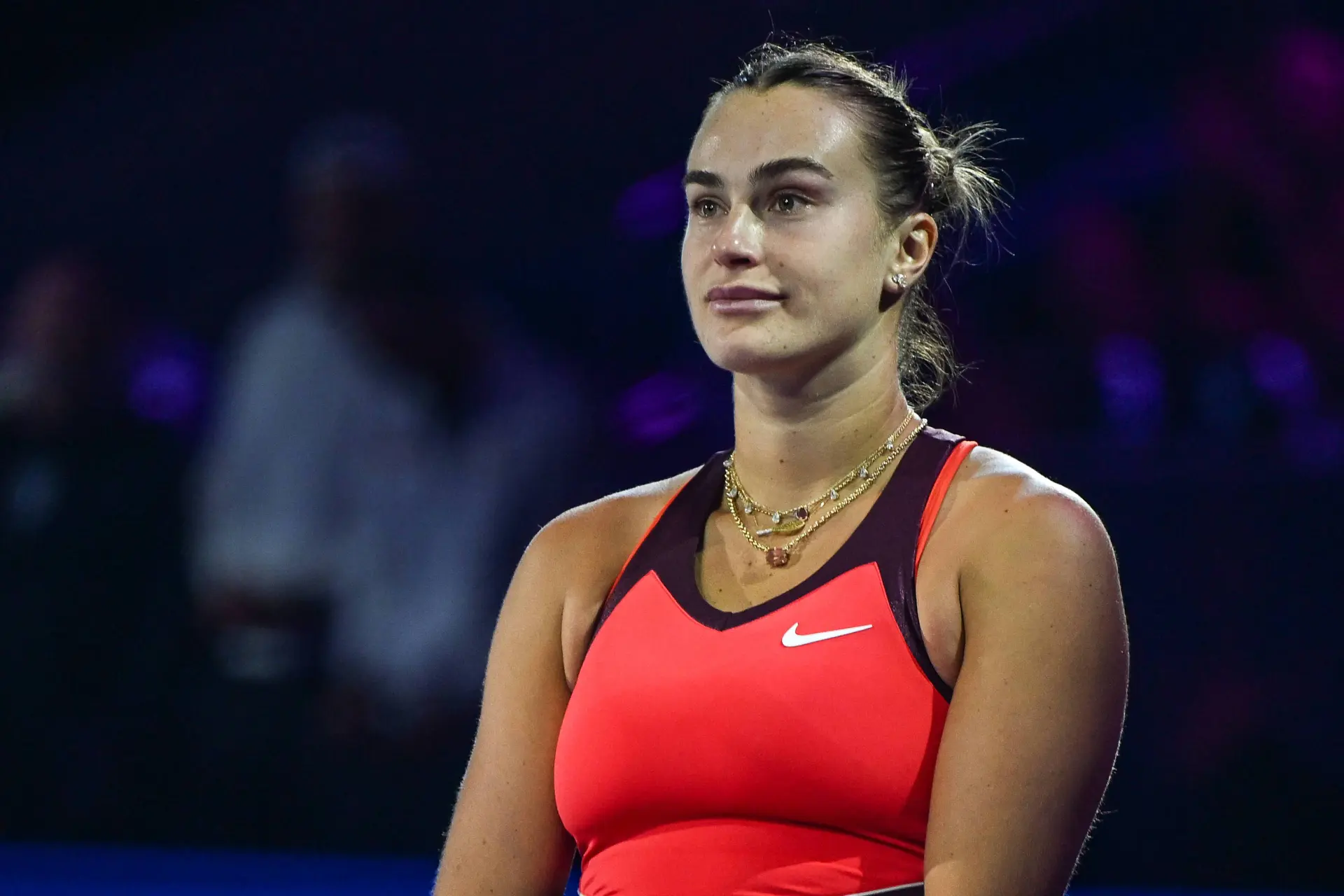
The matchup presents a contrast in trajectories: Sabalenka’s sustained presence at the top against Baptiste’s surge through the draw. For Sabalenka, the objective remains consistent — maintain her level and extend her run without deviation from her process.
With 83 weeks at World No. 1 already secured, Sabalenka’s focus now shifts to the immediate task in Miami. A place in the semifinals — and a step closer to the Sunshine Double — will depend less on the milestone behind her, and more on the execution that has carried her through a near-flawless start to the season.
Most weeks as world No. 1 WTA
| Stand | Player | Weeks |
| 1 | Steffi Graf | 377 |
| 2 | Martina Navratilova | 332 |
| 3 | Serena Williams | 319 |
| 4 | Chris Evert | 260 |
| 5 | Martina Hingis | 209 |
| 6 | Monica Seles | 178 |
| 7 | Iga Swiatek | 125 |
| 8 | Ashleigh Barty | 121 |
| 9 | Justine Henin | 117 |
| 10 | Lindsay Davenport | 98 |
| 11 | Aryna Sabalenka | 83* |
| 12 | Caroline Wozniacki | 71 |
| 13 | Simona Halep | 64 |
| 14 | Victoria Azarenka | 51 |
| 15 | Amélie Mauresmo | 39 |
*Current No. 1

Cristhián AvilaTennis Journalist
Cristhián Ávila is a tennis journalist based in Santiago, Chile, and has been part of the TennisUpToDate team since early 2023. He covers the ATP and WTA Tours as well as all four Grand Slams, producing breaking news, match reports, analysis, and regular liveblogs from major tournaments.
His reporting combines statistical analysis with clear explanation, helping readers understand tactical developments, player form, and broader storylines across the tour. Working fluently in both Spanish and English, Cristhián collaborates with an international editorial team and contributes to comprehensive global coverage. As part of his work, he has conducted interviews and media interactions with leading figures in the sport, including Caroline Wozniacki and John McEnroe.
In his journalism, Cristhián places strong emphasis on careful sourcing, editorial accuracy, and updating articles promptly when new, verified information becomes available. His coverage is grounded in research, context, and direct engagement with professional tennis.
claps 0visitors 0
Just In

Popular News
Latest Comments
- Two Things: 1. Stop allowing these Spoiled Trust-Fund Elitists to behave badly. Your little hand-slaps do not deter them. 2. STOP the incessantly annoying "towel wiping" nonsense!!!!
 mandoist15-10-2026
 - A healthy Qinwen may be hard to stop next season. She was already scaring her opponents before her medical leave(s). Unfortunately, Zheng insisted on singing again. On the positive side -- Mirra did not sing!! ;~}mandoist11-10-2026
- Where is it written that athletes, entertainers... People in general... are mandated to keep looking at -- or even using [anti]Social Media? Public & private figures consistently complain and reveal their concerns about negativity and violence thrown at them -- yet they insist on participating. Avoid it, don't use it, don't read it. It's okay to occasionally look up at the World instead beating your eyes & thumbs to death on The Inventions out there.mandoist11-10-2026
- great articlestennisseserver07-10-2026
- Medvedev was leading Djokovic 7-5, 3-5 when an attempted return..' NO you ignorants, Djokovic was leading .weiss05-10-2026
- No more bullshit "Wildcards" to these two. Qualify like everyone else -- there will be cameras there, too. Time to scream... WTF ????!!!!mandoist29-09-2026
- Let's not BS the general public -- Sabalenka started showing cracks in her game last season. Her losses and near-losses started at about the same time she began being distracted by Fame (constant Selfies, making TV commercials, magazine shoots, endless Social Media nonsense, etc., etc.) One would think even Saba could recognize the parallels with others who failed before her -- Raducanu, Giorgi, Bouchard to name a few.mandoist25-09-2026
- Gross!! Hey Raducanu, Giorgi, and Bouchard -- reserve a seat at your Social Media Selfie table for Saba + Naomi. They're heading in your direction soon enough.mandoist24-09-2026
- And then these same players will complain about how lengthy their season’s were and need more time-off. I’m all for more tennis but the amount of tennis we get now is actually kind of crazy! We all need a break, especially the players.DaveyWavey23-09-2026
- You should do a comparison article for "different kinds of justice" the courts decide for tennis players. I can think of at least three players who received very small bans of a few months, however Tara Moore has been fighting for her literal survival the past few years. It seems odd considering she is not a "name" player, unlike the other cases.DaveyWavey22-09-2026

Loading