Wimbledon WTA Day Three Round-Up | Mirra Andreeva knocked out in epic battle, Gauff survives late drama as Sabalenka cruises on
WTA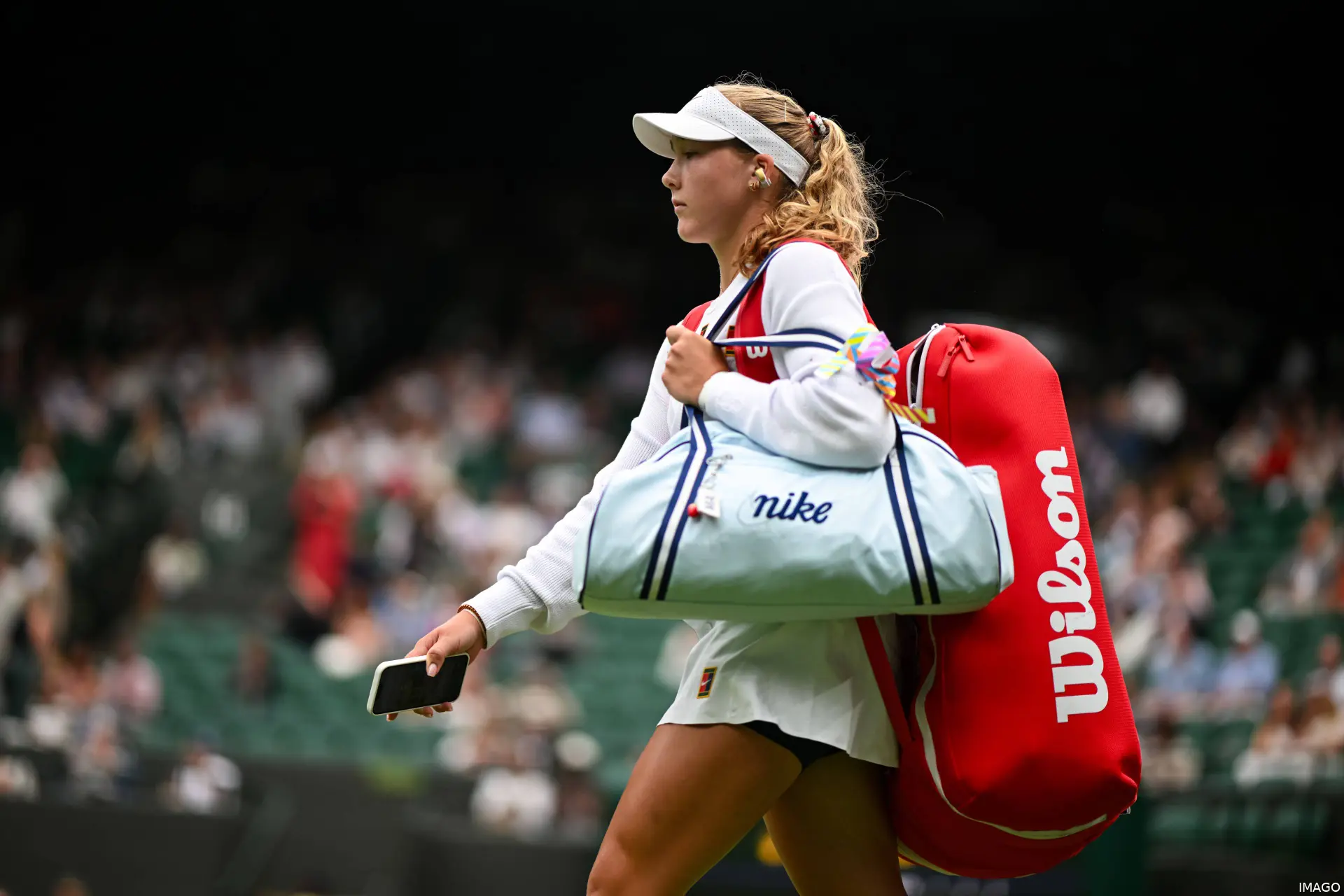
Wimbledon’s third day in the women’s draw produced a clear split between top-seed control and extended resistance across multiple sections of the bracket. Aryna Sabalenka and Coco Gauff both progressed after being tested in phases of their opening matches, while Jessica Pegula and Naomi Osaka secured more structured victories to move into the next round.
The day also featured competitive swings behind the headline results, with Daria Kasatkina overcoming a tight three-set battle and Karolína Muchová continuing her strong grass-court form. Early exits for seeded and unseeded players further shaped the draw, reinforcing the volatility typical of the opening rounds at Wimbledon.
Aryna Sabalenka withstands second-set surge to open campaign
Aryna Sabalenka def. McCartney Kessler 6-1, 7-6
Aryna Sabalenka booked her place in the third round at Wimbledon after a straight-sets victory over McCartney Kessler, although the World No. 1 was forced into a far more competitive second set after a one-sided opener. The Belarusian imposed immediate pressure through aggressive returning and first-strike baseline patterns that prevented any early rhythm from her opponent.
Read also
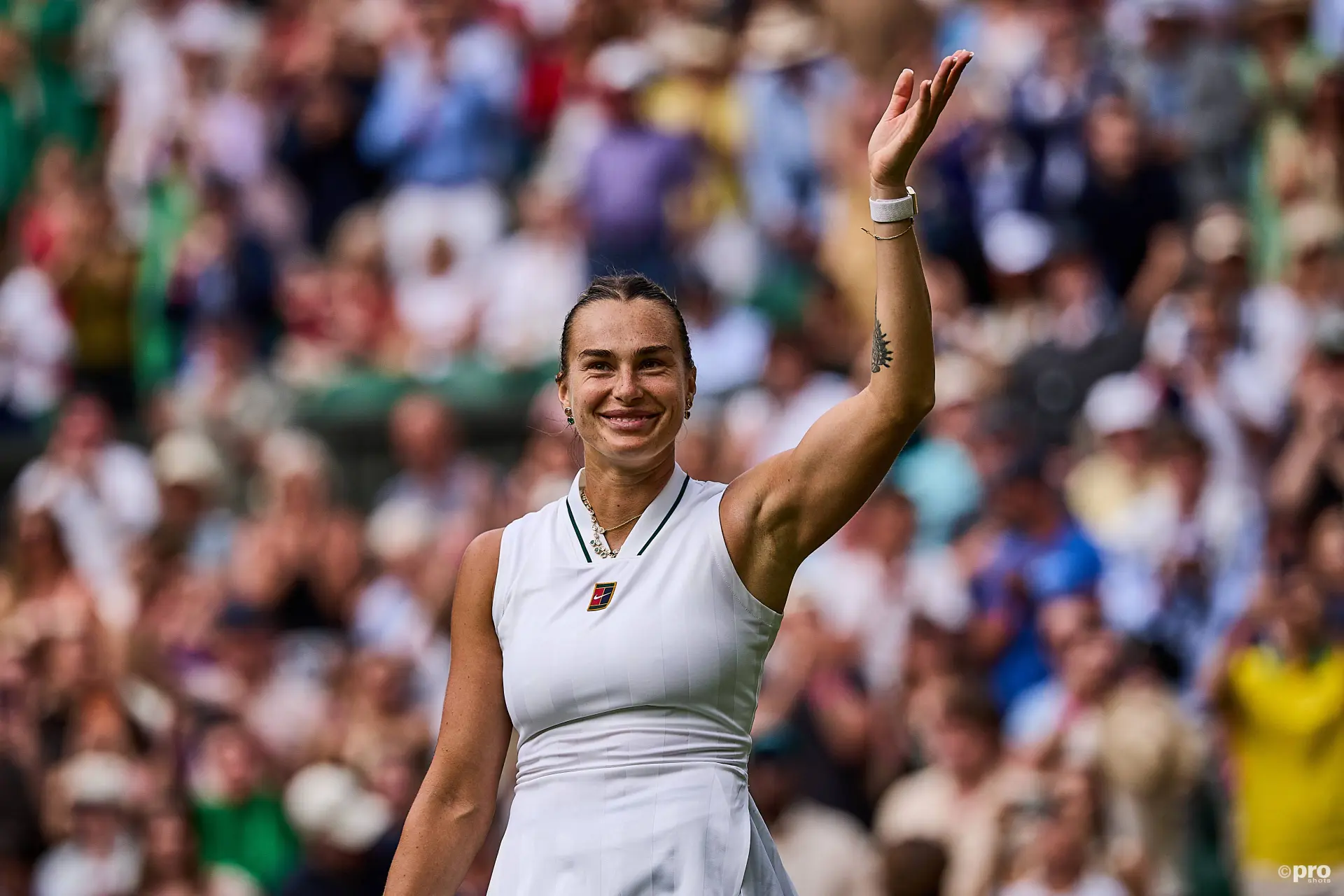
Kessler adjusted effectively in the second set, increasing depth on return and disrupting Sabalenka’s timing behind serve. The American built a 5-2 lead and created two set points, exposing a rare stretch of vulnerability from the top seed under sustained scoreboard pressure.
Sabalenka responded with composure, recovering the break deficit and stabilising her first-serve percentage in key moments. She ultimately controlled the tiebreak phase to close out a match that shifted significantly in intensity after the opening set.

Aryna Sabalenka of Belarus celebrates following her victory over Teodora Kostovic of Serbia during the Ladies' Singles on day one of the 2026 Wimbledon
Coco Gauff survives deciding-set tiebreak against Solana Sierra
Coco Gauff def. Solana Sierra 6-3, 3-6, 7-6(10-7)
Coco Gauff advanced to the third round after a high-intensity battle against Solana Sierra, in a match defined by sustained momentum swings and late-set pressure scenarios. The American struggled to establish early control as Sierra dictated baseline tempo and forced errors through depth and consistency.
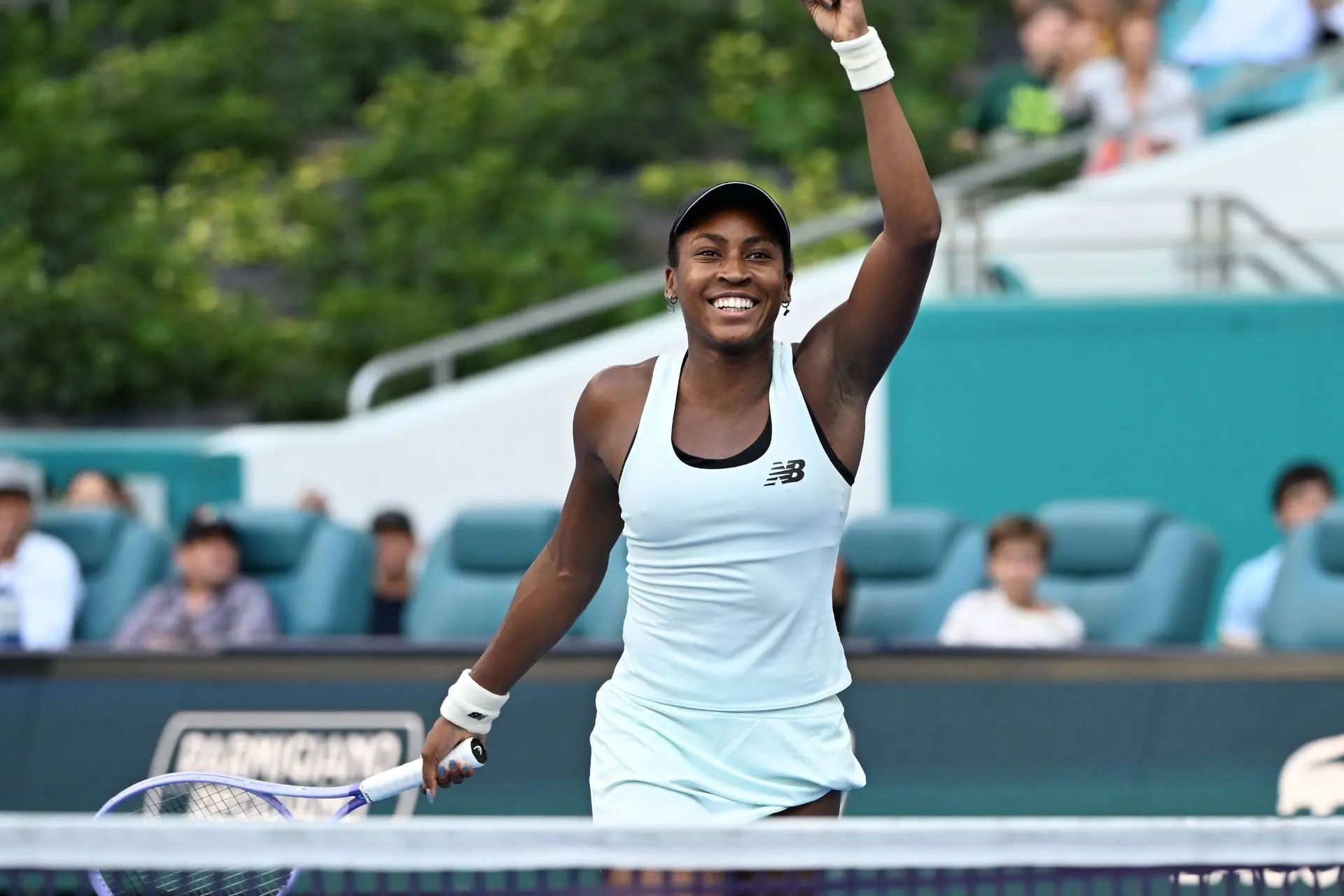
Gauff gradually improved her return positioning in the second set, reducing unforced errors and extending rallies on more neutral terms. However, Sierra reasserted control in the deciding set, breaking late and even serving for the match at 5-3, placing Gauff under maximum pressure.
The closing phase became a test of execution under tension, with Gauff raising aggression on return and shortening points under pressure. After breaking back, she overturned a 7-4 deficit in the final-set tiebreak by winning six consecutive points to complete a comeback built on resilience and clutch decision-making.

Daria Kasatkina recovers to eliminate Janice Tjen in three sets
Daria Kasatkina def. Janice Tjen 6-7, 6-1, 6-4
Daria Kasatkina recovered from a tight opening-set defeat to overcome Janice Tjen in a match shaped by momentum swings and tactical adjustments. The first set was decided in a tiebreak after both players exchanged breaks under pressure.
Kasatkina responded by increasing return depth and reducing unforced errors in the second set, gaining full control of baseline exchanges. Tjen struggled to sustain the intensity from the opener as rallies lengthened.
In the deciding set, Kasatkina secured a late break to complete the turnaround, managing the closing stages with greater consistency and structure. Her adaptability in rhythm proved decisive in reversing the early deficit.

Naomi Osaka opens Wimbledon with controlled straight-sets win
Naomi Osaka def. Anastasia Gasanova 6-3, 6-2
Naomi Osaka advanced to the third round at Wimbledon with a controlled straight-sets victory over Anastasia Gasanova, producing one of her most statistically complete performances of the day. The former World No. 1 dictated from the outset, combining a high first-serve percentage with clean baseline execution to prevent any sustained resistance from her opponent.
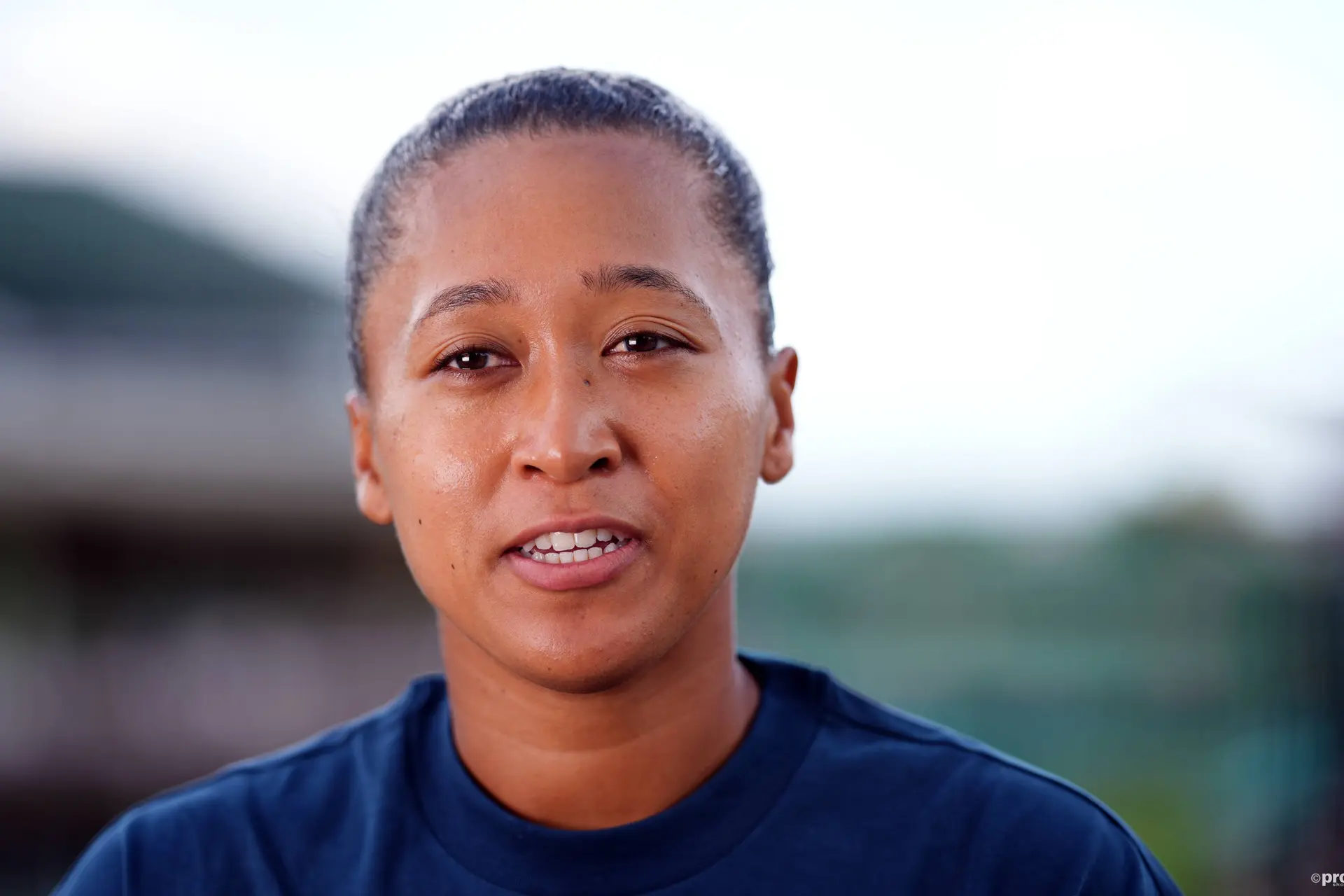
Osaka delivered a dominant serving display, producing 8 aces and landing 70% of first serves in, winning 79% of those points. Across the match she won 77% of total service points and consistently neutralised return pressure, not facing a single break point throughout the encounter. Her efficiency on serve translated directly into scoreboard control, converting 3 of 6 break opportunities.
The match dynamics were defined by her superiority in winners and error control, finishing with 30 winners compared to just 10 from Gasanova. That gap reflected a clear structural imbalance throughout the contest, as Osaka dictated both serve and baseline exchanges to secure progression in just over an hour without significant turbulence.

Karolína Muchová continues strong grass form with straight-sets win
Karolína Muchová def. Shuai Zhang 6-3, 6-2
Karolina Muchova extended her strong grass-court run to six consecutive victories after a controlled straight-sets win over Shuai Zhang at Wimbledon, following her title run at Bad Homburg the previous week. The Czech continues to show strong adaptation to surface conditions, combining variation and first-strike efficiency to dictate baseline exchanges from early stages.
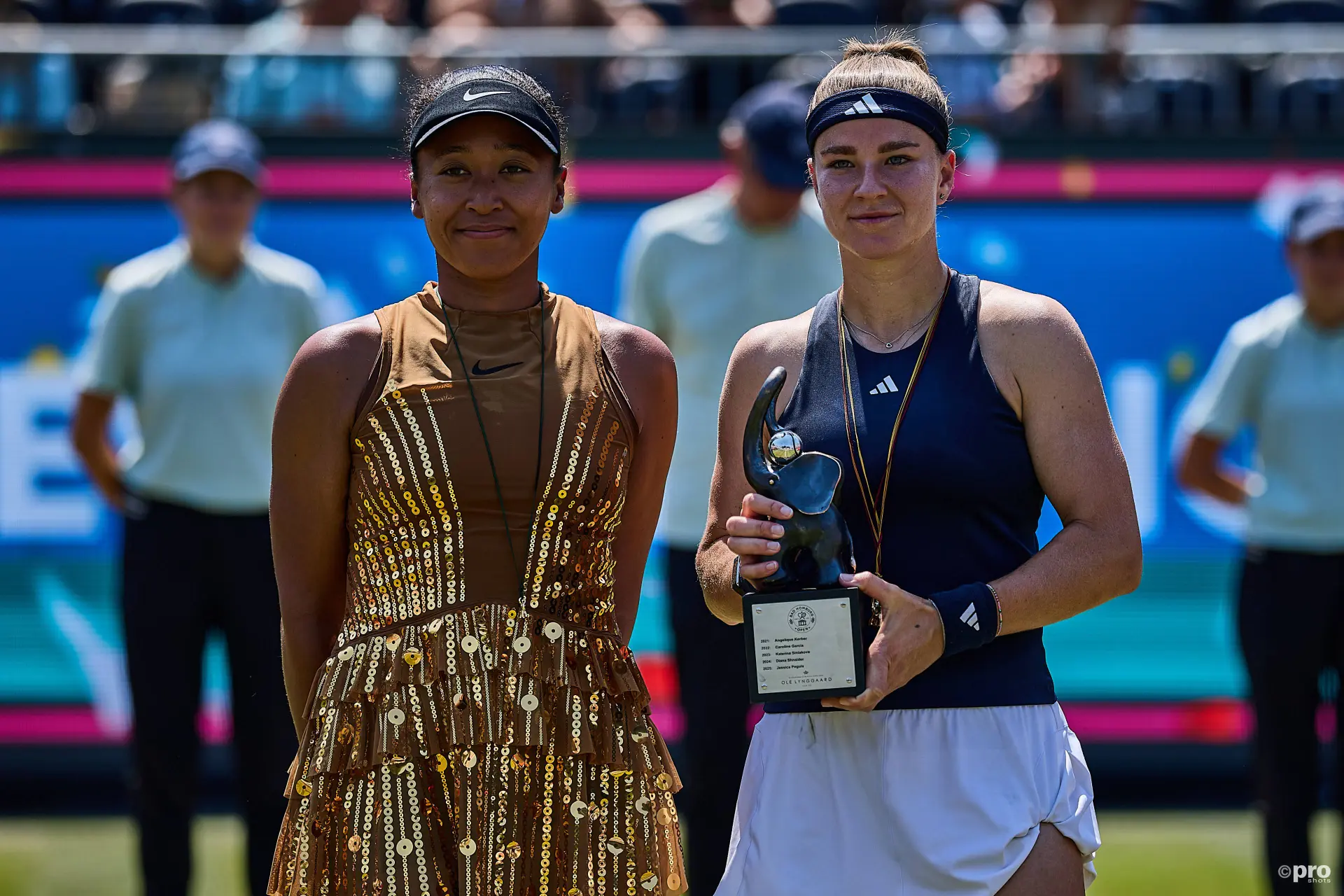
Muchova was particularly solid behind serve, producing up to 9 aces and winning 86% of points behind her first delivery. She also showed strong resilience under pressure, saving all six break points faced against the veteran Chinese player, consistently resetting key moments with serve accuracy and tactical depth.
The Czech converted 3 of 6 break opportunities to close out a structured performance and secure progression into the third round, where she will face Thai surprise package Mananchaya Sawangkaew, who reaches her first-ever Grand Slam third round after a breakthrough run in the draw.

Jessica Pegula advances with efficient straight-sets performance
Jessica Pegula def. Sara Sorribes Tormo 7-6, 6-1
Jessica Pegula progressed to the third round after a match that combined prolonged defensive resistance in the first set with a decisive shift in control thereafter. Sorribes Tormo’s ability to extend rallies and neutralise first-strike patterns created a physically demanding opening set.
The set evolved into a break-heavy exchange on both sides, with neither player able to sustain consistent service holds. In the tiebreak, Sorribes Tormo generated four set points, but Pegula responded with improved serve precision and cleaner first-ball execution to win six consecutive points and take the set.
From that moment, Pegula took full tactical control of the match. She stepped inside the baseline on return, reduced rally length, and repeatedly broke serve to dominate the second set 6-1, closing out a one-sided finish after a highly competitive opener.

Krejcikova survives Andreeva epic to reach third round
Barbora Krejcikova def. Mirra Andreeva 4-6, 7-5, 6-4
Barbora Krejcikova advanced to the third round after a match defined by shifting control across all three sets, with Mirra Andreeva repeatedly responding under pressure. The Russian took the opening set, while Krejcikova struggled to convert a set point on serve in the second, allowing Andreeva to initiate a comeback phase that briefly tilted momentum.
The second set turned decisively on a late break from Krejcikova, who managed to regain control after Andreeva’s resurgence and level the contest. That sequence prevented the Russian from fully completing her turnaround and forced a deciding set after a prolonged stretch of high-intensity exchanges.
In the third set, Krejcikova moved ahead again and had the chance to serve out the match, but Andreeva produced a remarkable defensive response, saving up to seven match points and breaking back to extend the contest. However, at the critical moment of what looked like a potential full comeback, Krejcikova earned a final break point after a disrupted exchange at the net, and Andreeva ultimately closed the match with a forehand error to hand the Czech victory.
Read also


Lucas MichaelTennis Journalist
Lucas Michael is a tennis journalist based in Cambridge, UK, specializing in comprehensive coverage of the ATP and WTA tours. For the past 1.5 years, he has been a core contributor to TennisUpToDate, where he has authored more than 3,000 data-driven match reports, deep-dive analysis pieces, and engaging liveblogs.
Lucas pairs real-time statistical analysis with on-the-ground reporting, frequently traveling to tournaments to cover the action firsthand from the press box and player press conferences. This blend of advanced metrics and direct access allows him to provide sharp context regarding player form, tactical trends, and breaking tour developments.
He holds a BA (Hons) in Sports Journalism. Grounded in core journalistic ethics, Lucas places a strict emphasis on meticulous sourcing, editorial accuracy, and a commitment to updating live content swiftly as verified information emerges.
claps 0visitors 0
Just In

Popular News
Latest Comments
- A healthy Qinwen may be hard to stop next season. She was already scaring her opponents before her medical leave(s). Unfortunately, Zheng insisted on singing again. On the positive side -- Mirra did not sing!! ;~}
 mandoist11-10-2026
 - Where is it written that athletes, entertainers... People in general... are mandated to keep looking at -- or even using [anti]Social Media? Public & private figures consistently complain and reveal their concerns about negativity and violence thrown at them -- yet they insist on participating. Avoid it, don't use it, don't read it. It's okay to occasionally look up at the World instead beating your eyes & thumbs to death on The Inventions out there.mandoist11-10-2026
- great articlestennisseserver07-10-2026
- Medvedev was leading Djokovic 7-5, 3-5 when an attempted return..' NO you ignorants, Djokovic was leading .weiss05-10-2026
- No more bullshit "Wildcards" to these two. Qualify like everyone else -- there will be cameras there, too. Time to scream... WTF ????!!!!mandoist29-09-2026
- Let's not BS the general public -- Sabalenka started showing cracks in her game last season. Her losses and near-losses started at about the same time she began being distracted by Fame (constant Selfies, making TV commercials, magazine shoots, endless Social Media nonsense, etc., etc.) One would think even Saba could recognize the parallels with others who failed before her -- Raducanu, Giorgi, Bouchard to name a few.mandoist25-09-2026
- Gross!! Hey Raducanu, Giorgi, and Bouchard -- reserve a seat at your Social Media Selfie table for Saba + Naomi. They're heading in your direction soon enough.mandoist24-09-2026
- And then these same players will complain about how lengthy their season’s were and need more time-off. I’m all for more tennis but the amount of tennis we get now is actually kind of crazy! We all need a break, especially the players.DaveyWavey23-09-2026
- You should do a comparison article for "different kinds of justice" the courts decide for tennis players. I can think of at least three players who received very small bans of a few months, however Tara Moore has been fighting for her literal survival the past few years. It seems odd considering she is not a "name" player, unlike the other cases.DaveyWavey22-09-2026
- PRIZE MONEY & POINTS Winner - $185,500 Finalist - $114,500 Semi-Finalist - $66,003 Quarter-Finalist - $35,000 Round of 16 - $18,045 Round of 32 - $13,005 Winner - 500 Finalist - 325 Semi-Finalist - 195 Quarter-Finalist - 108 Round of 16 - 60 Round of 32 - 1DaveyWavey20-09-2026

Loading