“Any match against Aryna is tough”: Rybakina previews Sabalenka clash in Indian Wells final
WTASaturday, 14 March 2026 at 21:49
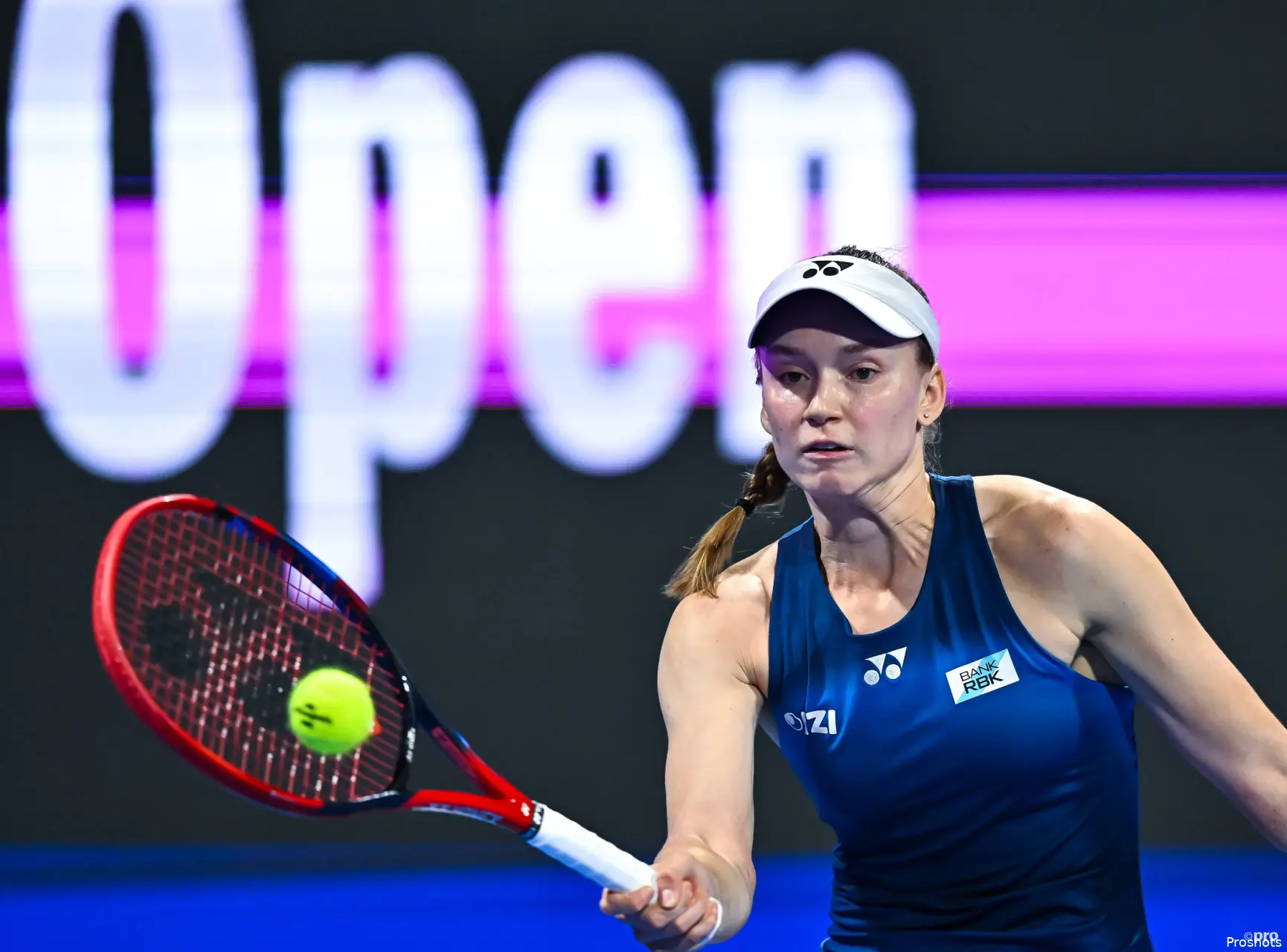
Elena Rybakina advanced to the final of the BNP Paribas Open in Indian Wells after defeating Elina Svitolina 7-5, 6-4, continuing a remarkable stretch of form that has positioned her among the most dominant players on the WTA Tour in recent months. The Kazakh will now face Aryna Sabalenka in the title match, renewing one of the most compelling rivalries at the top of the women’s game.
The result also carries significant ranking implications. Rybakina’s run in the Tennis Paradise will lift her to No. 2 in the WTA Rankings next week, overtaking Iga Swiatek and setting a new career-high position. It marks another milestone in a period of sustained success that has seen the former Wimbledon champion re-establish herself as one of the tour’s most consistent contenders.
Since October, Rybakina has compiled a 28-4 record, with two of those defeats coming without a completed match due to a retirement and a walkover. In completed matches during that span, she has lost only twice, while also recording an extraordinary streak of victories over elite opponents, including 12 consecutive wins against Top-10 players.
Despite the impressive statistics, Rybakina remained measured in her assessment after the semi-final victory, suggesting that her performance against Svitolina was solid rather than exceptional but enough to reach another final at a tournament where she has historically thrived. “Not maybe my best performance, but I’m super happy to win this match and be in the final again.”
Momentum built through consistency and experience
Rybakina’s resurgence at the biggest tournaments has been gradual but increasingly convincing. Her recent success traces back to the closing stages of last season, when she won six consecutive matches to qualify for the WTA Finals and then swept the event with victories over both Iga Swiatek and Aryna Sabalenka. She carried that momentum into the new season, capturing the Australian Open title and again defeating both Swiatek and Sabalenka along the way.
Speaking after her semi-final win, Rybakina credited the stability of her team and steady improvements in her game as key factors behind the sustained results. “We have been working well with the team, and last year I already started to have good results," Rybakina said. "Of course some confidence came after some wins against higher-ranked players. We just kept going, and I have a very good team around me, which I’m super happy about. We’re trying to improve every day, and slowly the results are showing on the court.”
Her results against top opponents underline that progress. Rybakina is one of only four active players with a winning career record against Top-10 opponents (35-27), joining Sabalenka, Swiatek and Venus Williams. Many of those wins have come quickly, with seven of her recent Top-10 victories achieved in straight sets.
Experience has also played a role in refining her approach against elite rivals. With repeated encounters against the same opponents, Rybakina believes familiarity has helped her handle key moments more effectively than earlier in her career.
“I think with the years, with experience, I’m getting this consistency," the new world No. 2 added. "Hopefully I can just keep going. Also you get to know the players much more. When you play the same player multiple times, you know what to expect.”
A familiar rivalry awaits in the final
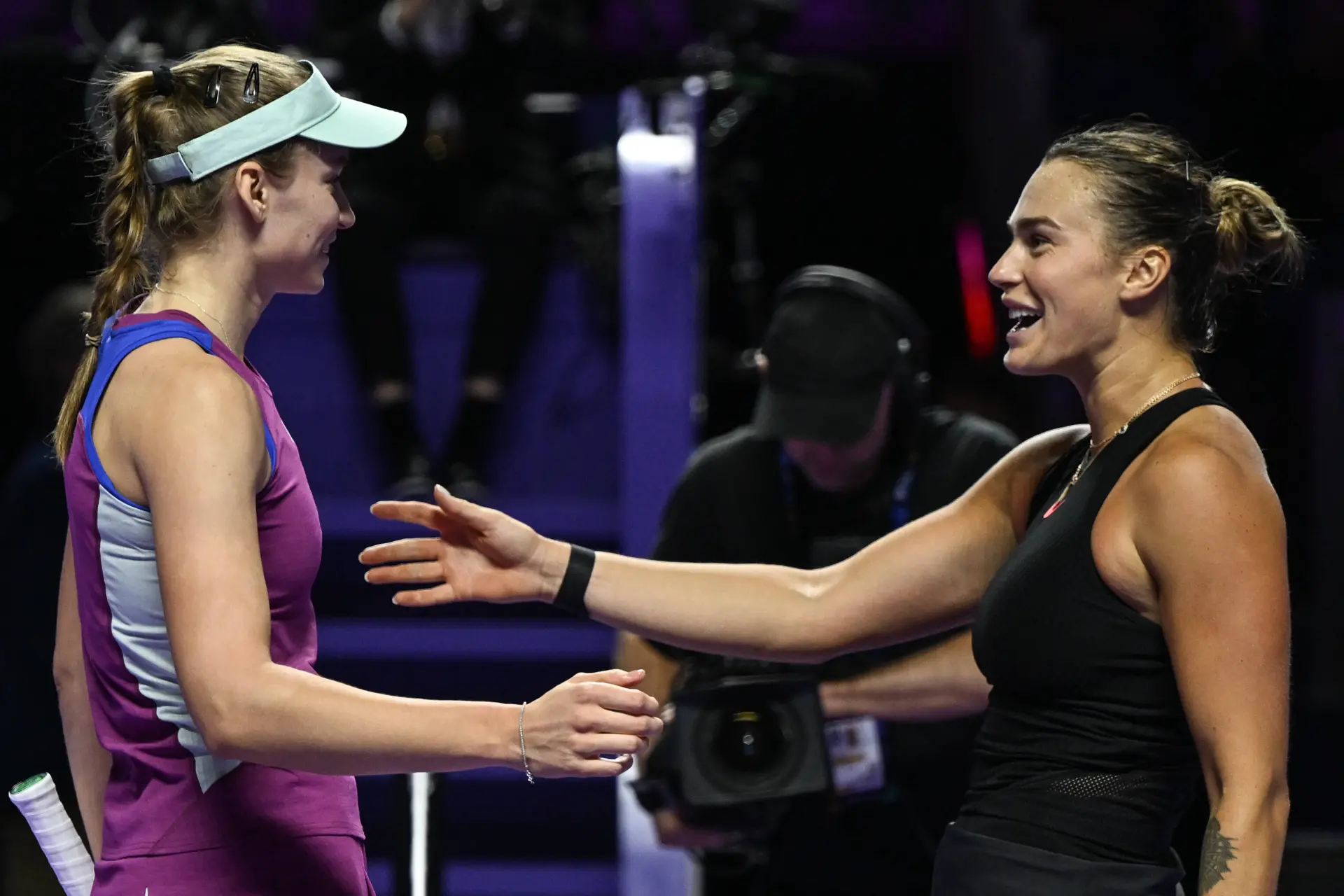
The Indian Wells final will see Rybakina face Sabalenka once again, two years after their previous title match at the tournament in 2023. Their rivalry has become one of the defining matchups on the WTA Tour, featuring repeated clashes in the latter stages of major events.
Indian Wells has been a particularly successful venue for Rybakina. Outside the Grand Slams, it is the tournament where she has recorded the most victories in her career, now reaching 16 wins at the event. This is her 6th WTA 1000 final, with titles won in Indian Wells and Rome Open 2023.
Rybakina expects another tightly contested battle against Sabalenka, emphasizing that their matches are often decided by small margins and aggressive play during critical moments. “Any match I play against Aryna is tough. We’ve played many times, and I think it all depends on those close moments. Whoever steps in and plays more aggressive, more solid — that’s usually the difference.”
The conditions in Indian Wells could also play a role in shaping the final. Rybakina noted that the heavy desert conditions and slower hard courts tend to produce longer rallies compared with faster surfaces, making physical endurance an additional factor. “We know each other’s game very well. It’s a lot about physical as well, because here the ball is heavy and the rallies are a little bit longer than on other hard courts. It’s going to be a difficult match where we both try to serve well and put pressure.”
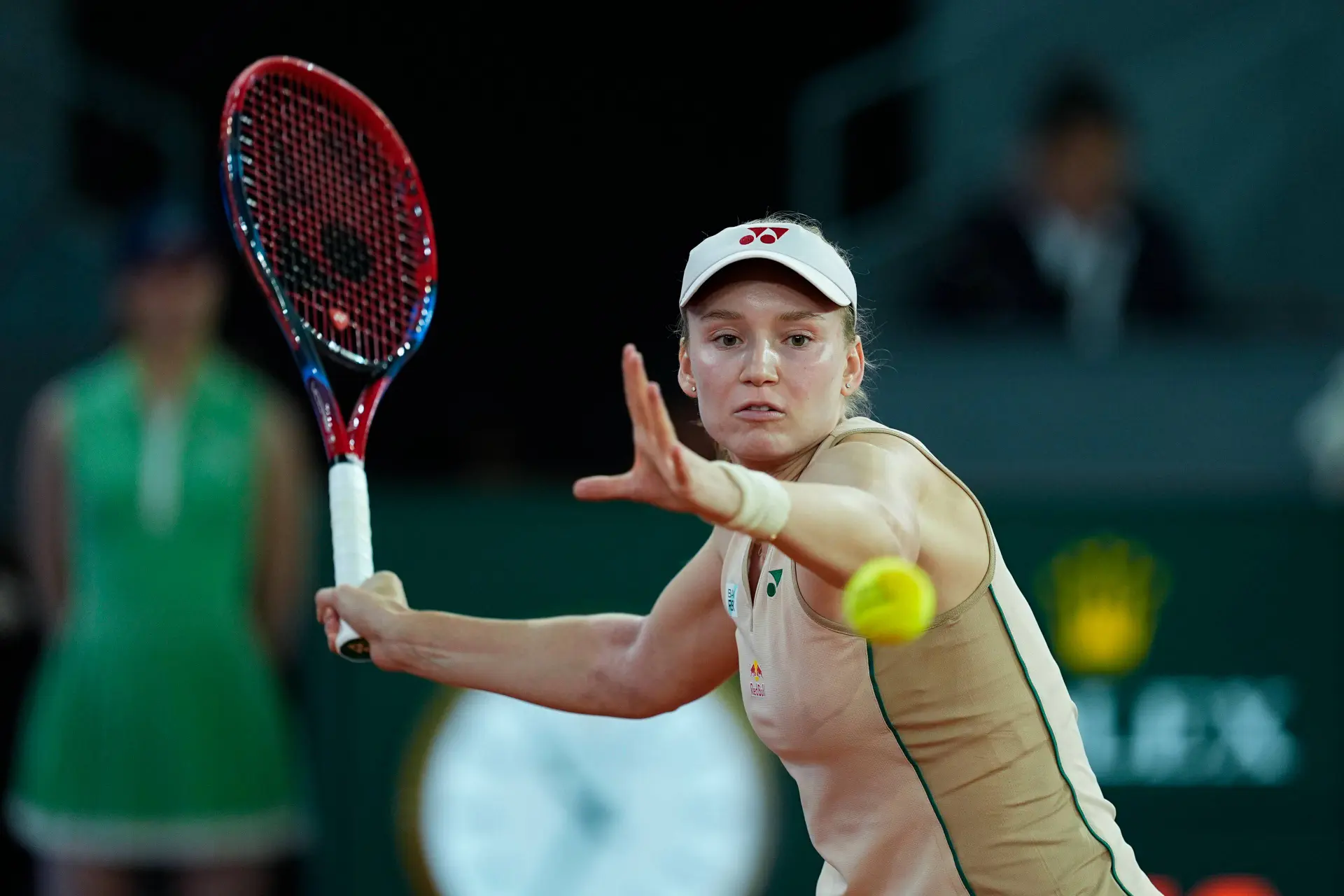
With the final approaching, Rybakina’s immediate focus remains on recovery and preparation. Yet the broader picture is already clear: her rise to No. 2 in the world and her sustained dominance against the sport’s elite have brought her closer to another objective. “To stay so long as No. 1 you need to be very consistent, and Aryna has shown great tennis for the past couple of years," the 2-time Grand Slam champion added. "Of course my goal is to get even higher in the ranking and reach that position. That’s my next goal, and I will try to do it this year.”

Cristhián AvilaTennis Journalist
Cristhián Ávila is a tennis journalist based in Santiago, Chile, and has been part of the TennisUpToDate team since early 2023. He covers the ATP and WTA Tours as well as all four Grand Slams, producing breaking news, match reports, analysis, and regular liveblogs from major tournaments.
His reporting combines statistical analysis with clear explanation, helping readers understand tactical developments, player form, and broader storylines across the tour. Working fluently in both Spanish and English, Cristhián collaborates with an international editorial team and contributes to comprehensive global coverage. As part of his work, he has conducted interviews and media interactions with leading figures in the sport, including Caroline Wozniacki and John McEnroe.
In his journalism, Cristhián places strong emphasis on careful sourcing, editorial accuracy, and updating articles promptly when new, verified information becomes available. His coverage is grounded in research, context, and direct engagement with professional tennis.
claps 0visitors 0
Just In

Popular News

Latest Comments
- WTA players have been the loudest voices against the ridiculous, mentally & physically dangerous scheduling for the past 2 seasons. But now that ATP is affected, all of a sudden it's a 'legitimate' issue. The WTA / ATP fat-cats need to leave their air-conditioned offices once in a while and experience no days off!
 mandoist26-07-2026
 - Can someone please tell Stubbs to STFU? This is not a match commentating situation (where she also cannot shut her mouth; not even for a second). This is BIOLOGY. Look it up, before you next bless us with your lack of wisdom. Better yet... have that male Olympic boxer in Algeria throw a "female" punch at you and let us know how that goes.mandoist24-07-2026
- This testing should have been done years ago as a prerequisite to competing in any male or female sport. Safety First -- Biology Rules!!mandoist21-07-2026
- Poor Aaron has been so bothered, for so long, by this possibility of proving one is NOT a male in a female sport that his list of unproven, unsupported claims is laughable. Claiming "privacy" and "Rights" is nothing short of lame. I challenge Mr. Solomon to take advantage of his "Right" to take a punch from that Algerian "female" boxer (whom failed testing -- and subsequently continues to play the system). This is the one who has injured several female opponents. WTA should absolutely not receive any credit for this common sense ruling!!! They have finally been forced to do so by the IOC. Imagine, after far too many years and injuries by males hurting females, "gender equality" comes to the sport of tennis (females competing with genuine biological females).mandoist21-07-2026
- Hurry on back Carlos! We miss you!!Rapunzel17-07-2026
- Well done to the author of this article!! A meltdown is what Coco experienced at the US Open the year she was chirping at her box, very near to tears, double faults were in great supply and she simply could not get a handle on that match. THAT AP is a meltdown!!Rapunzel12-07-2026
- This sensible approach helped Muchova... and look where she will find herself tomorrow (Wimbledon Final). Iga's wise to escape... especially to Nature and so. The wilderness (forests, lakes, mountains) has been my "Church" and escape from The Noise since I was a kid. She'll do well in the end.mandoist10-07-2026
- "Like if it was hotter, I probably would have won, I'm not gonna lie." Geezus...mandoist08-07-2026
- This one has totally lost the plot. She is about to cross the racism line in her hatred for Russian people. NEWSFLASH DARLING -- Russian majority of citizens (and your ex-Colleagues whom you shamed) are not who you should be aiming at. Grow up.mandoist08-07-2026
- Why do all these "experts" feel the need to publicly "tell players" what they need to do, or what they're doing wrong?? How about this -- if you're so concerned with a player's situation actually take the time to contact the team in question and talk directly to them. Yapping in public media is rarely, if ever, helpful.mandoist07-07-2026

Loading