“She improved what didn’t work”: Kim Clijsters highlights Sabalenka’s evolution after Australina Open loss
WTAWednesday, 01 April 2026 at 06:30
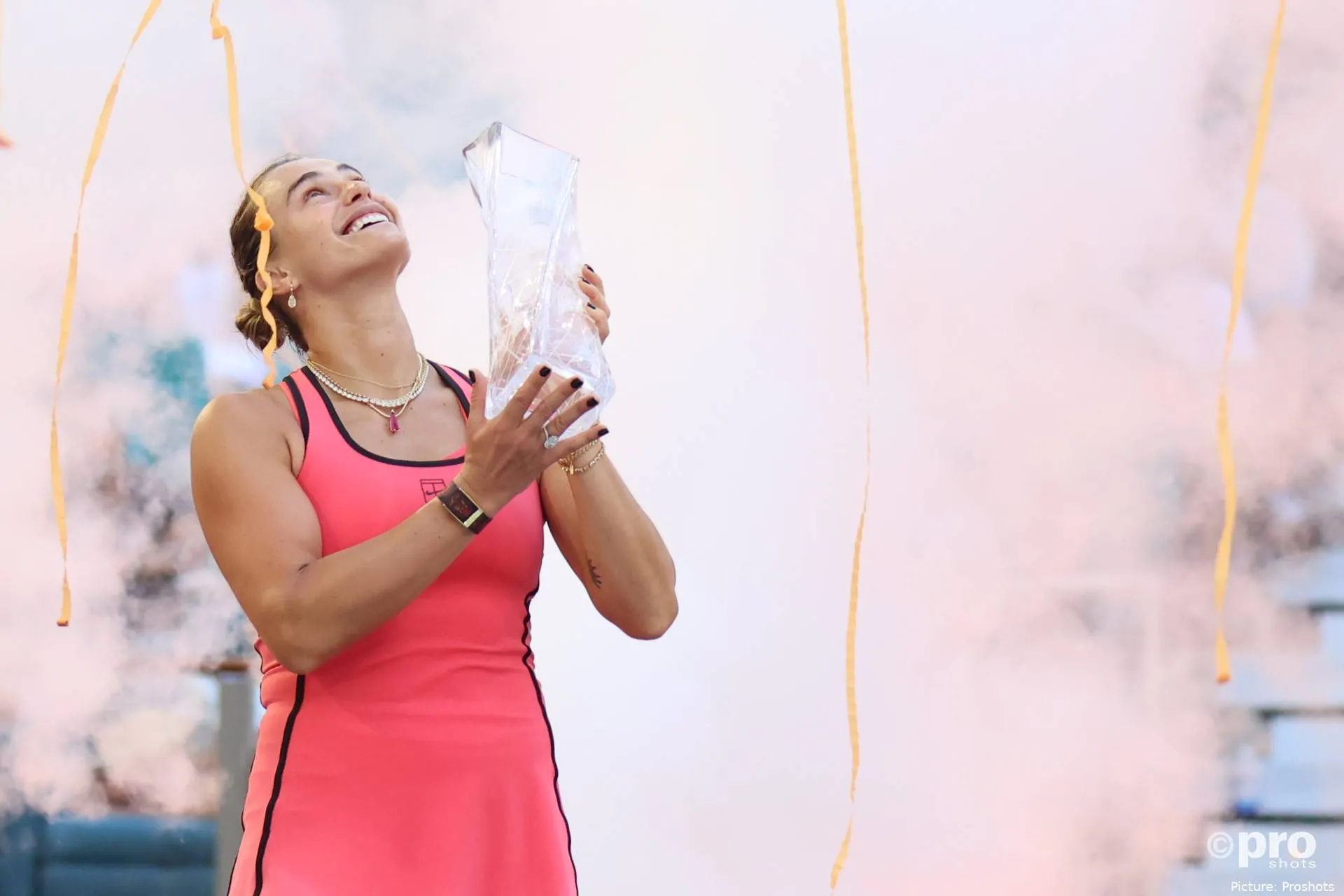
Kim Clijsters has placed Aryna Sabalenka’s Sunshine Double at the centre of her latest analysis, pointing to a combination of tactical adjustments and mental clarity behind the World No.1’s titles at Indian Wells and Miami.
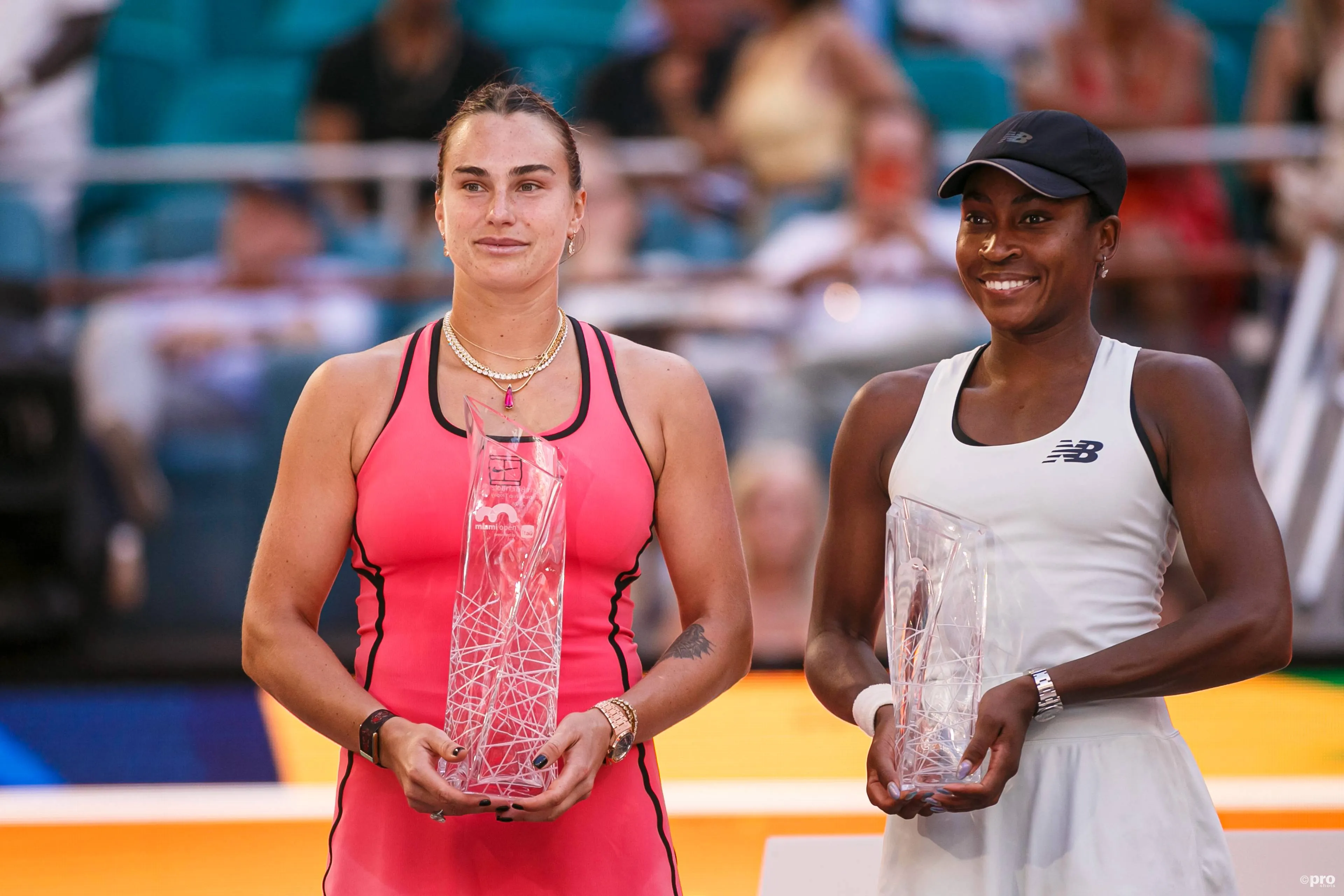
Speaking on the Love All Podcast, the former four-time Grand Slam champion framed Sabalenka’s wins over Elena Rybakina and Coco Gauff as the result of deliberate evolution following her Australian Open final defeat earlier in the season.
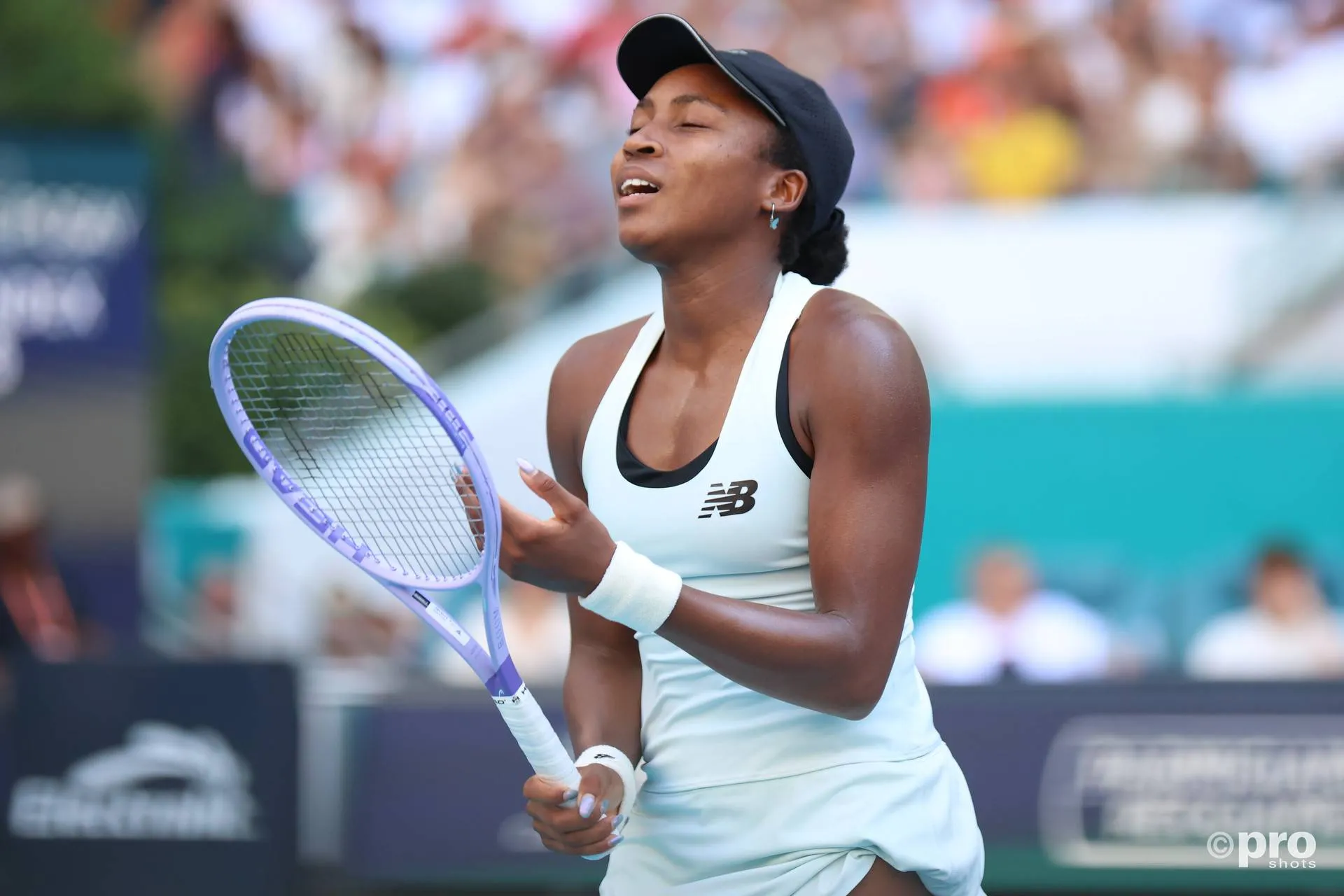
Sabalenka saved match point to defeat Rybakina in the Indian Wells final before backing it up with a three-set win over Gauff in Miami, extending her lead at the top of the rankings and surpassing 75 consecutive weeks as World No.1. The back-to-back WTA 1000 titles reinforced her consistency across high-pressure matches against two of the tour’s most complete players.
Clijsters, a former World No.1 who won four Grand Slam titles, focused less on the outcome itself and more on the process behind it, highlighting how Sabalenka adapted both technically and mentally across the two tournaments. Her assessment centred on the ability to adjust patterns, sustain aggression, and remain composed in decisive moments.
“It was a very high-intensity, high-level match between two players who play in a very similar way. What we’ve learned over the last few days is that players look for solutions. I was a little surprised how open they were about the adjustments and the game plan.”
Serve variation and pattern changes disrupt Rybakina
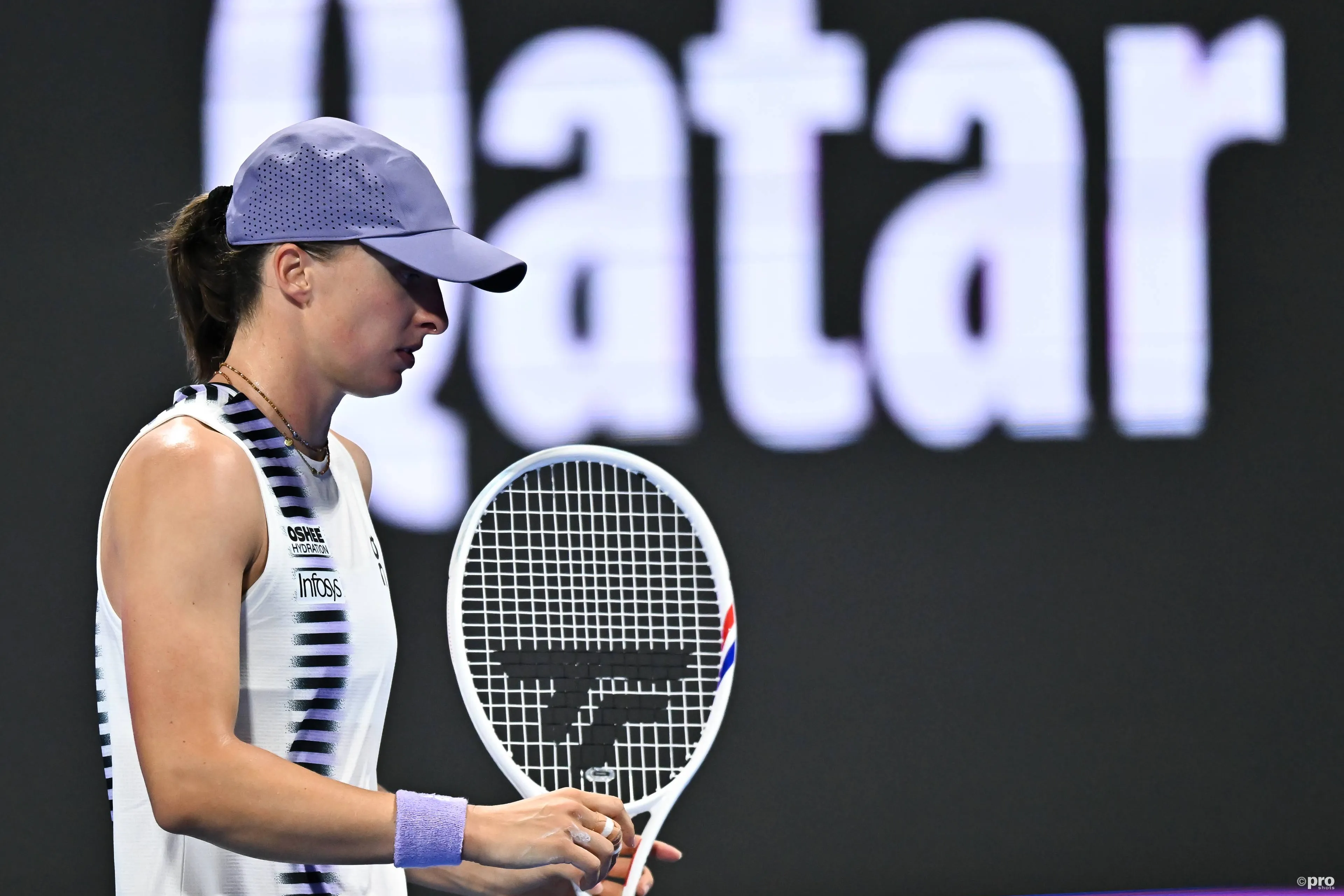
Clijsters pointed to Sabalenka’s adjustments on serve as a key factor in shifting the dynamic against Rybakina, particularly the introduction of more variation on the second serve. Rather than relying exclusively on pace, Sabalenka mixed trajectories and spins, forcing hesitation and disrupting timing on return.
She explained that the effectiveness of the change was not necessarily about improving the serve itself, but about introducing uncertainty into Rybakina’s decision-making, especially in early rally patterns.
“We saw her changing up the second serve a little bit more, instead of hitting a deeper, flatter second serve like she did in the past. She’s now using a bit more kick at times. It’s not that it’s a better serve, but it’s the variety that makes your opponent think—do I step back, do I take it early?”
Clijsters also linked that variation to a broader objective—removing Rybakina’s ability to immediately dominate rallies from the return position, which had been a defining feature in their previous encounters. “You surprise your opponent with that, and it takes away from Rybakina’s side of the court where she can just swing freely and start dominating the rally, which is what they’re both trying to do first.”
She further noted how serve efficiency has become increasingly decisive in the women’s game, with players generating more free points and controlling exchanges within the first two shots. “The serve becomes so important. They get so many free points, and if it’s not an ace or an unreturnable, it’s the next shot that is super important.”
Aggression and decision-making define key moments
Clijsters placed particular emphasis on Sabalenka’s decision-making under pressure, especially during the closing stages of the Indian Wells final. Facing match point, Sabalenka opted for an aggressive backhand winner—an example Clijsters used to illustrate her mindset. “That backhand cross-court on match point just shows the mindset and confidence that you need. To go for that shot in that moment was incredible.”
She described the match as one where both players committed to aggressive intent, even at the risk of errors, framing those mistakes as a necessary by-product of high-level tennis. “There were unforced errors, but they were good mistakes because they were going for it. They weren’t hesitant.”
Clijsters also highlighted the psychological impact of such moments, noting how a single shot can shift the mental balance of a match and place additional pressure on the opponent. “That does something to your opponent mentally as well. It shows that it’s going to take a lot more than just hitting great shots to break your opponent.”
Composure and mindset sustain Sunshine Double level
Beyond individual points, Clijsters underlined Sabalenka’s ability to maintain composure across both finals, particularly in pressure situations such as the deciding tiebreak in Indian Wells and the momentum swings in Miami.
“She stayed calm, stayed focused, and just kept things simple. She stayed locked in and didn’t think about being down—just stayed in the moment.”
Read also
She also connected this composure to Sabalenka’s response to recent setbacks, suggesting that the loss in Melbourne served as a catalyst for improvement rather than a source of doubt. “I don’t think her personality works that way. She’s a go-getter. She takes the losses and tries to be better next time.”
Clijsters concluded by framing Sabalenka’s trajectory within the broader context of elite careers, where setbacks are part of the process and long-term success depends on how players respond to them. “There’s no great career without setbacks. You learn how to deal with them mentally and physically. I don’t think she sits on losses—she attacks the next challenge.”
claps 0visitors 0
Just In



Popular News
Latest Comments
- Anyone else notice how general mental & physical fatigue is a major issue now, given WTA's ignorant refusal to consider the stress of their idiotic scheduling and additional demands??
- What a load of bullshit. Artur Szostaczko failed to mention that he didn't get hired!!
- Almost condescending. BTW: That was another anti-climactic Final compared to several of the excellent pre-Final matches.
- Sounds like maybe a mental health break? Miss her on the tour. My favorite American female player. Hurry back Emma!
- Why are microphones even allowed in front of the coaching boxes??? In this age of hi-tech, whatever is heard (strategy or otherwise) can instantly be relayed to any given opponent. How and why did WTA decide to slip this past everyone? Also, these strategic placements of mic's is obvious stupidity initiating a commentator's personal decision to expound upon -- and apologize for -- foul language, etc., when a player or team member curses, etc. Then media pounces upon every off-color phrase or word in their sensationalistic "news coverage". This practice of literally -- and openly -- eavesdropping needs to stop!!
- So she actually CAN think clearly! If she wants to play tennis, make it a priority. Learn from Life choices (like having a kid with her rapper ex). Today's game is a grueling exercise in Humility if one is not fully dedicated; or does not have the time to do The Work. Raducanu is a shining example of someone with the talent but lacks the drive, attitude, and/or devotion it takes to maintain 100% capacity of everything the Tour demands.
- It's as if troubled 'Condescending Collins' is competing with The Williams' for the daily spotlight. Some just do not know when to quit. Go fix yourselves and stop informing the public of your personal problems. The general public has their own issues in Life.
- Coach Macci and Martina Navratilova are seemingly the only reasonable voices coming out of the tennis circuit in regards to Iga at the moment. People like Stubbs, Gilbert, and anti-Social Media dwellers have very little or nothing to offer. What they are indeed is... predictable. Why certain media think their input is of value is a mystery. Perhaps easy filler for their publications? Media, in general, could/should consider their poor choices and lazy habits of running to the Loudest Mouths for "expert advice". Certain Internet 'news sources' might do their own research and STOP COPYING & PASTING the first articles to hit the web with little-to-no editing or true journalism. As for Iga (and any athlete) they are not robots. They are Human Beings and Humans, as we all know, are not infallable. Leave the expert criticisms and "solutions" to these athletes and their teams. Disgruntled bettors and so-called "experts" are not a solution!
- Sab has more disappointments to come. She's more or less been 'skating' by many of her opponents. Perhaps less Social Media, TV commercials, and photo-ops... otherwise those distractions will gaurantee a slide in ranking. Take that hint from the downfall of some of her colleagues.
- No kidding. Obviously this did not cross an editor's cubicle. Other than the mediocre grammar... there are more comma's in this mess than in 'War and Peace' !!

Loading