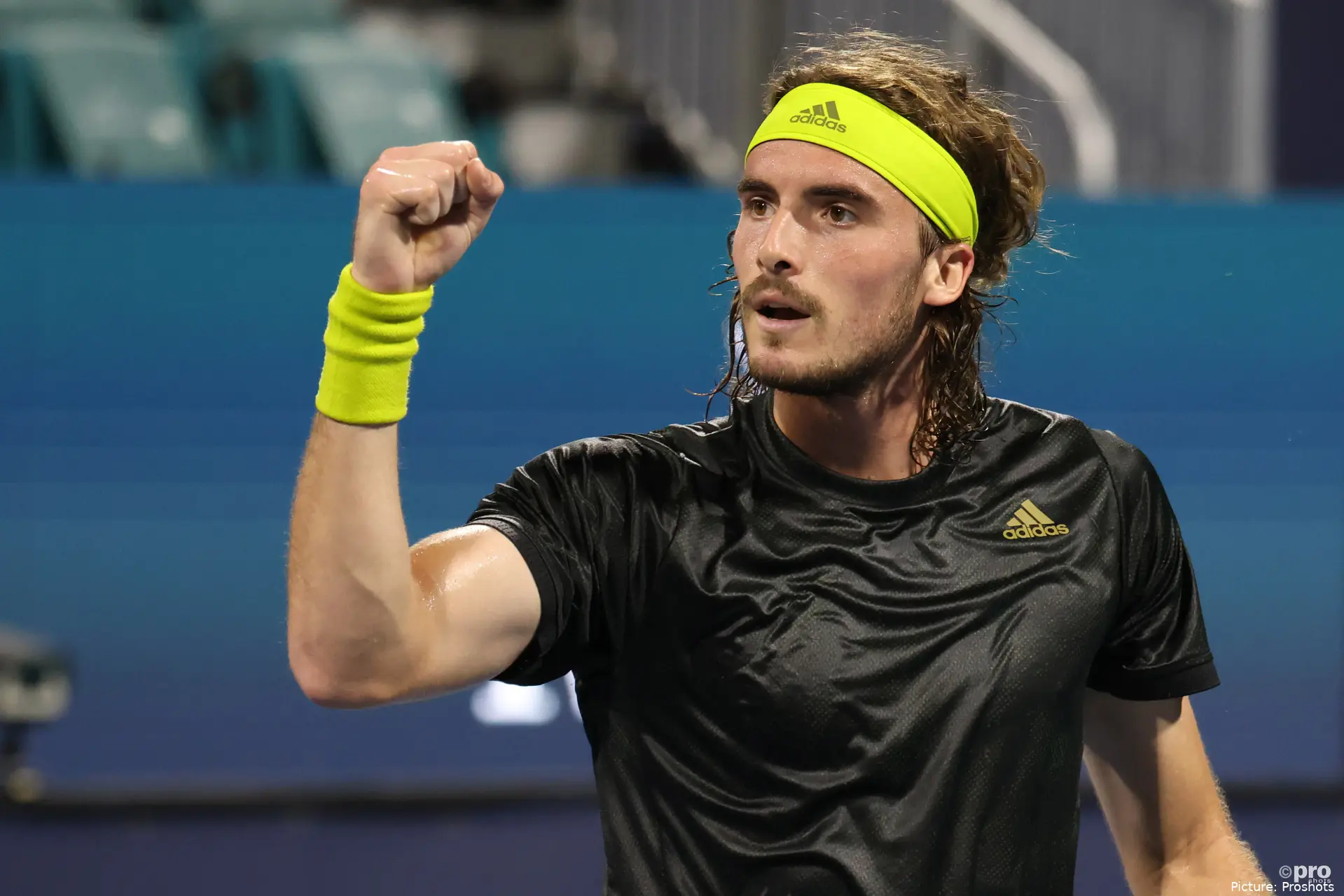
A few weeks past his 28th birthday, Stefanos Tsitsipas finds himself in unfamiliar territory: fighting from outside the world's top 50, still searching for the level that once made him one of the most feared shot-makers in the sport. Ranked as high as No. 3 five years ago, he arrived on tour billed as a future Grand Slam champion. That promise remains unfulfilled.
Tsitsipas's story isn't about one bad season. It's a mix of two lost Grand Slam finals, a body that broke down at the worst moments, a rotating cast of coaches, and a very public breakup that spilled well beyond the court. Off it, his relationship with his own father has been just as complicated as anything he's faced on it.
A teenage prodigy who arrived fast
Tsitsipas turned professional in 2016, but his rise properly began in 2018. At just 19, he reached the Barcelona Open final, then produced one of the more remarkable weeks by a teenager in modern tennis: at the Canada Masters, he beat four consecutive top-10 opponents — Alexander Zverev, Grigor Dimitrov, Dominic Thiem and Kevin Anderson — to reach the final, becoming the first teenager in the Masters 1000 era to do so.
A year later, at 21, he won the ATP Finals, beating Thiem in the final to become the youngest champion of that event since a 20-year-old Novak Djokovic in 2008. It confirmed what many already suspected: Tsitsipas wasn't just a promising junior graduate, but a genuine threat to the sport's established order.
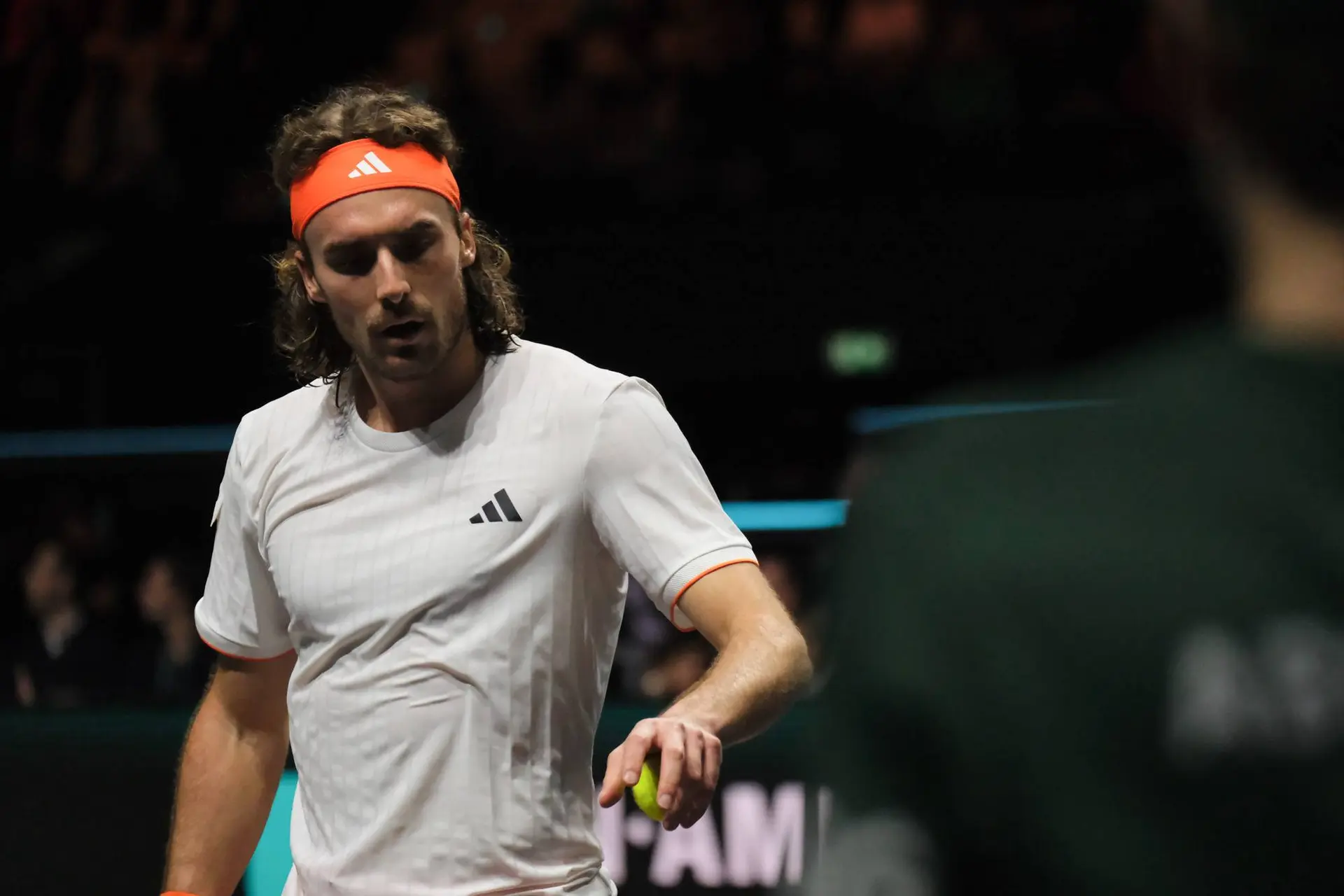
Stefanos Tsitsipas's career trajectory
| Period | Ranking / milestone |
| 2018 | Canada Masters final; beat four straight top-10 players |
| 2019 | ATP Finals champion, aged 21 |
| 2021 | Reaches world No. 3; French Open runner-up |
| 2023 | Australian Open runner-up |
| 2024 | Splits with father as coach; ranking begins sliding |
| May 2026 | Falls outside the top 75, a career low |
| Jul–Aug 2026 | Wins Gstaad; climbs back toward the top 50 |
Two Grand Slam finals, and a peak at world No. 3
The two biggest results of his career both ended in defeat to the same man. At the 2021 French Open, Tsitsipas won the first two sets of the final before Djokovic produced one of the great comebacks in Roland Garros history to win in five. Two years later, at the 2023 Australian Open, Djokovic beat him again, this time in straight sets.
In between, Tsitsipas reached No. 3 in the world in August 2021 — still the highest ranking any Greek player has ever achieved — and won three Masters 1000 titles, in Toronto and twice in Monte Carlo. Between 2019 and 2023, he finished five straight seasons inside the top six, a run of consistency few players his age could match at the time.
For much of that stretch, Tsitsipas was talked about as one of the leading candidates to eventually succeed the Big Three, alongside contemporaries like Daniil Medvedev and Alexander Zverev. His one-handed backhand, a rarity among his generation, made him a stylistic outlier as much as a results-based one — the kind of player broadcasters built highlight packages around, regardless of the scoreline.
The physical decline: back pain and a career-low ranking
The years since have told a very different story. Persistent back problems disrupted Tsitsipas for roughly 18 months, at one stage severe enough that he later admitted the pain had nearly pushed him toward retirement. Results suffered accordingly, and by May 2026 his ranking had collapsed to outside the world's top 75 — his lowest position since his earliest years on tour.
Tsitsipas responded by admitting he might need to drop down to smaller tournaments simply to rebuild ranking points and rhythm. That rebuild has shown genuine signs of working: in July 2026, he won the title in Gstaad, his first in 16 months, and has since climbed back toward the world's top 50 heading into the US Open swing.
Off the court: the on-again, off-again relationship with Paula Badosa
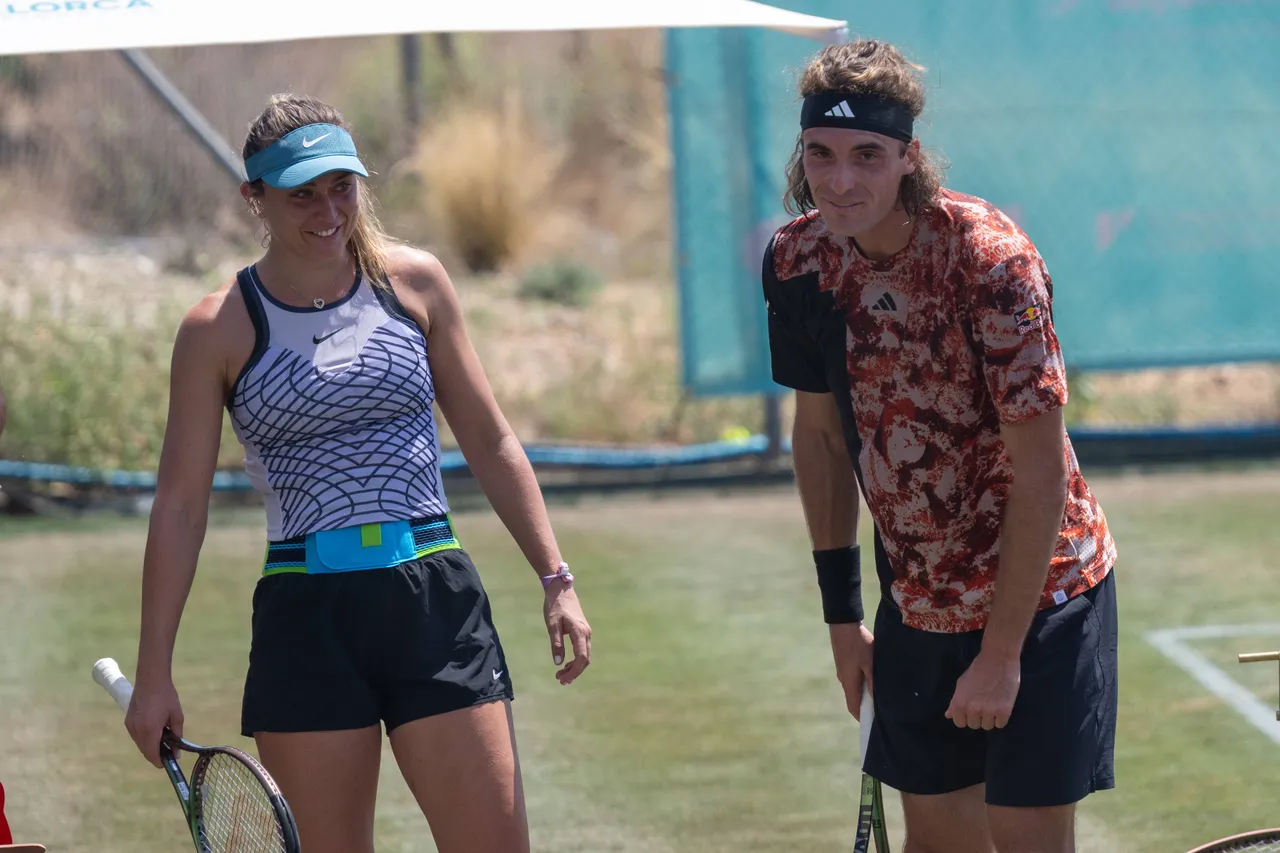
Tsitsipas's personal life has drawn almost as much attention as his tennis. He and Spanish player Paula Badosa went public with their relationship in mid-2023, quickly becoming one of the sport's most followed couples. They split briefly in May 2024 before reconciling within weeks, with Tsitsipas later admitting he hadn't handled the pressure of the tour well during that stretch.
The relationship ended for good in July 2025, days after both were eliminated in the first round of Wimbledon. A year later, at Queen's Club, Badosa described the relationship and the environment around it as "toxic," saying she had suffered for a year afterward. Tsitsipas has largely avoided commenting on the specifics since.
The most complicated relationship of his career: coaching under his father
No relationship has shaped Tsitsipas's career more than the one with his father, Apostolos, who coached him from childhood in 2001 all the way through 2024. Their partnership delivered every major result of his career, but it also drew constant criticism from pundits over Apostolos's animated, hands-on approach from the players' box — and it eventually became something Tsitsipas needed to step away from.
The split in 2024 didn't stick. A brief spell with Dimitris Chatzinikolaou gave way to a high-profile hire of Goran Ivanisevic, Djokovic's former coach, in mid-2025 — reportedly at the urging of Tsitsipas's mother, Yulia. That partnership lasted only a few weeks before ending in a public, critical fallout over his fitness. Apostolos returned to the team shortly after.
The cycle finally broke on June 28, 2026, days before Wimbledon, when Tsitsipas ended his coaching partnership with his father again — this time, he said, for good. He brought in Thomas Perrin, from Patrick Mouratoglou's academy, to lead his team through the rest of the season, describing a need to make decisions independently for the first time in his career.
Tsitsipas's coaching timeline
| Period | Coach | Note |
| 2001–2024 | Apostolos Tsitsipas (father) | Every major result of his career |
| 2024–2025 | Dimitris Chatzinikolaou | Brief spell after first split with his father |
| Mid-2025 | Goran Ivanisevic | Lasted weeks; public fallout over fitness |
| 2025–Jun 2026 | Apostolos Tsitsipas (father) | Second stint, reconciliation |
| Jun 2026–present | Thomas Perrin | Hired after a "final" split with his father |
Where Tsitsipas goes from here
At 28, Tsitsipas is not old by modern tennis standards — plenty of his rivals are still competing deep into their thirties. But he's starting over almost everywhere at once: a new coach outside his family for the first time in his career, a very public breakup behind him, and a ranking he must rebuild from outside the top 50 rather than defend from the top 10.
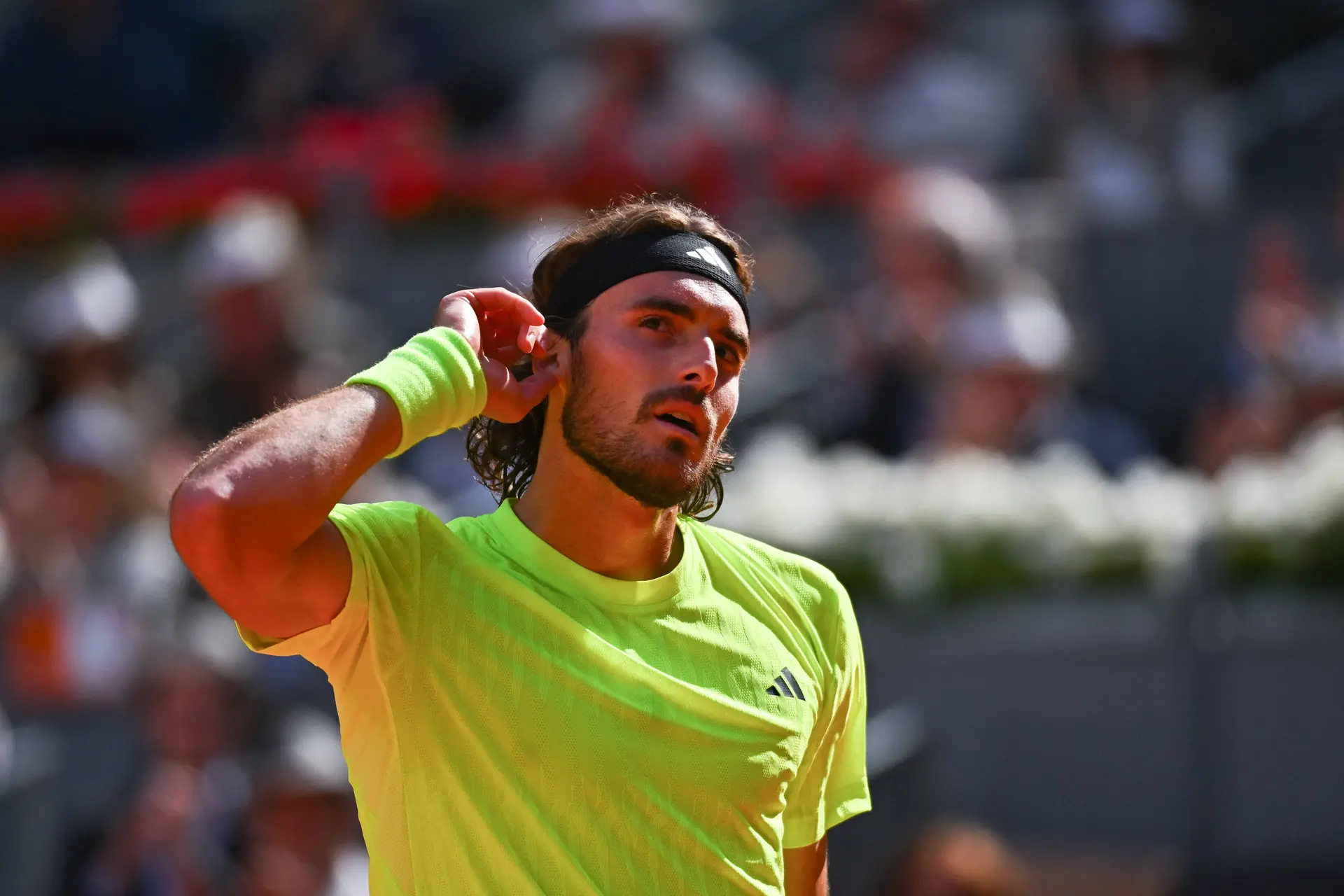
The talent that took him to two Grand Slam finals and world No. 3 hasn't disappeared — Gstaad proved that much. What's far less certain is whether a team built from scratch, without his father in the box for the first time in over two decades, can finally give that talent the stability it never quite had during his peak years.
There's also a scheduling detail working in his favor: several of the players currently ahead of him in the rankings are past 30, and the sport's generational handover is still ongoing rather than finished. If Tsitsipas can string together a full, uninterrupted season for the first time since his back problems began, there's still a version of his career left to write — just one that now has to be built without the safety net that shaped every result that came before it.

Cristhián AvilaTennis Journalist
Cristhián Ávila is a tennis journalist based in Santiago, Chile, and has been part of the TennisUpToDate team since early 2023. He covers the ATP and WTA Tours as well as all four Grand Slams, producing breaking news, match reports, analysis, and regular liveblogs from major tournaments.
His reporting combines statistical analysis with clear explanation, helping readers understand tactical developments, player form, and broader storylines across the tour. Working fluently in both Spanish and English, Cristhián collaborates with an international editorial team and contributes to comprehensive global coverage. As part of his work, he has conducted interviews and media interactions with leading figures in the sport, including Caroline Wozniacki and John McEnroe.
In his journalism, Cristhián places strong emphasis on careful sourcing, editorial accuracy, and updating articles promptly when new, verified information becomes available. His coverage is grounded in research, context, and direct engagement with professional tennis.
claps 0visitors 0
Just In

Popular News
Latest Comments
- great articlestennisseserver07-10-2026
- Medvedev was leading Djokovic 7-5, 3-5 when an attempted return..' NO you ignorants, Djokovic was leading .weiss05-10-2026
- No more bullshit "Wildcards" to these two. Qualify like everyone else -- there will be cameras there, too. Time to scream... WTF ????!!!!
 mandoist29-09-2026
 - Let's not BS the general public -- Sabalenka started showing cracks in her game last season. Her losses and near-losses started at about the same time she began being distracted by Fame (constant Selfies, making TV commercials, magazine shoots, endless Social Media nonsense, etc., etc.) One would think even Saba could recognize the parallels with others who failed before her -- Raducanu, Giorgi, Bouchard to name a few.mandoist25-09-2026
- Gross!! Hey Raducanu, Giorgi, and Bouchard -- reserve a seat at your Social Media Selfie table for Saba + Naomi. They're heading in your direction soon enough.mandoist24-09-2026
- And then these same players will complain about how lengthy their season’s were and need more time-off. I’m all for more tennis but the amount of tennis we get now is actually kind of crazy! We all need a break, especially the players.DaveyWavey23-09-2026
- You should do a comparison article for "different kinds of justice" the courts decide for tennis players. I can think of at least three players who received very small bans of a few months, however Tara Moore has been fighting for her literal survival the past few years. It seems odd considering she is not a "name" player, unlike the other cases.DaveyWavey22-09-2026
- PRIZE MONEY & POINTS Winner - $185,500 Finalist - $114,500 Semi-Finalist - $66,003 Quarter-Finalist - $35,000 Round of 16 - $18,045 Round of 32 - $13,005 Winner - 500 Finalist - 325 Semi-Finalist - 195 Quarter-Finalist - 108 Round of 16 - 60 Round of 32 - 1DaveyWavey20-09-2026
- Pegula withdrew from this Singapore event
 tennishappens19-09-2026
 - Serena Williams chose her tournaments. It's not such a bad idea.MuswellHillbilly17-09-2026

Loading