Tennis Legends - Angelique Kerber: Oldest first-time world number one who claimed three Grand Slams
WTA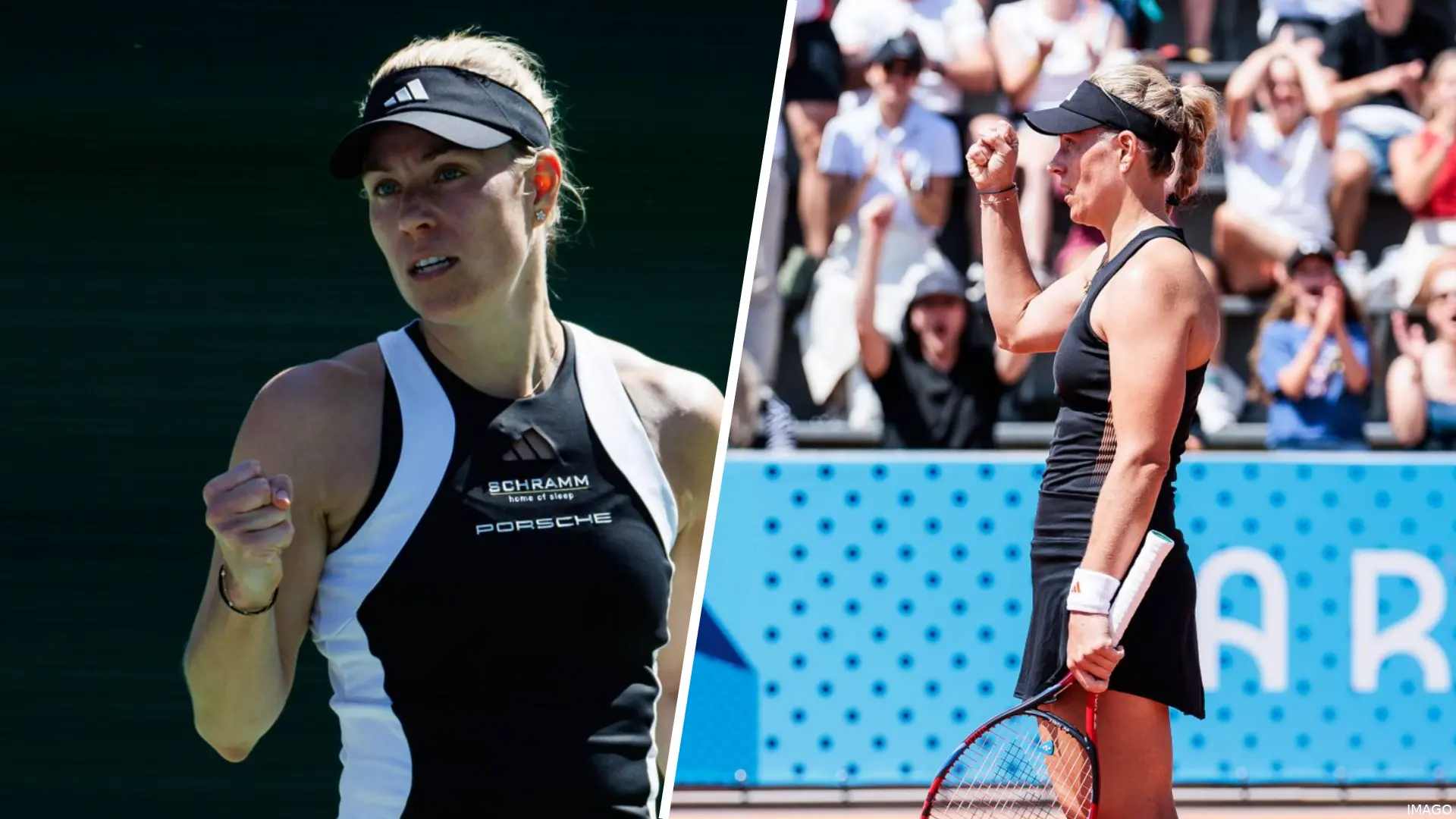
Boris Becker and Steffi Graf placed German tennis at the forefront of the sport in the 1980s and 1990s. Between them, 28 singles Grand Slams - 22 for Graf and 6 for Becker - were accumulated. The wait for a new Grand Slam champion ended in 2016 when late bloomer Angelique Kerber upset Serena Williams to lift the Australian Open. It was the first of three majors for the German lefty.
Born on the 18th of January 1988, the year of Graf’s Golden Slam, in the city of Bremen. She was born to Polish-German parents Slawomir and Beata. She has one sister, Jessica. Although born right-handed, Kerber has always played tennis left-handed. She took up the sport aged just three.
Years of toil before breakthrough in the early 2010s
Kerber turned professional in 2003 and attempted to qualify for a WTA Tour event two years later. Her main draw debut at a Grand Slam came at the French Open in 2007, losing to future Olympic champion Elena Dementieva. She finished the 2007 campaign ranked at 84.
The 2008 and 2009 seasons followed a similar pattern of early exits at the majors and occasional runs in the lower-key WTA tournaments. The Rosmalen Open, in 2008, represented her maiden appearance in a main tour quarter-final. Kerber finished both of these seasons just outside the top 100.
Bremen’s finest reached her first Tour final in 2010, at the Copa Colsanitas in Colombia. Home favourite Mariano Duque Marino proved too good for her in the final. Earlier in the year, in the Australian Open, Kerber made it to round three of a Grand Slam for the first time. Her season-end ranking was 47.
A run to the US Open semis in 2011 turned out to be a significant breakthrough in the career arc of Kerber. It materialised in a season of difficulty where she failed to negotiate successive rounds at any tournament in the first seven months of the season. A surprise win over 12th seed Agnieszka Radwanska was the highlight of her run to the last four in New York, one that saw her rise from 92 to 34 in the rankings.
2012-2015: Begins to establish herself in the top ten and wins seven titles
Kerber broke her duck in the WTA circuit when lifting the defunct Open Sues event in Paris. She beat France's Marion Bartoli in the final. A further success was added in Denmark, and helped Kerber finish the term in the world's top ten for the first time, positioned at 5. The year was also enhanced by a run to the Wimbledon semis.
One title was pocketed in the 2013 campaign. It came at the Linz Open in Austria. Two other finals were reached and she again finished the year inside the top ten.
2014 was a blank in regard to titles but she remained consistent by reaching four finals and making the last eight at Wimbledon. Two of the finals were in the Premier class. Kerber remained in the top ten for a third successive year at the season's close.
Kerber managed four titles in 2015, a seasonal best return. This quartet included a maiden title on grass at the Birmingham Classic. Conversely, in the majors, the German experienced a lean year. Kerber failed to navigate her way beyond the last 32 at any major. Despite this frustration, another campaign concluded with Kerber still inside the top ten.
Major titles won by Angelique Kerber
| Tournament | Year | Surface |
| Australian Open | 2016 | Hard |
| US Open | 2016 | Hard |
| Wimbledon | 2018 | Grass |
2016 turns into an annus mirabilis, winning two Grand Slams and becoming the sport’s oldest first-time World Number One
By now, Kerber was establishing herself in matches against the world's best. This was further emphasised at the opening major of 2016 when she reached her first Grand Slam final at the Australian Open.
In the title match she would face off against the great Serena Williams. The American rarely lost major finals at this point. However, in a three-set contest, Kerber prevailed using her famed defensive quality to counter the power of Williams. Kerber became the first German to win a singles Grand Slam since Steffi Graf at the 1999 French Open. She was also the first player to win a major having survived a match point in round one.
Kerber’s triumph in Melbourne elevated her to a career high second in the world rankings. Her form remained solid until the grass-court season, including a last four run at the Miami Open. She also defended her crown in Stuttgart on clay.
Grass has always been a compatible surface for the style of game exhibited by the German. Her lefty game creates angles that on the green stuff are harder to defend against. The quality of her slice is most adept on grass with a lower bounce than other surfaces.

Angelique Kerber in action before retirement.
Kerber tuned up for Wimbledon by reaching the last eight when defending her Birmingham Classic title, losing to Carla Suarez-Navarro. At the Wimbledon Championships, Kerber cruised into the semis where she bested Venus Williams. Waiting for her final was Serena. Unlike in Melbourne, Kerber had to settle for a runners-up trophy.
The Rio Olympics soon followed and Kerber reached another final where she was a clear favourite against the unheralded Puerto Rican Monica Puig. In a big upset, Puig triumphed to give her nation their first Olympic gold.
Kerber bounced back from this disappointing loss by claiming her second Grand Slam singles title of the year and her career when reigning supreme at the US Open. A victory over Dane Caroline Wozniacki confirmed she'd become the oldest first-time world number one. This peak was then followed by another when defeating Karolina Pliskova in the final.
Struggles in 2017 with increased expectations before a third major title in 2018
Kerber went into 2017 at the ranking summit. The added expectations of a career best year seemed to weigh heavily on Kerber during the season. She would reach just one final all season and lose the first round at Roland Garros and Flushing Meadows. Last 16 exits at the Australian Open and Wimbledon represented a significant regression from the highs of 2016. Kerber dropped out of the top 20 after such an alarming loss in form.
The 2018 campaign started positively when capturing the Sydney International title in the opening month of a term that witnessed a revival. A semi-final run at the Australian Open consolidated the success in Sydney.
A run to the last eight at the French Open teed up Kerber for a return to her favoured grass. At Wimbledon she dropped just one set en route to setting up a rematch of the 2016 final with Serena. Kerber avenged the loss of two years earlier to win a third Grand Slam singles title. Kerber finished the year ranked second.
Gradual slide down the rankings until retirement in 2024
Kerber's 2019 season was without any trophy lifts but she did finish runner-up at the 1000 Indian Wells Open and the Eastbourne International on grass. Her form was largely inconsistent as she dropped to 20 by the season's denouement.
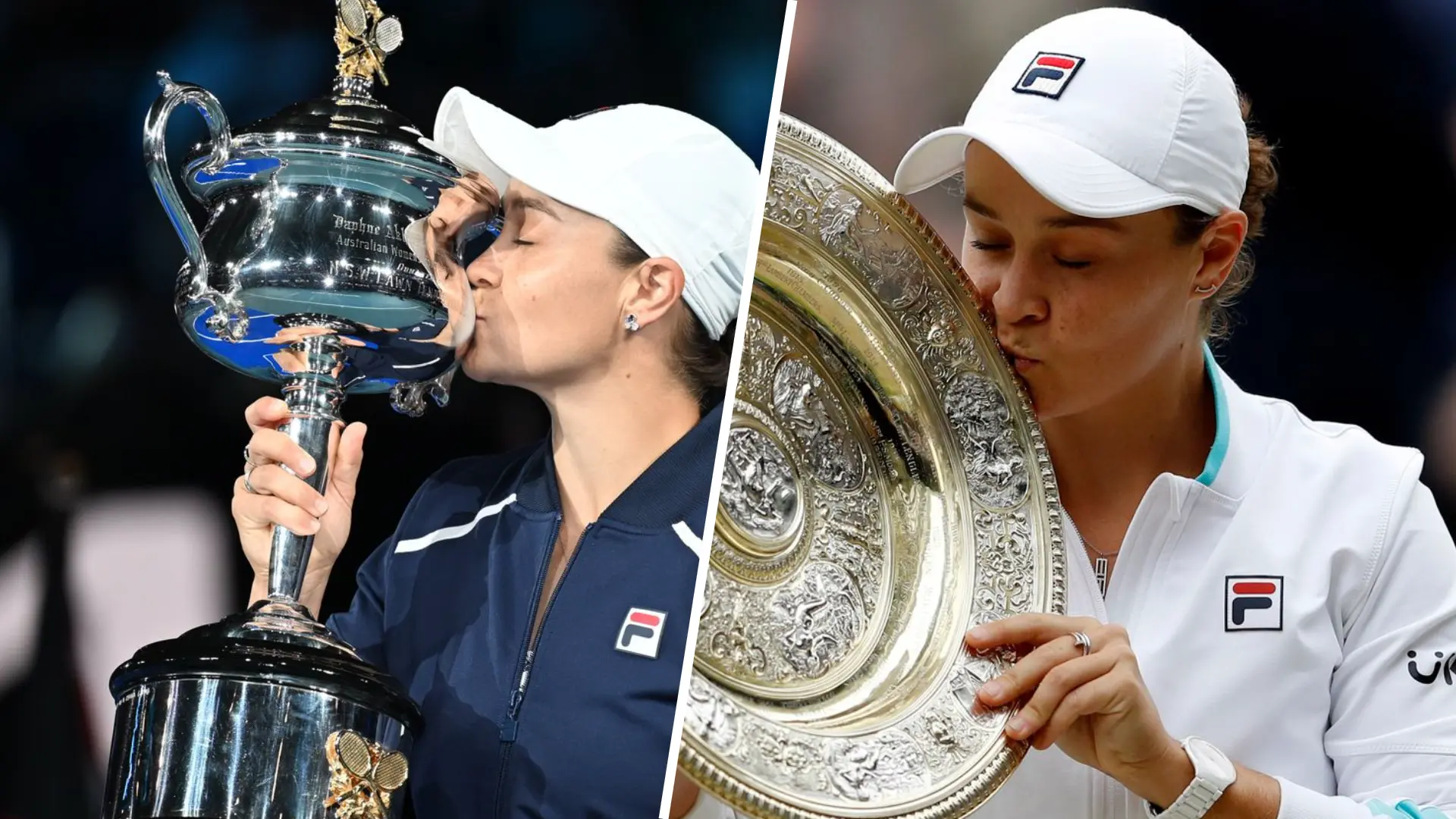
The 2020 season was heavily interrupted by COVID. Her 2021 campaign saw a modest rise to 16 by the end. Kerber lost to Ash Barty in the Wimbledon last four. After 2018, this proved to be the only time Kerber would advance beyond the last 16 of a major.
Appearances were limited in the 2022 season and she didn't play at all in 2023. She returned to play in 2024 but with little success. On the 31st July, 2024, Kerber called time on a 21-year professional career. She finished with 14 singles titles from 32 finals.

Angelique Kerber a German icon.
Playing for Germany included United Cup success
Kerber turned out for her country in Fed Cup on a number of occasions. She was part of a Germany squad that reached the Fed Cup final in 2014. Kerber lost both of her singles rubbers in a 3-1 loss to the Czech Republic. The German lefty would play in runs to the semis the following year and in 2018.
For two years on the spin, partnering Alex Zverev, Germany lost out to Swiss pairing of Roger Federer and Belinda Bencic in the Hopman Cup final. Kerber would go one better in mixed team competition when a member of the German team lifted the second edition of the United Cup in Australia.
Personal life and legacy
Kerber now lives in a suburb of the Polish city Poznan. Despite her Polish heritage, Kerber has always emphasised her allegiance to Germany. She's a supporter of six-time European champions Bayern Munich.
Kerber is a practising Catholic, telling the magazine Emotion “Faith is important to me…Christian values shape me to this day”. Kerber's absence from the tour in 2023 was due to having her first child, a daughter. She had a son in 2025.
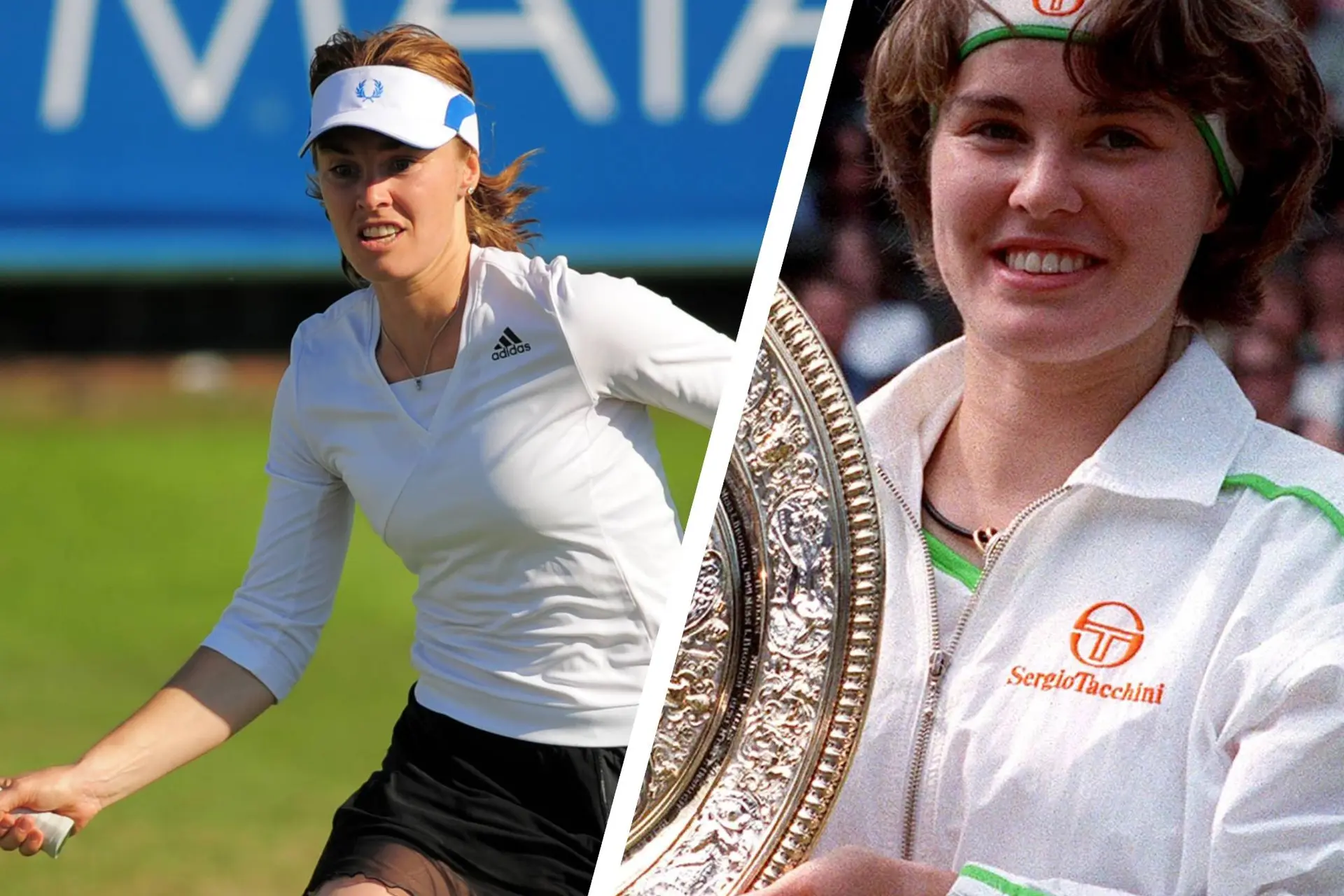
Kerber's career trajectory is a lesson to those who believe their career may be devoid of the greatest triumphs if it's not happened by the time they've been a professional for over a decade.
Kerber struggled in her early years on tour to gain entry into even the top 50. Even once there, her next few years were spent on the periphery of the majors. Then, in one calendar year, aged 28, she won her first two Grand Slams and hit number one. Parallels could be drawn with Swiss Stan Wawrinka in winning Grand Slams late into their careers for the first time.

Jay Brannon is a sports journalist from Sutton Coldfield, England, with a lifelong passion for athletic competition and storytelling. For the past 1.5 years, he has been a prominent voice at TennisUpToDate.com, where he has authored more than 3,000 articles, specializing in deep-dive columns, tactical analyses, liveblogs, and comprehensive match reports for the ATP and WTA tours.
Jay’s tennis reporting blends rigorous, real-time statistical analysis with on-the-ground coverage. He frequently travels to tournaments to cover the action firsthand from the press box and player press conferences. This direct access allows him to deliver sharp insight into player form and tour developments—a dedication sparked by his earliest sporting memory of the iconic 1991 Wimbledon final between Michael Stich and Boris Becker.
Beyond the court, Jay brings a versatile background in live broadcasting and media. His professional experience includes serving as a sports reporter for BHBN Hospital Radio—where he delivered live updates and analysis for West Bromwich Albion and Wolverhampton Wanderers matches—as well as working as a match reporter for Sutton Coldfield Town.
Jay holds a degree in Music Journalism and Broadcasting from Staffordshire University, a foundational training that shaped his voice as a thoughtful, authentic storyteller. Grounded in core journalistic ethics, he places a strict emphasis on careful sourcing, editorial accuracy, and swift, verified updates.
claps 0visitors 0
Just In

Popular News
Latest Comments
- Does Sinner need that 4.5 mil? I doubt it. He can make that with three modelling gigs!😅🤣Rapunzel21-10-2026
- Did "People Magazine" purchase this website? This nonstop storyline is bullshit.
 mandoist21-10-2026
 - Listen... this is of no concern to anyone but these two. Deal with your own issues -- most of us have our own. Thanks, media, for these insignificant follow-ups which are meaningless.mandoist21-10-2026
- This is so very very sad, for all three of them. I truly thought they had an unbreakable bond, but life throws up so many differing challenges. Having your homeland suffering in such a terrible way, makes happiness lose out to guilt as well. Our thoughts are with them. X💔bjsexton20-10-2026
- I have lost all respect for Svitolina! Could she not have waited until he had played at the Paris Masters!!! She is selfish and don't give a damn about Gael. That is NOT how love is demonstrated Elina!!Rapunzel19-10-2026
- Perhaps convenient tennis tour sex is not a strong enough experience in which to base a marriage?mandoist19-10-2026
- Fight the Good Fight... Tennis (sports in general) need more Humans such as yourself.mandoist18-10-2026
- When is WTA going to mandate Genetic Testing (DNA) ???mandoist18-10-2026
- Hey, Dan... you just wake up from a coma? Regardless -- Thanks for the comedy this morning!mandoist18-10-2026
- Two Things: 1. Stop allowing these Spoiled Trust-Fund Elitists to behave badly. Your little hand-slaps do not deter them. 2. STOP the incessantly annoying "towel wiping" nonsense!!!!mandoist15-10-2026

Loading