"That’s incredible. She’d already won a Slam, but she still wanted to improve" - Gavin MacMillan details call up to Gauff's team while explaining long term process behind serving
WTA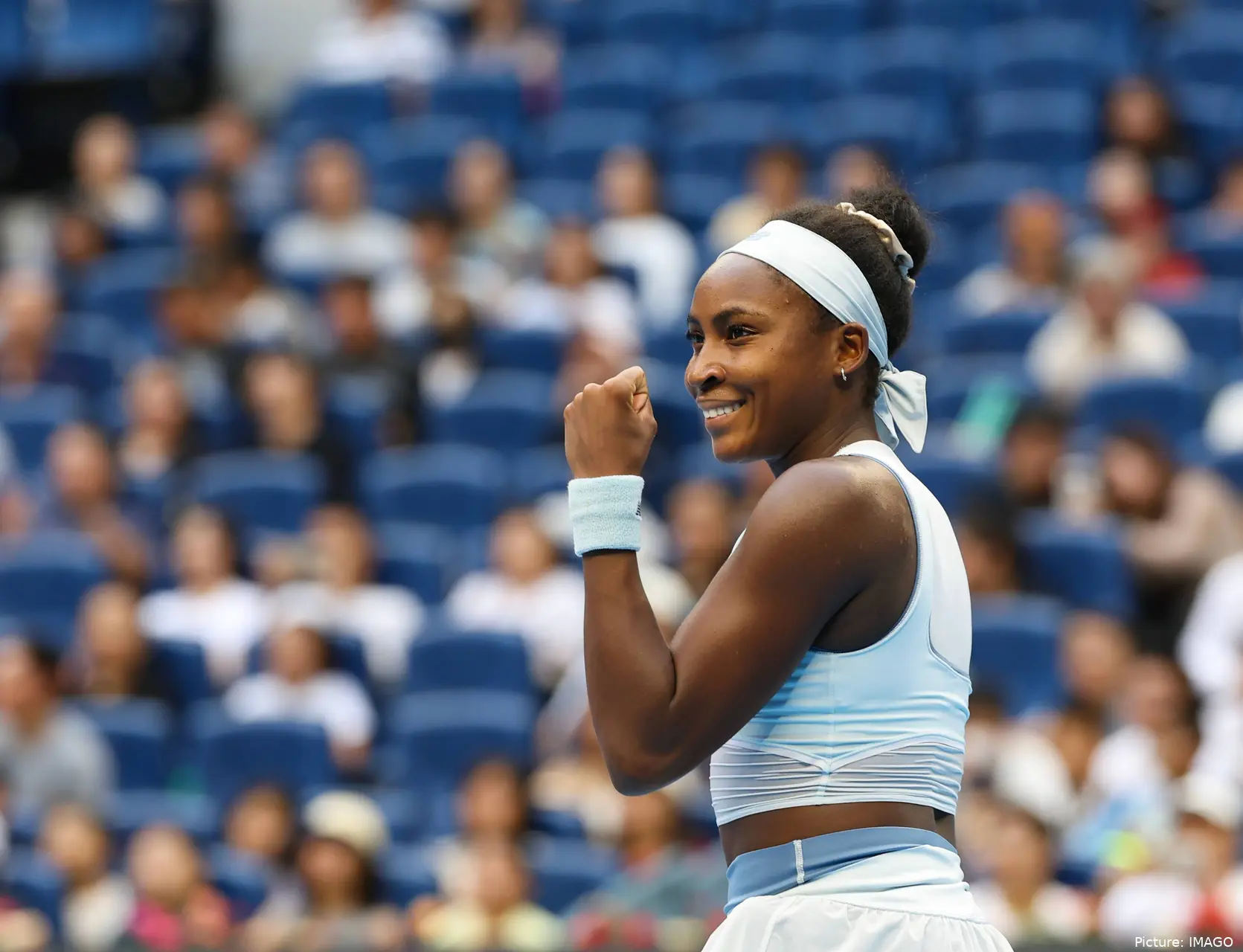
Gavin MacMillan has become almost a household name in the past few years. The biomechanics coach has overlooked some of the best players in the sport, helping them unlock the potential in their serve and overall game. He caught the tennis world's attention after the job he did with Aryna Sabalenka, and now he is trying to do the same with Coco Gauff. On the Tennis Insider Club, he illustrated why improving one's serve is not an instant fix, keeping perspective amid the swirling negatives in the sport while describing how he ended up overlooking Gauff's serve and forehand a week before the 2025 US Open.
Making a name for himself with Sabalenka
One of the things the American is best known for is fixing Sabalenka's once sketchy serve. It was a real bogey shot for her and something of an anomaly in her game, short of confidence and technically all over the place. Then comes in MacMillan, who produces his magic, and now Sabalenka is by far and away the dominant force on the WTA Circuit.
It is not an overnight fix, as MacMillan labels it as a 'process. "If you look at Aryna Sabalenka, in one of her early finals she double-faulted six times against Elena Rybakina. But a year later, she double-faulted six times in the entire tournament. That comes from a year of trusting the process, so under pressure your brain knows: 'If I keep doing this, I’ll make it.'"
He reiterated that it is not an instant fix, keeping expectations from a short-term perspective at a minimum. "It depends on what your expectations are. If you think you’ll suddenly serve like a top player overnight—come on," he stated. "In tennis, it’s hard to stay patient because people remind you constantly when you’re not performing well. That makes it difficult to believe the long-term process will pay off."

Another part of the job is keeping these players fixed and motivated on this pathway without straying. "You have to explain what you’re doing and educate the player," he explained. "The goal is actually for them not to need you. That’s a big issue in coaching—if you’re making players dependent on you, you’re in the wrong profession."
It is not like players can stand on court for eight hours a day and do nothing but serve. There has to be a limit to how many are completed when practicing due to the physical demands. MacMillan underlines how key repetitions are to improve your serve. "It’s everything," although restrictions are put in place. "But you’re limited—you can’t hit more than 70 or 80 serves a day because of the stress on the arm. So you build it over time. Maybe 500–600 serves a week, around 2,000 a month, and over a year maybe 20,000. Then you evaluate: is the pattern improving? There’s no such thing as a “five-minute fix.” To believe that, you’d have to be kidding yourself."

Aryna Sabalenka is a four-time Grand Slam champion
What his job is - why so crucial with Gauff
MacMillan described what his job role consisted of. "Specifically, I’m there to improve shot-making. But it’s collaborative. For example, Jean-Christophe [Faurel] (Gauff's coach) is very knowledgeable—he’s been in tennis his whole life and knows her much better than I do."
On paper, MacMillan had two main tasks to improve Gauff, but that is just on the surface. "Everyone knows I was brought in to help with her serve and forehand, which she had been struggling with," he acknowledged. "But we talk about everything. Nothing gets presented to the player unless we’ve discussed it as a team. It’s important to use everyone’s experience—otherwise, it would be a mistake."
While the overall weaknesses are clear to see, MacMillan did point out some huge positives the two-time Grand Slam champion possesses on court. "Coco Gauff has had a ton of expectations put on her. But from my standpoint, she’s the best athlete on tour. She has a phenomenal backhand—no one is going to outrun her. So if we improve certain areas, let’s see what she can do. And clearly, I believe in that—or I wouldn’t be doing it."
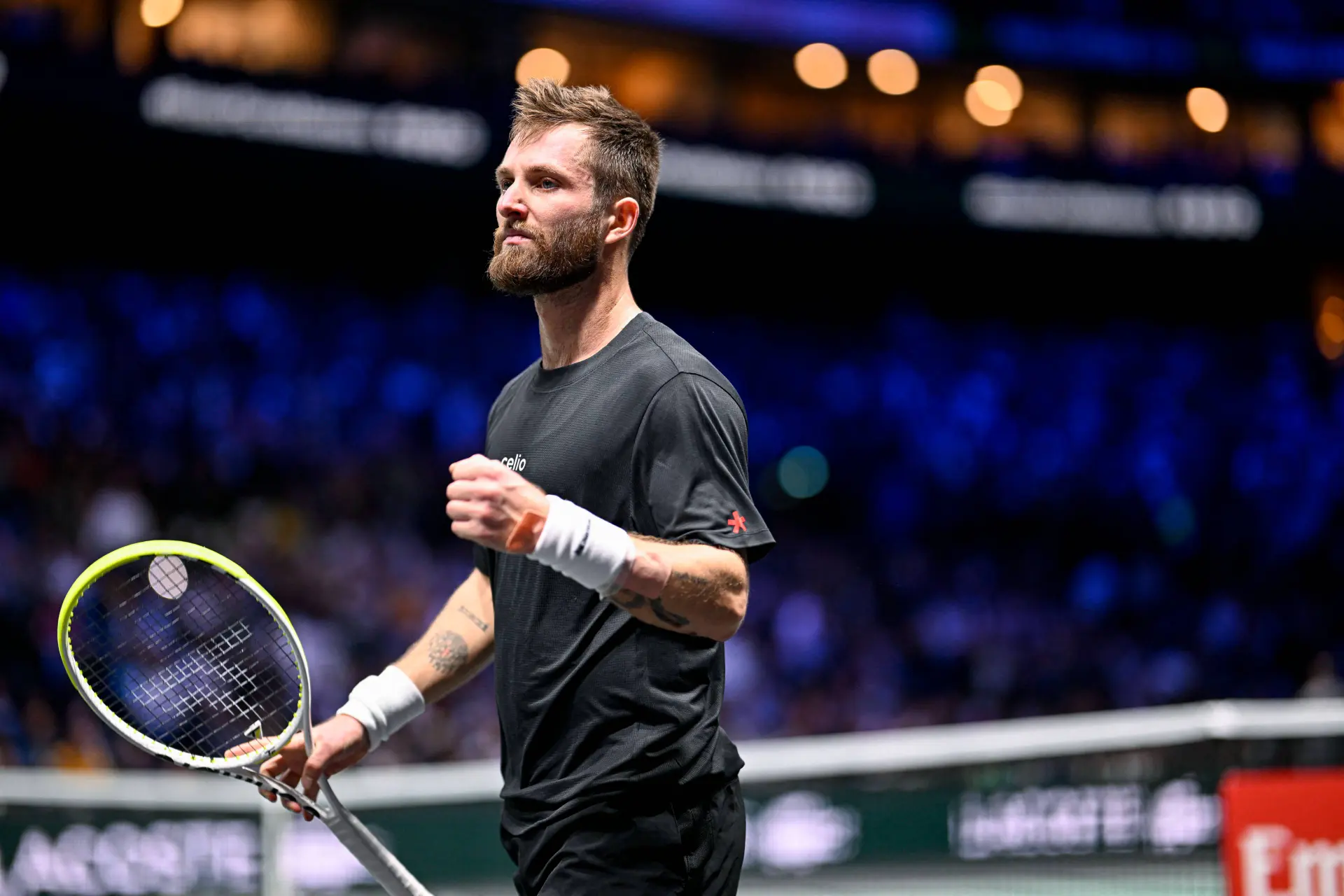
He leans towards repetition and getting it technically right. "It’s about building patterns and neural pathways. You don’t just snap your fingers and fix it. The brain has to imprint the movement until it becomes automatic. That takes repetition and time."
Once it has trickled into the brain, then the progress and results will show clear as day - take Gauff for example. "If you look at progress—for example, after New York, she goes to China, wins a tournament, and has the first match of her life without a double fault. That’s progress—but it’s gradual."
Changing a professional's technique
At this level, these players would have done so many serves specifically. Whether technically right or wrong, it has gotten them to this level and that routine built up in those years is something tough to shake off.
This is not the case with all players, as MacMillan reminisced on a period with American tennis player Brandon Nakashima. "It depends. The first time I really worked on technical changes was with Brandon Nakashima when he was 17," he said. "He was the top junior but limited by his serve and forehand. I told him, 'You’re the eighth seed—do you really think you can win like this?' He said, 'I don’t know.' I said, 'No.' So we took a month and changed things. He’s a savant—if you give him good information, he absorbs it incredibly quickly. He struggled early in matches, but then he found rhythm and ended up winning the tournament."
While admitting there is no simple answer, he did bring up three points of call that players need to complete if they are to see progress. "Buy into the change, not focus on immediate results, have the physical ability to execute it."
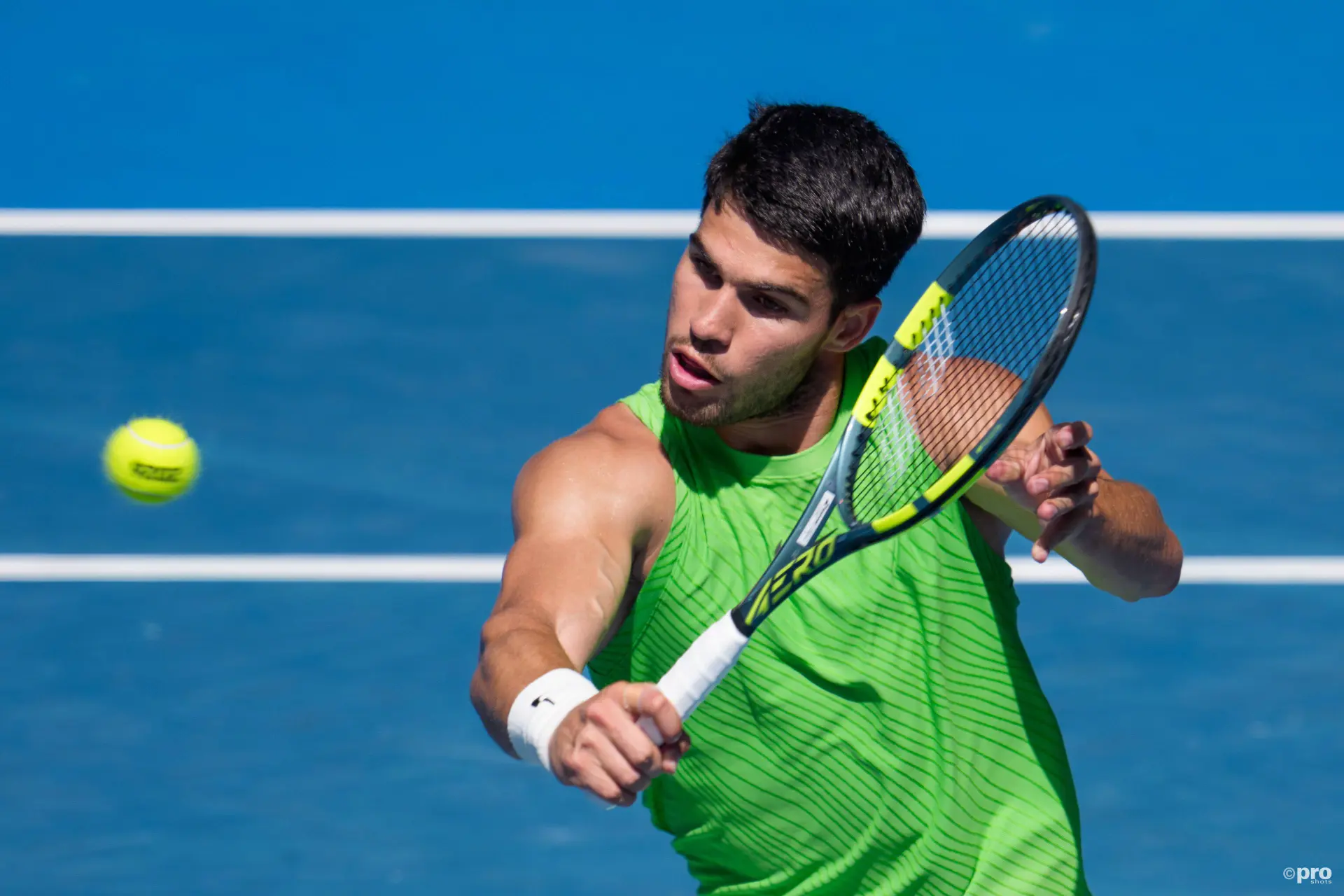
These changes can be seen sooner rather than later in some cases. "Take Nikoloz Basilashvili—before Indian Wells, we focused on getting a heavy first serve with spin in at around 65%. He’d never won a round there in six years—and he made the final, beating top players along the way."
He again used Sabalenka as a case study. "Or with Aryna Sabalenka—we had three days before Cincinnati. She went from 23 double faults in a match to five. That’s immediate improvement—but only because she bought into it and had the physical tools."
How he joined Gauff's team
MacMillan attempted to push away some of the oncoming criticism aimed at Gauff due to her recent woes on court. "Coco Gauff is only 21, and sometimes we forget she’s been on tour for six or seven years already," he commented. "She’s a very interesting player because she’s achieved so much under immense pressure—honestly, I can’t even imagine what she’s gone through."
After clinching her second Grand Slam at Roland Garros in 2025, Gauff endured a torrid grass swing followed by early exits in the WTA 1000 events following Wimbledon. The US Open was fast approaching, one of the biggest tournaments on the calendar. This is where she made an incredibly brave and bold decision to bring MacMillan into the fold.
"This year, after winning Roland-Garros, she made the decision just a week before the US Open to change her plans and work on her serve," MacMillan clarified. "That’s incredible. She’d already won a Slam, but she still wanted to improve. People outside tennis might not understand how big that is—trying to change something as important as your serve at that level. It shows long-term thinking, and I have huge respect for that."
It did not work out the way she would have hoped for, losing out to Naomi Osaka in the fourth round while marking another disappointing showing in court in a tournament she could have left as the world number one.
Perspective was key for onlookers, according to MacMillan. "If you go back and watch her first-round match, the level of tennis was unbelievable," he said. "Then she’s facing players like Donna Vekić, an Olympic silver medallist, and potentially Naomi Osaka, a two-time US Open champion. These are elite players—it’s not like you’re just winning matches in a park. So if the only measure of success is whether she wins the tournament, then you clearly don’t understand how difficult it is to win—even when you’re doing everything right."
He was not one for only focusing on the end results of matches. "It creates an impossible standard. If the only acceptable outcome is winning, that’s not a healthy lens to live under as an athlete. You need the right people around you to keep perspective—and most players don’t have that."
MacMillan will continue to aid Gauff as she looks to find her old self with the biggest titles in the sport as the target. Her clay swing was marveled at by many last year, but now those points from Roland Garros and two WTA 1000 finals are set to come tumbling off her rankings. Gauff, MacMillan, and her team will do everything they can to keep her challenging the best.
Lucas MichaelTennis Journalist
Lucas Michael is a tennis journalist based in Cambridge, UK, specializing in comprehensive coverage of the ATP and WTA tours. For the past 1.5 years, he has been a core contributor to TennisUpToDate, where he has authored more than 3,000 data-driven match reports, deep-dive analysis pieces, and engaging liveblogs.
Lucas pairs real-time statistical analysis with on-the-ground reporting, frequently traveling to tournaments to cover the action firsthand from the press box and player press conferences. This blend of advanced metrics and direct access allows him to provide sharp context regarding player form, tactical trends, and breaking tour developments.
He holds a BA (Hons) in Sports Journalism. Grounded in core journalistic ethics, Lucas places a strict emphasis on meticulous sourcing, editorial accuracy, and a commitment to updating live content swiftly as verified information emerges.
claps 0visitors 0
Just In

Popular News
Latest Comments
- A healthy Qinwen may be hard to stop next season. She was already scaring her opponents before her medical leave(s). Unfortunately, Zheng insisted on singing again. On the positive side -- Mirra did not sing!! ;~}
 mandoist11-10-2026
 - Where is it written that athletes, entertainers... People in general... are mandated to keep looking at -- or even using [anti]Social Media? Public & private figures consistently complain and reveal their concerns about negativity and violence thrown at them -- yet they insist on participating. Avoid it, don't use it, don't read it. It's okay to occasionally look up at the World instead beating your eyes & thumbs to death on The Inventions out there.mandoist11-10-2026
- great articlestennisseserver07-10-2026
- Medvedev was leading Djokovic 7-5, 3-5 when an attempted return..' NO you ignorants, Djokovic was leading .weiss05-10-2026
- No more bullshit "Wildcards" to these two. Qualify like everyone else -- there will be cameras there, too. Time to scream... WTF ????!!!!mandoist29-09-2026
- Let's not BS the general public -- Sabalenka started showing cracks in her game last season. Her losses and near-losses started at about the same time she began being distracted by Fame (constant Selfies, making TV commercials, magazine shoots, endless Social Media nonsense, etc., etc.) One would think even Saba could recognize the parallels with others who failed before her -- Raducanu, Giorgi, Bouchard to name a few.mandoist25-09-2026
- Gross!! Hey Raducanu, Giorgi, and Bouchard -- reserve a seat at your Social Media Selfie table for Saba + Naomi. They're heading in your direction soon enough.mandoist24-09-2026
- And then these same players will complain about how lengthy their season’s were and need more time-off. I’m all for more tennis but the amount of tennis we get now is actually kind of crazy! We all need a break, especially the players.DaveyWavey23-09-2026
- You should do a comparison article for "different kinds of justice" the courts decide for tennis players. I can think of at least three players who received very small bans of a few months, however Tara Moore has been fighting for her literal survival the past few years. It seems odd considering she is not a "name" player, unlike the other cases.DaveyWavey22-09-2026
- PRIZE MONEY & POINTS Winner - $185,500 Finalist - $114,500 Semi-Finalist - $66,003 Quarter-Finalist - $35,000 Round of 16 - $18,045 Round of 32 - $13,005 Winner - 500 Finalist - 325 Semi-Finalist - 195 Quarter-Finalist - 108 Round of 16 - 60 Round of 32 - 1DaveyWavey20-09-2026

Loading