Roland Garros ATP Day Two Round-Up | Emotional exits for Gael Monfils and Stan Wawrinka as Ruud survives epic scare
ATP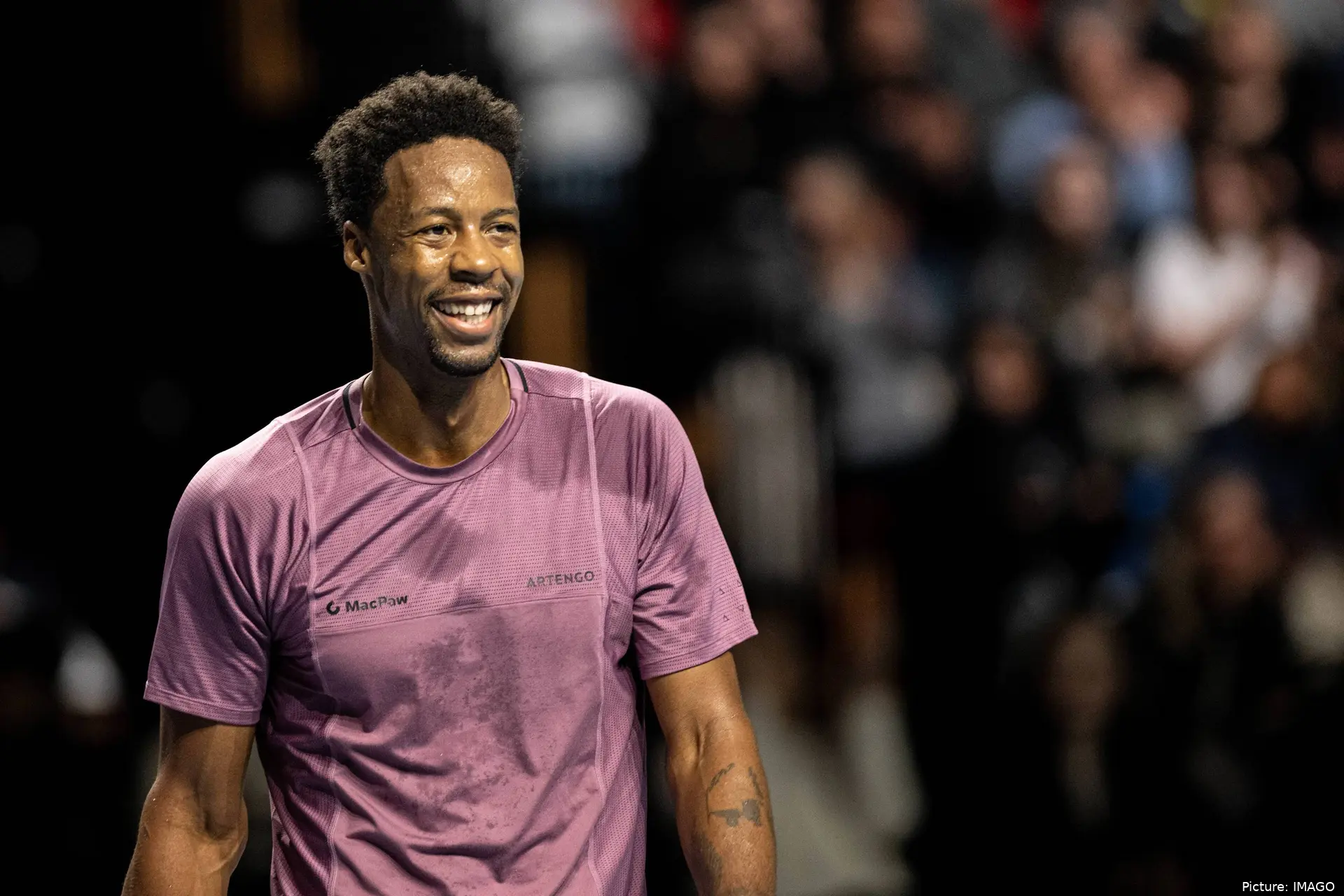
The opening round of the Roland Garros featured a mix of seeded progression and extended early-round battles, with several players forced into physically demanding five-set scenarios. Casper Ruud survived a major swing against Roman Safiullin, while Matteo Berrettini and Alex de Minaur secured solid openings to their campaigns in Paris.
Day Two was also defined by emotional farewells, as Gaël Monfils and Stan Wawrinka both contested their final Roland Garros appearances as part of their retirement season. Alongside those exits, Andrey Rublev and Thanasi Kokkinakis advanced through testing encounters, while Hubert Hurkacz and Frances Tiafoe progressed into the second round.
Ruud withstands Safiullin momentum swings in four-hour contest
Casper Ruud def. Roman Safiullin 6-2, 7-6, 5-7, 0-6, 6-2
Casper Ruud appeared on course for a routine opening-round victory after taking a two-set lead and moving within points of the finish line in the third set. The Norwegian dictated most of the early baseline exchanges and consistently pushed Safiullin behind the court with heavy forehand depth. However, the match shifted dramatically after Ruud failed to convert multiple match points late in the third set.

Safiullin raised his first-serve level and began shortening rallies through aggressive returning, winning 11 consecutive games across the third and fourth sets. Ruud struggled physically during that stretch and briefly lost control of the tempo, but stabilised early in the fifth by protecting his service games and re-establishing forehand patterns into Safiullin’s backhand wing.
The former finalist recovered after letting slip two match points on return at 5-2 and another three while serving at 5-3 in the third set. Despite the collapse in the fourth, Ruud regained efficiency behind serve in the decider and limited Safiullin’s free points on second serve. The Norwegian now advances into the second round of Roland Garros with questions remaining about his physical durability deeper into the draw.

Berrettini recovers from slow start in winning Roland Garros return
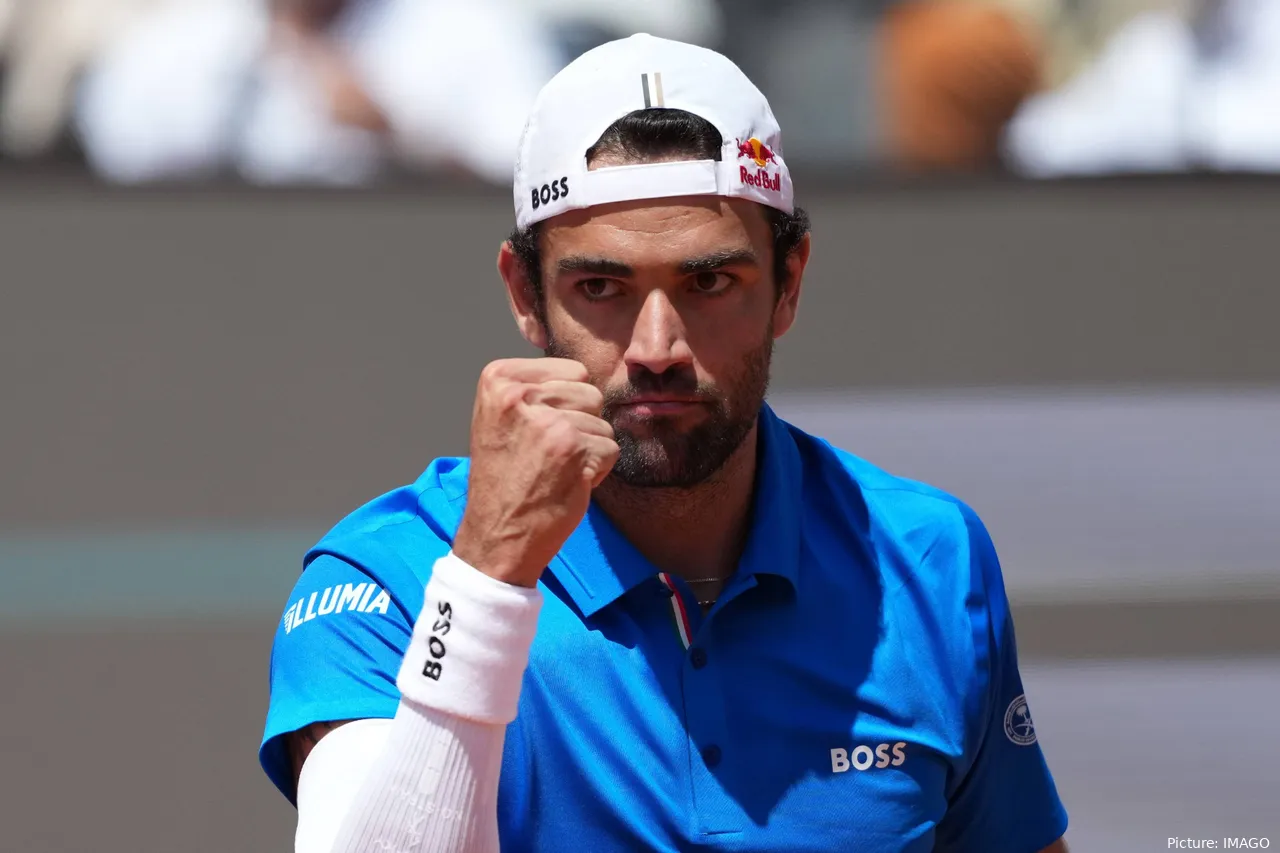
Matteo Berrettini def. Márton Fucsovics 6-7, 7-5, 6-1, 6-2
Matteo Berrettini returned to Roland Garros for the first time since 2021 and needed time to settle into the match after dropping a tight opening-set tiebreak against Márton Fucsovics. The Italian initially struggled to establish control behind his serve as Fucsovics absorbed pace effectively and extended rallies through the middle of the court.
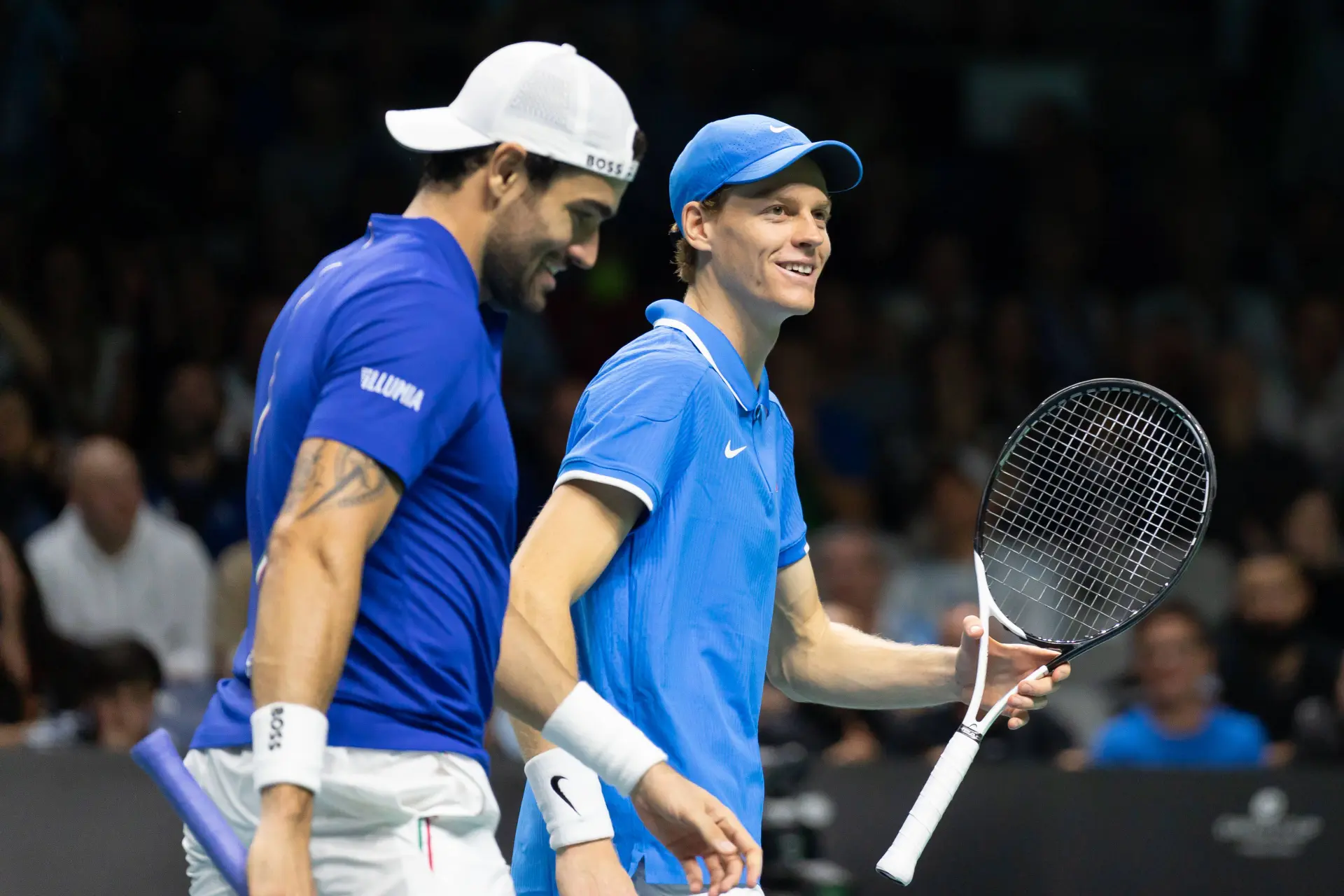
The match changed late in the second set when Berrettini began generating more consistent forehand penetration and attacking second serves earlier in rallies. From that point, the Hungarian’s resistance declined sharply as Berrettini increased both his first-strike efficiency and court positioning.
After edging the second set 7-5, Berrettini dominated the final two sets, conceding only three games. His serving numbers improved substantially after the opening set, while his forehand produced repeated short-ball opportunities. The former quarter-finalist secured his first Grand Slam win in over a year and moves into the second round with signs that his physical condition is stabilising after extended injury interruptions.
De Minaur progresses efficiently against Roland Garros debutant
Alex de Minaur def. Toby Samuel 6-4, 6-4, 6-2
Alex de Minaur handled a potentially awkward first-round match professionally against British qualifier Toby Samuel, who was making his Roland Garros main-draw debut. The Australian secured an early break in the opening set and consistently forced Samuel into extended defensive exchanges from the baseline.
Samuel briefly disrupted the rhythm by moving ahead early in the second set, but De Minaur responded immediately through improved returning depth and greater pressure on second-serve exchanges. Once the Australian regained parity, the match largely moved in one direction as his movement and consistency exposed Samuel’s inexperience at this level.
De Minaur closed the match by winning five consecutive games and maintained strong control over return games throughout the final set. The Australian avoided extended service pressure and advanced with limited physical expenditure, an important factor heading into the second round at Roland Garros where deeper physical demands are expected.

Rublev survives resistance from emerging Peruvian Ignacio Buse
Andrey Rublev def. Ignacio Buse 6-3, 6-7(6), 6-3, 7-5
Andrey Rublev was tested throughout his opening-round encounter by Ignacio Buse, who arrived in Paris shortly after claiming the Hamburg Open title. The Russian initially controlled the match through heavier baseline hitting and superior rally tolerance, but Buse adapted quickly and became increasingly effective behind serve during the second set.
The momentum shifted during the second-set tiebreak when Buse handled pressure moments more effectively and began extending points into Rublev’s forehand corner. Rublev responded by flattening out his backhand earlier in rallies and targeting returns more aggressively to avoid prolonged exchanges against the confident Peruvian.
Buse continued applying pressure deep into the fourth set despite limited recovery time entering Roland Garros. Rublev eventually separated himself through greater consistency on critical points and will now face Camilo Ugo Carabelli in the second round. The match also reinforced Buse’s growing level on clay after his recent breakthrough run in Hamburg.
Kokkinakis survives five-set marathon after fifth-set comeback
Thanasi Kokkinakis def. Terence Atmane 6-7, 6-2, 4-6, 6-3, 7-5
Thanasi Kokkinakis returned to the Grand Slam winners’ circle after surviving a physically demanding five-set contest against Terence Atmane that lasted more than four hours. The Australian struggled to maintain scoreboard control despite periods of effective serving, while Atmane repeatedly disrupted rhythm through aggressive returning and early ball striking.
The decisive shift came late in the fifth set when Kokkinakis recovered from a 2-5 deficit by increasing first-serve accuracy and shortening points behind his forehand. Atmane’s level dipped physically during the closing stages, allowing Kokkinakis to regain control of service games and apply sustained scoreboard pressure.
Kokkinakis won four consecutive games to close the match and secured his first ATP-level victory since Adelaide earlier this season. The Australian also recorded his first Grand Slam match win since the Australian Open, potentially providing important ranking protection as he attempts to rebuild consistency following long-term injury interruptions.

Hurkacz restores order after third-set dip against Munar
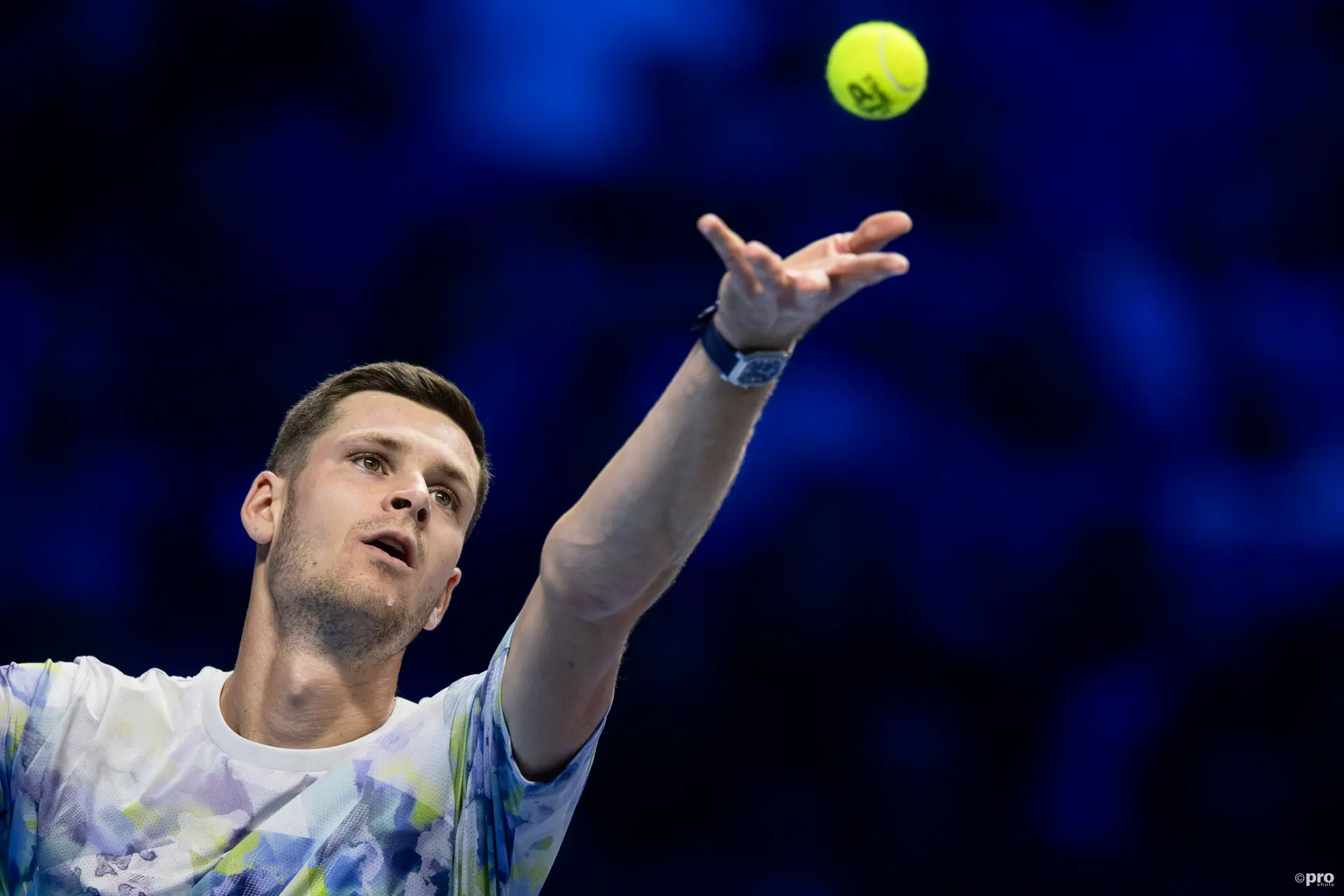
Hubert Hurkacz def. Jaume Munar 6-3, 6-3, 2-6, 6-3
Hubert Hurkacz opened strongly against Jaume Munar, using his serve to keep points short while controlling the middle of the court with flatter baseline patterns. The Pole dictated the first two sets efficiently and appeared positioned for a straightforward victory before Munar extended rallies and increased defensive pressure in the third.
Munar’s tactical adjustment forced Hurkacz into more uncomfortable movement patterns and disrupted his serving rhythm, leading to a one-sided third set. However, Hurkacz re-established control early in the fourth by securing a break and returning to more aggressive first-strike tennis.
The former quarter-finalist faced late pressure while serving out the match, saving multiple break points in the final game before closing the victory. Hurkacz now advances to a significant second-round clash against Frances Tiafoe, one of the more balanced matchups in this section of the Roland Garros draw.
Wawrinka exits Paris in final Roland Garros appearance
Jesper de Jong def. Stan Wawrinka 6-3, 3-6, 6-3, 6-4
Stan Wawrinka’s final Roland Garros appearance ended in four sets against lucky loser Jesper de Jong. The 2015 champion remained competitive for extended stretches and briefly levelled the contest through improved backhand depth during the second set.
De Jong gradually took control by extending physical rallies and targeting Wawrinka’s movement patterns, particularly during longer exchanges into the forehand side. The Dutchman remained composed in key service games and avoided the fluctuations that often allowed Wawrinka brief momentum swings.
The Swiss veteran struggled to maintain consistent first-serve effectiveness across four sets, while de Jong handled scoreboard pressure more cleanly during the latter stages. Wawrinka exits Roland Garros after another emotional appearance in Paris, while de Jong progresses to one of the biggest wins of his career.

Stan Wawrinka at 2025 Australian Open
Gaël Monfils bows out in Roland Garros farewell
Hugo Gaston def. 6-2, 6-3, 3-6, 5-7, 6-0 Gaël Monfils
Hugo Gaston advanced at the Roland Garros after defeating Gaël Monfils in a five-set match defined by distinct momentum shifts and a decisive final-set breakdown. The encounter evolved from Gaston’s early control into a full comeback from Monfils, before the Frenchman ultimately reasserted authority in the decider.
Monfils responded from two sets down by improving first-serve impact and extending baseline exchanges, particularly through the third and fourth sets, where he reduced unforced errors and began dictating more frequently on the forehand side. That adjustment allowed him to overturn the deficit and force a fifth set, keeping his tournament alive amid strong home support.

The fifth set, however, was shaped by physical decline and diminishing serve efficiency. Gaston immediately targeted second-serve patterns and applied consistent return pressure, breaking early and repeatedly isolating Monfils in longer rallies. The veteran was unable to stabilise his service games, with momentum shifting rapidly as Gaston extended the gap.
The match closed with a final-set bagel, as Gaston won the last three games via consecutive breaks to complete the victory. Monfils exits Roland Garros in what is effectively his farewell appearance in Paris, receiving an extended ovation after a career-long connection with the French crowd, marking the end of a significant chapter at his home Grand Slam.
Lucas MichaelTennis Journalist
Lucas Michael is a tennis journalist based in Cambridge, UK, specializing in comprehensive coverage of the ATP and WTA tours. For the past 1.5 years, he has been a core contributor to TennisUpToDate, where he has authored more than 3,000 data-driven match reports, deep-dive analysis pieces, and engaging liveblogs.
Lucas pairs real-time statistical analysis with on-the-ground reporting, frequently traveling to tournaments to cover the action firsthand from the press box and player press conferences. This blend of advanced metrics and direct access allows him to provide sharp context regarding player form, tactical trends, and breaking tour developments.
He holds a BA (Hons) in Sports Journalism. Grounded in core journalistic ethics, Lucas places a strict emphasis on meticulous sourcing, editorial accuracy, and a commitment to updating live content swiftly as verified information emerges.
claps 0visitors 0
Just In

Popular News
Latest Comments
- Two Things: 1. Stop allowing these Spoiled Trust-Fund Elitists to behave badly. Your little hand-slaps do not deter them. 2. STOP the incessantly annoying "towel wiping" nonsense!!!!
 mandoist15-10-2026
 - A healthy Qinwen may be hard to stop next season. She was already scaring her opponents before her medical leave(s). Unfortunately, Zheng insisted on singing again. On the positive side -- Mirra did not sing!! ;~}mandoist11-10-2026
- Where is it written that athletes, entertainers... People in general... are mandated to keep looking at -- or even using [anti]Social Media? Public & private figures consistently complain and reveal their concerns about negativity and violence thrown at them -- yet they insist on participating. Avoid it, don't use it, don't read it. It's okay to occasionally look up at the World instead beating your eyes & thumbs to death on The Inventions out there.mandoist11-10-2026
- great articlestennisseserver07-10-2026
- Medvedev was leading Djokovic 7-5, 3-5 when an attempted return..' NO you ignorants, Djokovic was leading .weiss05-10-2026
- No more bullshit "Wildcards" to these two. Qualify like everyone else -- there will be cameras there, too. Time to scream... WTF ????!!!!mandoist29-09-2026
- Let's not BS the general public -- Sabalenka started showing cracks in her game last season. Her losses and near-losses started at about the same time she began being distracted by Fame (constant Selfies, making TV commercials, magazine shoots, endless Social Media nonsense, etc., etc.) One would think even Saba could recognize the parallels with others who failed before her -- Raducanu, Giorgi, Bouchard to name a few.mandoist25-09-2026
- Gross!! Hey Raducanu, Giorgi, and Bouchard -- reserve a seat at your Social Media Selfie table for Saba + Naomi. They're heading in your direction soon enough.mandoist24-09-2026
- And then these same players will complain about how lengthy their season’s were and need more time-off. I’m all for more tennis but the amount of tennis we get now is actually kind of crazy! We all need a break, especially the players.DaveyWavey23-09-2026
- You should do a comparison article for "different kinds of justice" the courts decide for tennis players. I can think of at least three players who received very small bans of a few months, however Tara Moore has been fighting for her literal survival the past few years. It seems odd considering she is not a "name" player, unlike the other cases.DaveyWavey22-09-2026

Loading