Victoria Mboko 'top 10 material no doubt' but is she better than Coco Gauff? Vandeweghe, Petkovic and Gilbert discuss
WTA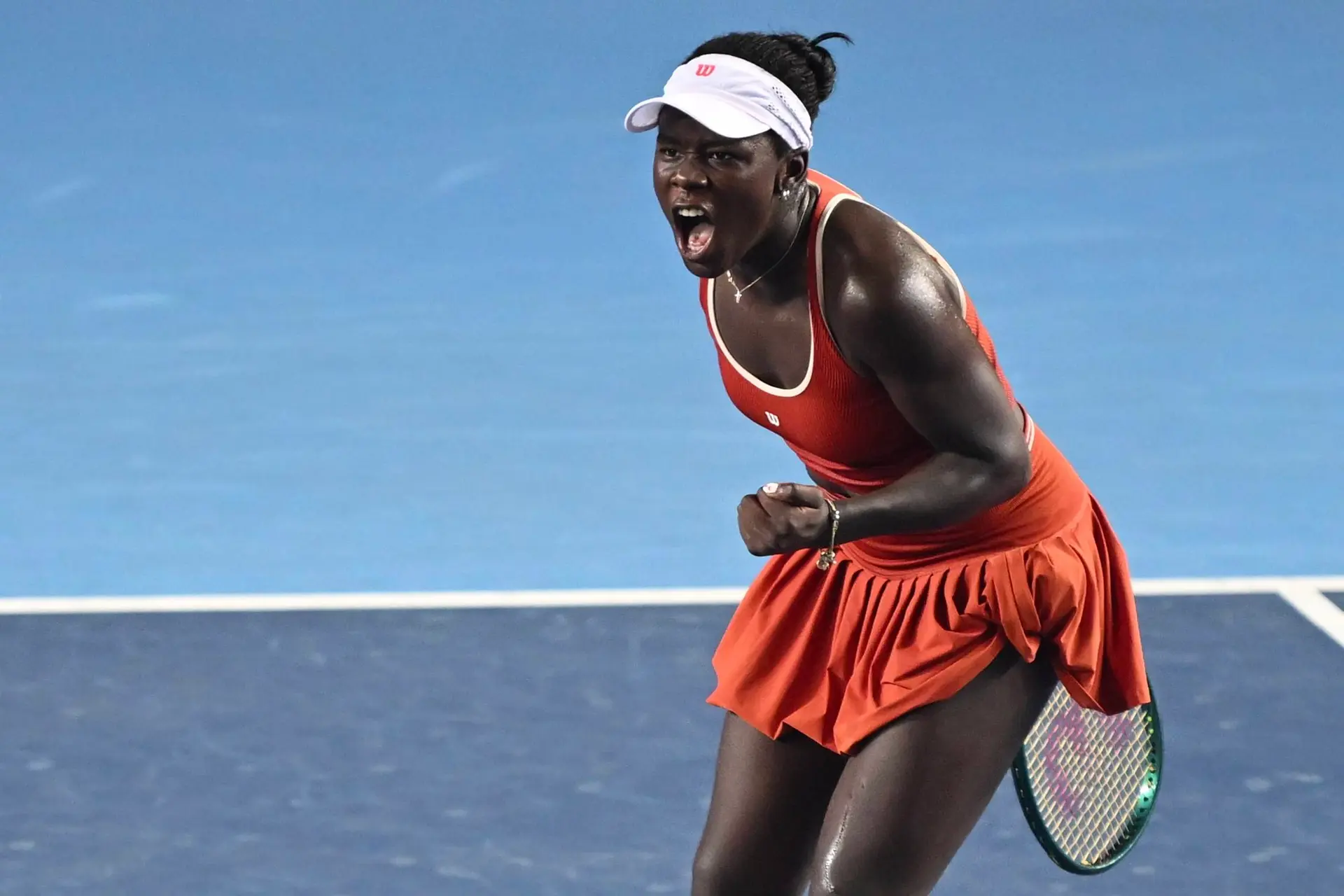
The latest episode of Big T delivered a lively mix of hot takes, personal experience, and philosophical debate, as Coco Vandeweghe, Andrea Petkovic and Brad Gilbert worked their way through another round of “Bank or Shank.”
From comparing Victoria Mboko’s ceiling to Coco Gauff’s résumé, to the ethics of double bounces, and finally the possibility of a Serena Williams comeback, the trio didn’t hold back.
Mboko vs Gauff: “That’s a Different Echelon”
The debate began with a bold statement: Victoria Mboko has a higher ceiling than Coco Gauff. Vandeweghe wasted little time. “I think I’ve got to go shank on that one,” she said on Big T Podcast. “With Coco Gauff having two Grand Slams under her belt, that is a feat in itself. And who knows how many more she will have by the end of her career? We forget that Coco is still so young. So I’m going shank.”
While full of praise for Mboko’s potential calling her “Top 10 material, no doubt” and possibly even top five, Vandeweghe drew a firm line at major titles. “But Grand Slams? That’s a different echelon.”
Petkovic agreed. "I will also shank that,” she said. “I think Coco Gauff has one of the strongest champion’s minds I have ever seen in a player being that young, with some flaws in her game, but always competing.”
Read also

Petkovic went further, suggesting that Gauff remains oddly underrated despite her success. “I don’t know if you agree, but in a weird way, I feel like she’s underrated,” she said. “I played her when she was 15. Right away I thought to myself, ‘This is a generational talent.’ I lost to Coco Gauff when she was 15 years old.”
Gilbert called it an “easy trifecta.” "Mboko maybe has a higher ceiling in a one-off match if she’s playing her best tennis,” he said. “But Coco is more resilient. She stays healthy — that’s going to be a big thing for Mboko.”
Long term, he sided firmly with Gauff. “I think Coco has a much higher ceiling longer term. But just for a one-off match? Maybe Mboko’s ceiling is pretty high.”

Victoria Mboko or Coco Gauff? Who has a higher ceiling?
Do players know when it’s a double bounce?
Next came a frequent talking point in tennis: when a player chases down a ball that’s close to bouncing twice, do they always know whether they got it up in time?
“Ninety-nine percent of the time, bank,” Gilbert said. “Every once in a blue moon, it’s an absolute bang-bang play. But way often it’s not even close. You know you didn’t get it, or you know you got it and they said you didn’t.”
Petkovic largely agreed, citing the recent Jack Draper–Felix Auger-Aliassime incident in Cincinnati as a rare exception.
“That’s the one time where I kind of honestly believed him that he didn’t know,” she said. “But every other time, I bank this.”
Vandeweghe also banked it, recalling a controversial moment on Madrid’s blue clay involving Roger Federer and Tomáš Berdych.
“As a player — stop fooling everyone. You know,” she said, before questioning why replay decisions can’t be made more quickly. “It’s trial and error, but it’s mainly because the umpires need to look good.”
Should players call it on themselves?
The discussion naturally evolved: if the umpire misses a double bounce, should the player concede the point?
Gilbert didn’t hesitate.“I want to say that good sportsmanship is paramount,” he said. “I’m banking it. When you look back on your career after you have retired, and you have called a few of these things, you will feel terrible about yourself and your character. Nobody wants that.”
Petkovic agreed — and brought karma into it. "Karma is real. You want good karma. Otherwise, ball don’t lie,” she said. “Some people say it’s not cheating because it’s not up to them. But if you stole something from a store and no one saw it, but you don’t rat yourself out — what is that? That’s still stealing.”
Gilbert countered with a baseball adage: “If you’re not cheating, you’re not trying.”
Vandeweghe shrugged. “If you’re stupid enough to not hide it well enough, then that’s on you.” The trio ultimately agreed on two things: it’s bad sportsmanship not to concede, and review systems need to be faster.
Serena: Singles comeback or doubles farewell?
The final topic sparked the most intrigue: Serena Williams will play a professional singles match this year. Bank or shank?
Petkovic went bold. “Bank. I think she will definitely play at least one singles match. I think she will try.”
Vandeweghe wasn’t convinced. “I’m going shank. I don’t see the point of her playing singles. She’s going to play doubles with her sister Venus, and that’s going to be the retirement road for the both of them.”
Gilbert sided with Vandeweghe. “I do not think she’s going to play singles,” he said. “The only thing would be if she thought, ‘I can win the tournament.’ I’m not sure that, unless she plays a lot, she’s going to put herself in position to win singles. So I’m going to say it will be doubles — probably the US Open.”
Petkovic raised another practical concern — anti-doping requirements.
“I don’t know if it’s worth it to be on the anti-doping list for six months with people ringing your doorbell at 5 a.m. to watch you pee in your own bathroom,” she said.
But Vandeweghe saw emotional value.
“I think it is worth it because it is her sister Venus,” she said. “The camaraderie they have, the love they have for each other, the respect that Serena has for Venus — that is just unmatched.”
If Serena came back — how would you coach it?
Petkovic then pressed Gilbert: if he were coaching a Serena singles comeback, what would the plan be? “This is a great question,” Gilbert said. “It’s not Serena in her early 30s. She’s almost 44. So what is the goal?”
If the aim is a 25th major, he argued, then match play would be essential. “You probably have to focus on singles, not play doubles, and see how your body handles playing two matches in three days,” he said. “When you’ve been off for five years, the hardest thing is how your body holds up match in, match out — especially over two weeks at a Grand Slam.”
He also pointed to something less tangible: equity. “When you’re great and winning all the time, you build up so much equity that a lot of your opponents have lost to you before you’ve even played,” he said. “Now she’s going to be playing players she hasn’t played. The equity isn’t built up. From match one, game one, you’ve got to play.”
Petkovic wasn’t buying that entirely. "She’s Serena Williams. She’s the greatest of all time,” she said. “She’s got that equity no matter where she walks into a room.”

Samuel GillEditor-in-Chief
Samuel Gill is the Chief Content Officer (CCO) of TennisUpToDate.com, a role he has held since 2020. He is responsible for editorial governance across the platform, including setting content standards, overseeing accuracy and consistency, and guiding long-term editorial strategy. Since joining, he has contributed more than 10,000 articles and editorial pieces across the TennisUpToDate network, playing a central role in the daily operation and development of the site.
Based in Leicester, Samuel has a broad background in tennis media. In his current role, he works closely with editors and writers to ensure coverage meets clear journalistic standards, with particular attention to verification, consistency, and timely updates when new information becomes available.
claps 0visitors 0
Just In


Popular News

Latest Comments
- Can you please stop publishing this nonsense? Stick to Tennis.
 mandoist25-10-2026
 - Bye, Bye Saba!!mandoist25-10-2026
- Does Sinner need that 4.5 mil? I doubt it. He can make that with three modelling gigs!😅🤣Rapunzel21-10-2026
- Did "People Magazine" purchase this website? This nonstop storyline is bullshit.mandoist21-10-2026
- Listen... this is of no concern to anyone but these two. Deal with your own issues -- most of us have our own. Thanks, media, for these insignificant follow-ups which are meaningless.mandoist21-10-2026
- This is so very very sad, for all three of them. I truly thought they had an unbreakable bond, but life throws up so many differing challenges. Having your homeland suffering in such a terrible way, makes happiness lose out to guilt as well. Our thoughts are with them. X💔bjsexton20-10-2026
- I have lost all respect for Svitolina! Could she not have waited until he had played at the Paris Masters!!! She is selfish and don't give a damn about Gael. That is NOT how love is demonstrated Elina!!Rapunzel19-10-2026
- Perhaps convenient tennis tour sex is not a strong enough experience in which to base a marriage?mandoist19-10-2026
- Fight the Good Fight... Tennis (sports in general) need more Humans such as yourself.mandoist18-10-2026
- When is WTA going to mandate Genetic Testing (DNA) ???mandoist18-10-2026

Loading