"Wasn’t quite at the level of the very top players": Jessica Pegula improved in one area to go from outsider to contender to big names
WTA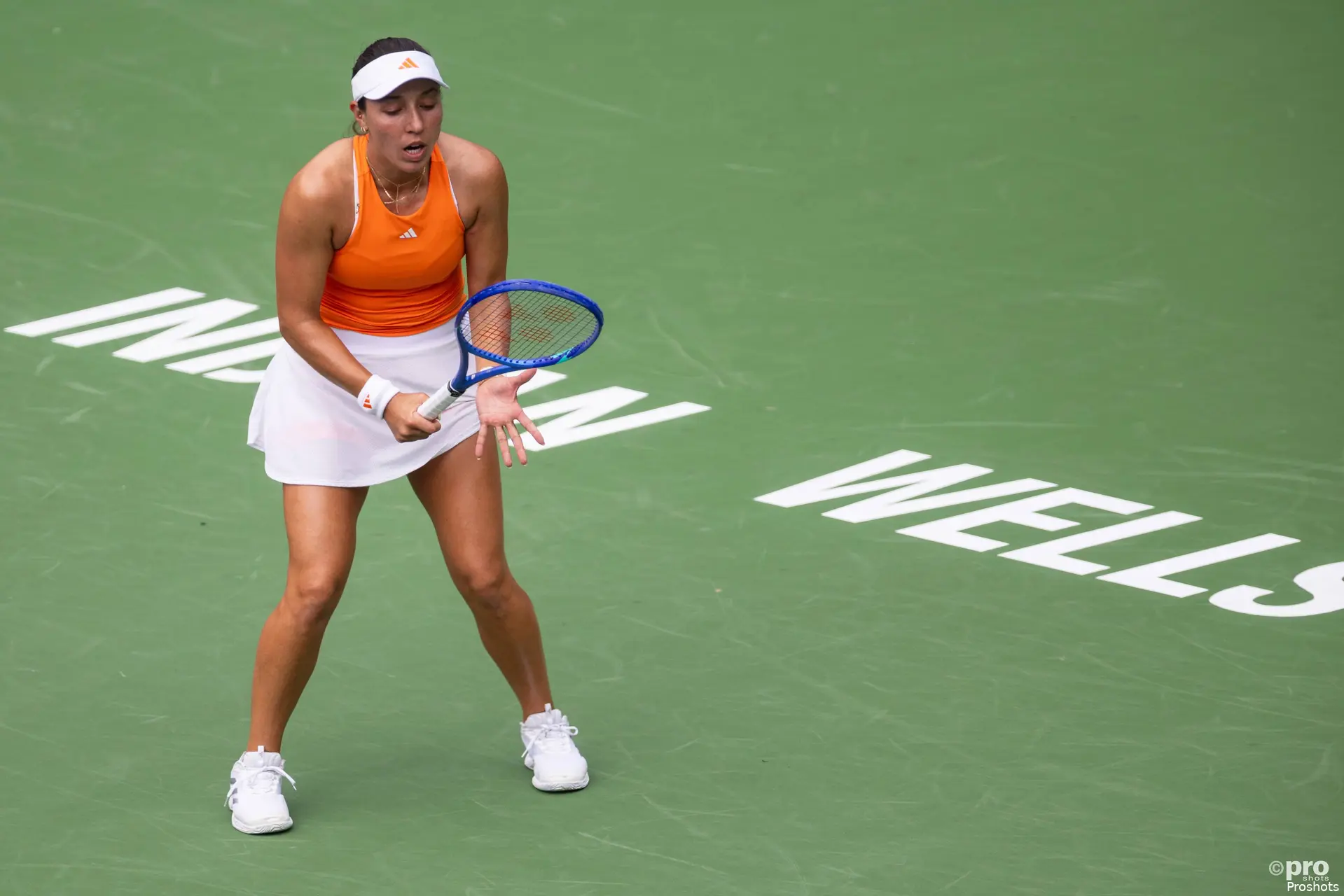
Few players on the WTA Tour have built their success as steadily as Jessica Pegula. Long regarded as one of the most consistent performers in the game, Pegula has increasingly turned that reliability into deeper runs—and, crucially, titles.
Speaking on Tennis Channel, Danielle Collins pointed to consistency as the foundation of Pegula’s progress and she is seen as a real contender for Miami.
“I think just getting more consistent,” Collins said. “Being able to push through those quarterfinals, semifinals, and make it to the very end of some of these events—and then lifting the trophy at the end.”
That next step, converting late-stage appearances into victories—has been key. Pegula has long been a regular in the latter rounds, but her ability to sustain her level across an entire week is what now separates her.
Collins also highlighted how certain environments amplify Pegula’s strengths. “Last year she made the finals here. This is a place that she plays incredible tennis at. This is her home tournament. She thrives in these hot, humid conditions,” she said, adding, “I think she has a chance of going all the way and winning this tournament.”

Technical improvement = higher ceiling
While consistency defines Pegula’s baseline, Jimmy Arias believes a specific technical improvement has elevated her ceiling: the serve.
“The biggest thing that she’s improved, in my mind, is actually her serve,” Arias explained. “Her serve was the one shot that wasn’t quite at the level of the very top players. It’s still not Sabalenka and Rybakina, but she’s hitting her spots a little bit better.”
That added precision has had a ripple effect across her game. Pegula has traditionally relied on getting into rallies, where her clean, penetrating groundstrokes can take control. Previously, second serves could leave her exposed.
“She always needed first serves or she was going to be in a little bit of trouble,” Arias said. “If you got a second serve, that was the best opportunity in the rally—because the rest of her shots are deep and fast and penetrating.”

Jessica Pegula resumes her role of queen of WTA consistency.
Now, with improved placement and more reliable first serves, she is earning more free points and setting up those aggressive baseline exchanges on her own terms.
“You can see these numbers—she’s done a lot better with that serve. Sixth-most aces—that shocks me a little bit,” Arias added. “That definitely pays dividends when you’re going deep into tournaments and playing against the best players. You have to come up with big first serves and hit them consistently.”
From an opponent’s perspective, however, Pegula’s challenge goes far beyond one shot. “The consistency and just her ability to play relentless tennis,” Collins said when asked what makes her so difficult to face. “When things are going her way, it’s hard to stop her.”
Her precision is equally damaging. “Being able to hit the corners of the court—and then being so tough in those high-pressure situations,” Collins noted. “Her all-around game, I find to be really challenging.”
Arias added another, more subtle dimension—one that becomes apparent only when sharing the court with her. “She doesn’t look as though she’s swinging that fast,” he said, “but the ball absolutely shoots off her racket. It goes through the court so fast without you seeing the racket-head speed.”
That deceptive power creates discomfort for opponents, particularly when combined with her ability to disguise intent.
“You’re not able to get a read on where she’s going to hit the ball,” Arias explained. “She disguises her shots incredibly well. Then you’re in a tough moment—4-all or 5-4—and you’re trying to play a guessing game. It’s hard.”
Taken together, the picture is clear: Pegula’s rise hasn’t been built on one dramatic change, but on layered improvements. Greater consistency, sharper serving, relentless ball-striking, and an ability to handle pressure moments have all combined to elevate her from a dependable quarterfinalist into a genuine title threat.

Samuel GillEditor-in-Chief
Samuel Gill is the Chief Content Officer (CCO) of TennisUpToDate.com, a role he has held since 2020. He is responsible for editorial governance across the platform, including setting content standards, overseeing accuracy and consistency, and guiding long-term editorial strategy. Since joining, he has contributed more than 10,000 articles and editorial pieces across the TennisUpToDate network, playing a central role in the daily operation and development of the site.
Based in Leicester, Samuel has a broad background in tennis media. In his current role, he works closely with editors and writers to ensure coverage meets clear journalistic standards, with particular attention to verification, consistency, and timely updates when new information becomes available.
claps 0visitors 0
Just In

Popular News
Latest Comments
- A healthy Qinwen may be hard to stop next season. She was already scaring her opponents before her medical leave(s). Unfortunately, Zheng insisted on singing again. On the positive side -- Mirra did not sing!! ;~}
 mandoist11-10-2026
 - Where is it written that athletes, entertainers... People in general... are mandated to keep looking at -- or even using [anti]Social Media? Public & private figures consistently complain and reveal their concerns about negativity and violence thrown at them -- yet they insist on participating. Avoid it, don't use it, don't read it. It's okay to occasionally look up at the World instead beating your eyes & thumbs to death on The Inventions out there.mandoist11-10-2026
- great articlestennisseserver07-10-2026
- Medvedev was leading Djokovic 7-5, 3-5 when an attempted return..' NO you ignorants, Djokovic was leading .weiss05-10-2026
- No more bullshit "Wildcards" to these two. Qualify like everyone else -- there will be cameras there, too. Time to scream... WTF ????!!!!mandoist29-09-2026
- Let's not BS the general public -- Sabalenka started showing cracks in her game last season. Her losses and near-losses started at about the same time she began being distracted by Fame (constant Selfies, making TV commercials, magazine shoots, endless Social Media nonsense, etc., etc.) One would think even Saba could recognize the parallels with others who failed before her -- Raducanu, Giorgi, Bouchard to name a few.mandoist25-09-2026
- Gross!! Hey Raducanu, Giorgi, and Bouchard -- reserve a seat at your Social Media Selfie table for Saba + Naomi. They're heading in your direction soon enough.mandoist24-09-2026
- And then these same players will complain about how lengthy their season’s were and need more time-off. I’m all for more tennis but the amount of tennis we get now is actually kind of crazy! We all need a break, especially the players.DaveyWavey23-09-2026
- You should do a comparison article for "different kinds of justice" the courts decide for tennis players. I can think of at least three players who received very small bans of a few months, however Tara Moore has been fighting for her literal survival the past few years. It seems odd considering she is not a "name" player, unlike the other cases.DaveyWavey22-09-2026
- PRIZE MONEY & POINTS Winner - $185,500 Finalist - $114,500 Semi-Finalist - $66,003 Quarter-Finalist - $35,000 Round of 16 - $18,045 Round of 32 - $13,005 Winner - 500 Finalist - 325 Semi-Finalist - 195 Quarter-Finalist - 108 Round of 16 - 60 Round of 32 - 1DaveyWavey20-09-2026

Loading