“You will win it, and you’re going to enjoy it even more”: Aryna Sabalenka consoles Anisimova after US Open 2025 final
WTA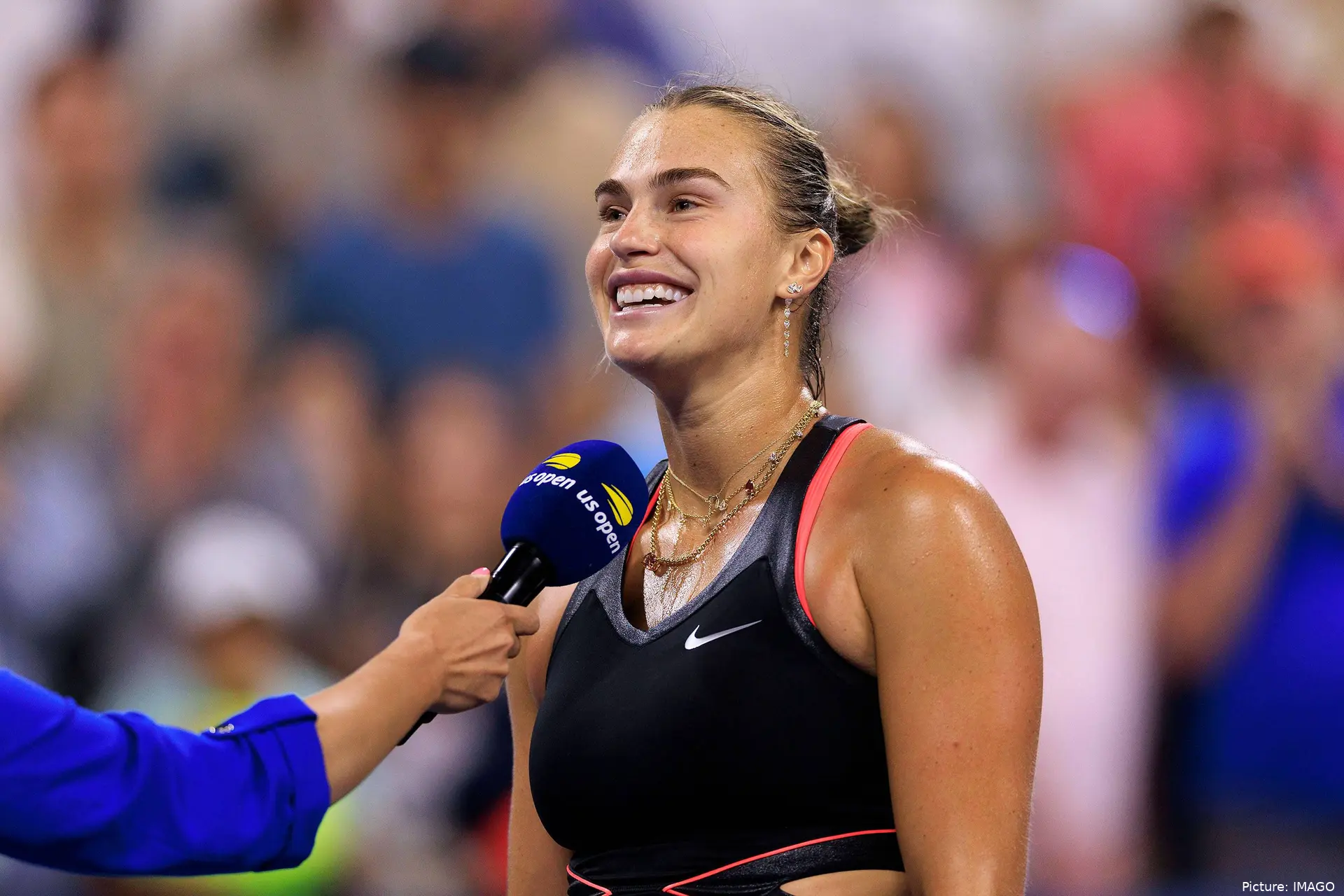
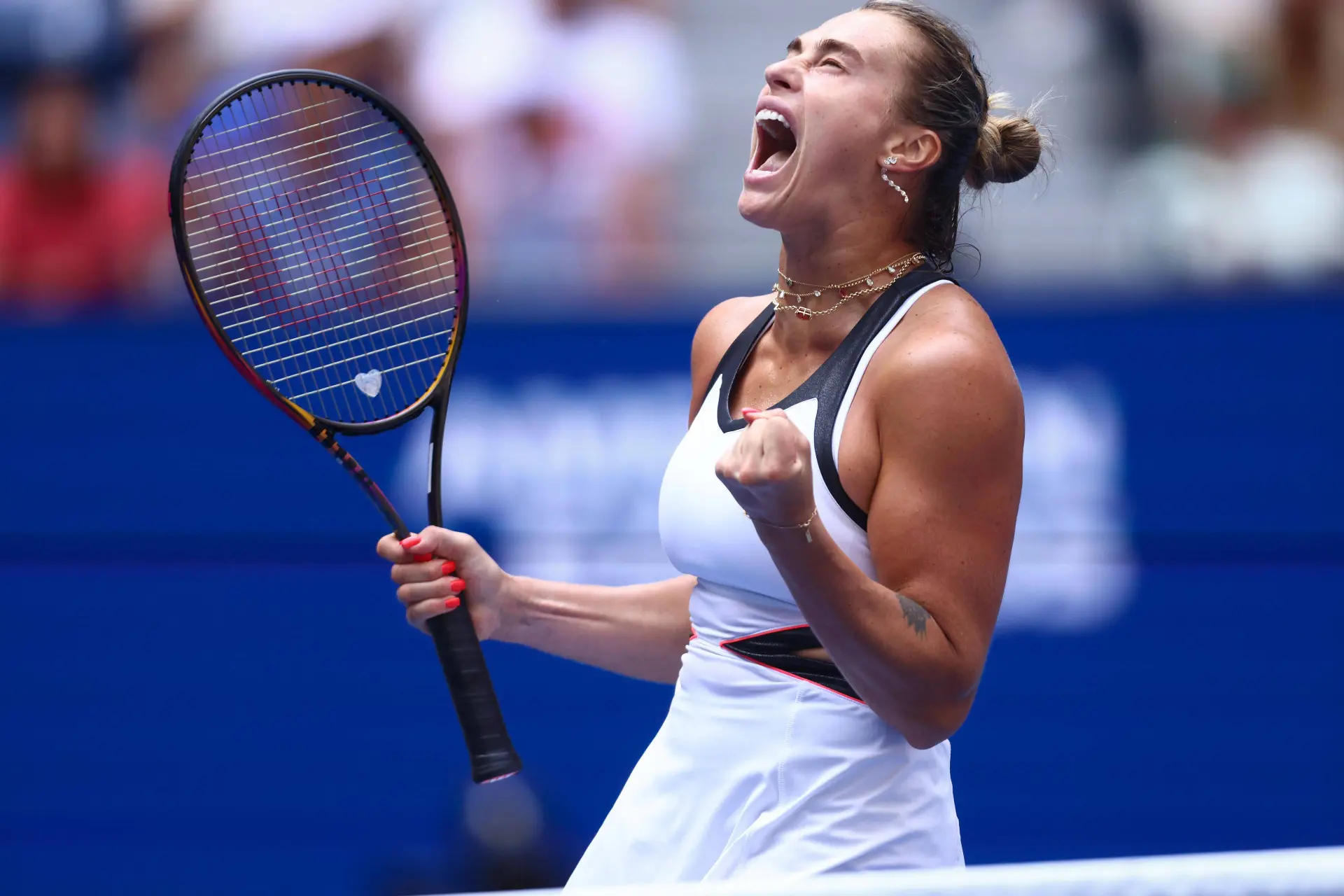
Aryna Sabalenka stood on Arthur Ashe Stadium, her voice still shaky after sealing her second straight US Open crown. The Belarusian had come heartbreakingly close to sweeping the first three majors of 2025, but instead of dwelling on missed chances, she left New York with the trophy that mattered most: a 6-3, 7-6 triumph over Amanda Anisimova in the final.
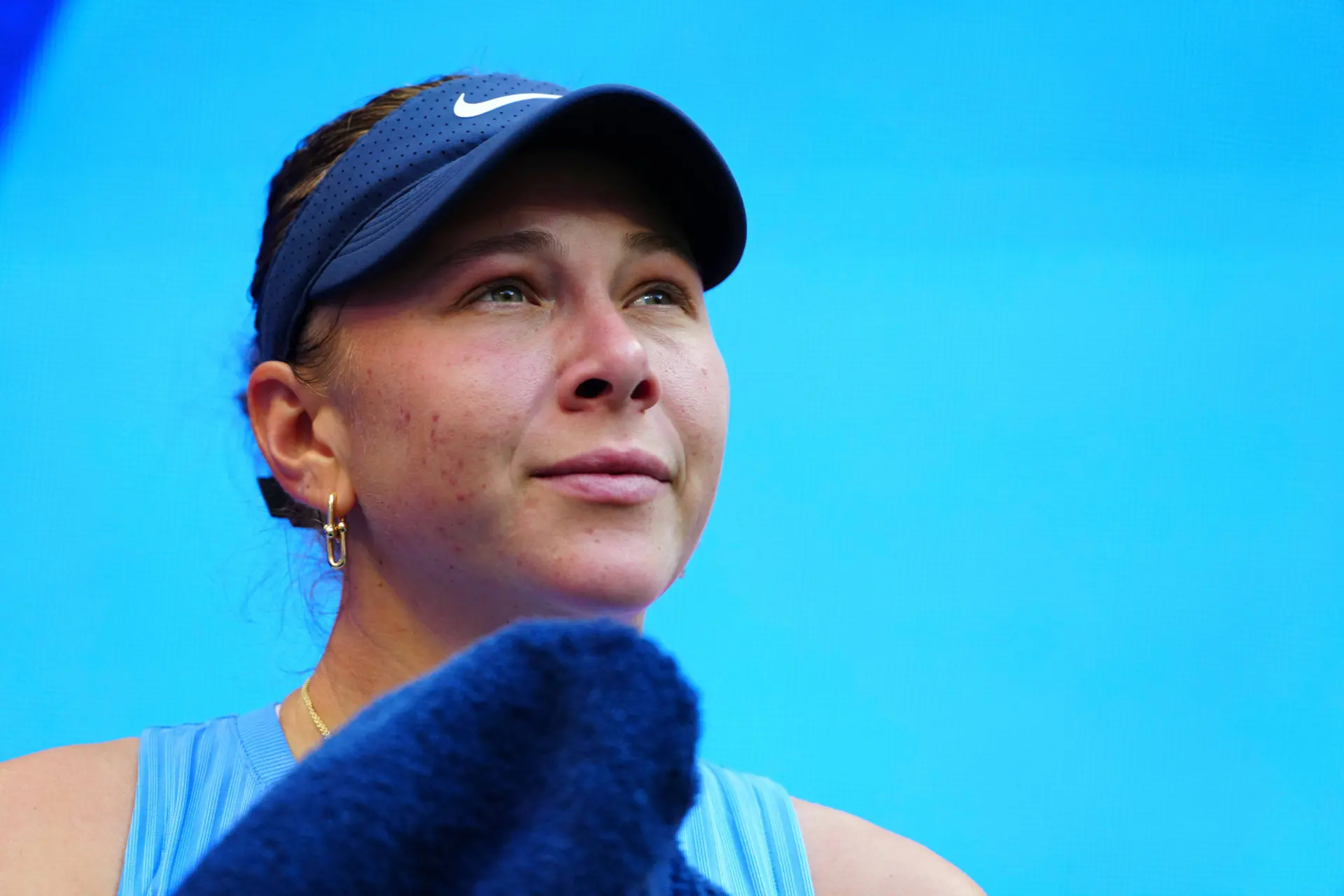
Sabalenka’s first instinct wasn’t to celebrate her own achievement, but to turn toward her opponent. “First of all, I want to say congrats to Amanda on reaching back-to-back Slam finals,” she told the crowd in her first words during trophy ceremony. “I know how much it hurts losing in the finals, but trust me—the moment you win your first one, and you will win it, you’re playing incredible tennis—you’re going to enjoy it even more after these tough losses.”
The defending champion admitted the victory came as both a relief and a reward. “It’s just crazy, you know. I’m speechless right now,” she said. The hard-fought two-set win was Sabalenka’s 12th title overall, and one that cements her status as the player of the season despite falling just short of the elusive Grand Slam. Her journey through the draw was far from straightforward, with the top seed navigating a challenging run and once again facing the prospect of battling Americans back-to-back on the biggest stage.
Sabalenka confessed that her relationship with the New York crowd had been complicated in the past, but 2025 felt different. “My first year here, when I saw I had to play back-to-back against Americans, I was like, ‘No way, guys, please, I don’t want to play,’” she recalled with a laugh. “But then I came back the next year, again back-to-back against Americans in the semis and then the final, and I felt a bit more support. This year, I felt even more support. I’m super excited to come back next year, and I hope you’ll all cheer for me. Thank you for bringing the best atmosphere—it was remarkable.”
Gratitude to her team
Before tournament officials could hand her the winner’s cheque, Sabalenka stopped the ceremony to thank those closest to her. “Wait, wait, wait—I need to thank my team! I’m not gone yet,” she said, drawing laughter from the stands. “It would be rude to give them such a hard time all year and then not appreciate them in the speech.”
Her words carried extra weight when directed toward Stacey Allaster, the outgoing tournament director. “I’m really sad to hear that you’re retiring after this year. You’ve taken such great care of us. Maybe you’ll consider staying? Thank you so much for everything you’ve done for me and for all the players. You’re the best.”
Read also
Sabalenka then turned to her own tight-knit entourage, who had flown in from Miami and Los Angeles to sit courtside. “You guys are not allowed to skip! Hopefully I’ll reach many more finals, but wherever you are, you’ll be flying to my finals,” she declared. With a smile, she admitted her behaviour wasn’t always easy to manage: “It’s been a tough year, and in those finals I was really terrible towards you—but come on, it was worth it, right? Thank you so much. I love you, you’re my family.”
A personal note
No speech from Sabalenka would have been complete without acknowledging her partner Georgios Frangulis. “Thank you to my boyfriend, who is always there for me, cheering me on. Without your support, I wouldn’t have been able to make it,” she said, her voice softening."
Sealed with a kiss 💋 pic.twitter.com/Y5sG52mz4x
— US Open Tennis (@usopen) September 6, 2025
But perhaps the most emotional moment came when she revealed the inspiration she had drawn that morning. “I know the kids back home are watching me. This morning I received a video from the tennis school where I started—the kids were cheering for me and wishing me all the best. I was crying a little bit, and that was the moment I realized I couldn’t let them down. I had to give them positive vibes. So, Smina, thank you so much for your support.”
The New York crowd roared with approval, sensing that this victory meant more to Sabalenka than just another title. It was a season-defining triumph, one that turned near-misses into motivation and confirmed her as the face of women’s tennis in 2025. “All those tough lessons were worth this one,” she had said at the start of her speech. By the end, it was clear: the lessons had not just been worth it—they had forged a champion.


Cristhián AvilaTennis Journalist
Cristhián Ávila is a tennis journalist based in Santiago, Chile, and has been part of the TennisUpToDate team since early 2023. He covers the ATP and WTA Tours as well as all four Grand Slams, producing breaking news, match reports, analysis, and regular liveblogs from major tournaments.
His reporting combines statistical analysis with clear explanation, helping readers understand tactical developments, player form, and broader storylines across the tour. Working fluently in both Spanish and English, Cristhián collaborates with an international editorial team and contributes to comprehensive global coverage. As part of his work, he has conducted interviews and media interactions with leading figures in the sport, including Caroline Wozniacki and John McEnroe.
In his journalism, Cristhián places strong emphasis on careful sourcing, editorial accuracy, and updating articles promptly when new, verified information becomes available. His coverage is grounded in research, context, and direct engagement with professional tennis.
claps 0visitors 0
Just In

Popular News
Latest Comments
- Two Things: 1. Stop allowing these Spoiled Trust-Fund Elitists to behave badly. Your little hand-slaps do not deter them. 2. STOP the incessantly annoying "towel wiping" nonsense!!!!
 mandoist15-10-2026
 - A healthy Qinwen may be hard to stop next season. She was already scaring her opponents before her medical leave(s). Unfortunately, Zheng insisted on singing again. On the positive side -- Mirra did not sing!! ;~}mandoist11-10-2026
- Where is it written that athletes, entertainers... People in general... are mandated to keep looking at -- or even using [anti]Social Media? Public & private figures consistently complain and reveal their concerns about negativity and violence thrown at them -- yet they insist on participating. Avoid it, don't use it, don't read it. It's okay to occasionally look up at the World instead beating your eyes & thumbs to death on The Inventions out there.mandoist11-10-2026
- great articlestennisseserver07-10-2026
- Medvedev was leading Djokovic 7-5, 3-5 when an attempted return..' NO you ignorants, Djokovic was leading .weiss05-10-2026
- No more bullshit "Wildcards" to these two. Qualify like everyone else -- there will be cameras there, too. Time to scream... WTF ????!!!!mandoist29-09-2026
- Let's not BS the general public -- Sabalenka started showing cracks in her game last season. Her losses and near-losses started at about the same time she began being distracted by Fame (constant Selfies, making TV commercials, magazine shoots, endless Social Media nonsense, etc., etc.) One would think even Saba could recognize the parallels with others who failed before her -- Raducanu, Giorgi, Bouchard to name a few.mandoist25-09-2026
- Gross!! Hey Raducanu, Giorgi, and Bouchard -- reserve a seat at your Social Media Selfie table for Saba + Naomi. They're heading in your direction soon enough.mandoist24-09-2026
- And then these same players will complain about how lengthy their season’s were and need more time-off. I’m all for more tennis but the amount of tennis we get now is actually kind of crazy! We all need a break, especially the players.DaveyWavey23-09-2026
- You should do a comparison article for "different kinds of justice" the courts decide for tennis players. I can think of at least three players who received very small bans of a few months, however Tara Moore has been fighting for her literal survival the past few years. It seems odd considering she is not a "name" player, unlike the other cases.DaveyWavey22-09-2026

Loading