ATP Madrid Open Day Four Round-Up | Stefanos Tsitsipas too strong for Bublik, Zverev and Medvedev survive tough tests
ATP
The Madrid Open second round moved several top seeds into the third round, with Alexander Zverev, Casper Ruud and Daniil Medvedev all progressing through different match patterns. Ruud delivered the most one-sided performance of the day, while Zverev and Medvedev were required to adjust across three sets to secure their openings in the tournament.
The results stabilised the upper sections of the draw but also introduced disruption through qualifying runs, most notably Adolfo Daniel Vallejo. With Jakub Mensik returning from injury and Felix Auger-Aliassime advancing efficiently, the third round takes shape with a mix of expected names and emerging variables.
Ruud compresses match with sustained return pressure
Casper Ruud def. Jaume Munar 6-0, 6-1
Casper Ruud advanced into the third round with a match defined by shortened service games and immediate scoreboard separation. He opened with four consecutive games and closed the first set without conceding a game, consistently neutralising Munar’s serve before rallies could develop.
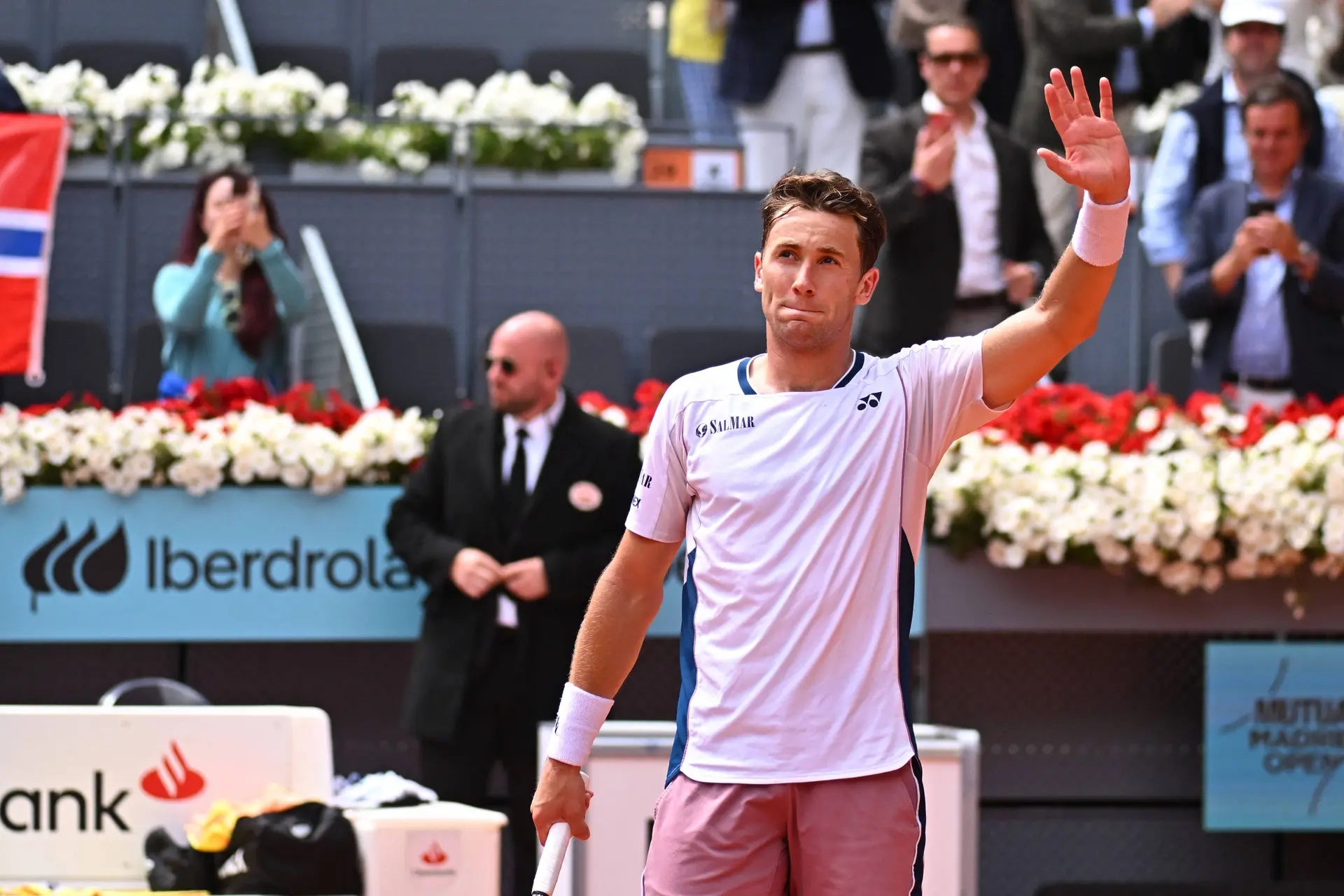
The only interruption came early in the second set, when Munar held after saving multiple break points in an extended game. That sequence did not shift the pattern. Ruud continued to target second serves and maintained depth through the middle of the court, preventing Munar from generating directional change.
The distribution of games—12 of 13—captures the structural imbalance in the match. Munar was unable to establish service stability or extend rallies into neutral phases. Ruud now progresses into a likely third-round meeting with Alejandro Davidovich Fokina, where the baseline exchanges should lengthen significantly.

Casper Ruud fist bumps in Basel.
Zverev re-establishes serve dominance in deciding set
Alexander Zverev def. Mariano Navone 6-1, 3-6, 6-3
Alexander Zverev’s opening match followed a three-phase structure, beginning with a service-led first set and closing with a similar pattern after a mid-match drop. He took the opener 6-1 while dropping only one point behind his first serve, limiting Navone’s ability to engage in extended baseline exchanges.
Navone altered the match by increasing rally tolerance and stepping further inside the baseline on second-serve returns, earning an early break in the second set. That forced Zverev into longer points and reduced the effectiveness of his first-strike patterns.
The reset came immediately in the third set, where Zverev won 12 of the first 14 points and secured an early break. He backed that up with a high first-serve efficiency in the decider (87% of points won on serve in that set), allowing him to manage the remaining games without facing sustained pressure. He moves on to face Terence Atmane.

Medvedev capitalises on late error cluster from Marozsan
Daniil Medvedev def. Fabian Marozsan 6-2, 6-7, 6-4
Daniil Medvedev progressed through a match that tightened after a controlled opening set. He built a 6-2 lead through early breaks and consistent depth, with Marozsan unable to disrupt the rhythm from the baseline during the initial phase.
The second set shifted through improved serving from Marozsan, who held more comfortably and extended points with greater patience. After Medvedev briefly moved ahead with a break, the Hungarian recovered and took the set via tiebreak, forcing a decider defined by service holds.
With no break points created deep into the third set, the match turned on a short sequence of baseline errors from Marozsan at 4-5. Medvedev generated two break opportunities—both match points—and converted immediately. He advances to face Nicolai Budkov Kjaer, entering a section that has already seen variance in results.

Mensik manages key moments on return from injury
Jakub Mensik def. Martin Damm Jr. 6-3, 6-4
Jakub Mensik returned to competition with a controlled straight-sets win, relying on selective aggression rather than sustained pressure. After several holds early, he created separation late in the first set and carried that pattern into the second.
The match hinged on a second break that gave Mensik scoreboard control in the latter stages. Damm generated a late break point while trailing, but Mensik resolved that moment on serve, preventing the set from extending into a higher-variance finish.
Across the match, the Czech converted his limited break opportunities while denying Damm any extended return sequences. Given his absence since Miami due to injury, the efficiency of the performance—minimal physical exposure and clean scoreline—positions him well heading into the third round.
Auger-Aliassime advances behind unchallenged service games
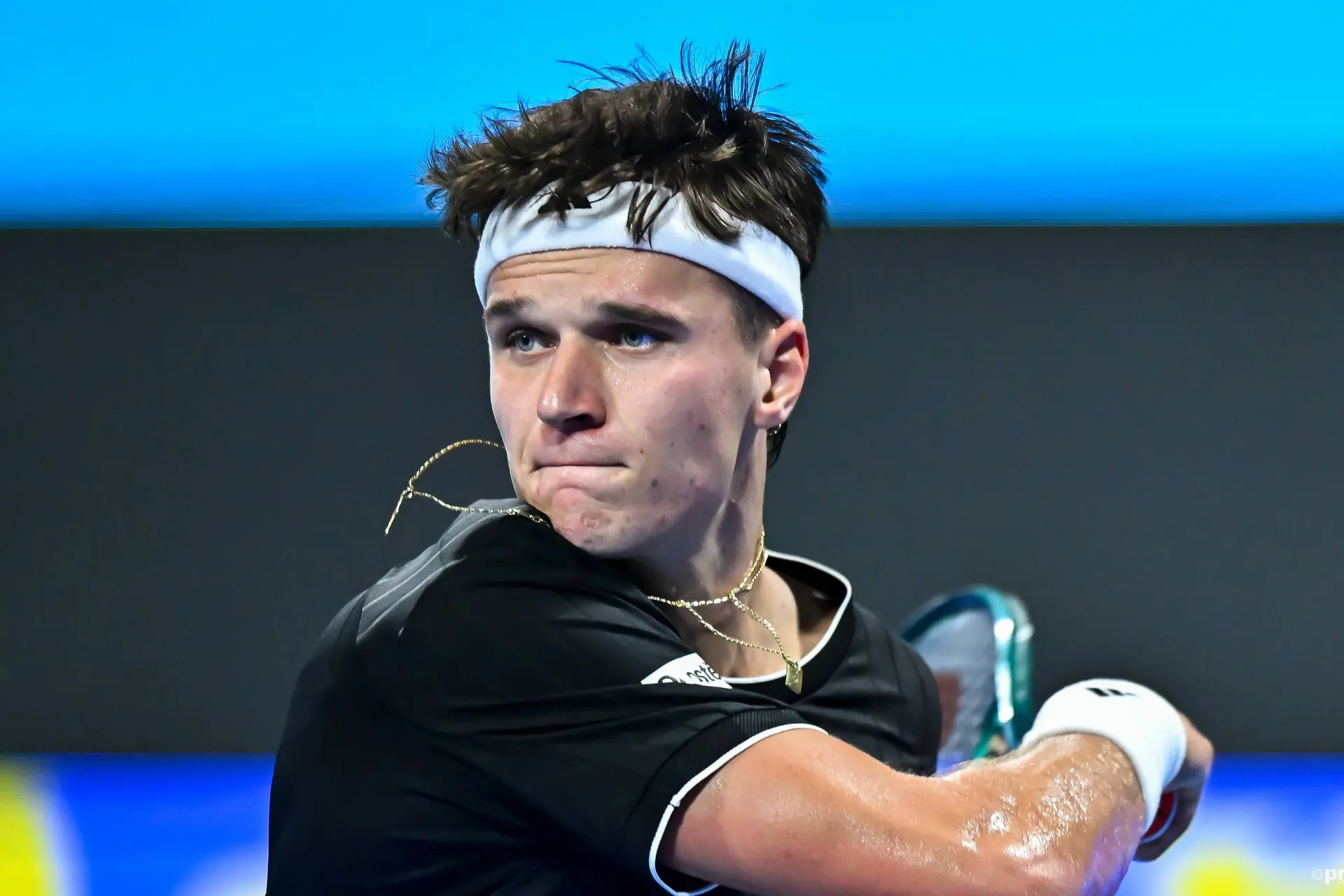
Felix Auger-Aliassime def. Vilius Gaubas 6-3, 6-4
Felix Auger-Aliassime progressed without facing a break point, structuring the match around consistent service holds and a single breakthrough in each set. He took the first set 6-3 after dropping just two points on serve and converting his only break opportunity.
Gaubas remained close in scoreline terms during the second set but was unable to apply pressure in return games. Auger-Aliassime extended rallies selectively and waited for a late opening, breaking before closing the match with three consecutive games.
The decisive factor was the absence of return pressure from Gaubas, who did not create a single break point across the match. Auger-Aliassime’s service stability removed variance and allowed him to progress efficiently into the third round, maintaining a clean physical profile.
Vallejo separates match through return efficiency
Adolfo Daniel Vallejo def. Learner Tien 6-4, 6-3
Adolfo Daniel Vallejo recorded a career-best win by ranking, advancing in straight sets through sustained return pressure. The first set remained on serve until a late break, which shifted scoreboard control and forced Tien into a reactive position for the remainder of the match.
Tien briefly recovered a break earlier in the set, but Vallejo’s return positioning continued to generate opportunities. In the second set, the Paraguayan maintained hold discipline and closed the match without allowing momentum swings.
The statistical gap was defined by break conversion: Vallejo secured four breaks compared to one from Tien, while also winning 63% of points on serve. That combination—consistent holds plus repeated return success—explains the straight-sets outcome. He now faces Flavio Cobolli in the third round.
Tsitsipas converts late pressure to complete straight-sets win
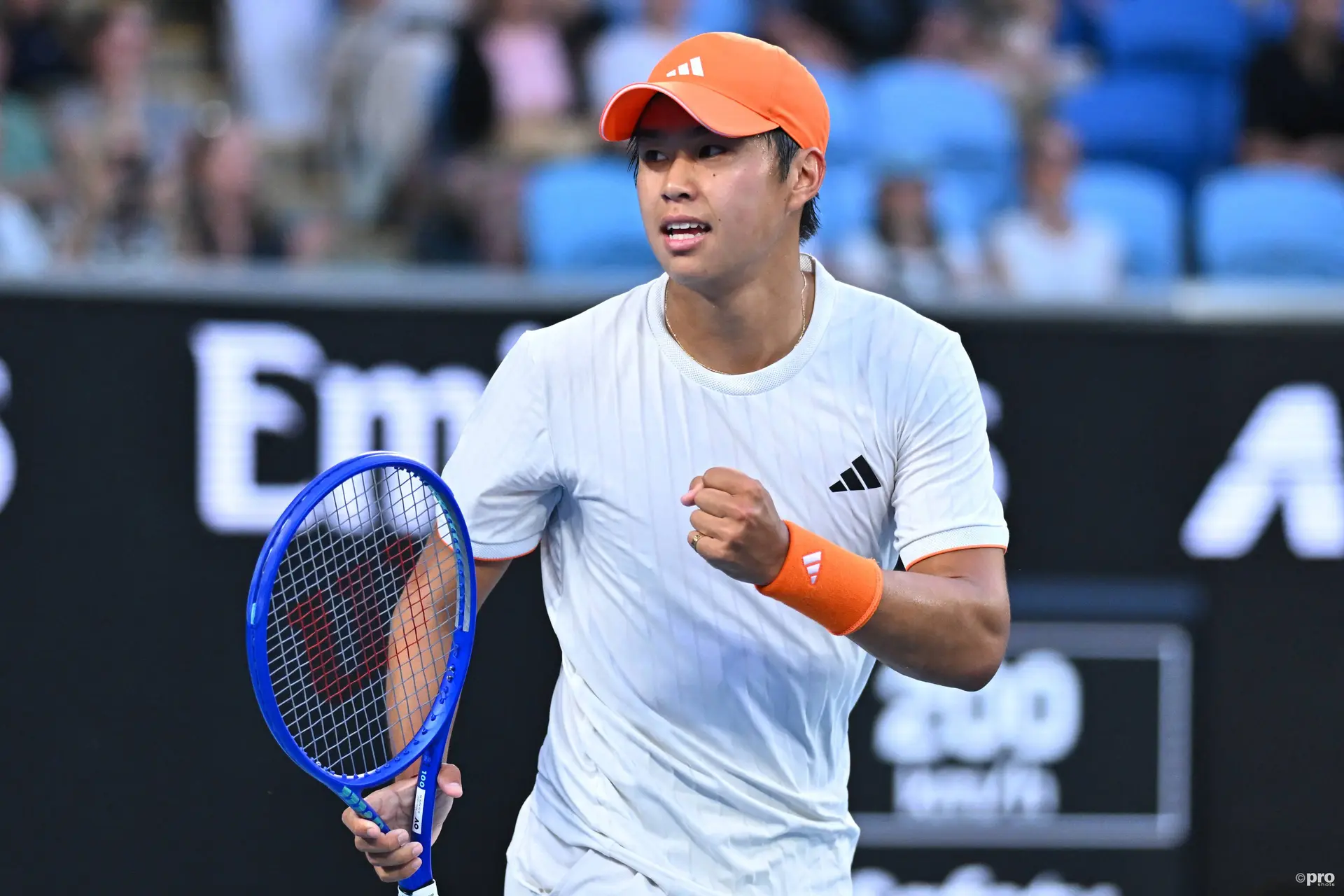
Stefanos Tsitsipas def. Alexander Bublik 6-2, 7-5
Stefanos Tsitsipas advanced into the Madrid Open third round with a straight-sets win over Alexander Bublik, establishing early control before managing a tighter second set. The Greek secured a double-break advantage in the opener, building separation through consistent baseline depth while limiting Bublik’s ability to impose variation on serve.
The second set followed a different structure, with both players holding through the early and middle phases. Bublik raised his first-serve level to stay level at 5-5, saving pressure moments with direct points. Tsitsipas responded by maintaining hold stability, winning a sequence of consecutive service points to guarantee at least a tiebreak and reapply scoreboard pressure.
The decisive shift came at 5-5, when Tsitsipas increased return depth and forced errors from Bublik in a compressed game. He broke to 6-5 and closed the match on return, completing the win without needing a tiebreak. The progression reflects sustained control in the first set and efficient execution in the key return game late in the second, sending Tsitsipas into the third round with a stable service profile.


Lucas MichaelTennis Journalist
Lucas Michael is a tennis journalist based in Cambridge, UK, specializing in comprehensive coverage of the ATP and WTA tours. For the past 1.5 years, he has been a core contributor to TennisUpToDate, where he has authored more than 3,000 data-driven match reports, deep-dive analysis pieces, and engaging liveblogs.
Lucas pairs real-time statistical analysis with on-the-ground reporting, frequently traveling to tournaments to cover the action firsthand from the press box and player press conferences. This blend of advanced metrics and direct access allows him to provide sharp context regarding player form, tactical trends, and breaking tour developments.
He holds a BA (Hons) in Sports Journalism. Grounded in core journalistic ethics, Lucas places a strict emphasis on meticulous sourcing, editorial accuracy, and a commitment to updating live content swiftly as verified information emerges.
claps 0visitors 0
Just In


Popular News


Latest Comments
- Does Sinner need that 4.5 mil? I doubt it. He can make that with three modelling gigs!😅🤣Rapunzel21-10-2026
- Did "People Magazine" purchase this website? This nonstop storyline is bullshit.
 mandoist21-10-2026
 - Listen... this is of no concern to anyone but these two. Deal with your own issues -- most of us have our own. Thanks, media, for these insignificant follow-ups which are meaningless.mandoist21-10-2026
- This is so very very sad, for all three of them. I truly thought they had an unbreakable bond, but life throws up so many differing challenges. Having your homeland suffering in such a terrible way, makes happiness lose out to guilt as well. Our thoughts are with them. X💔bjsexton20-10-2026
- I have lost all respect for Svitolina! Could she not have waited until he had played at the Paris Masters!!! She is selfish and don't give a damn about Gael. That is NOT how love is demonstrated Elina!!Rapunzel19-10-2026
- Perhaps convenient tennis tour sex is not a strong enough experience in which to base a marriage?mandoist19-10-2026
- Fight the Good Fight... Tennis (sports in general) need more Humans such as yourself.mandoist18-10-2026
- When is WTA going to mandate Genetic Testing (DNA) ???mandoist18-10-2026
- Hey, Dan... you just wake up from a coma? Regardless -- Thanks for the comedy this morning!mandoist18-10-2026
- Two Things: 1. Stop allowing these Spoiled Trust-Fund Elitists to behave badly. Your little hand-slaps do not deter them. 2. STOP the incessantly annoying "towel wiping" nonsense!!!!mandoist15-10-2026

Loading