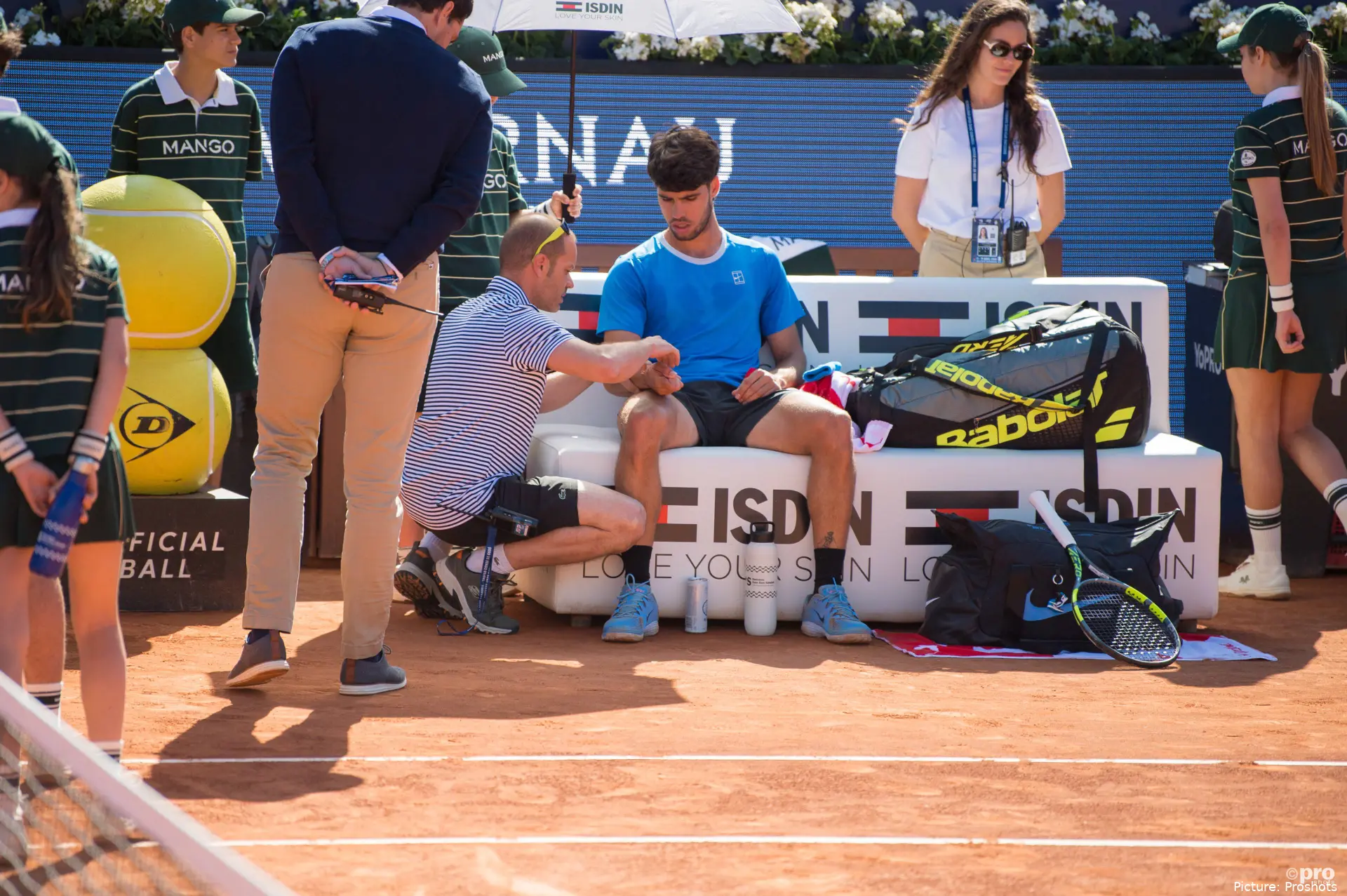
For the better part of two years, I have been writing some version of the same column. There is too much tennis. The season is too long. The calendar makes increasingly little sense. The Masters 1000 expansion from one week to 12 days was a terrible idea. Players aren’t getting enough time to recover.
Tournaments are cannibalizing one another. Fans are being asked to pay premium prices for events increasingly vulnerable to withdrawals, exhaustion and compromised fields. And every time I write it, I wonder whether I’m becoming the guy yelling at clouds.
Well, apparently the clouds have data. The Professional Tennis Players’ Association weighed in this week after the wave of withdrawals in Toronto, and its message could hardly have been clearer: “We are saddened to see so many withdrawals from the @nbotoronto. Unfortunately, we are not surprised.”
Neither am I. But what follows is much more important than another complaint about a disappointing tournament field. The PTPA says it has been working with its medical director, Dr. Robby Sikka, for three years to collect and analyze injury data. Its work now encompasses more than 30,000 professional matches over eight years and across all levels of professional tennis.
Its conclusion? “The evidence is clear: the season is too long, recovery time is shrinking, and injuries are occurring earlier and becoming more severe.” There it is. Not a disgruntled fan. Not a columnist with a bee in his bonnet about the Canadian Open. Not a player giving a frustrated press conference after losing a three-hour match at midnight. Data.
And the 2026 numbers are genuinely alarming. According to the PTPA’s injury analysis, upper-body injuries in the first quarter of 2026 were up 42 percent compared with the average first quarter over the previous seven years. Arm injuries were up 112 percent. Match-ending injuries are up 53 percent compared with the rolling 12-month average over the previous seven years. Re-injuries are up 55 percent. At some point, tennis has to stop pretending this is bad luck.
We have confused more tennis with better tennis
This has been my objection to the sport’s current trajectory all along. Tennis’s governing bodies seem to have adopted a remarkably simple economic philosophy: if tennis is valuable, more tennis must be more valuable. Make tournaments longer. Add days. Increase inventory. Create more sessions. Sell more tickets. Generate more television hours. Stretch Masters events across two weeks.
On a spreadsheet, perhaps it looks wonderful. Then actual human beings have to play the matches. And actual fans have to buy tickets to watch them. That’s where the model begins falling apart.
A tournament isn’t made better because it lasts 12 days instead of seven. A ticket isn’t worth more because the tournament has another session to sell. And a Masters 1000 isn’t a premium sporting event merely because the ATP says it is one. The value comes from the players. It comes from Carlos Alcaraz and Jannik Sinner and Iga Swiatek and Aryna Sabalenka and Coco Gauff and the rest of the world’s best players being healthy, rested and desperate to win. Take enough of them away and you’re not expanding the product. You’re diluting it.
We are saddened to see so many withdrawals from the @nbotoronto. Unfortunately, we are not surprised.
— Professional Tennis Players Association (@ptpaplayers) August 10, 2026
Three years ago, the PTPA, in collaboration with its Medical Director Dr. Robby Sikka, launched a comprehensive project to collect and analyze injury data across professional… pic.twitter.com/3b4gx2LMbH
Toronto Is Not the Problem. Toronto Is the Warning.
I’ve been particularly critical of what has happened to the Canadian Open, and I don’t intend to retreat from that argument now. But it would be a mistake to blame Toronto for a problem much bigger than Toronto. The tournament is living with the consequences of a calendar that increasingly asks players to make perfectly rational decisions that are terrible for individual events. Rest or play?
Protect your body or satisfy another tournament obligation? Prepare properly for the U.S. Open or squeeze another event into an already relentless schedule?
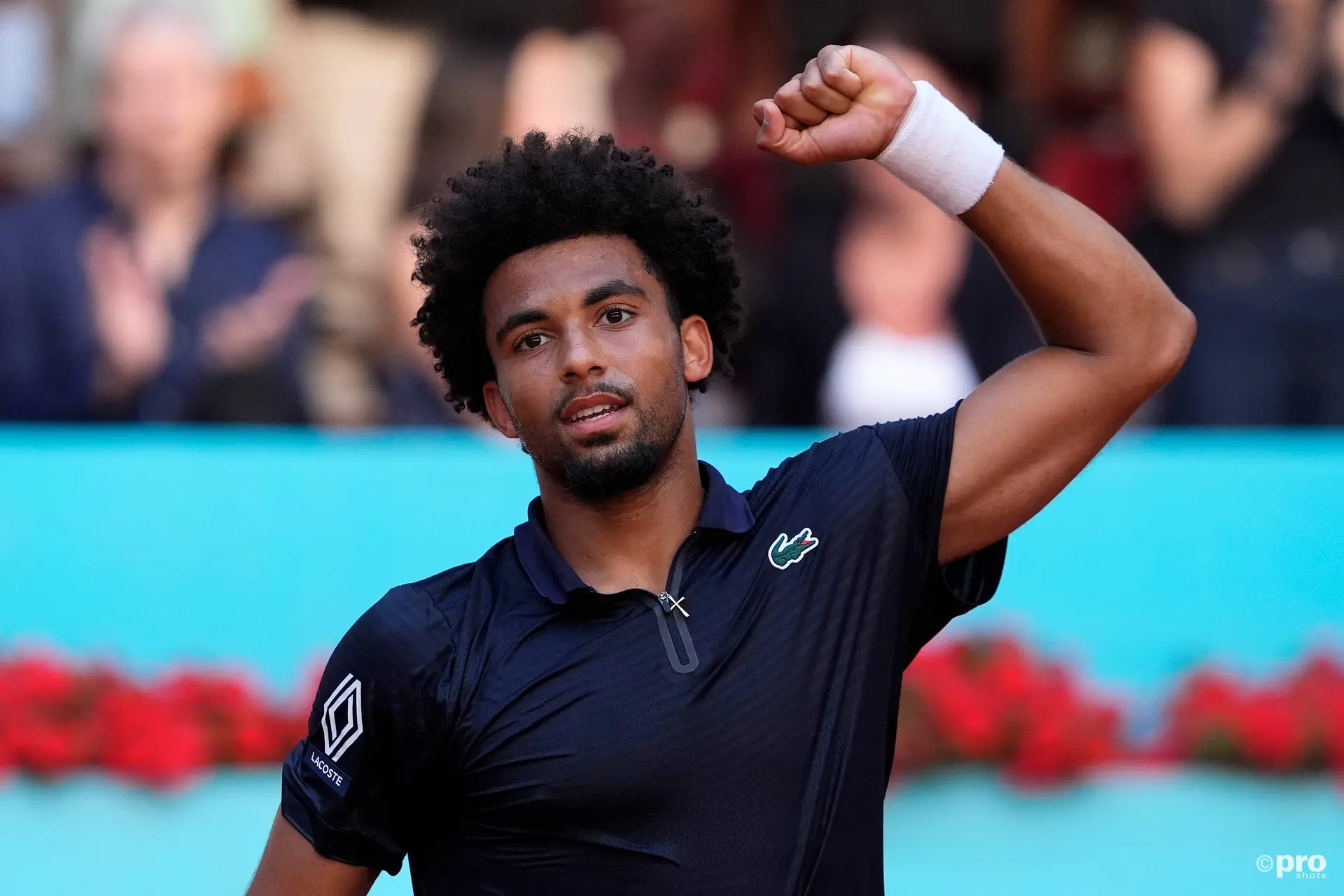
We shouldn’t be surprised when players choose their bodies. Frankly, we’d be foolish to expect otherwise. And this is why I keep coming back to the same point: you cannot evaluate the health of professional tennis by counting how many days of professional tennis are available to sell.
You have to look at the quality of those days. You have to look at who’s actually playing. You have to look at injuries. You have to look at withdrawals. You have to look at whether fans paying extraordinary prices are receiving something remotely resembling the tournament they thought they were buying tickets for. And now we have to look at the PTPA’s numbers.
The PTPA’s Proposed Solution Sounds Awfully Familiar
Perhaps my favorite part of the PTPA’s statement is its prescription. Going forward, it wants tennis to:
- adopt a player-health and data-driven approach to restructuring the season;
- give players a meaningful voice in shaping the calendar;
- reduce mandatory event obligations to allow adequate recovery; and
- consider rolling back the 12-day format for Masters 1000 tournaments.
Yes. Please. All of it. Especially the last one. The 12-day Masters experiment has always struck me as one of those ideas that makes considerably more sense in a boardroom than it does to anyone who actually follows tennis.
Masters tournaments used to have urgency. You could feel the tournament accelerating. The draw narrowed quickly. Big matches arrived one after another. By the weekend, the event had developed a rhythm and an identity.
Now some of these tournaments seem to last approximately as long as the Hundred Years’ War. Players get awkward gaps between matches. Fans struggle to follow the narrative. Other tournaments get squeezed. The calendar gets longer without actually becoming more interesting. And apparently the players aren’t especially enjoying the arrangement either. Who knew?
This isn’t really about Player Sympathy
There is another reason the tennis establishment should pay attention, even if appeals to player welfare haven’t moved it sufficiently. This is bad business.
That’s the part I think tennis continually misses. Protecting players isn’t some charitable concession to millionaire athletes. Protecting players protects the asset. If the stars are injured, they don’t play.
If they don’t play, tournament fields deteriorate. When tournament fields deteriorate, fans become less willing to pay enormous ticket prices. When fans begin assuming that half the players advertised for an event may not actually appear, trust erodes. And once that happens, all those extra sessions the sport created aren’t nearly as valuable as they looked on the spreadsheet.
The PTPA put it perfectly: “Short-term commercial interests cannot come at the expense of player health.” I’d go one step further.
Eventually, short-term commercial interests come at the expense of long-term commercial interests. Tennis is flirting with that point now.
So yes, I told you so
I’ll permit myself a small victory lap. I’ve spent two years arguing that tennis doesn’t need more tennis. It needs better tennis. I’ve argued that the calendar needs subtraction rather than addition. I’ve argued that the expanded Masters format is hurting tournaments rather than strengthening them.
I’ve argued that the Canadian Open is being placed in an increasingly impossible position. And I’ve argued that there eventually comes a point when players simply cannot keep absorbing everything the sport asks of them. Now the PTPA has examined 30,000 matches.
Upper-body injuries: up 42 percent. Arm injuries: up 112 percent. Match-ending injuries: up 53 percent. Re-injuries: up 55 percent.
Those numbers aren’t an opinion. They’re a warning. The people running tennis can keep stretching tournaments, adding inventory and congratulating themselves on the increased revenue opportunities. Or they can finally recognize what the players’ own association is telling them. The season is too long.
Recovery is too short. The players are getting hurt. And the solution to too much tennis cannot possibly be more tennis. I’ve been telling you this for two years. I’d much rather tennis fix it than give me the opportunity to spend a third.
Aron SolomonGuest Author
A Pulitzer Prize-nominated journalist for his groundbreaking op-ed in The Independent exposing the NFL’s “race-norming” policies, Aron Solomon, JD, is a globally recognized thought leader in law, media, and strategy.
As Chief Strategy Officer for AMPLIFY, he leverages his deep expertise to shape the future of legal marketing. Aron has taught entrepreneurship at McGill University and the University of Pennsylvania and was honored as a Fastcase 50 recipient, recognizing him among the world’s top legal innovators. A prolific commentator on law, business, and culture, his insights regularly appear in Newsweek, The Hill, Crunchbase News, and Literary Hub.
He has also been featured in The New York Times, Fast Company, Fortune, Forbes, CBS News, CNBC, USA Today, ESPN, TechCrunch, BuzzFeed, Venture Beat and countless other leading global media outlets. We are proud to have Aron on board at TennisUpToDate, where his deep tennis expertise enriches the site with sharp, original columns that connect the sport to wider cultural debates.
claps 0visitors 0
Just In

Popular News
Latest Comments
- A healthy Qinwen may be hard to stop next season. She was already scaring her opponents before her medical leave(s). Unfortunately, Zheng insisted on singing again. On the positive side -- Mirra did not sing!! ;~}
 mandoist11-10-2026
 - Where is it written that athletes, entertainers... People in general... are mandated to keep looking at -- or even using [anti]Social Media? Public & private figures consistently complain and reveal their concerns about negativity and violence thrown at them -- yet they insist on participating. Avoid it, don't use it, don't read it. It's okay to occasionally look up at the World instead beating your eyes & thumbs to death on The Inventions out there.mandoist11-10-2026
- great articlestennisseserver07-10-2026
- Medvedev was leading Djokovic 7-5, 3-5 when an attempted return..' NO you ignorants, Djokovic was leading .weiss05-10-2026
- No more bullshit "Wildcards" to these two. Qualify like everyone else -- there will be cameras there, too. Time to scream... WTF ????!!!!mandoist29-09-2026
- Let's not BS the general public -- Sabalenka started showing cracks in her game last season. Her losses and near-losses started at about the same time she began being distracted by Fame (constant Selfies, making TV commercials, magazine shoots, endless Social Media nonsense, etc., etc.) One would think even Saba could recognize the parallels with others who failed before her -- Raducanu, Giorgi, Bouchard to name a few.mandoist25-09-2026
- Gross!! Hey Raducanu, Giorgi, and Bouchard -- reserve a seat at your Social Media Selfie table for Saba + Naomi. They're heading in your direction soon enough.mandoist24-09-2026
- And then these same players will complain about how lengthy their season’s were and need more time-off. I’m all for more tennis but the amount of tennis we get now is actually kind of crazy! We all need a break, especially the players.DaveyWavey23-09-2026
- You should do a comparison article for "different kinds of justice" the courts decide for tennis players. I can think of at least three players who received very small bans of a few months, however Tara Moore has been fighting for her literal survival the past few years. It seems odd considering she is not a "name" player, unlike the other cases.DaveyWavey22-09-2026
- PRIZE MONEY & POINTS Winner - $185,500 Finalist - $114,500 Semi-Finalist - $66,003 Quarter-Finalist - $35,000 Round of 16 - $18,045 Round of 32 - $13,005 Winner - 500 Finalist - 325 Semi-Finalist - 195 Quarter-Finalist - 108 Round of 16 - 60 Round of 32 - 1DaveyWavey20-09-2026

Loading