"He still finished as the tour’s prize-money leader, earning more than Alcaraz": Roddick and Wertheim laud Sinner's 'absurd' doping bounceback
ATPFriday, 26 December 2025 at 15:30
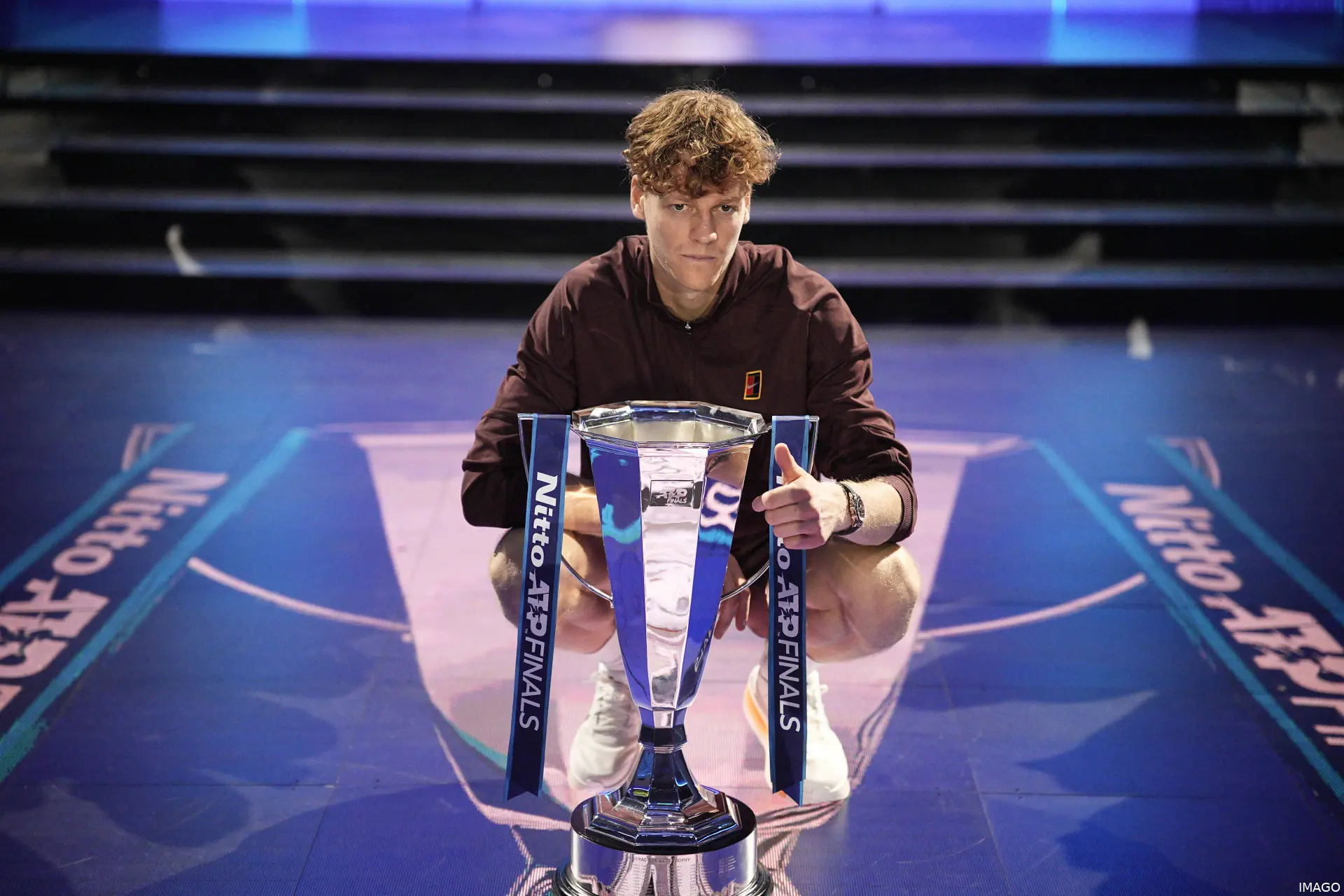
Andy Roddick and Jon Wertheim didn’t set out to rank greatness on Served, but a discussion about Jannik Sinner’s extraordinary year inevitably led them there.
Sinner’s 2024 resume alone demands the conversation. He finished world No. 2, won Wimbledon, came agonisingly close to lifting the French Open and US Open titles, nearly ended the year as world No. 1, and did all of that despite missing three months of competition.
For Roddick, that body of work immediately raises a bigger question. “He’s automatically on the short list for best ball striker of all time,” Roddick said on Served. “Who is it? Andre? Lindsay Davenport? Sinner’s up there.”
Wertheim was careful not to rush to definitive conclusions, but the comparison came naturally. “Since Sinner, this is Andre Agassi calibre,” Wertheim said. “I’m not saying I’m ready to go there yet, but how do you define it? Consistently being able to square it up with pace, able to bully someone off the spot just by ball striking.”
Roddick agreed that definition matters. Before spin, variety or disguise enter the conversation, Sinner’s impact comes from something more fundamental. “That’s not what he does to bother people and smother people,” Roddick said. “He just gets on top of you. I think he’s in that conversation.”
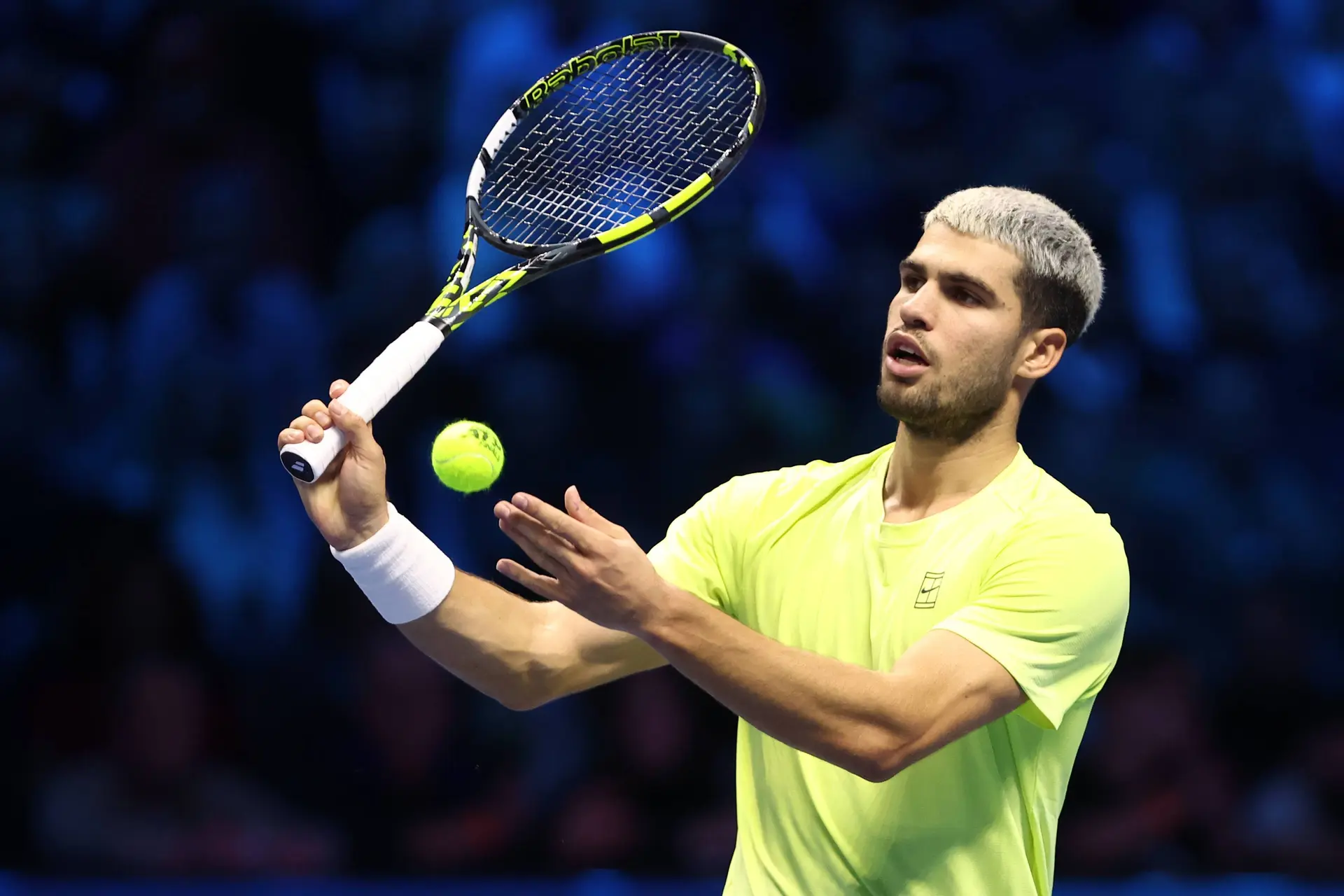
What separates Sinner, in their view, is the relentlessness of his stock game. He isn’t flipping balls, changing rhythm or relying on deception. His intent is clear and brutal. “He comes out and his stock game is, ‘I’m going to get on my front foot,’” Wertheim explained. “And once I do, you can’t get away from me. There’s nowhere to go. You can’t go through him.”
Once Sinner controls a rally often starting with the return opponents rarely regain the initiative. There is, however, one notable exception. “Unless you’re Carlos,” Wertheim said, referencing Carlos Alcaraz’s ability to break patterns through spin, drop shots and movement. Roddick put it more vividly. “He’s the only person who can get out of it, the bear hug, the headlock, once he’s in it.”
Part of what makes Sinner so effective, Wertheim noted, is an athleticism that isn’t always obvious at first glance. “He is the most deceptively good athlete,” Wertheim said. “We’re not talking about Gaël Monfils and vertical highlights. We’re talking about someone who puts himself in position to dictate play.”
Sometimes athleticism shows up as highlight-reel shots. Other times, it’s subtler, getting out on the front foot, winning the first exchange in a rally, and imposing control through movement and balance.
Absurd season
Stepping back, Roddick called Sinner’s season “unbelievable.” Even the complications didn’t derail him. A 90-day anti-doping sanction, a subject both agreed could be debated endlessly, removed Sinner from competition, yet somehow he still finished as the tour’s prize-money leader, earning more than Alcaraz and nearly winning three majors. I hope we’ve given Sinner enough credit for what he’s been able to do,” Wertheim said. “And how he’s been able to compartmentalise.”
He challenged listeners to set aside their opinions on the suspension itself and focus instead on Sinner’s mental control. “Take three seconds. Okay, great,” Wertheim said. “Now acknowledge the ability to compartmentalise all that polarising attention, come back, and the output is the same.”
Roddick didn’t mince words. “It’s f***ing insane,” he said. “It’s absurd.”
That same capacity for growth and self-awareness, the pair agreed, defines Alcaraz as well. Wertheim pointed out that Alcaraz has openly spoken about needing extended preparation time — and, crucially, having the humility to change despite already being elite. “Being that good and then being able to check your ego to improve, that’s not normal,” Wertheim said.
Roddick was blunt about how rare that trait is. “I wasn’t even close,” he admitted. “People would tell me, ‘You need to adjust this,’ and I’d be like, ‘F*** no. This works really well.’”
Alcaraz-Sinner rivalry
The lack of ego shared by Sinner and Alcaraz, and their willingness to adapt to each other, is what elevates their rivalry. It has reached a point, Roddick said, where it’s impossible to discuss one without the other.
Alcaraz’s role in that rivalry was perhaps best illustrated in what Wertheim called a “match of the ages” — the French Open final. “I think that 12- or 13-point sequence at the end, after five and a half hours on court, is the best I’ve ever seen,” Wertheim said. “It’s something I’ll never forget.” To Wertheim, it looked like Alcaraz was playing a video game — “using himself” — at the climax of the match.
Roddick pointed to the US Open final as another defining moment, calling it peak Alcaraz to this point in his career. “He has a gear that maybe Earth doesn’t have when everything is going right,” Roddick said.
Wertheim urged fans to revisit those final minutes. “We talk about the last round of a heavyweight fight when everyone’s gassed,” he said. “You would never have known we were five hours into this high-stakes classic.”
For him, it spoke volumes about Alcaraz’s physical durability, mental strength and sheer tennis quality. “What he brought at that point was a joke, in the best possible way,” Wertheim said.
Ultimately, both men agreed that rivalry is the defining theme of the season. It fuels fans, sharpens narratives, and most importantly forces evolution. “What we’re seeing isn’t just two guys who’ve distanced themselves from the field,” Roddick said. “It’s two guys who keep improving because the other is right there.”

Samuel GillEditor-in-Chief
Samuel Gill is the Chief Content Officer (CCO) of TennisUpToDate.com, a role he has held since 2020. He is responsible for editorial governance across the platform, including setting content standards, overseeing accuracy and consistency, and guiding long-term editorial strategy. Since joining, he has contributed more than 10,000 articles and editorial pieces across the TennisUpToDate network, playing a central role in the daily operation and development of the site.
Based in Leicester, Samuel has a broad background in tennis media. In his current role, he works closely with editors and writers to ensure coverage meets clear journalistic standards, with particular attention to verification, consistency, and timely updates when new information becomes available.
claps 0visitors 0
Just In


Popular News

Latest Comments
- You should do a comparison article for "different kinds of justice" the courts decide for tennis players. I can think of at least three players who received very small bans of a few months, however Tara Moore has been fighting for her literal survival the past few years. It seems odd considering she is not a "name" player, unlike the other cases.DaveyWavey22-09-2026
- PRIZE MONEY & POINTS Winner - $185,500 Finalist - $114,500 Semi-Finalist - $66,003 Quarter-Finalist - $35,000 Round of 16 - $18,045 Round of 32 - $13,005 Winner - 500 Finalist - 325 Semi-Finalist - 195 Quarter-Finalist - 108 Round of 16 - 60 Round of 32 - 1DaveyWavey20-09-2026
- Pegula withdrew from this Singapore event
 tennishappens19-09-2026
 - Serena Williams chose her tournaments. It's not such a bad idea.MuswellHillbilly17-09-2026
- This child is just too fragile. Step away from tennis for a year. Get healthy, get fit; train hard;ranking be damned, and come back as strong contender. Anisimova did it. So can Emma.Rapunzel17-09-2026
- Double standards, what can be said!? Venus is p**ing on media and public. Can't face defeat. Cowerdness! Shouldn't be given any other wild cards ever. That's gross disrespect.DragosJacob16-09-2026
- Anywhere is better than Saudi Arabia!DaveyWavey16-09-2026
- He'd be a perfect coach for Rafael Jodar.DaveyWavey16-09-2026
- This financial 'chump-change' means nothing to Saba. Her vacuity likely cannot fathom the "problem" with her unprofessional actions and reactions in general. The racquet smash is not my focus. My focus was/is on her distasteful, totally unprofessional, disgusting facial expressions and eye-rolls while standing behind Elena as she spoke on the podium. This woman needs a degree of therapy for her True Attitude(s). She is not fooling anyone within the WTA circles with her post-match winner "humor" and smiley behavior. Her True Self comes out when losing a set/match and as a runner-up on the podium.
 mandoist16-09-2026
 - When will this repetitive "news" and wishful thinking stop?mandoist16-09-2026

Loading