“I don’t want to be a robot”: Daniil Medvedev explains ‘win-win’ mindset after Miami Open victory
ATP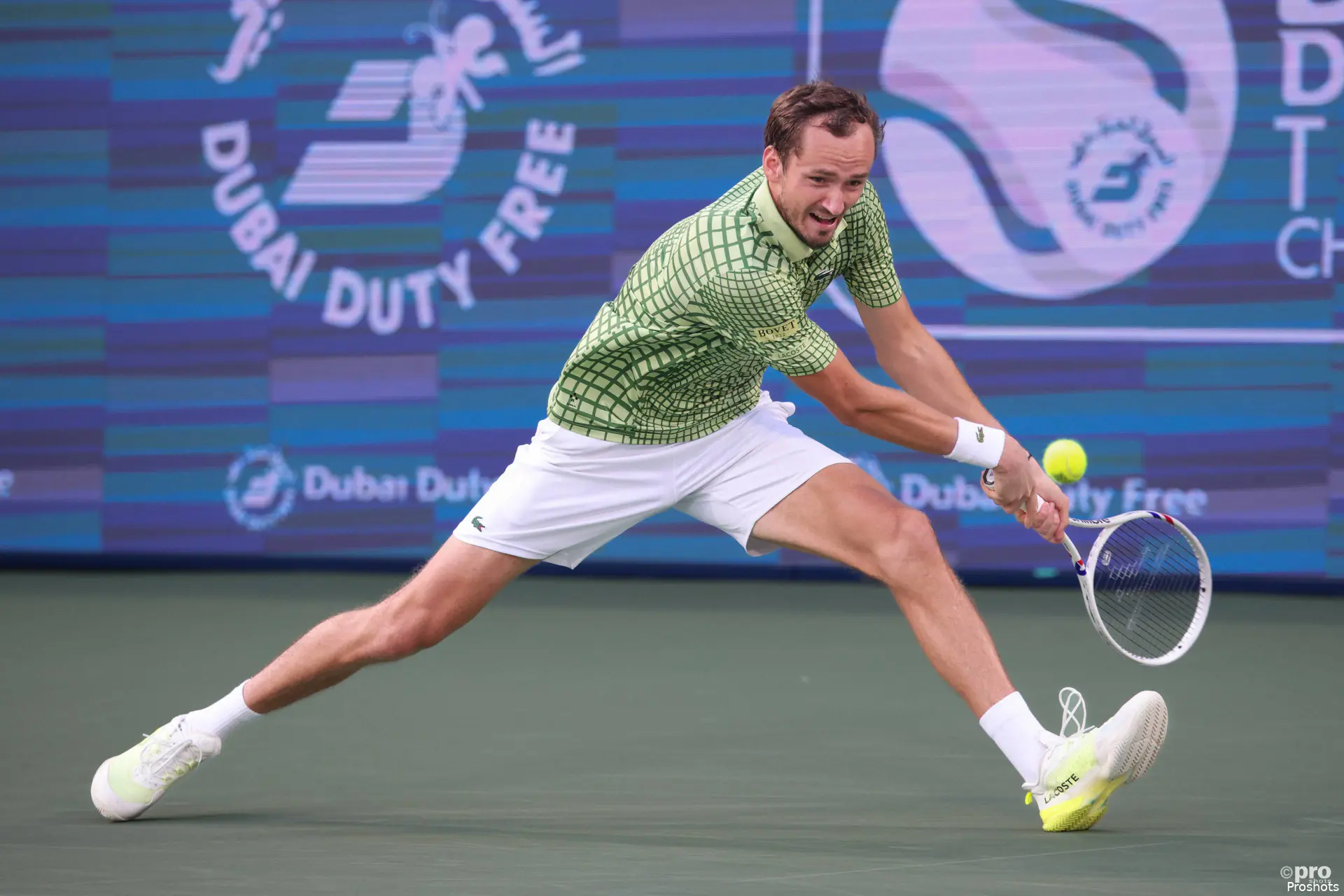
Daniil Medvedev continued his strong start to the 2026 season with a hard-fought opening win at the Miami Open, overcoming Japan’s Rei Sakamoto in three sets, 6-7(10), 6-3, 6-1. The former World No. 1 recovered from a slow start and a lengthy first-set tiebreak to reassert control, extending a run that has seen him win 10 of his last 11 matches.
The result follows a productive swing for Medvedev, who returned to the top 10 after reaching the Indian Wells final. The Russian defeated World No. 1 Carlos Alcaraz en route, ending the Spaniard’s 16-match winning streak, before falling to Jannik Sinner in a final decided by two tiebreaks. He also claimed the title in Dubai earlier in the season, reinforcing a period of consistent form.
Miami presents a different challenge, both in surface speed and environmental conditions, compared to Indian Wells. While the Californian desert has traditionally disrupted Medvedev’s rhythm, this season marked a departure, as he adapted effectively and carried that confidence into Florida.
A former champion in Miami in 2023, Medvedev is again among the contenders in this year’s draw. As the No. 9 seed, he will next face Argentina’s Francisco Cerúndolo, the No. 18 seed, with the opportunity to build further momentum in a tournament where he has previously thrived.
Adapting from Indian Wells to Miami conditions
Medvedev highlighted the transition from Indian Wells to Miami as a key factor in his opening-round performance. Despite arriving with confidence from his run in California, he acknowledged that adapting to the new conditions required adjustments, particularly in rally dynamics.
He noted that while he would not definitively describe the Miami courts as slower, the change from the “fast and dry air” of Indian Wells altered how points developed. As he put it, it “felt slower in the rallies,” even though both players were serving effectively and holding comfortably through much of the match.
“In the rallies, the first set I was not getting my rhythm," Medvedev claimed in Tennis Channel. "So even if I made one or two shots that would put him in trouble, I couldn’t finish it off and then made him come back into the point again and again. And then he was good in turning it around and making a winner, a volley winner and something like this.”
As the match progressed, Medvedev found solutions, increasing the weight and depth of his shots to gain control. He described how he “managed to find more juice” later in the match, which allowed him to create more pressure and wear down his opponent physically.
“More until the end of the match, end of the second set, I managed to find more juice on my shots which helped me to put him in tougher spots, make him more tired, get more confidence in my shots.”
Confidence, equipment stability and match management
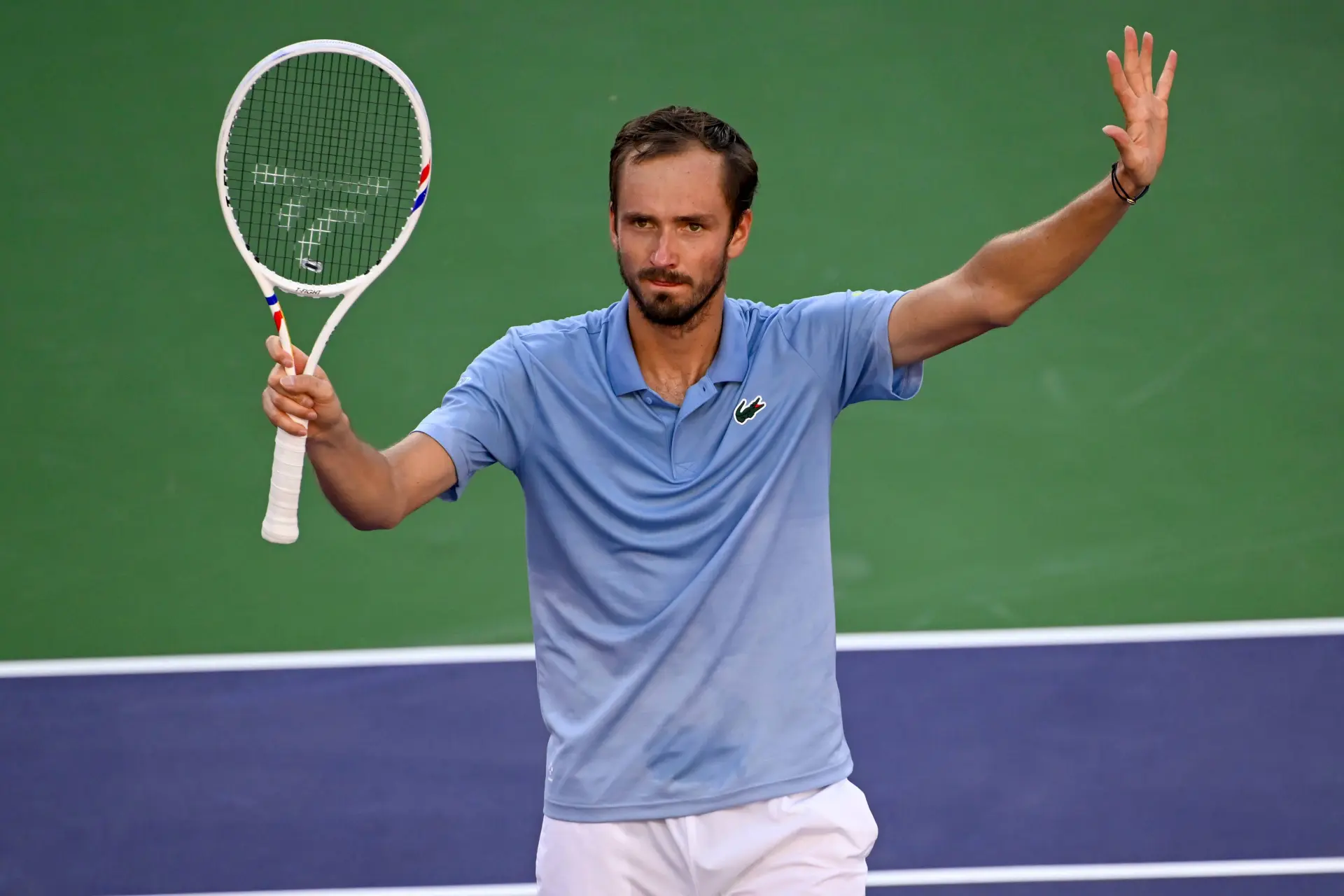
Medvedev’s recent form has been underpinned by a clear sense of confidence, which he links directly to his performances in Indian Wells. Despite the disappointment of losing in the final, he described the tournament as “great” and emphasised the value of competing closely with top-ranked opponents.
He pointed to his level against Sinner as evidence that he is “in good shape right now,” reinforcing his belief that he can continue producing strong results in Miami. This confidence also translates into a consistent approach to equipment, where he avoids unnecessary adjustments.
“No, I prefer usually not to. And when I play well, I don’t really play around anything," the fomrer world No. 1 said. "I even usually keep the same tension. And again, you can see me, I don’t change the racket for new balls because I don’t feel like my tension is getting loose. So why would I change? And I never, never do.”
A ‘win-win’ mindset and balance beyond the court
Beyond technical and tactical considerations, Medvedev also offered insight into his broader mindset on tour, particularly regarding how he manages the demands of a long season. He described his perspective as a “win-win situation,” even in scenarios where results do not go his way.
According to Medvedev, tournaments like Miami offer value regardless of outcome, whether through competitive success or opportunities to prepare for upcoming events. This outlook reflects a more balanced approach to performance and recovery across the calendar.
“I’m also someone who always tries to think about a win-win situation. There are a couple of tournaments on tour where it’s tough to see this win-win situation. But if you’re in Miami and you lose early, you have more time to prepare clay and you have time to spend a good time in Miami. But if you play good in the tournament, it’s great because that’s what you are here for.”
He also addressed the importance of maintaining a balance between professional responsibilities and personal life, noting that he does not aim to operate in a purely mechanical, tennis-focused routine. Instead, he allows space for off-court experiences, even if they come at the cost of ideal preparation.
“If you live life only to be a robot on and off the court, I don’t think… I mean, you could, if you enjoy it, then yes, I don’t. I try to balance life on tour and off tour. So Miami is treating me very well.”

Cristhián AvilaTennis Journalist
Cristhián Ávila is a tennis journalist based in Santiago, Chile, and has been part of the TennisUpToDate team since early 2023. He covers the ATP and WTA Tours as well as all four Grand Slams, producing breaking news, match reports, analysis, and regular liveblogs from major tournaments.
His reporting combines statistical analysis with clear explanation, helping readers understand tactical developments, player form, and broader storylines across the tour. Working fluently in both Spanish and English, Cristhián collaborates with an international editorial team and contributes to comprehensive global coverage. As part of his work, he has conducted interviews and media interactions with leading figures in the sport, including Caroline Wozniacki and John McEnroe.
In his journalism, Cristhián places strong emphasis on careful sourcing, editorial accuracy, and updating articles promptly when new, verified information becomes available. His coverage is grounded in research, context, and direct engagement with professional tennis.
claps 1visitors 1
Just In

Popular News
Latest Comments
- A healthy Qinwen may be hard to stop next season. She was already scaring her opponents before her medical leave(s). Unfortunately, Zheng insisted on singing again. On the positive side -- Mirra did not sing!! ;~}
 mandoist11-10-2026
 - Where is it written that athletes, entertainers... People in general... are mandated to keep looking at -- or even using [anti]Social Media? Public & private figures consistently complain and reveal their concerns about negativity and violence thrown at them -- yet they insist on participating. Avoid it, don't use it, don't read it. It's okay to occasionally look up at the World instead beating your eyes & thumbs to death on The Inventions out there.mandoist11-10-2026
- great articlestennisseserver07-10-2026
- Medvedev was leading Djokovic 7-5, 3-5 when an attempted return..' NO you ignorants, Djokovic was leading .weiss05-10-2026
- No more bullshit "Wildcards" to these two. Qualify like everyone else -- there will be cameras there, too. Time to scream... WTF ????!!!!mandoist29-09-2026
- Let's not BS the general public -- Sabalenka started showing cracks in her game last season. Her losses and near-losses started at about the same time she began being distracted by Fame (constant Selfies, making TV commercials, magazine shoots, endless Social Media nonsense, etc., etc.) One would think even Saba could recognize the parallels with others who failed before her -- Raducanu, Giorgi, Bouchard to name a few.mandoist25-09-2026
- Gross!! Hey Raducanu, Giorgi, and Bouchard -- reserve a seat at your Social Media Selfie table for Saba + Naomi. They're heading in your direction soon enough.mandoist24-09-2026
- And then these same players will complain about how lengthy their season’s were and need more time-off. I’m all for more tennis but the amount of tennis we get now is actually kind of crazy! We all need a break, especially the players.DaveyWavey23-09-2026
- You should do a comparison article for "different kinds of justice" the courts decide for tennis players. I can think of at least three players who received very small bans of a few months, however Tara Moore has been fighting for her literal survival the past few years. It seems odd considering she is not a "name" player, unlike the other cases.DaveyWavey22-09-2026
- PRIZE MONEY & POINTS Winner - $185,500 Finalist - $114,500 Semi-Finalist - $66,003 Quarter-Finalist - $35,000 Round of 16 - $18,045 Round of 32 - $13,005 Winner - 500 Finalist - 325 Semi-Finalist - 195 Quarter-Finalist - 108 Round of 16 - 60 Round of 32 - 1DaveyWavey20-09-2026

Loading