"I wanted to make the most out of the clay season" - Casper Ruud explains reasons behind featuring at Geneva Open
ATP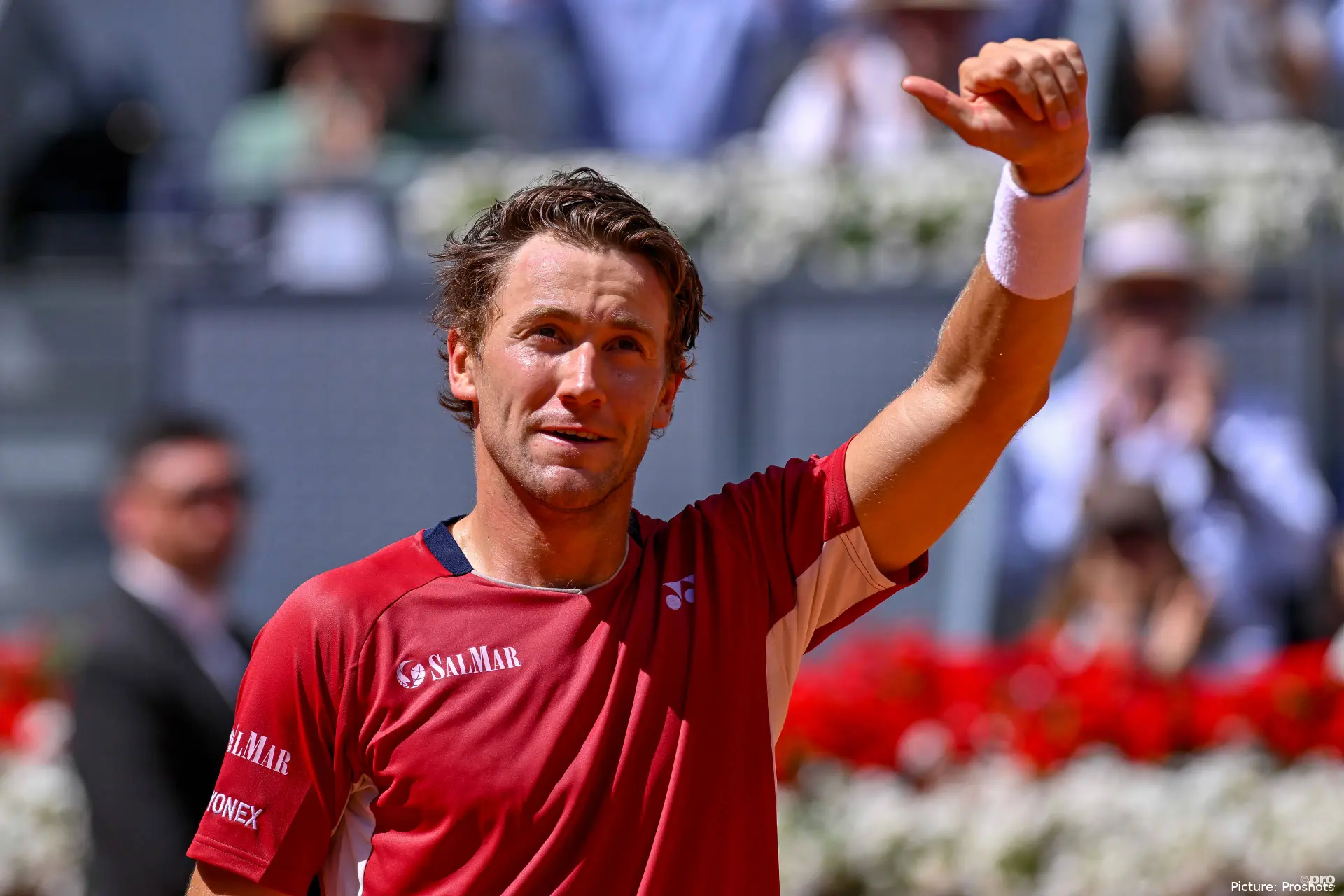
Casper Ruud explained why he opted to compete in Geneva despite playing a whole load of matches ahead of Roland Garros. The two-time finalist is raring to go ahead of the second Grand Slam of the year while siding with the players as the prize money debacle goes on.
Ruud was very much on board with the rise of prize money at Grand Slam level. He was not fully up to date after coming in late from Geneva. "Honestly, I haven’t gotten any feedback because I wasn’t here. I was still playing and only arrived late last night," he stated.
The 15-minute limit when speaking to media is in protest with the rise of prize money. the players want 22% of revenue from the Grand Slam while the organisers have stuck with 15%. Ruud was very much sticking with it.
"But yes, the plan is to do a 15-minute media day today, together with the other players who are doing the same. We’re trying to send a message, use our voices and stay as united as possible."
Playing in Geneva despite Roland Garros being around the corner
Ruud competed in the Gevena Open as he gunned for a fourth title. His quest was abruptly halted by the eventual champion Mariano Navone in a straight set defeat at the semi-final stage. A specialist on clay, Ruud was willing to get as much tennis on this surface under his belt as possible before a shortened grass swing offers him a chance to put his feet up.
"We definitely discussed it, especially after reaching the final in Rome," Rudd told the press. "Ultimately, it came down to the fact that the year hadn’t really gone as well as I’d hoped, especially at the beginning. And when you’re on a roll and playing with confidence, I think sometimes it’s good to be a little bit greedy. That was one reason I went to Geneva."
"Another reason is that I don’t play any grass-court events before Wimbledon, so after Roland-Garros I have three weeks off to rest. I wanted to make the most out of the clay season."
There were questions surrounding his participation in Geneva due to that final run in Rome. However, the Norwegian was not fazed by the amount of time on court. "The biggest factor was that I hadn’t played many long matches in Rome," he explained. "I played nothing over an hour and a half until the final. Of course, if the final had gone three or three-and-a-half hours and I’d been exhausted, I probably would have gone to Geneva and withdrawn. But that wasn’t the case.
"I felt like I had the energy and motivation to play, and I’ve had good experiences doing that in the past. This year was a bit different because I didn’t have a first-round bye and had to play four matches in four days, but it’s okay. I’m injury-free, happy to be here, and now I have two days to get ready for my first round."

Casper Ruud reached the final in the Rome Open before losing to Jannik Sinner 6-4, 6-4
Positives from Rome, but Sinner dominance compounded
It was a much improved Ruud showcased in this clay swing. While he did plummet outside the top 20 after failing to defend his Madrid Open title, a quarter-final was a very positive result. He then backed it up with a final showing at Foro Italico, losing out to the world number one Jannik Sinner.
He compared prior meetings against the Italian to this one, with Sinner continuing his imperious form over Ruud. "I said after the final that the thing that makes him so good is that you get no breathing room from any corner of the court," he recalled. "Whether it’s a forehand cross-court rally or a backhand cross-court rally, you know the ball is coming with high pace and usually very good placement as well. So if you’re not extremely precise with your own shots, he’s immediately on top of you and ready to punish you. When you constantly feel like every shot has to be close to perfect, it becomes extra difficult mentally."
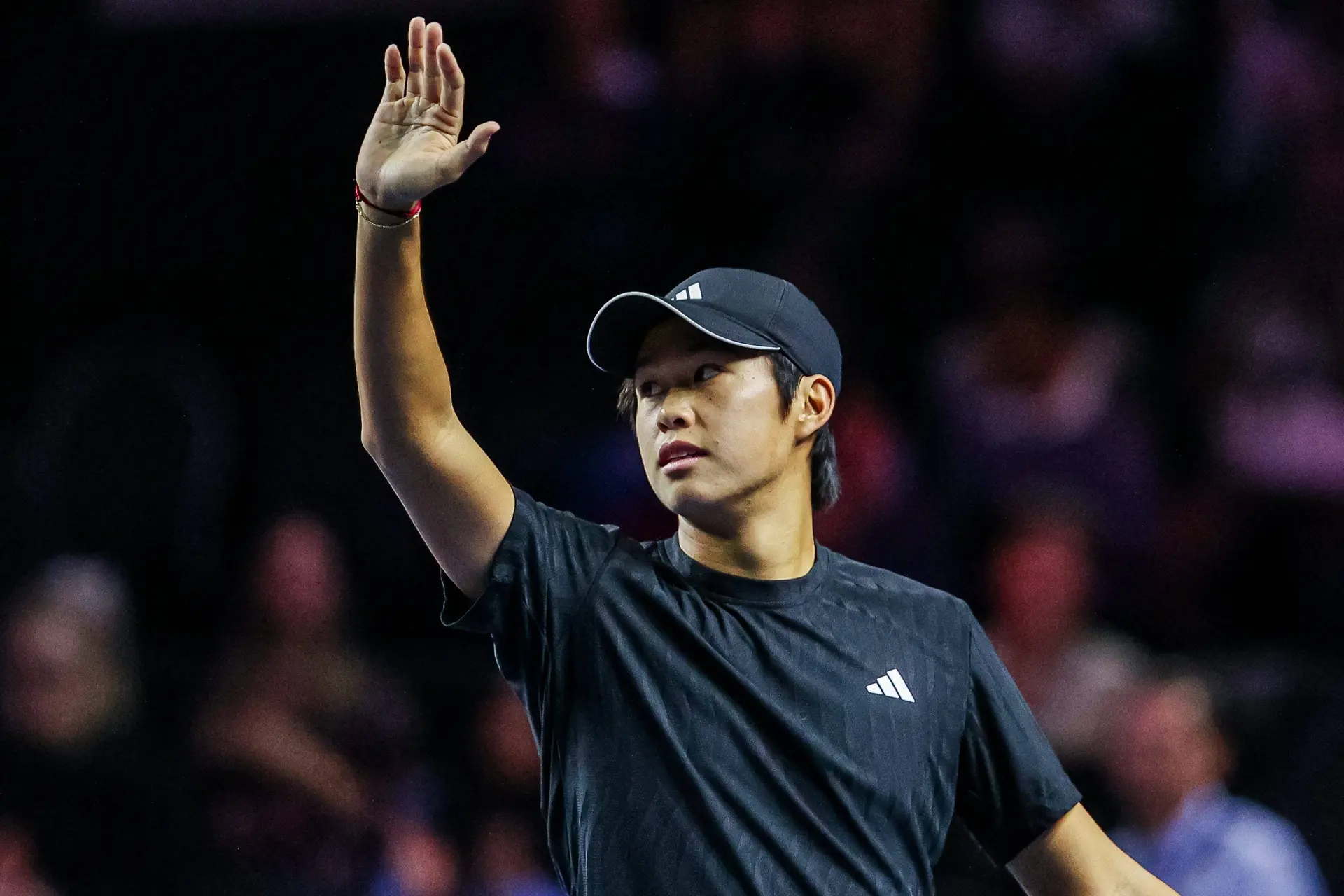
The opportunities are limited and the fact that Sinner is brilliant in almost every aspect on the court is a huge reason why he is so much better than everyone else. "You don’t get many short balls against him. He defends extremely well. When he first arrived on tour, everyone saw how cleanly he struck the ball, even at a young age. But I think his physicality, movement and defensive play have improved the most over the last two or three years. That’s why he’s taken such a big step and is dominating the way he is now.
"Even from defensive positions, you don’t really get much from him. He doesn’t give away many unforced errors or weaker shots. So when you do finally get a chance, you really have to take it — otherwise it’s kind of game over."
This was the fifth meeting between the pair, and Ruud is yet to win a set against Sinner. However, there were improvement signs from his side of the court. "My own feeling and level were better," he admitted. "I came into the match physically fresh because I hadn’t played many long matches. I got the start I wanted and broke him right away. Unfortunately, I didn’t follow it up with a good service game.
"If I’d managed to build a bigger early lead, who knows? But there’s still a lot of tennis to play, even when you’re up 2-0 or 3-0. I was happy with parts of my game that day, but towards the end of the first set and the beginning of the second, I kind of dozed off a little bit and lost some intensity and execution. That’s where the match slipped away from me."

Jannik Sinner of Italy lifts the tropy as he celebrates the victory of the Internazionali BNL d'Italia 2026 tennis tournament at Foro Italico in Rome
He somewhat related it to the dominance of Rafael Nadal on clay. "It does feel similar, yes. Jannik obviously hasn’t won here 14 times like Rafa did, but he’s definitely the clear favourite right now. He’s swept through the clay season, winning all three Masters 1000 events, and this tournament feels like the final piece he needs to complete his résumé.
"I’m sure there’s pressure and nerves that come with that, but he’s definitely the player to beat and has a big target on his back. That said, we’re all human. Everyone who plays against him will try their best to stop him. That’s true for every player — anyone who plays me wants to beat me, anyone who plays Sascha wants to beat him. So it’s still an open tournament, and I think it’s going to be a really exciting edition of Roland-Garros."
Lucas MichaelTennis Journalist
Lucas Michael is a tennis journalist based in Cambridge, UK, specializing in comprehensive coverage of the ATP and WTA tours. For the past 1.5 years, he has been a core contributor to TennisUpToDate, where he has authored more than 3,000 data-driven match reports, deep-dive analysis pieces, and engaging liveblogs.
Lucas pairs real-time statistical analysis with on-the-ground reporting, frequently traveling to tournaments to cover the action firsthand from the press box and player press conferences. This blend of advanced metrics and direct access allows him to provide sharp context regarding player form, tactical trends, and breaking tour developments.
He holds a BA (Hons) in Sports Journalism. Grounded in core journalistic ethics, Lucas places a strict emphasis on meticulous sourcing, editorial accuracy, and a commitment to updating live content swiftly as verified information emerges.
claps 0visitors 0
Just In

Popular News
Latest Comments
- Two Things: 1. Stop allowing these Spoiled Trust-Fund Elitists to behave badly. Your little hand-slaps do not deter them. 2. STOP the incessantly annoying "towel wiping" nonsense!!!!
 mandoist15-10-2026
 - A healthy Qinwen may be hard to stop next season. She was already scaring her opponents before her medical leave(s). Unfortunately, Zheng insisted on singing again. On the positive side -- Mirra did not sing!! ;~}mandoist11-10-2026
- Where is it written that athletes, entertainers... People in general... are mandated to keep looking at -- or even using [anti]Social Media? Public & private figures consistently complain and reveal their concerns about negativity and violence thrown at them -- yet they insist on participating. Avoid it, don't use it, don't read it. It's okay to occasionally look up at the World instead beating your eyes & thumbs to death on The Inventions out there.mandoist11-10-2026
- great articlestennisseserver07-10-2026
- Medvedev was leading Djokovic 7-5, 3-5 when an attempted return..' NO you ignorants, Djokovic was leading .weiss05-10-2026
- No more bullshit "Wildcards" to these two. Qualify like everyone else -- there will be cameras there, too. Time to scream... WTF ????!!!!mandoist29-09-2026
- Let's not BS the general public -- Sabalenka started showing cracks in her game last season. Her losses and near-losses started at about the same time she began being distracted by Fame (constant Selfies, making TV commercials, magazine shoots, endless Social Media nonsense, etc., etc.) One would think even Saba could recognize the parallels with others who failed before her -- Raducanu, Giorgi, Bouchard to name a few.mandoist25-09-2026
- Gross!! Hey Raducanu, Giorgi, and Bouchard -- reserve a seat at your Social Media Selfie table for Saba + Naomi. They're heading in your direction soon enough.mandoist24-09-2026
- And then these same players will complain about how lengthy their season’s were and need more time-off. I’m all for more tennis but the amount of tennis we get now is actually kind of crazy! We all need a break, especially the players.DaveyWavey23-09-2026
- You should do a comparison article for "different kinds of justice" the courts decide for tennis players. I can think of at least three players who received very small bans of a few months, however Tara Moore has been fighting for her literal survival the past few years. It seems odd considering she is not a "name" player, unlike the other cases.DaveyWavey22-09-2026

Loading