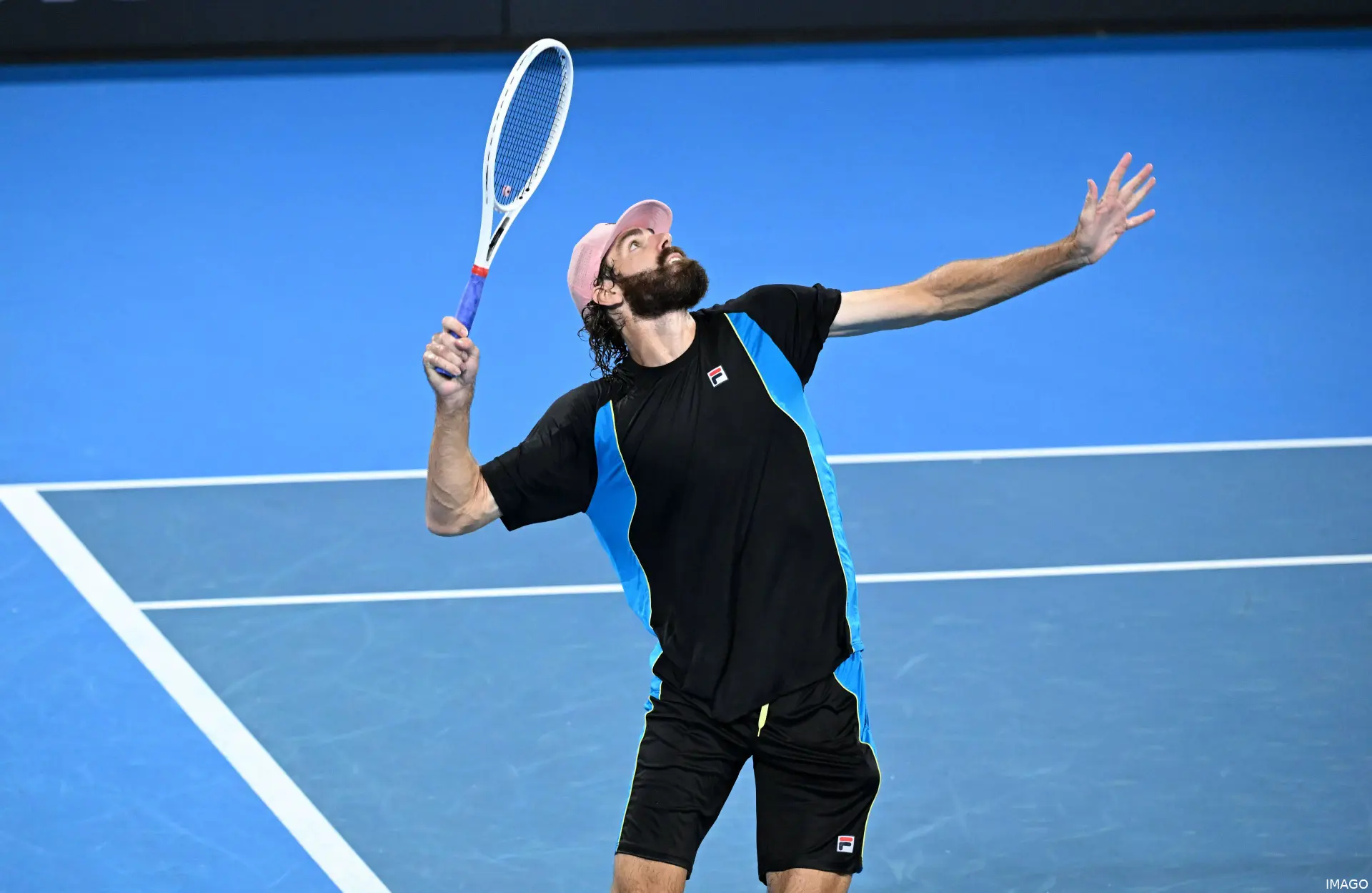
Reilly Opelka has never shied away from direct assessments of professional tennis, and his appearance on the Nothing Major Podcast followed the same line. Speaking with host John Isner, the American revisited a recurring topic in modern men’s tennis: the advantages and limitations faced by the tour’s tallest players, often labelled “bots” for their reliance on serve-dominated patterns.
At 6’11”, Opelka remains one of the biggest physical outliers on the ATP Tour, alongside former world No. 8 Isner and past top-10 players such as Kevin Anderson and Milos Raonic. While power serving has helped him reach ATP titles and deep runs at Masters events, Opelka argued that height alone does not translate to sustained dominance at the very top level.
From a statistical perspective, his point is difficult to dismiss. The average height of recent Grand Slam champions sits well below 6’3”, and the majority of year-end top-10 players are closer to six feet. Opelka acknowledged that reality directly, suggesting that raw physical advantage can become a structural limitation over time.
“You could easily argue that if I were six inches shorter, I’d probably be a better player. And I think John could say the same. Getting down to low balls would be easier.” Opelka said, reflecting on the cumulative demands of the tour. “The average height of the top 10 is nowhere near 6’11½”. It’s closer to six feet.”
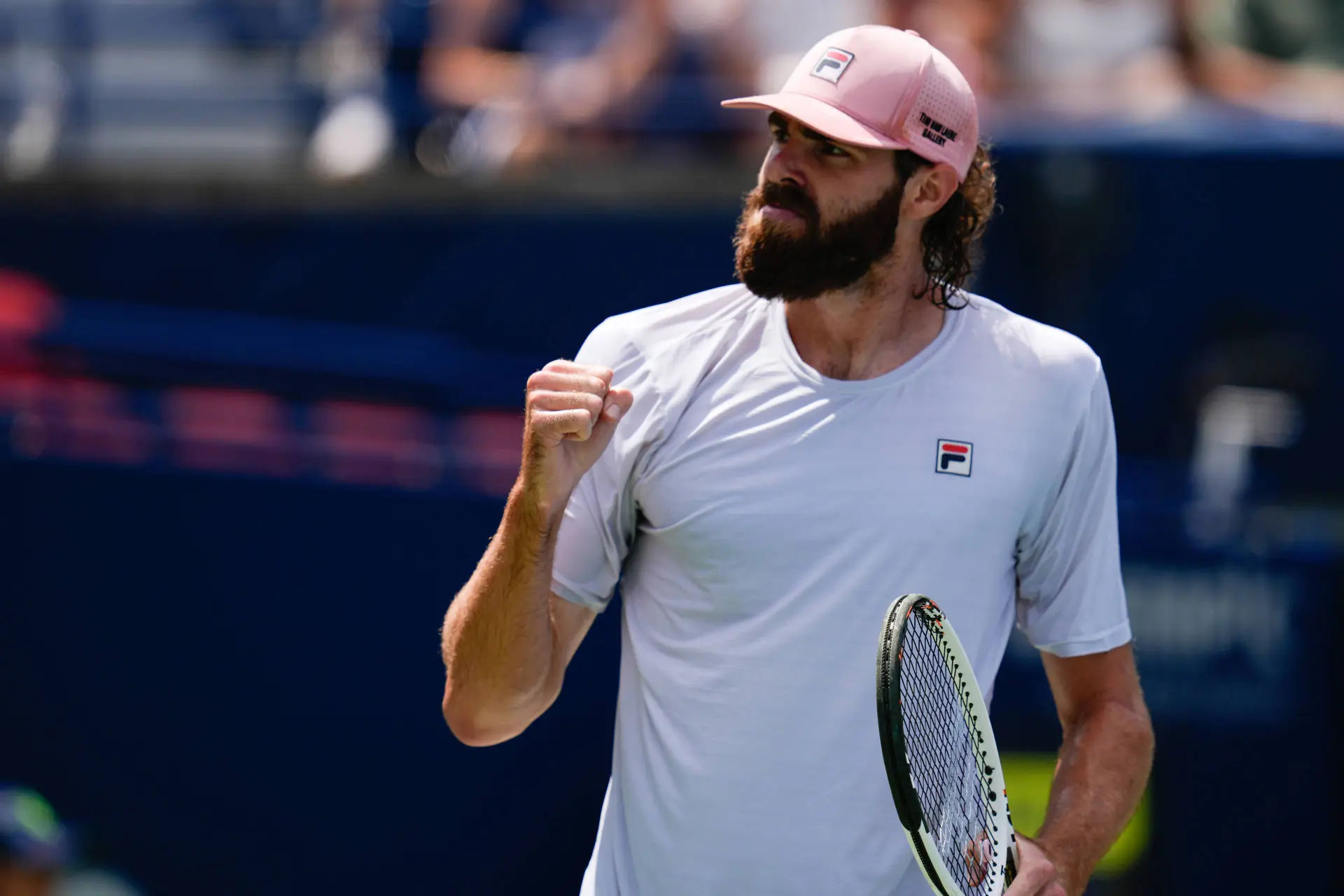
The trade-off between power and practicality
Opelka stressed that serving efficiency alone does not guarantee success, pointing to Isner’s career as an example of adaptation rather than simplicity. He noted that winning as a big server requires constant problem-solving, especially against elite returners who neutralise first-serve dominance and extend baseline exchanges.
“There is an element of knowing how to win,” Opelka explained, referencing Isner’s ability to manage matches with limited exchanges while still applying pressure. “John was unbelievable at that. He could play matches where he would make four or five shots max and still beat a top-10 player.”
Read also
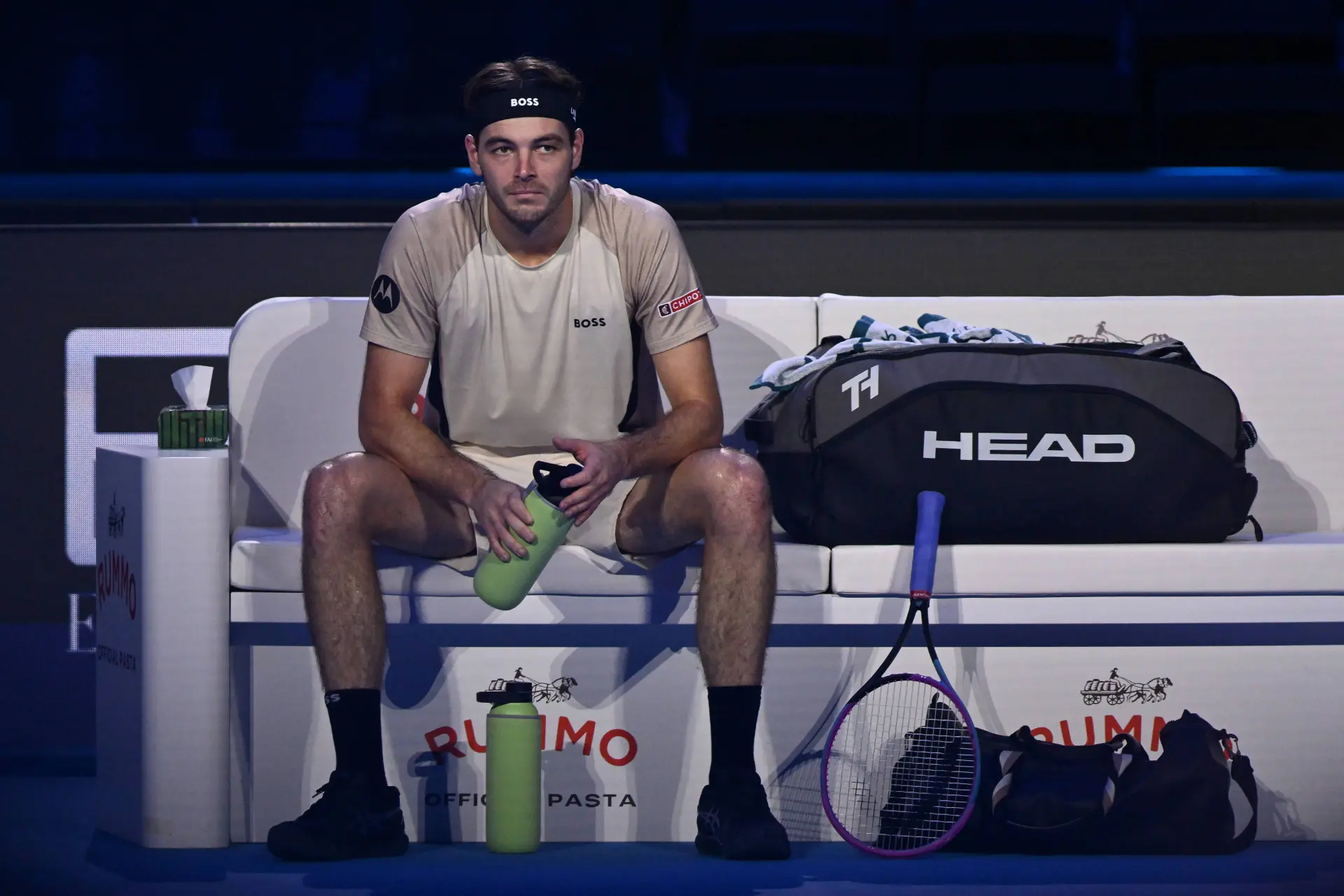
The American also highlighted how height affects basic movement patterns, particularly on low balls. While taller players gain reach and leverage, they sacrifice ease of movement in defensive positions, a factor that becomes more relevant against the tour’s strongest baseliners and counterpunchers. “But the biggest disadvantage is traveling,” Opelka added. “If you’re driving 25 minutes from the hotel to the courts, your back, your neck, everything tightens up. Then you have to arrive early just to undo the damage from the car ride.”
"And when you’re flying overseas in lay-flat seats — I recently discovered this trick. I lie the seat flat, but I sit all the way up at the headrest, press my back against it, and stretch my legs straight.
Read also
Matchups, Medvedev and the ‘bot’ label
When discussion turned to matchups, Opelka was clear about which opponent caused the most consistent problems for big servers. Daniil Medvedev, a former world No. 1 and US Open champion, was described as the “ultimate antidote” due to his return positioning and ability to extend games.
“He would hold serve just as fast as me, John or Nick,” Opelka said. “But his return games would drag on forever. I’d feel like I was holding in ten minutes, while he’d hold in sixty seconds.”
Opelka also touched on aesthetics, noting that effectiveness does not always align with visual appeal. Medvedev’s strokes, he joked, are “hard to watch,” yet brutally efficient, particularly in neutralising players who rely heavily on serve-plus-one patterns.
That contrast fed into the podcast’s closing game, “Bot or Not,” where Opelka categorised players such as Raonic, Hurkacz, Anderson and Querrey firmly as bots, while excluding Medvedev. When asked to classify himself, Opelka did not hesitate.

Cristhián AvilaTennis Journalist
Cristhián Ávila is a tennis journalist based in Santiago, Chile, and has been part of the TennisUpToDate team since early 2023. He covers the ATP and WTA Tours as well as all four Grand Slams, producing breaking news, match reports, analysis, and regular liveblogs from major tournaments.
His reporting combines statistical analysis with clear explanation, helping readers understand tactical developments, player form, and broader storylines across the tour. Working fluently in both Spanish and English, Cristhián collaborates with an international editorial team and contributes to comprehensive global coverage. As part of his work, he has conducted interviews and media interactions with leading figures in the sport, including Caroline Wozniacki and John McEnroe.
In his journalism, Cristhián places strong emphasis on careful sourcing, editorial accuracy, and updating articles promptly when new, verified information becomes available. His coverage is grounded in research, context, and direct engagement with professional tennis.
claps 0visitors 0
Just In


Popular News

Latest Comments
- Does Sinner need that 4.5 mil? I doubt it. He can make that with three modelling gigs!😅🤣Rapunzel21-10-2026
- Did "People Magazine" purchase this website? This nonstop storyline is bullshit.
 mandoist21-10-2026
 - Listen... this is of no concern to anyone but these two. Deal with your own issues -- most of us have our own. Thanks, media, for these insignificant follow-ups which are meaningless.mandoist21-10-2026
- This is so very very sad, for all three of them. I truly thought they had an unbreakable bond, but life throws up so many differing challenges. Having your homeland suffering in such a terrible way, makes happiness lose out to guilt as well. Our thoughts are with them. X💔bjsexton20-10-2026
- I have lost all respect for Svitolina! Could she not have waited until he had played at the Paris Masters!!! She is selfish and don't give a damn about Gael. That is NOT how love is demonstrated Elina!!Rapunzel19-10-2026
- Perhaps convenient tennis tour sex is not a strong enough experience in which to base a marriage?mandoist19-10-2026
- Fight the Good Fight... Tennis (sports in general) need more Humans such as yourself.mandoist18-10-2026
- When is WTA going to mandate Genetic Testing (DNA) ???mandoist18-10-2026
- Hey, Dan... you just wake up from a coma? Regardless -- Thanks for the comedy this morning!mandoist18-10-2026
- Two Things: 1. Stop allowing these Spoiled Trust-Fund Elitists to behave badly. Your little hand-slaps do not deter them. 2. STOP the incessantly annoying "towel wiping" nonsense!!!!mandoist15-10-2026

Loading