"Lack of transparency, inconsistency, and the convenience of the ban coming between the Slams": Novak Djokovic found Jannik Sinner doping scandal 'odd'
ATP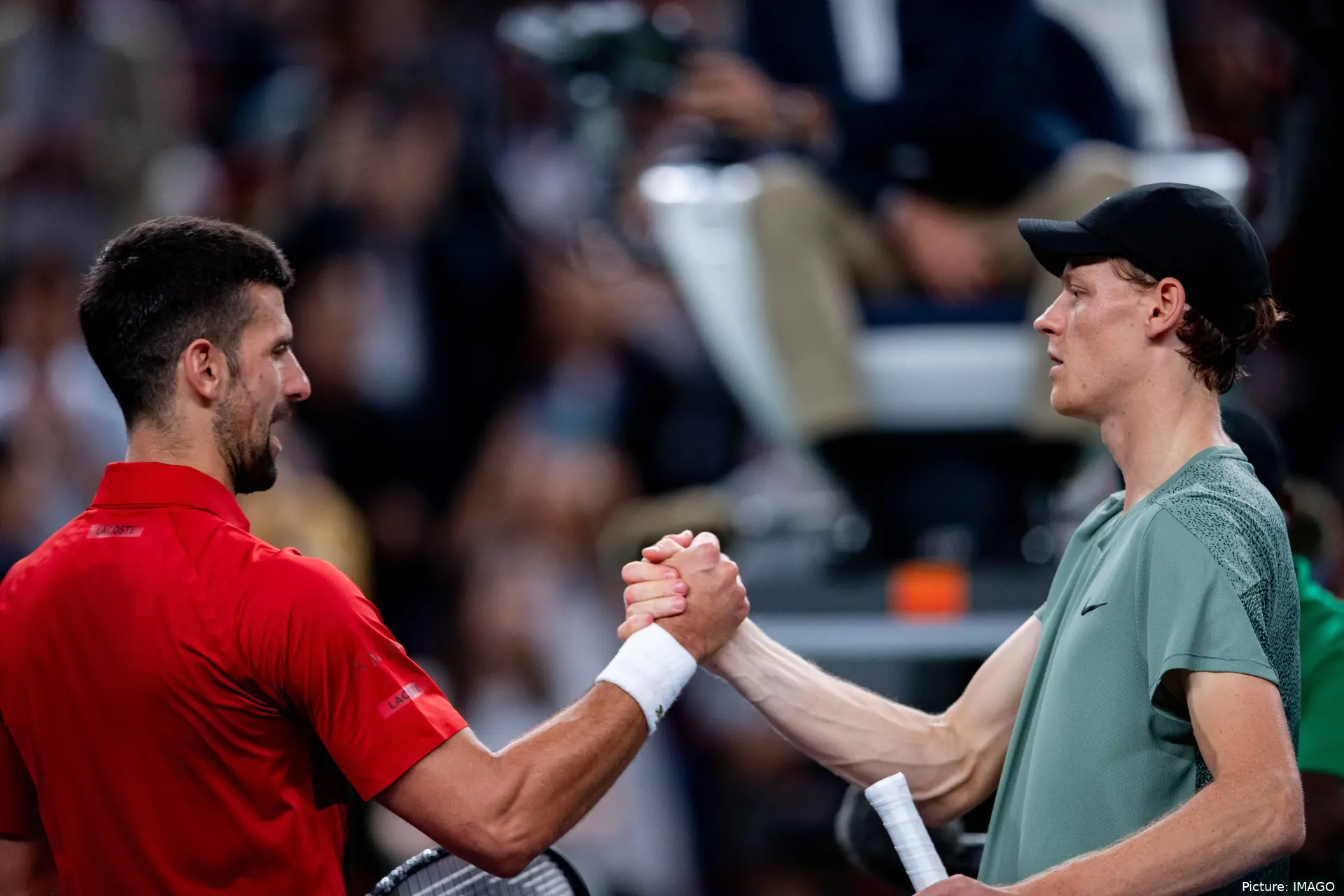
Novak Djokovic has spoken out in defence of Jannik Sinner following the controversy that has cast a shadow over the Italian’s season, saying he believes Sinner did not intentionally commit any wrongdoing — but criticised what he described as “a lack of transparency and consistency” in how the case was handled.
Appearing on Piers Morgan Uncensored, Djokovic said that the scrutiny Sinner now faces will likely “follow him for the rest of his career,” just as the Serbian’s own stand during the COVID-19 era continues to be a talking point. Sinner plays at the ATP Finals this week, while Djokovic decided to withdraw late after winning his 101st title in Athens.
“That cloud will follow him as the cloud of COVID will follow me for the rest of his or my career,” Djokovic said. “It was such a major thing that happened that, over time, it will fade — but I don’t think it will disappear. There will always be a certain group of people who will try to bring that forward.”
Asked if he believed Sinner’s explanation, Djokovic was emphatic. “I’ve known Jannik since he was probably 13 or 14 years of age,” he explained. “His first serious coach, the one working with him in those crucial years, was my coach as well — Riccardo Piatti. I used to train quite a bit at Piatti’s academy in Italy, and I practised with Sinner many times when he was a junior.”
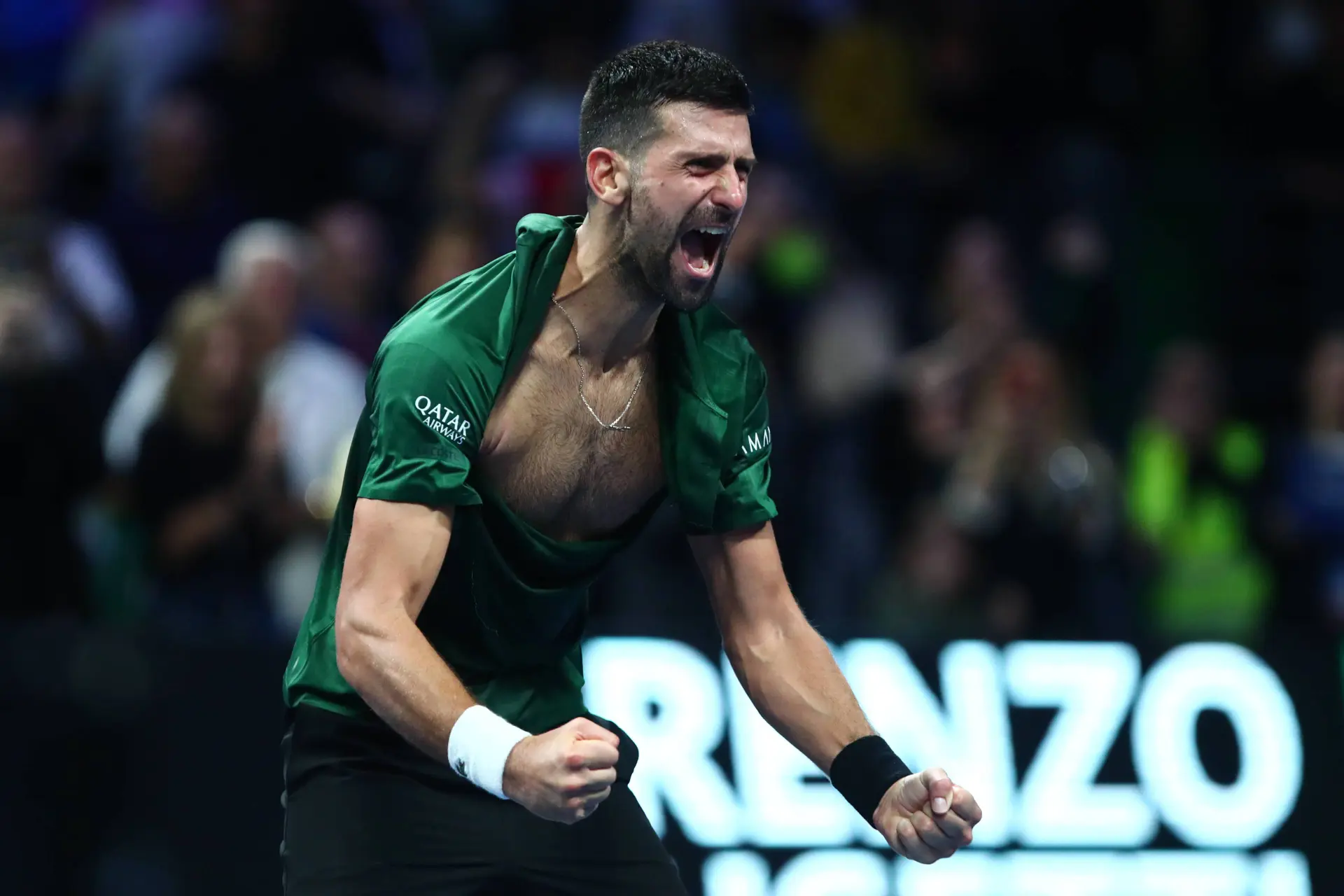
Djokovic found timing of Sinner ban 'very odd'
Djokovic described a long-standing admiration for the Italian’s character and focus. “I liked him a lot because he was always skinny, as I was — tall, grew up skiing, grew up in the mountains — a very similar story to mine. He always came across as very genuine, very nice, very quiet. He had his own world and didn’t really care too much about the lights of society. He just wanted to be the best player he could be. I liked that mentality. When this happened, I was honestly shocked. I do think he didn’t do it on purpose.”
But while he defended Sinner’s character, Djokovic also questioned the process and timing of the disciplinary response.
“The way the whole case was handled — there were so many red flags,” he said. “There’s a lack of transparency, inconsistency, and the convenience of the ban coming between the Slams so he doesn’t miss the others. It was very, very odd. I really don’t like how the case was handled. You could hear many other players — both male and female — coming out in the media and complaining that there was preferential treatment.”
Djokovic suggested that a lower-ranked player might have faced a much harsher punishment. “If he’d been number 500 in the world, I think he’d have been banned,” he said. “When you see someone else being banned for years for something similar, and then he’s banned for a provisional three months or whatever it was — it’s just not right.”
Even the Italian’s surname, Djokovic joked, made things more difficult for him. “If you’re called Sinner, it makes it even harder,” he smiled. “It’s not easy for him, obviously. But I do have a sense of empathy and compassion for him. He’s handled the storm in the media very well — very maturely and steadily. Kudos to him for that. In the midst of all that, he’s still dominating — still playing incredible tennis, winning Slams, winning titles.”
The 24-time Grand Slam champion even encouraged Morgan to interview Sinner himself. “You should interview him. You should ask him how he’s used that as fuel. It would be interesting to hear.”
When Morgan quipped that he only interviews “GOATs”, Djokovic laughed: “Fair enough — that’s why I’m here.”
Read also
“The man who touched people’s hearts”
The conversation then turned from controversy to legacy, as Morgan asked Djokovic how he would like to be remembered once he retires. Djokovic reflected deeply, citing sports psychologist Dr. Jim Loehr — whom he credits with strengthening his mindset — and recalling the recent loss of his mentor Nikola Pilic, whom he described as his “tennis father”.
“One of Dr. Loehr’s main questions is: what would you want to have on your tombstone? It makes you wonder — how do you want to be remembered? Obviously, the achievements, the results, the crowns and titles — I’m very proud of that. I’ve worked my ass off my entire life to get to where I am, and to be in this discussion.”
But Djokovic said that his greatest takeaway from his mentor’s funeral was not about tennis, but about the way people remembered him as a human being. “The connections he left behind, the way he touched people’s hearts, people weren’t talking about what he achieved as a player or coach. It was about who he was as a person, how he conducted himself, how he changed lives.That’s how I want to be remembered.”
When Morgan pressed him to imagine the inscription on his own tombstone, Djokovic paused before replying: “The man who touched people’s hearts.”
Morgan smiled, visibly moved. “That’s great,” he said. “I think I’ve just realised what I want on my tombstone.”
Djokovic laughed. “I love that. Thank you for that.” Morgan concluded: “You helped me come to that realisation.” Djokovic replied simply: “I’m here to help.”

Samuel GillEditor-in-Chief
Samuel Gill is the Chief Content Officer (CCO) of TennisUpToDate.com, a role he has held since 2020. He is responsible for editorial governance across the platform, including setting content standards, overseeing accuracy and consistency, and guiding long-term editorial strategy. Since joining, he has contributed more than 10,000 articles and editorial pieces across the TennisUpToDate network, playing a central role in the daily operation and development of the site.
Based in Leicester, Samuel has a broad background in tennis media. In his current role, he works closely with editors and writers to ensure coverage meets clear journalistic standards, with particular attention to verification, consistency, and timely updates when new information becomes available.
claps 0visitors 0
Just In

Popular News
Latest Comments
- A healthy Qinwen may be hard to stop next season. She was already scaring her opponents before her medical leave(s). Unfortunately, Zheng insisted on singing again. On the positive side -- Mirra did not sing!! ;~}
 mandoist11-10-2026
 - Where is it written that athletes, entertainers... People in general... are mandated to keep looking at -- or even using [anti]Social Media? Public & private figures consistently complain and reveal their concerns about negativity and violence thrown at them -- yet they insist on participating. Avoid it, don't use it, don't read it. It's okay to occasionally look up at the World instead beating your eyes & thumbs to death on The Inventions out there.mandoist11-10-2026
- great articlestennisseserver07-10-2026
- Medvedev was leading Djokovic 7-5, 3-5 when an attempted return..' NO you ignorants, Djokovic was leading .weiss05-10-2026
- No more bullshit "Wildcards" to these two. Qualify like everyone else -- there will be cameras there, too. Time to scream... WTF ????!!!!mandoist29-09-2026
- Let's not BS the general public -- Sabalenka started showing cracks in her game last season. Her losses and near-losses started at about the same time she began being distracted by Fame (constant Selfies, making TV commercials, magazine shoots, endless Social Media nonsense, etc., etc.) One would think even Saba could recognize the parallels with others who failed before her -- Raducanu, Giorgi, Bouchard to name a few.mandoist25-09-2026
- Gross!! Hey Raducanu, Giorgi, and Bouchard -- reserve a seat at your Social Media Selfie table for Saba + Naomi. They're heading in your direction soon enough.mandoist24-09-2026
- And then these same players will complain about how lengthy their season’s were and need more time-off. I’m all for more tennis but the amount of tennis we get now is actually kind of crazy! We all need a break, especially the players.DaveyWavey23-09-2026
- You should do a comparison article for "different kinds of justice" the courts decide for tennis players. I can think of at least three players who received very small bans of a few months, however Tara Moore has been fighting for her literal survival the past few years. It seems odd considering she is not a "name" player, unlike the other cases.DaveyWavey22-09-2026
- PRIZE MONEY & POINTS Winner - $185,500 Finalist - $114,500 Semi-Finalist - $66,003 Quarter-Finalist - $35,000 Round of 16 - $18,045 Round of 32 - $13,005 Winner - 500 Finalist - 325 Semi-Finalist - 195 Quarter-Finalist - 108 Round of 16 - 60 Round of 32 - 1DaveyWavey20-09-2026

Loading