Monte-Carlo Masters Round-Up Day Three | Carlos Alcaraz and Jannik Sinner cruise through while Monfils and Dimitrov bow out
ATP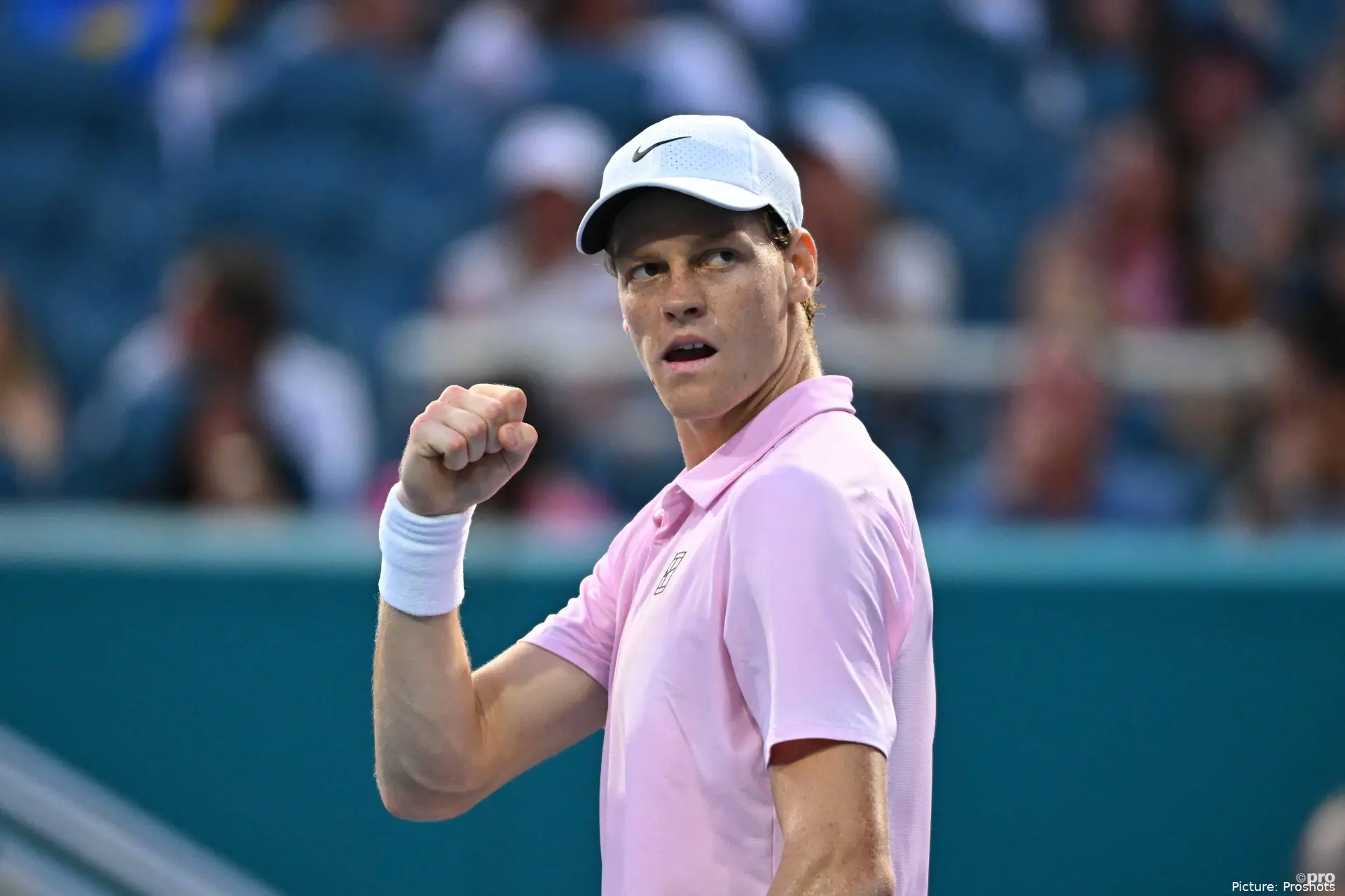
Day Three at the Monte-Carlo Masters saw the top seeds assert control as Jannik Sinner and Carlos Alcaraz both advanced into the Round of 16, while Alex de Minaur secured a three-set win over Cameron Norrie. The Monte-Carlo Masters continued to define early clay-court form, with several matches shaped by return pressure and second-serve vulnerability.
The results carry implications for the early-season clay hierarchy, particularly with Sinner maintaining strong form and Alcaraz beginning his title defence efficiently. De Minaur’s win adds depth to the draw, while Alexander Bublik also progressed as Gael Monfils exited in what is expected to be his final Monte-Carlo appearance. The Round of 16 lineup continues to take shape with multiple seeds advancing.
Sinner’s return pressure dismantles Humbert
Jannik Sinner def. Ugo Humbert 6-3, 6-0
Jannik Sinner advanced into the Round of 16 with a straight-sets win over Ugo Humbert, establishing control after a balanced opening phase. Humbert held early and matched Sinner through the first few games, but once the Italian secured his first break — to move ahead 3-2 — the pattern shifted toward extended baseline exchanges and increased return depth.
The key adjustment came through Sinner’s positioning on return, stepping inside the baseline and targeting Humbert’s second serve. This reduced Humbert’s ability to dictate first-ball patterns, forcing shorter replies and opening the court for Sinner to redirect with pace.
Sinner won 91% of points behind his first serve — compared to just 40% for Humbert across the match. The Italian produced five breaks in eight opportunities, while Humbert did not manage even a single break point chance. Sinner’s 19 winners compared to just six from Humbert also reflected his ability to dictate points and keep control from start to finish. A strong debut for the world No. 2, who now awaits Tomas Machac or Francisco Cerundolo in the second round.
Alcaraz progresses with structured baseline control
Carlos Alcaraz def. Sebastian Baez 6-1, 6-3
Carlos Alcaraz moved into the Round of 16 with a controlled win over Sebastian Baez, establishing an early advantage through aggressive court positioning. He broke immediately and built a 4-0 lead, using depth and variation to disrupt Baez’s rhythm from the baseline. Baez managed to hold serve only once before Alcaraz took command of the match again.
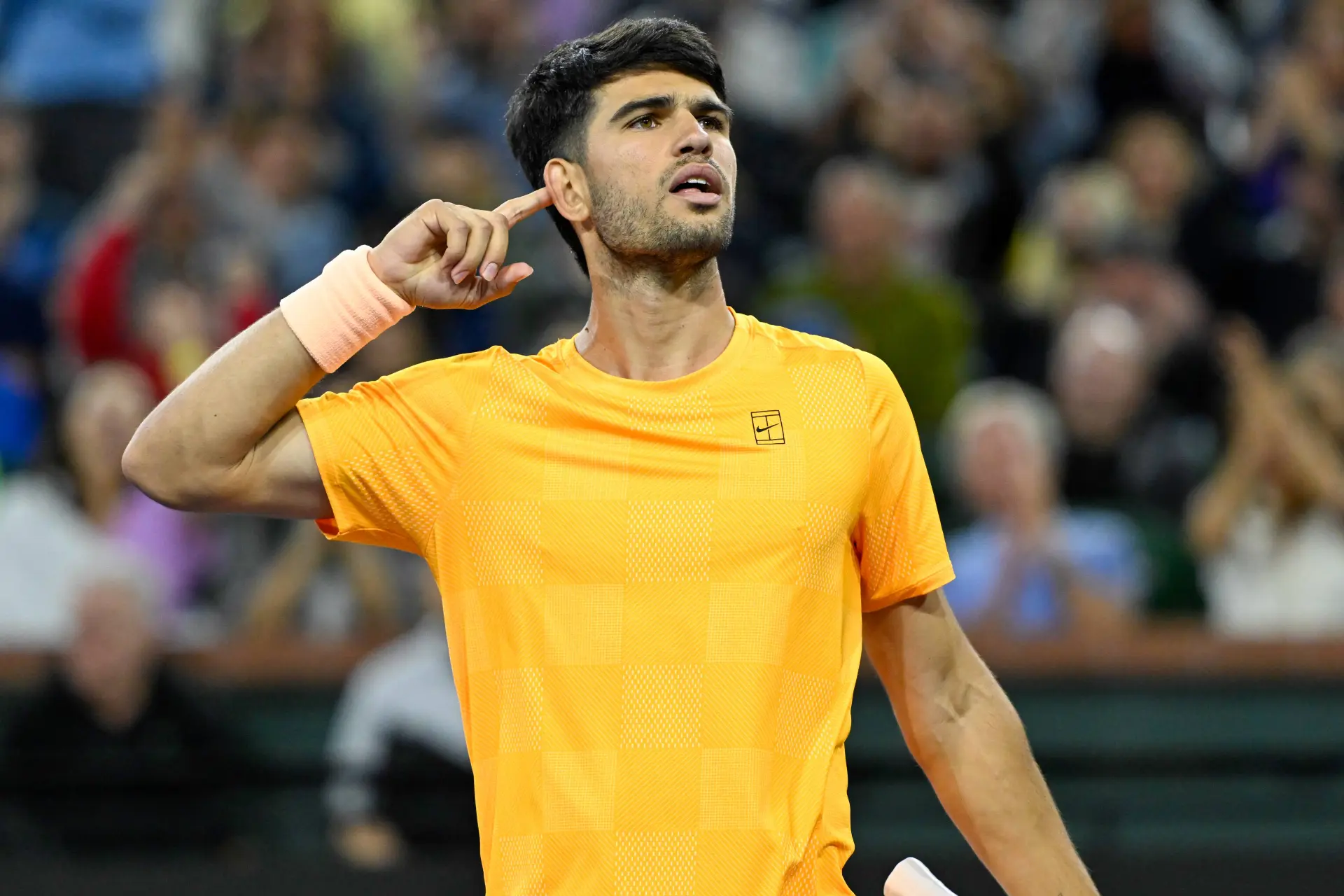
The Spaniard won nine of the first 10 games contested, building a wide lead at 6-1, 3-0, already with a break advantage. The seven-time major champion did not face major trouble after building that margin, and although Baez showed signs of resistance in the final minutes, there was not much he could do and he never managed to put his opponent’s serve at risk.
Alcaraz won as much as 83% of points behind his first serve compared to only 53% for the Argentine. He converted five breaks in 10 chances, while Baez took his only opportunity in the seventh game of the second set. It took Alcaraz just one hour and 10 minutes to get past a clay specialist like Baez, finishing with 24 winners compared to only five from the Argentine — one of the kings of the South American clay swing, but one who on his Monte-Carlo debut could not be very competitive against Alcaraz. In the next round, Carlitos awaits Tomas Martin Etcheverry or Terence Atmane.
Bublik advances as Monfils exits Monte-Carlo
Alexander Bublik def. Gael Monfils 6-4, 6-4
Alexander Bublik moved into the Round of 16 with a straight-sets win over Gael Monfils, closing the match with consistent serving patterns and controlled baseline exchanges. Monfils stayed competitive early, but struggled to sustain pressure on return games.
Read also
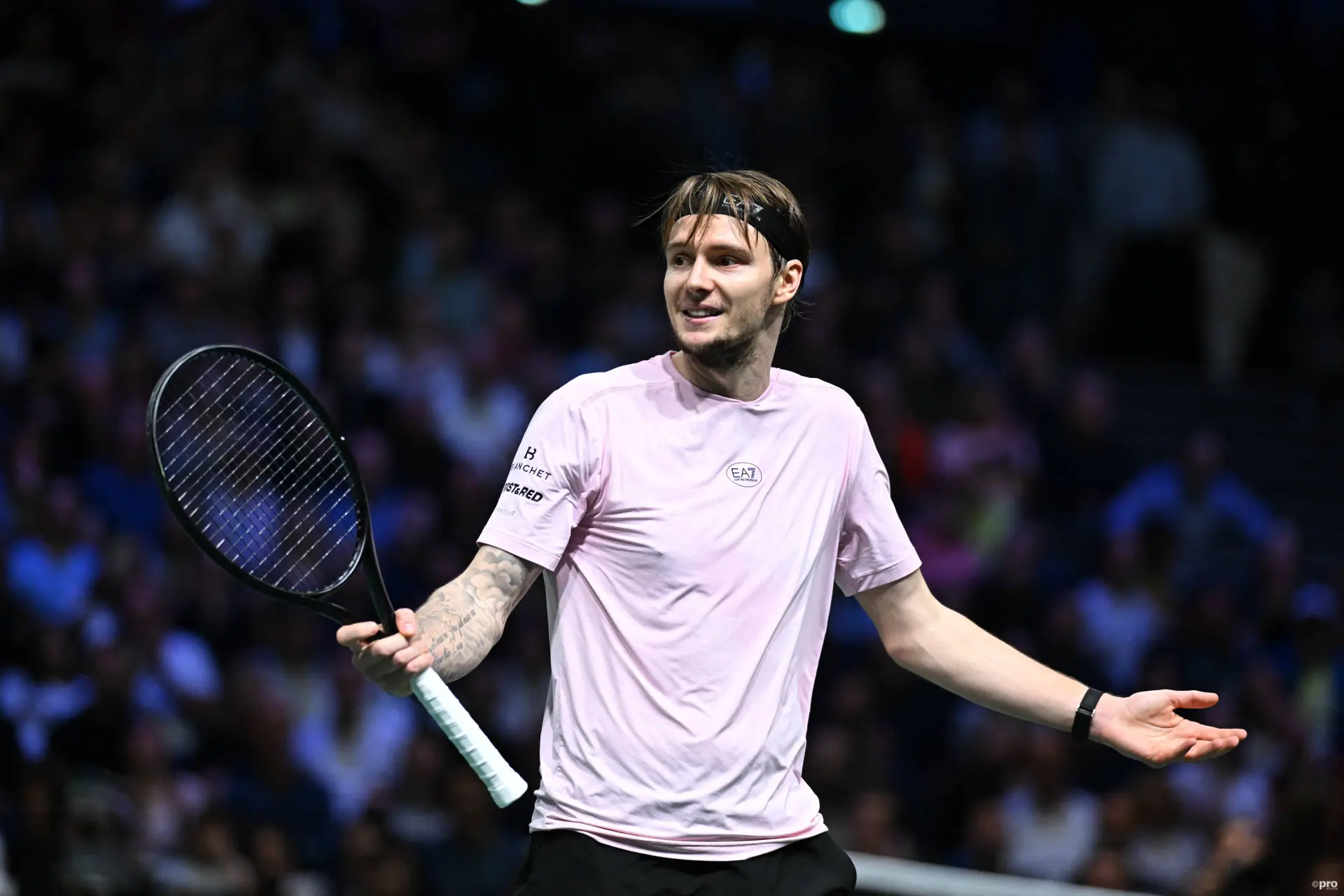
The decisive factor was Bublik’s ability to protect his serve while applying targeted pressure in return games. He secured late breaks in both sets, capitalising on short balls and reducing unforced errors during key sequences. In both sets, Bublik kept the lead on serve, and on both occasions he found the break with his only chance while leading 5-4, when Monfils needed to hold pressure to stay in the match.
It was Monfils’ last match in Monte-Carlo — one of the tournaments most special to the veteran Frenchman, who reached the final there in 2016. This time he says goodbye in the second round, marking an important step in his retirement year, and after leaving a good first-round win that reinforces that he can remain competitive on clay courts. Bublik now waits for a difficult challenge in the next round against the winner between Jiri Lehecka and Alejandro Tabilo.
Ruud advances through efficient serving patterns
Casper Ruud def. Alexei Popyrin 6-3, 6-4
Casper Ruud advanced into the Round of 16 with a straight-sets win over Alexei Popyrin, structuring the match around consistent service holds and selective aggression on return. The three-time Grand Slam runner-up showed why he is one of the favourites in clay-court tournaments and was dominant from the baseline against a player much more naturally suited to faster courts.
Ruud maintained consistency on serve, landing 72% first serves and winning 75% of those points. Meanwhile, Popyrin was the one who took more risks, landing only 52.3% of first serves in — which was a key difference, because he won 90% of points behind his first serve, but only 27% behind the second.
The Australian did not manage breaks in any of his opportunities, while Ruud needed only one break per set to take the victory. It was one hour and 34 minutes in which Ruud showed his clay-court quality, staying efficient in long rallies to return to winning ways after his early elimination on his Miami Open debut. His next challenge will be Corentin Moutet.
Etcheverry capitalises on Dimitrov’s inconsistency
Tomas Martin Etcheverry def. Grigor Dimitrov 6-4, 2-6, 6-3
Tomas Martin Etcheverry progressed after a three-set win over Grigor Dimitrov, with the match defined by alternating control phases. The Bulgarian wasted an early break advantage in the first set and allowed the Argentine back into the match, showing that on clay courts he can compete with the best and take advantage of the circumstances.
Dimitrov showed strong competitive spirit and was dominant in the second set. He secured two breaks and gave up only six points on serve — numbers that are more than notable considering the slow conditions in Monte-Carlo. After taking the second set comfortably, he sent the match into a decider, but that was where Etcheverry produced his best level.
The Argentine world No. 30 kept his composure and a single break around the middle of the set gave him the edge. After moving 4-2 ahead, he held firmly to his serve and Dimitrov found no solutions on return. Etcheverry secures an important win and will face Frenchman Atmane in the next round — with the chance that, if he advances, Carlos Alcaraz is already waiting for him.
De Minaur overturns momentum to defeat Norrie
Alex de Minaur def. Cameron Norrie 7-6(7-4), 2-6, 6-2
Alex de Minaur progressed into the Round of 16 after a three-set win over Cameron Norrie, with the match defined by swings in return effectiveness. The opening set remained on serve for long stretches before De Minaur recovered from an early deficit in the tiebreak to take the lead.
Norrie shifted momentum in the second set by increasing return depth and converting early break opportunities, building a double-break lead. His improved second-serve returns disrupted De Minaur’s rhythm and allowed him to force a decider with controlled service games.
In the third set, De Minaur adjusted by improving first-serve percentage and reducing exposure on second serve. He converted three of five break points compared to Norrie’s five of nine, with more efficient execution in key moments. He advances to face either Flavio Cobolli or Alexander Blockx, strengthening his position in the section.

Lucas MichaelTennis Journalist
Lucas Michael is a tennis journalist based in Cambridge, UK, specializing in comprehensive coverage of the ATP and WTA tours. For the past 1.5 years, he has been a core contributor to TennisUpToDate, where he has authored more than 3,000 data-driven match reports, deep-dive analysis pieces, and engaging liveblogs.
Lucas pairs real-time statistical analysis with on-the-ground reporting, frequently traveling to tournaments to cover the action firsthand from the press box and player press conferences. This blend of advanced metrics and direct access allows him to provide sharp context regarding player form, tactical trends, and breaking tour developments.
He holds a BA (Hons) in Sports Journalism. Grounded in core journalistic ethics, Lucas places a strict emphasis on meticulous sourcing, editorial accuracy, and a commitment to updating live content swiftly as verified information emerges.
claps 0visitors 0
Just In



Popular News
Latest Comments
- A healthy Qinwen may be hard to stop next season. She was already scaring her opponents before her medical leave(s). Unfortunately, Zheng insisted on singing again. On the positive side -- Mirra did not sing!! ;~}
 mandoist11-10-2026
 - Where is it written that athletes, entertainers... People in general... are mandated to keep looking at -- or even using [anti]Social Media? Public & private figures consistently complain and reveal their concerns about negativity and violence thrown at them -- yet they insist on participating. Avoid it, don't use it, don't read it. It's okay to occasionally look up at the World instead beating your eyes & thumbs to death on The Inventions out there.mandoist11-10-2026
- great articlestennisseserver07-10-2026
- Medvedev was leading Djokovic 7-5, 3-5 when an attempted return..' NO you ignorants, Djokovic was leading .weiss05-10-2026
- No more bullshit "Wildcards" to these two. Qualify like everyone else -- there will be cameras there, too. Time to scream... WTF ????!!!!mandoist29-09-2026
- Let's not BS the general public -- Sabalenka started showing cracks in her game last season. Her losses and near-losses started at about the same time she began being distracted by Fame (constant Selfies, making TV commercials, magazine shoots, endless Social Media nonsense, etc., etc.) One would think even Saba could recognize the parallels with others who failed before her -- Raducanu, Giorgi, Bouchard to name a few.mandoist25-09-2026
- Gross!! Hey Raducanu, Giorgi, and Bouchard -- reserve a seat at your Social Media Selfie table for Saba + Naomi. They're heading in your direction soon enough.mandoist24-09-2026
- And then these same players will complain about how lengthy their season’s were and need more time-off. I’m all for more tennis but the amount of tennis we get now is actually kind of crazy! We all need a break, especially the players.DaveyWavey23-09-2026
- You should do a comparison article for "different kinds of justice" the courts decide for tennis players. I can think of at least three players who received very small bans of a few months, however Tara Moore has been fighting for her literal survival the past few years. It seems odd considering she is not a "name" player, unlike the other cases.DaveyWavey22-09-2026
- PRIZE MONEY & POINTS Winner - $185,500 Finalist - $114,500 Semi-Finalist - $66,003 Quarter-Finalist - $35,000 Round of 16 - $18,045 Round of 32 - $13,005 Winner - 500 Finalist - 325 Semi-Finalist - 195 Quarter-Finalist - 108 Round of 16 - 60 Round of 32 - 1DaveyWavey20-09-2026

Loading