Preview French Open Roland Garros ATP Semifinals | Alexander Zverev faces Jakub Mensik surge as Arnaldi and Cobolli set up all-Italian clash
ATP
The Roland Garros 2026 men’s semifinals in Paris present a dual narrative: one side defined by experience and expectation, the other by breakthrough and disruption, with Alexander Zverev facing Jakub Mensik in one semi, while Matteo Arnaldi meets Flavio Cobolli in an all-Italian clash in the other.
Staged at the French Open (Grand Slam) on clay, the final four features a blend of established elite presence and first-time Slam semifinalists. Zverev, a multiple-time Grand Slam finalist and one of the most consistent performers at this level, arrives as the clear favourite. Mensik, just 20 years old, continues his rapid ascent after an injury-disrupted start to the season. On the other side of the draw, Italy is guaranteed a finalist as Arnaldi and Cobolli—both in their first-ever major semifinal—battle for a historic breakthrough.
Arnaldi vs Cobolli – All-Italian breakthrough guarantees first Grand Slam finalist in Paris
The Roland Garros 2026 semifinal delivers a guaranteed Italian finalist as Matteo Arnaldi and Flavio Cobolli meet for a place in their first Grand Slam final in Paris. Neither player had previously progressed beyond a major quarter-final before this tournament, but both have produced career-defining runs on clay to reach this stage.
Arnaldi arrives as the lowest-ranked player in a Roland Garros semifinal since Filip Dewulf in 1997, while Cobolli, seeded No. 14, has built a more structured but increasingly high-level campaign marked by multiple top-tier victories. Their third ATP meeting also marks a second encounter at Roland Garros.
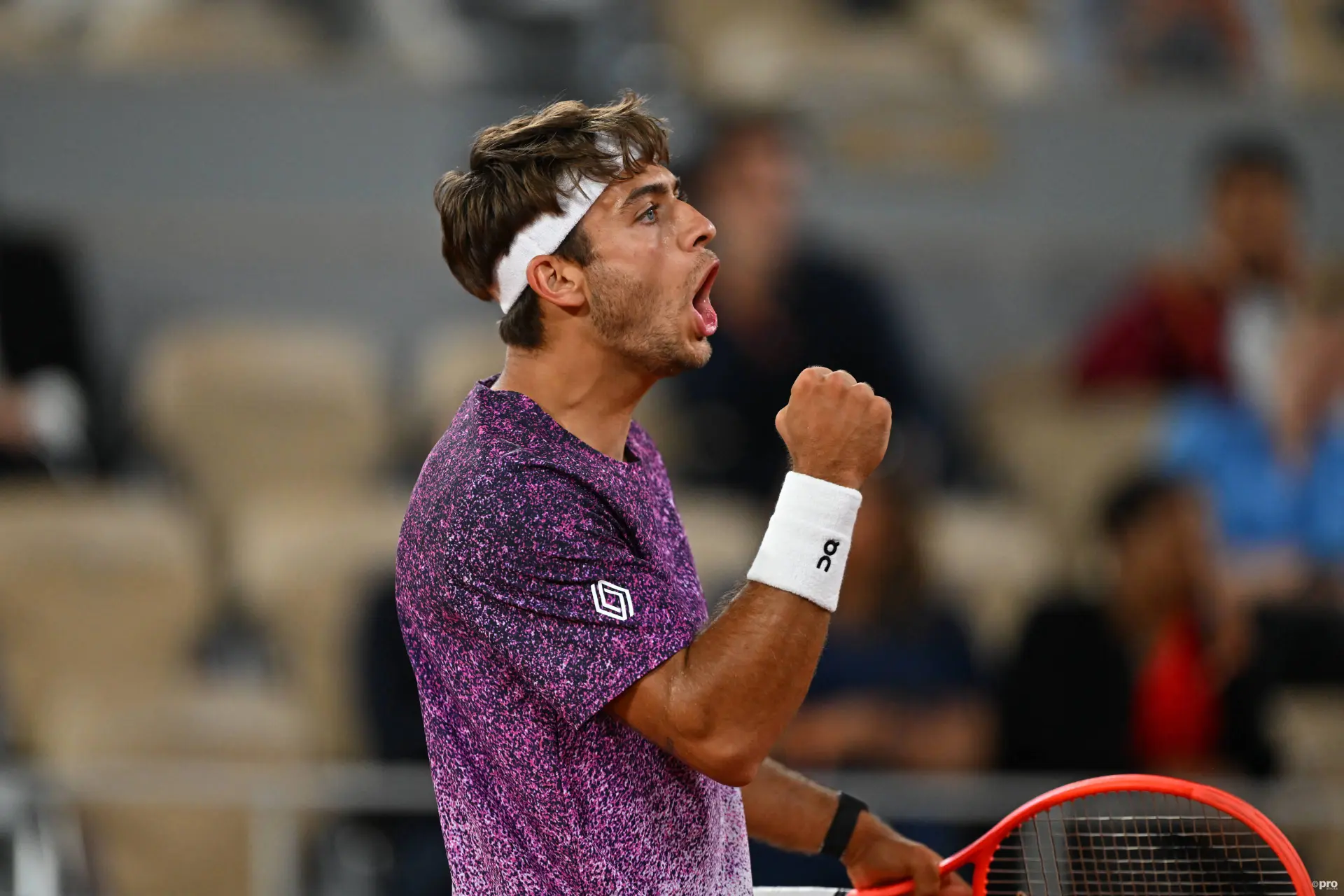
Matteo Arnaldi – Endurance, upsets and a historic run from outside the top 100
Matteo Arnaldi, ranked No. 104, has produced one of the most unexpected deep runs of the tournament. His path has been defined by volume and resilience, with multiple five-set matches and significant time on court across the fortnight.
He has already defeated Stefanos Tsitsipas, Frances Tiafoe, and Tallon Griekspoor, and has also endured another extended battle against Raphael Collignon. His quarter-final against Matteo Berrettini ended early with Arnaldi leading 7-5, 5-2 after retirement, but still added to an already heavy physical load approaching the 20-hour mark on court.
Arnaldi had entered Roland Garros after a difficult clay swing earlier in the season, including a run of four consecutive defeats before rebuilding confidence at Challenger level.
Flavio Cobolli – Seeded progression and proven clay-court stepping up
Flavio Cobolli, ranked No. 14, has delivered a more structured but increasingly authoritative run to his first Grand Slam semifinal. His season already included ATP 1000 quarter-finals in Madrid and Munich, and Paris has confirmed his consistency translating to major-level performance.
His most significant win came in the quarter-finals against Félix Auger-Aliassime, where he recovered after losing the opening set to win 4-6, 6-4, 6-4, 6-4. Earlier in the event, he recorded straight-sets wins over Learner Tien and Wu Yibing, and survived a tighter four-set battle against Zachary Svajda.
Cobolli’s win over Auger-Aliassime marked his fourth career victory over a top-10 opponent, all on clay, reinforcing his status as one of the more dangerous emerging clay-court players on the tour.

Flavio Cobolli (ITA) during his 1/4 final round match at the 2026 Roland Garros
Head-to-head context – familiar opponents on a familiar surface
Arnaldi and Cobolli meet for the third time on the ATP Tour, with their head-to-head tied at 1-1. Their previous meetings have all come on clay, including a Roland Garros encounter in 2025 where Cobolli prevailed in four sets, and a tighter Arnaldi win in Umag in 2023.
Despite the even record, all previous matches have been competitive and physically demanding, reinforcing the expectation of a close tactical and endurance-based semifinal. With both players contesting their first Grand Slam semifinal, the match guarantees a first-time finalist and extends Italy’s presence into the final weekend in Paris.
Jakub Mensik vs Alexander Zverev – Experience meets rising power
The second Roland Garros 2026 semifinal in Paris features a high-contrast matchup between Alexander Zverev and Jakub Mensik, with the German veteran facing one of the youngest breakthrough players in the draw.
Zverev, one of the most experienced clay-court players in the field and a multiple Grand Slam finalist, enters as the clear favourite after a controlled run to the last four. Mensik, just 20 years old, has arrived at his first Grand Slam semifinal following a disrupted season and a series of physically demanding wins in Paris, including multiple five-set battles.
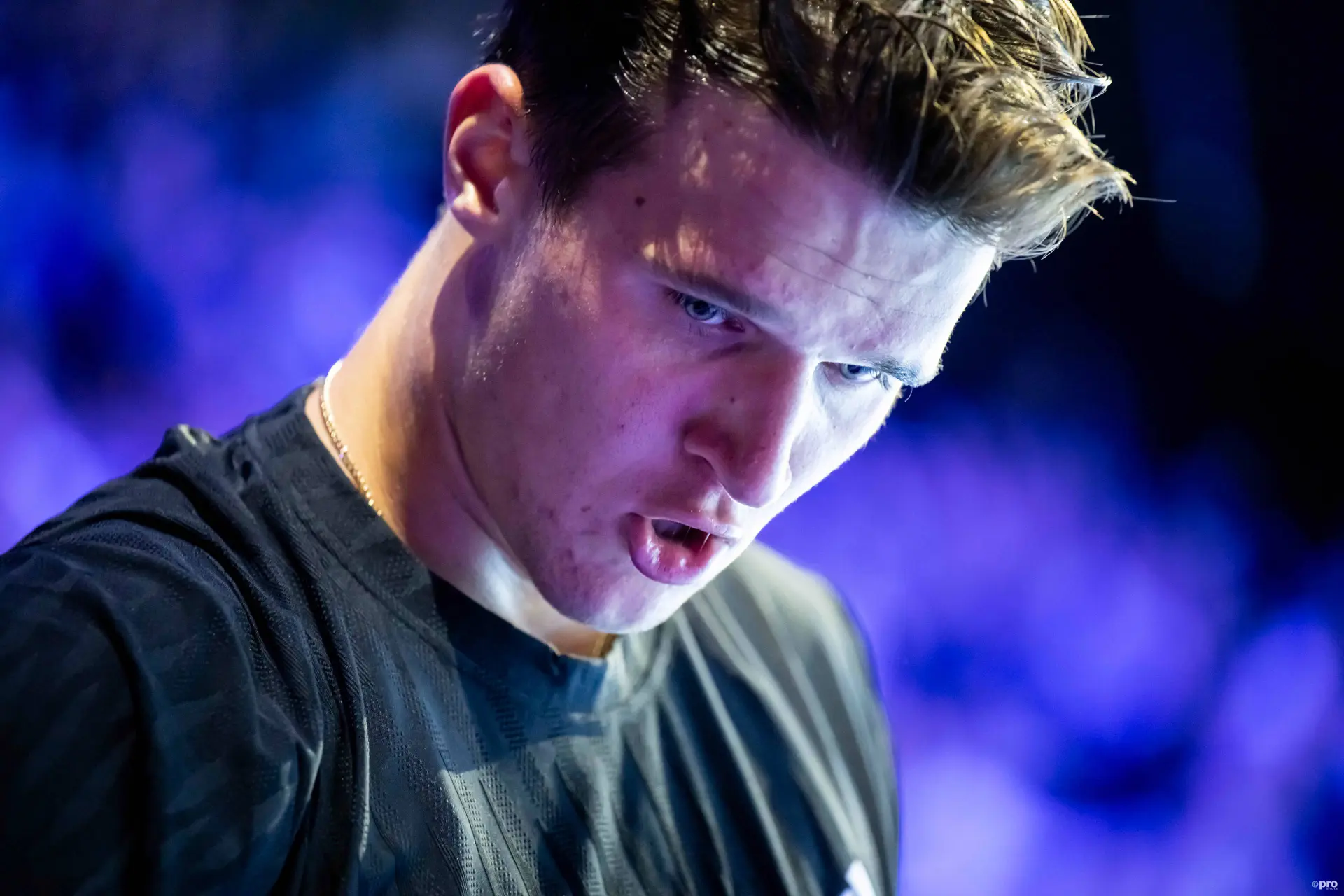
Alexander Zverev – Grand Slam experience and title pressure
Alexander Zverev arrives with the strongest major pedigree remaining in the draw, backed by a career Grand Slam record of 123–40 and 43–10 at Roland Garros. He has previously reached the Paris semifinals four times before and contested the final in 2024, reinforcing his status as a consistent elite performer on clay.
His 2026 campaign in Paris has been largely controlled, dropping just one set in the tournament (against Halys in the third round) while otherwise managing matches efficiently. His quarter-final win over Jodar was a clear demonstration of his ability to deal with favoritism, impose his hierarchy when he is the one expected to be aggressive and dominate against an opponent who was one of the most dangerous and unpredictable in the draw—considering the youth of the Spaniard and his rapid rise to the top level in recent months.
Zverev’s wider career context is central to this semifinal: multiple Masters 1000 titles, two ATP Finals titles, and Olympic gold underline his achievements, but the Grand Slam title remains the defining gap. Roland Garros has repeatedly represented his best opportunity, and this time, without the top players who have taken it away from him multiple times (Sinner, Alcaraz, Djokovic), he appears as the main candidate. However, his biggest rival will be his mind and his ability to control emotions in difficult moments.

Alexander ZVEREV of Germany celebrates his point during the tenth day of the Roland-Garros 2026
Jakub Mensik – Momentum return after disrupted season
Jakub Mensik enters his first Grand Slam semifinal at age 20 after a season interrupted by injury, which temporarily impacted his ranking following his Miami Masters breakthrough one year ago.
Seeded No. 26, he has delivered five wins in Paris, combining straight-set dominance with physically demanding five-set victories. In the second round, he survived a marathon against Mariano Navone lasting 4 hours and 41 minutes, where only fine margins decided a fifth-set tiebreak win.
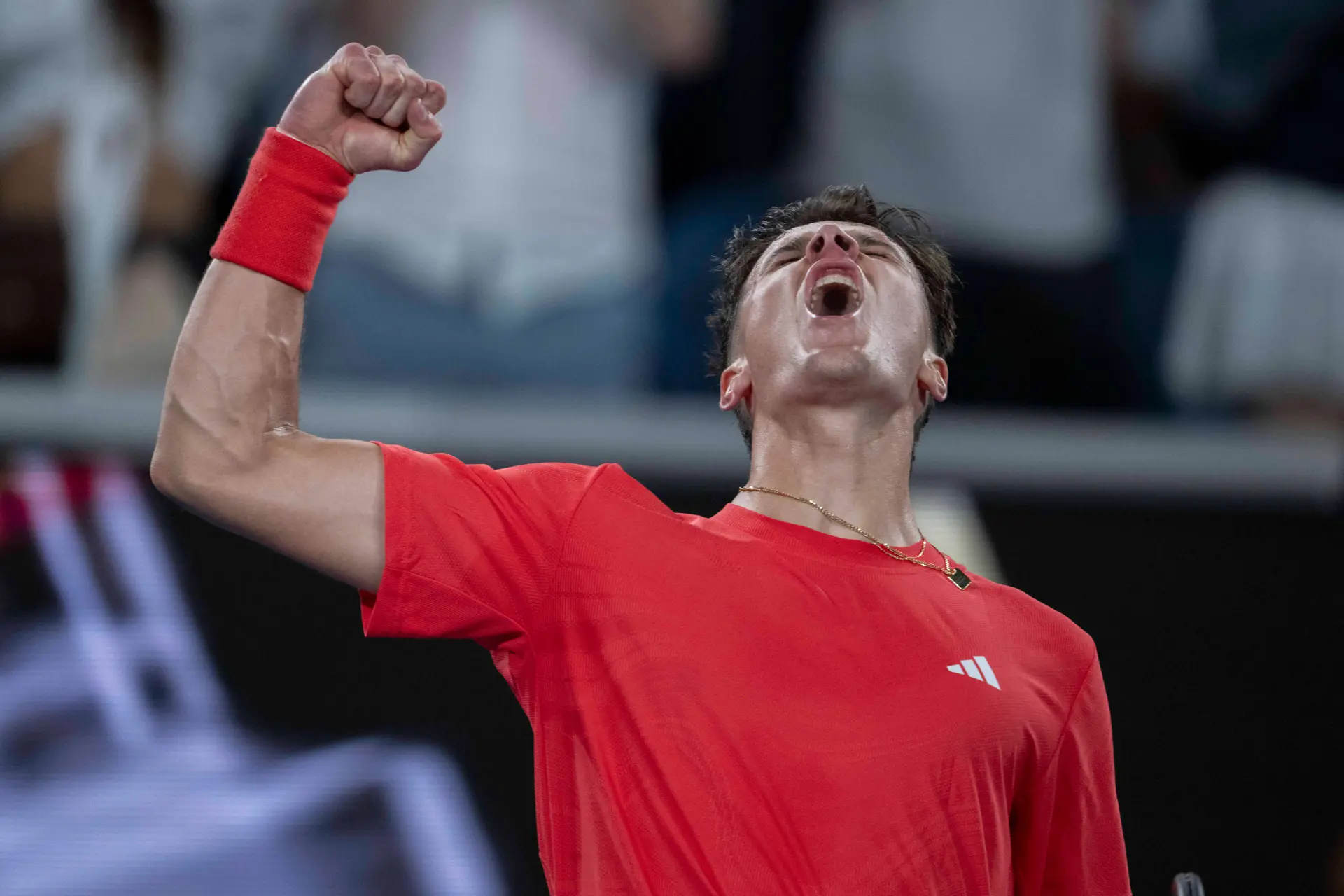
His run has arguably been the most demanding in terms of opponents, defeating names such as Alex de Minaur, Andrey Rublev, and Joao Fonseca on his way to the semifinals. Against the Brazilian, he showed he has both the quality to compete at the top level and, especially, the cold mentality in key moments, defeating the South American star in straight sets.
Mensik had never even reached the second week of a Grand Slam until earlier this year at the Australian Open (fourth round). However, this time he has gone further and reached his first Grand Slam semifinal.
His profile is defined by explosive shotmaking combined with improving endurance, now tested repeatedly across best-of-five formats. He is much less experienced than his rival, but he has already shown that he plays like a veteran in important moments—as seen in his breakthrough at Miami Open 2025, defeating Novak Djokovic in the final in two tiebreaks.

Jakub Mensik celebrates win Roland Garros 2026
Head-to-head outlook – controlled elite vs emerging force
The semifinal presents a classic generational contrast: Zverev’s established Grand Slam consistency against Mensik’s rapid rise and physical momentum through long matches in Paris.
Zverev holds clear advantages in experience, major-level consistency, and clay-court pedigree, while Mensik has shown that critical points do not weigh on him, and he has become accustomed to comebacks and maintaining concentration from start to finish. If the Czech’s serve functions as it has throughout the week, Zverev will have to expect a true marathon to prevail, and it will be a tricky opponent despite the German’s favoritism.
They have only one previous meeting, back at the Madrid Open a month ago, where Zverev took the victory in three sets, 6-4, 6-7(4), 6-3. On that occasion, when the Czech managed to push the set into a tiebreak, he ultimately could not sustain his level in the decisive moments.

Cristhián AvilaTennis Journalist
Cristhián Ávila is a tennis journalist based in Santiago, Chile, and has been part of the TennisUpToDate team since early 2023. He covers the ATP and WTA Tours as well as all four Grand Slams, producing breaking news, match reports, analysis, and regular liveblogs from major tournaments.
His reporting combines statistical analysis with clear explanation, helping readers understand tactical developments, player form, and broader storylines across the tour. Working fluently in both Spanish and English, Cristhián collaborates with an international editorial team and contributes to comprehensive global coverage. As part of his work, he has conducted interviews and media interactions with leading figures in the sport, including Caroline Wozniacki and John McEnroe.
In his journalism, Cristhián places strong emphasis on careful sourcing, editorial accuracy, and updating articles promptly when new, verified information becomes available. His coverage is grounded in research, context, and direct engagement with professional tennis.
claps 1visitors 1
Just In


Popular News

Latest Comments
- Lena... Takin' care of business
 mandoist25-10-2026
 - Can you please stop publishing this nonsense? Stick to Tennis.mandoist25-10-2026
- Does Sinner need that 4.5 mil? I doubt it. He can make that with three modelling gigs!😅🤣Rapunzel21-10-2026
- Did "People Magazine" purchase this website? This nonstop storyline is bullshit.mandoist21-10-2026
- Listen... this is of no concern to anyone but these two. Deal with your own issues -- most of us have our own. Thanks, media, for these insignificant follow-ups which are meaningless.mandoist21-10-2026
- This is so very very sad, for all three of them. I truly thought they had an unbreakable bond, but life throws up so many differing challenges. Having your homeland suffering in such a terrible way, makes happiness lose out to guilt as well. Our thoughts are with them. X💔bjsexton20-10-2026
- I have lost all respect for Svitolina! Could she not have waited until he had played at the Paris Masters!!! She is selfish and don't give a damn about Gael. That is NOT how love is demonstrated Elina!!Rapunzel19-10-2026
- Perhaps convenient tennis tour sex is not a strong enough experience in which to base a marriage?mandoist19-10-2026
- Fight the Good Fight... Tennis (sports in general) need more Humans such as yourself.mandoist18-10-2026
- When is WTA going to mandate Genetic Testing (DNA) ???mandoist18-10-2026

Loading