“Something beautiful awaits me when I return”: Carlos Alcaraz makes public appearance amid Roland Garros absence
ATP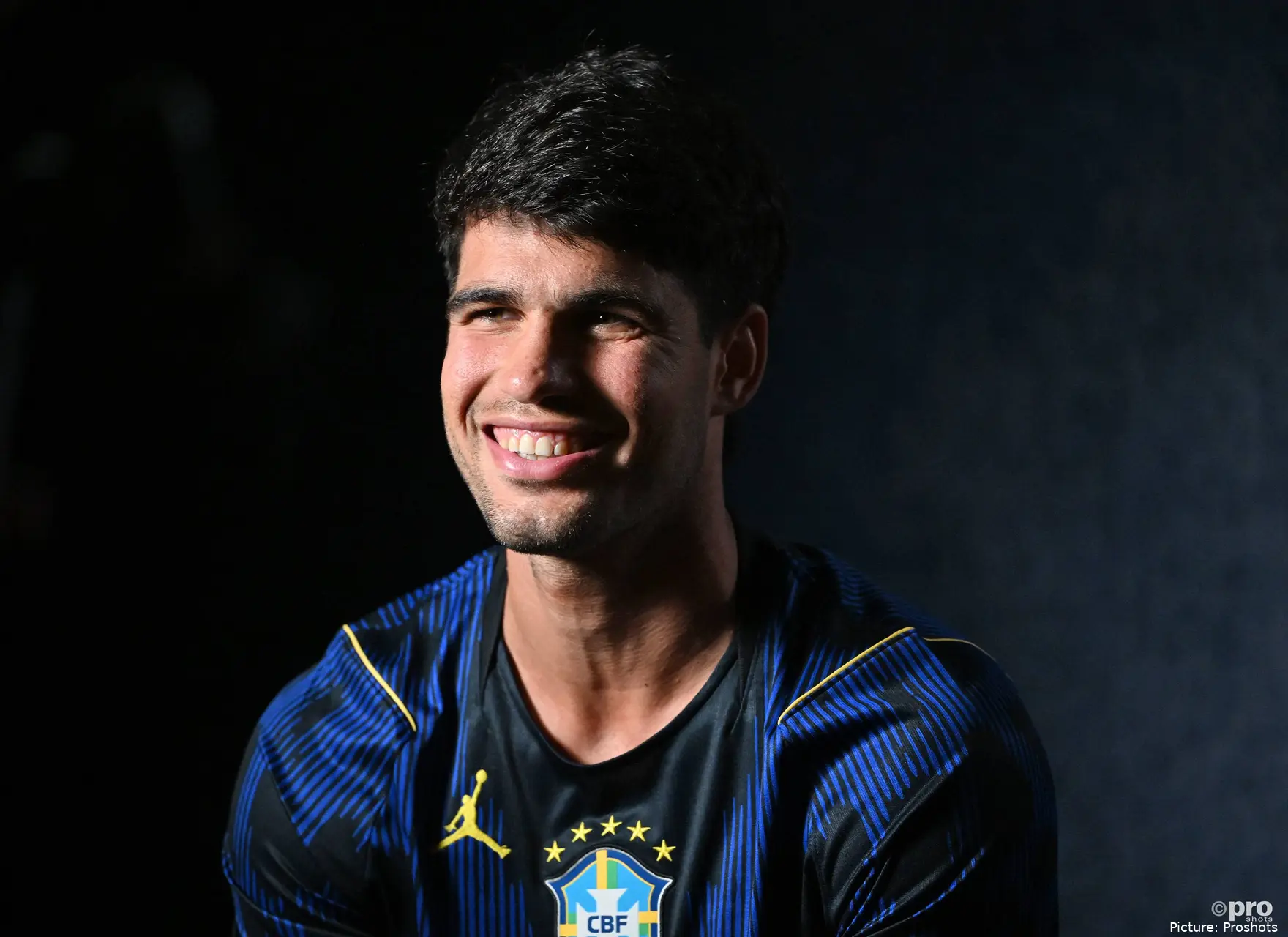
Carlos Alcaraz is following Roland Garros remotely this week while continuing recovery from a wrist injury that has left him out of competition since April and unable to defend his 2025 title at the French Open at Roland Garros. The Spanish player has been absent throughout the clay season and now the transition into grass, with no confirmed return date.
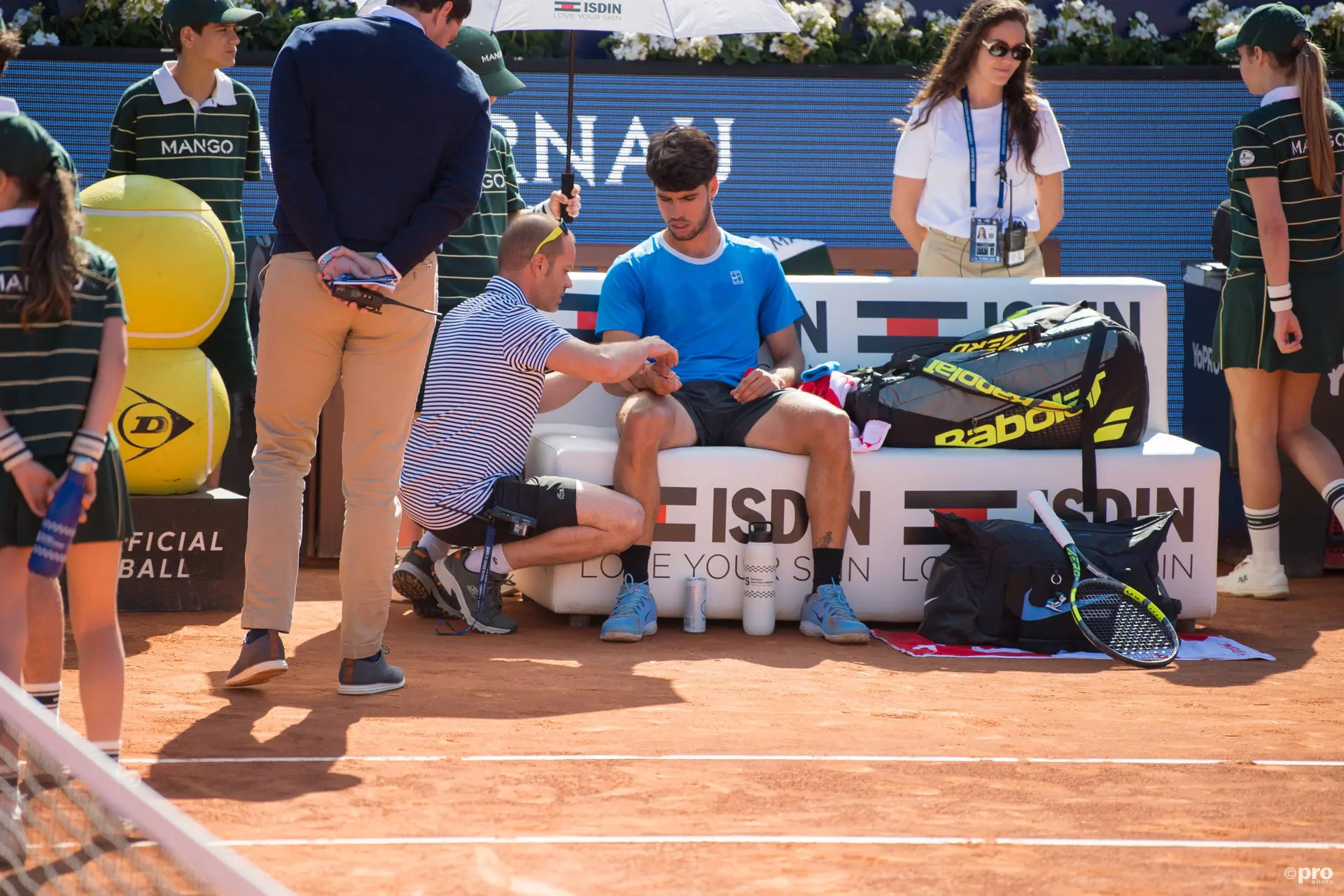
His last competitive appearance came at the Barcelona Open (Conde de Godó), where he defeated Otto Virtanen in the opening round before withdrawing prior to his second-round match against Tomáš Macháč due to the wrist issue. That withdrawal triggered a wider absence from Madrid, Rome and Roland Garros.
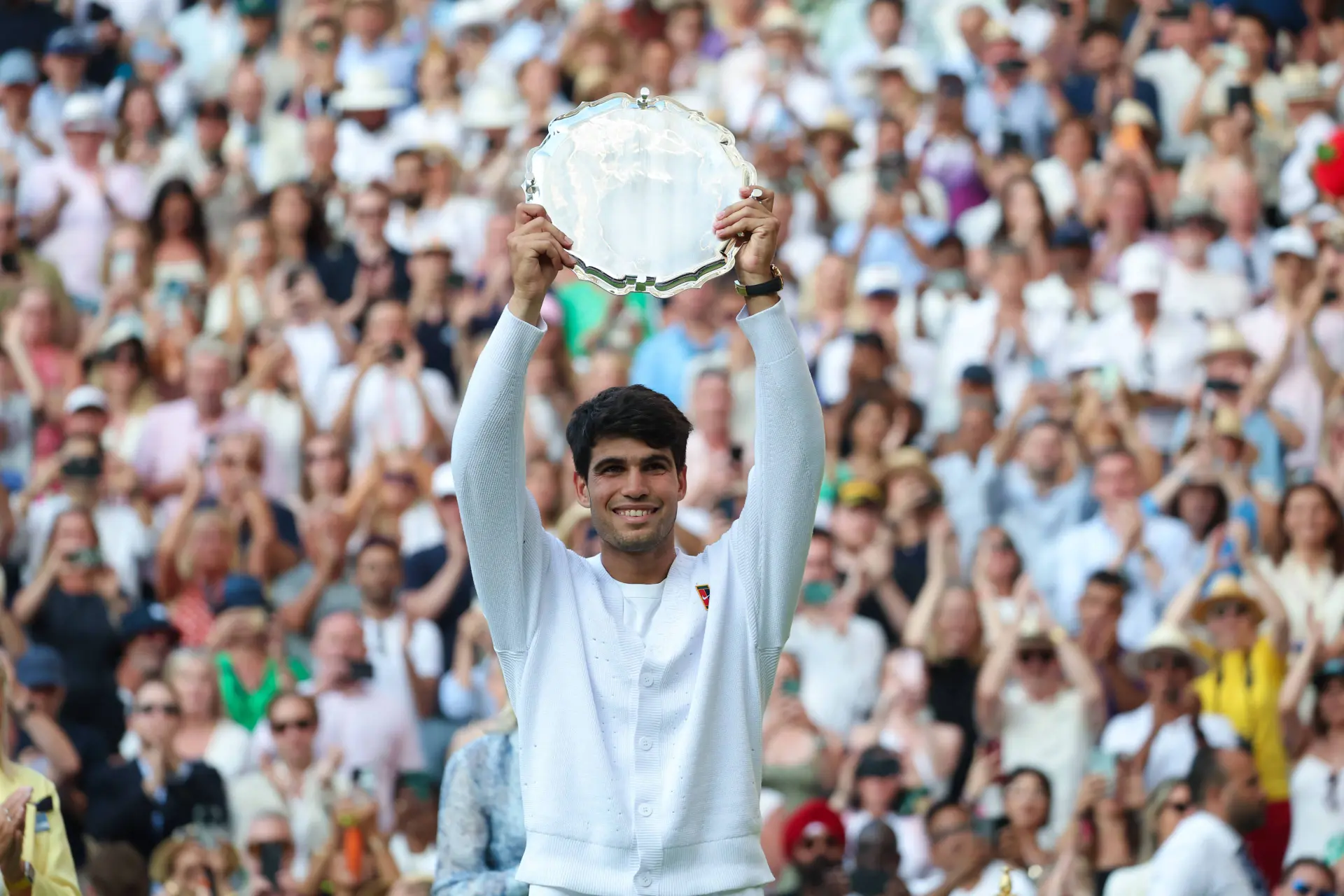
A week earlier, Alcaraz also confirmed he would not compete at Wimbledon, where he was champion in 2023 and 2024 and reached the final in 2025. The decision effectively removed him from a surface where he had established recent dominance on the ATP Tour.
On Tuesday, Alcaraz reappeared publicly at the Princesa de Girona “Congrefest” in Murcia, an event attended by Spain’s King Felipe VI. The appearance marked his first detailed public reflection since the start of his injury layoff, while he continues rehabilitation without a defined return timeline.
Watching Roland Garros from distance: absence during the season’s defining phase
Alcaraz’s current absence coincides with Roland Garros, a tournament that has become central to his career progression in recent seasons. His inability to compete has shifted him from participant to observer during one of the most important stages of the tennis calendar.
He described the experience of following matches and results from home as emotionally complex, combining frustration with acceptance of circumstance. The separation from competition has also affected his daily competitive rhythm, which is normally structured around tournament preparation.

Carlos Alcaraz attends a press conference to announce his withdrawal from the 2026 Barcelona Open
“From home I’m watching everything, I’m watching my rivals compete, the tournaments I would like to be playing in but I cannot. But, in the end, everything happens for a reason. I think it is destiny, and life will have something prepared for me when I come back, something beautiful, I hope.”
He also emphasised the reality of being physically unable to enter tournaments he normally targets, reinforcing the competitive gap created by injury. “I cannot play the tournaments I want. I’m watching my rivals compete, the tournaments I would like to be playing in but I cannot.”
Murcia appearance: recovery, patience and long-term perspective
At the Princesa de Girona Congrefest in Murcia, Alcaraz addressed his current situation in a public setting focused on youth development and leadership. The event, attended by King Felipe VI, provided a platform for reflection rather than competitive updates.
Alcaraz focused on motivation during recovery, highlighting daily training as a substitute for match competition while he works through rehabilitation. His emphasis remained on long-term improvement rather than immediate return.
“In my case, what motivates me is going every day to the tennis court or the gym, with huge excitement to try to give my best and improve so that it shows on court. I thank the version of myself from six or seven years ago for doing everything possible every day.”
He also revisited his early development, contrasting his current approach with his teenage mindset, where impatience dominated his relationship with results and progress. “When I was 14 I had zero patience, I wanted things from one day to the next, I wanted to win all the time, but the beautiful thing is the process.”
Alcaraz concluded his intervention with a broader message about ambition and acceptance of uncertainty, aimed primarily at younger audiences present at the event. “Think big, dream big, go for it with excitement and enjoy the process. Whatever happens, whether you achieve it or not.”
The message from Carlos Alcaraz to young people 💭
— Alcaraz Updates🐝 (@alcarazzupdates) May 26, 2026
"Think big, dream big, go for it with passion" pic.twitter.com/eowvvkd1NF
Uncertain return timeline after Wimbledon withdrawal
Despite speculation around a potential return during the North American hard-court swing, Alcaraz has not set a confirmed date for his comeback. His absence from Wimbledon, where he has been champion twice and reached the final last year, underlines the scale of the interruption.
The focus now remains on recovery progression rather than tournament scheduling. His absence from Roland Garros and Wimbledon marks the first extended break from Grand Slam competition during a phase in which he had been a consistent contender. For now, his competitive position remains static, with rehabilitation and physical response to training loads determining the next step in his season.

Cristhián AvilaTennis Journalist
Cristhián Ávila is a tennis journalist based in Santiago, Chile, and has been part of the TennisUpToDate team since early 2023. He covers the ATP and WTA Tours as well as all four Grand Slams, producing breaking news, match reports, analysis, and regular liveblogs from major tournaments.
His reporting combines statistical analysis with clear explanation, helping readers understand tactical developments, player form, and broader storylines across the tour. Working fluently in both Spanish and English, Cristhián collaborates with an international editorial team and contributes to comprehensive global coverage. As part of his work, he has conducted interviews and media interactions with leading figures in the sport, including Caroline Wozniacki and John McEnroe.
In his journalism, Cristhián places strong emphasis on careful sourcing, editorial accuracy, and updating articles promptly when new, verified information becomes available. His coverage is grounded in research, context, and direct engagement with professional tennis.
claps 0visitors 0
Just In


Popular News
Latest Comments
- No more bullshit "Wildcards" to these two. Qualify like everyone else -- there will be cameras there, too. Time to scream... WTF ????!!!!
 mandoist29-09-2026
 - Let's not BS the general public -- Sabalenka started showing cracks in her game last season. Her losses and near-losses started at about the same time she began being distracted by Fame (constant Selfies, making TV commercials, magazine shoots, endless Social Media nonsense, etc., etc.) One would think even Saba could recognize the parallels with others who failed before her -- Raducanu, Giorgi, Bouchard to name a few.mandoist25-09-2026
- Gross!! Hey Raducanu, Giorgi, and Bouchard -- reserve a seat at your Social Media Selfie table for Saba + Naomi. They're heading in your direction soon enough.mandoist24-09-2026
- And then these same players will complain about how lengthy their season’s were and need more time-off. I’m all for more tennis but the amount of tennis we get now is actually kind of crazy! We all need a break, especially the players.DaveyWavey23-09-2026
- You should do a comparison article for "different kinds of justice" the courts decide for tennis players. I can think of at least three players who received very small bans of a few months, however Tara Moore has been fighting for her literal survival the past few years. It seems odd considering she is not a "name" player, unlike the other cases.DaveyWavey22-09-2026
- PRIZE MONEY & POINTS Winner - $185,500 Finalist - $114,500 Semi-Finalist - $66,003 Quarter-Finalist - $35,000 Round of 16 - $18,045 Round of 32 - $13,005 Winner - 500 Finalist - 325 Semi-Finalist - 195 Quarter-Finalist - 108 Round of 16 - 60 Round of 32 - 1DaveyWavey20-09-2026
- Pegula withdrew from this Singapore event
 tennishappens19-09-2026
 - Serena Williams chose her tournaments. It's not such a bad idea.MuswellHillbilly17-09-2026
- This child is just too fragile. Step away from tennis for a year. Get healthy, get fit; train hard;ranking be damned, and come back as strong contender. Anisimova did it. So can Emma.Rapunzel17-09-2026
- Double standards, what can be said!? Venus is p**ing on media and public. Can't face defeat. Cowerdness! Shouldn't be given any other wild cards ever. That's gross disrespect.DragosJacob16-09-2026

Loading