“The door’s opened up”: John McEnroe sees better Djokovic chances at Roland Garros amid Alcaraz absence
ATP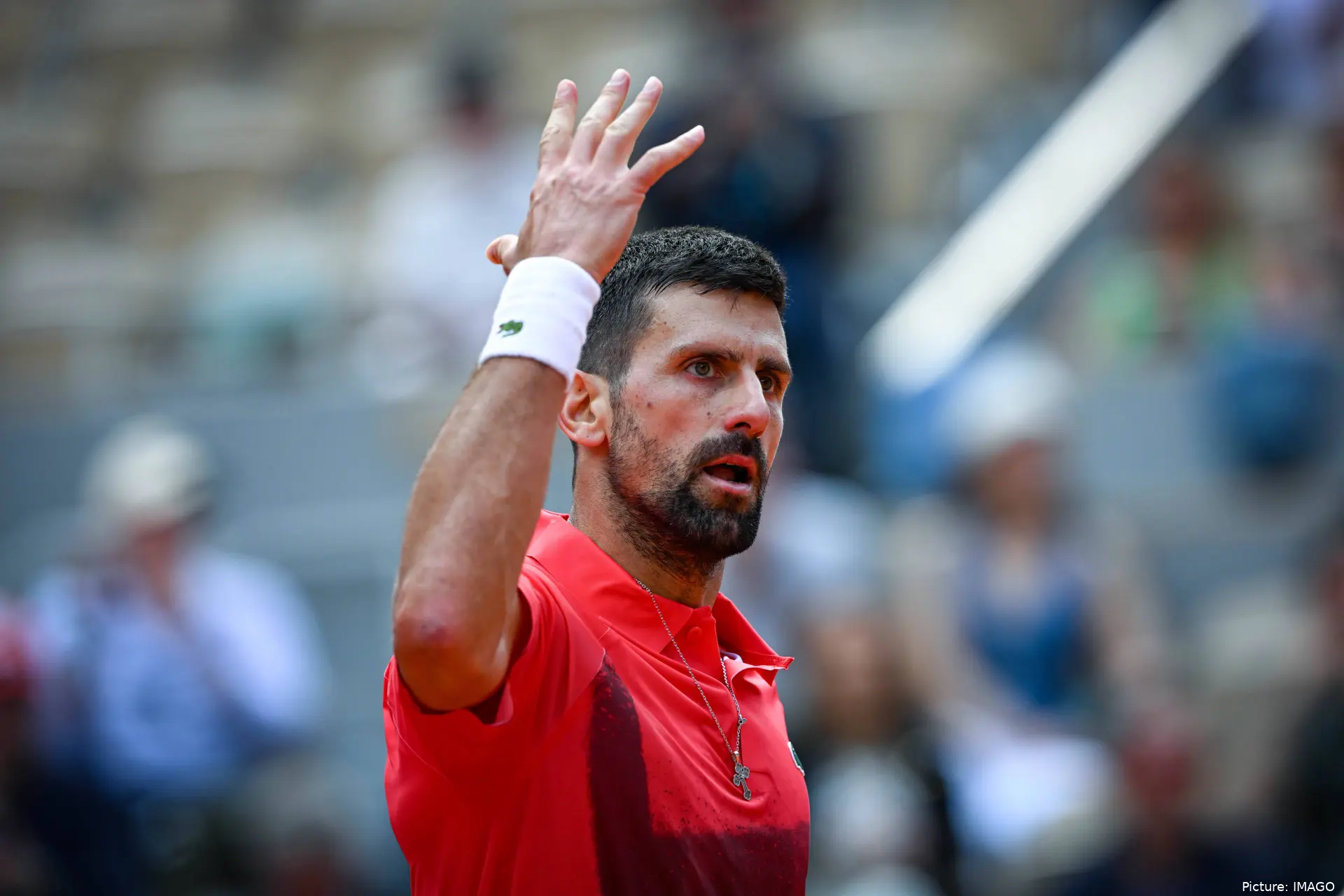
John McEnroe believes Novak Djokovic’s chances of capturing a 25th Grand Slam title have improved in the context of an increasingly open men’s field heading into Roland Garros 2026. The former world No. 1 specifically pointed to the absence of Carlos Alcaraz as a structural change in the competitive landscape. In his view, the draw has lost one of its most decisive forces on clay.
The American described the situation as one where the “door’s opened up obviously more” not only for Djokovic, but also for players such as Alexander Zverev and other established contenders. His assessment places Djokovic firmly within a reduced group of realistic title challengers, even if the broader hierarchy still favours the very top performers of the current tour.
McEnroe was explicit in framing Jannik Sinner as the central reference point in men’s tennis at present. While acknowledging the openness of the field, he still positioned Sinner as the player to beat. Djokovic, however, remains part of the secondary tier of elite contenders capable of exploiting any disruption in the expected tournament structure.
The Serbian, now operating in a stage of his career where Grand Slam opportunities are increasingly finite, has been repeatedly evaluated in terms of surface-specific advantages. McEnroe’s latest comments reinforce that Roland Garros 2026 may not be his most favourable environment, but it is now part of a broader window of opportunity created by shifts in the competitive order.
Read also
Roland Garros 2026 field dynamics
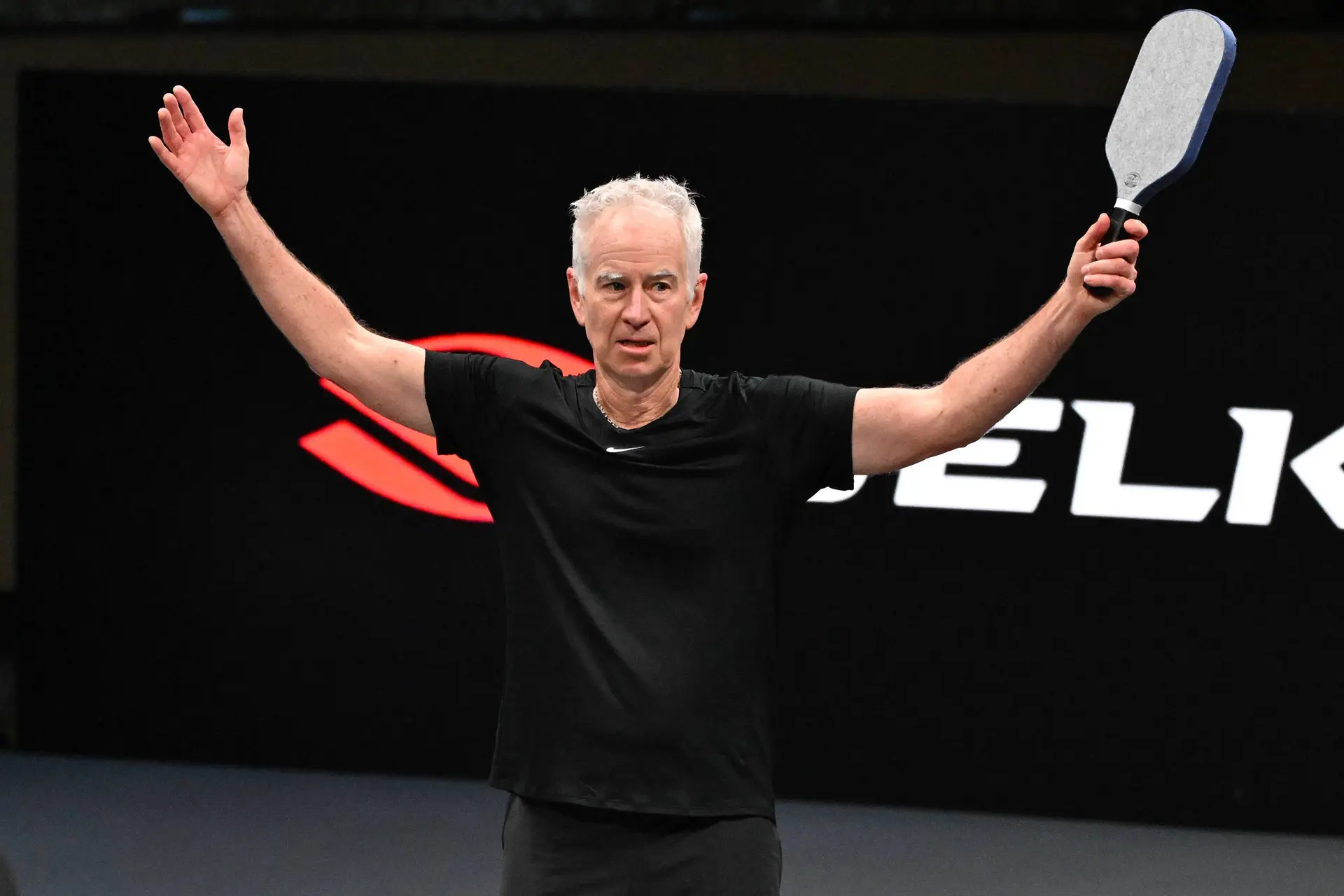
McEnroe’s central argument is not framed around a decline in Djokovic’s level, but around the redistribution of winning probability across the draw. The absence of Carlos Alcaraz removes a major clay-court reference point, particularly in five-set contexts where he has previously shown consistency. This structural change, according to McEnroe, increases variance in outcome.
“You’d have to say that when it looked even bleaker that he’d win another [major], the door’s opened up obviously more for [Djokovic] as well as [Alexander] Zverev, for example, and others that have been struggling,” McEnroe said to Forbes.
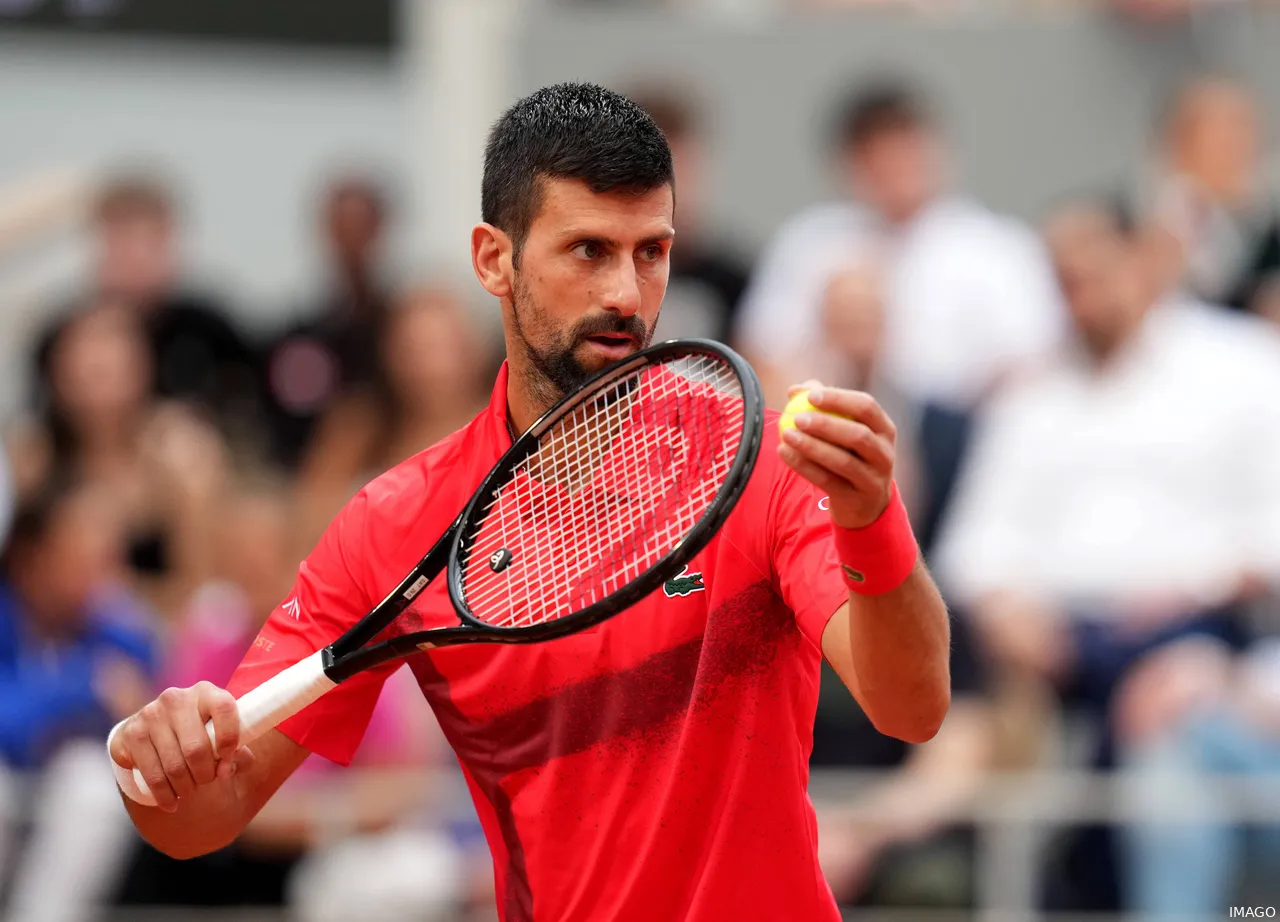
This interpretation places Djokovic in a group of players whose chances are no longer constrained by a dominant two-man rivalry at the top. Instead, the competition becomes more distributed, with matchups and momentum playing a larger role in determining progression through the draw.
“You talk about wide open in a way, other than the obvious guy Sinner," McEnroe said. “But to me ultimately it’s Sinner against the field, I’d take Sinner right now. But it does open the door for a bunch of other guys to make runs they weren’t ever going to potentially going to make.”
Djokovic’s profile and surface context
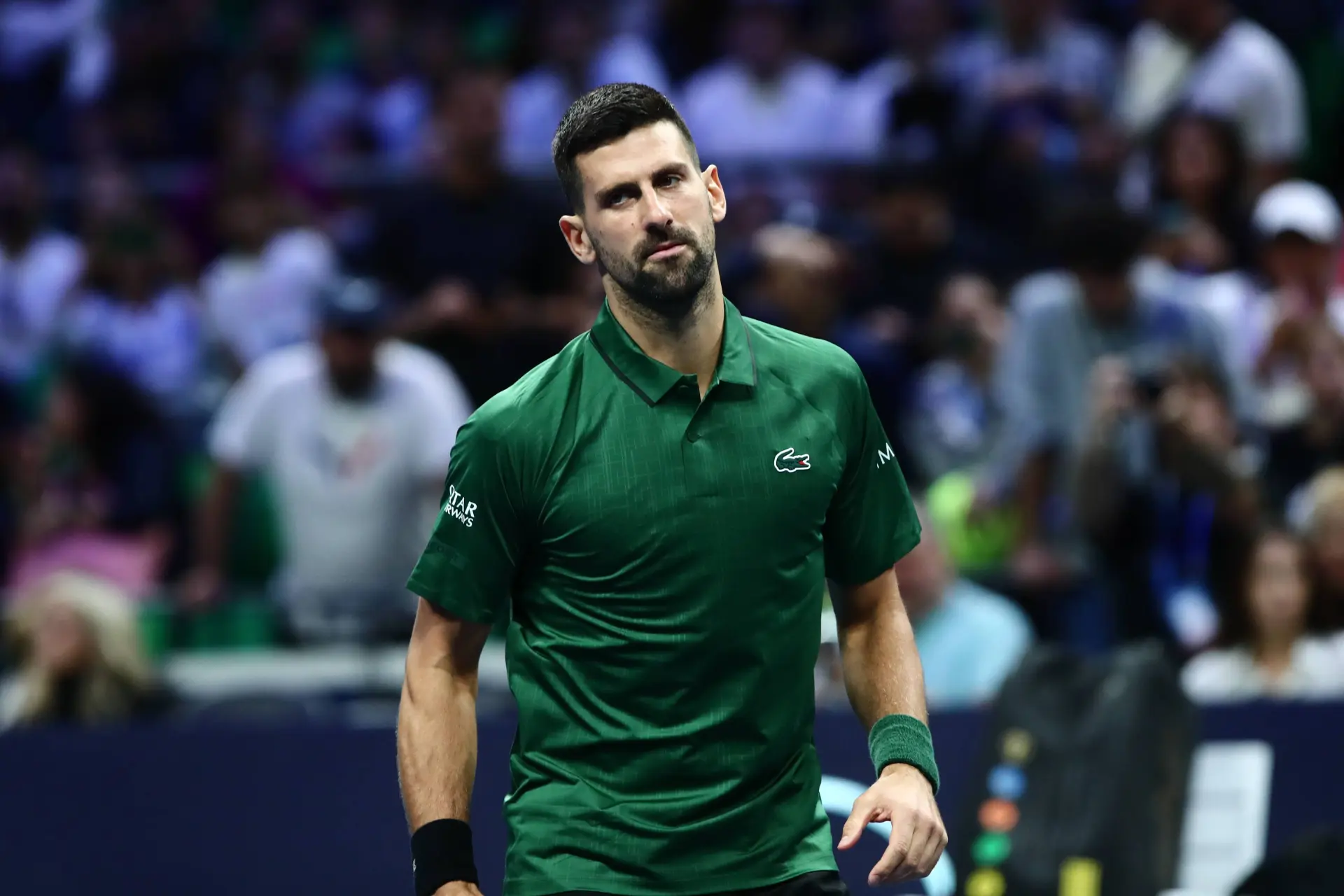
Beyond tournament dynamics, McEnroe’s assessment also focused on Djokovic’s tactical profile and historical adaptability. At this stage of his career, the Serbian’s Grand Slam competitiveness is increasingly tied to surface efficiency, match length control, and point construction under pressure.
“I can see that, absolutely,” McEnroe said of Djokovic’s chances on the grass. “He’s got that expertise, he knows that, he’s done that. The points are shorter. So I’d say that’s his best bet at this point.”

While this comment specifically referenced grass, it indirectly highlights a broader analytical point: Djokovic’s most efficient pathways to titles are now tied to environments that reduce physical load and maximise tactical control.
Roland Garros, by contrast, remains the most physically demanding Grand Slam. However, McEnroe’s broader thesis suggests that the absence of certain rivals increases Djokovic’s relative competitiveness even in less optimal conditions. The implication is not that he becomes the favourite, but that his probability curve improves in a less concentrated field.
Within that context, Djokovic’s pursuit of a 25th Grand Slam title remains mathematically open, but increasingly dependent on draw dynamics, recovery management, and the performance volatility of his main rivals.

Cristhián AvilaTennis Journalist
Cristhián Ávila is a tennis journalist based in Santiago, Chile, and has been part of the TennisUpToDate team since early 2023. He covers the ATP and WTA Tours as well as all four Grand Slams, producing breaking news, match reports, analysis, and regular liveblogs from major tournaments.
His reporting combines statistical analysis with clear explanation, helping readers understand tactical developments, player form, and broader storylines across the tour. Working fluently in both Spanish and English, Cristhián collaborates with an international editorial team and contributes to comprehensive global coverage. As part of his work, he has conducted interviews and media interactions with leading figures in the sport, including Caroline Wozniacki and John McEnroe.
In his journalism, Cristhián places strong emphasis on careful sourcing, editorial accuracy, and updating articles promptly when new, verified information becomes available. His coverage is grounded in research, context, and direct engagement with professional tennis.
claps 0visitors 0
Just In

Popular News
Latest Comments
- A healthy Qinwen may be hard to stop next season. She was already scaring her opponents before her medical leave(s). Unfortunately, Zheng insisted on singing again. On the positive side -- Mirra did not sing!! ;~}
 mandoist11-10-2026
 - Where is it written that athletes, entertainers... People in general... are mandated to keep looking at -- or even using [anti]Social Media? Public & private figures consistently complain and reveal their concerns about negativity and violence thrown at them -- yet they insist on participating. Avoid it, don't use it, don't read it. It's okay to occasionally look up at the World instead beating your eyes & thumbs to death on The Inventions out there.mandoist11-10-2026
- great articlestennisseserver07-10-2026
- Medvedev was leading Djokovic 7-5, 3-5 when an attempted return..' NO you ignorants, Djokovic was leading .weiss05-10-2026
- No more bullshit "Wildcards" to these two. Qualify like everyone else -- there will be cameras there, too. Time to scream... WTF ????!!!!mandoist29-09-2026
- Let's not BS the general public -- Sabalenka started showing cracks in her game last season. Her losses and near-losses started at about the same time she began being distracted by Fame (constant Selfies, making TV commercials, magazine shoots, endless Social Media nonsense, etc., etc.) One would think even Saba could recognize the parallels with others who failed before her -- Raducanu, Giorgi, Bouchard to name a few.mandoist25-09-2026
- Gross!! Hey Raducanu, Giorgi, and Bouchard -- reserve a seat at your Social Media Selfie table for Saba + Naomi. They're heading in your direction soon enough.mandoist24-09-2026
- And then these same players will complain about how lengthy their season’s were and need more time-off. I’m all for more tennis but the amount of tennis we get now is actually kind of crazy! We all need a break, especially the players.DaveyWavey23-09-2026
- You should do a comparison article for "different kinds of justice" the courts decide for tennis players. I can think of at least three players who received very small bans of a few months, however Tara Moore has been fighting for her literal survival the past few years. It seems odd considering she is not a "name" player, unlike the other cases.DaveyWavey22-09-2026
- PRIZE MONEY & POINTS Winner - $185,500 Finalist - $114,500 Semi-Finalist - $66,003 Quarter-Finalist - $35,000 Round of 16 - $18,045 Round of 32 - $13,005 Winner - 500 Finalist - 325 Semi-Finalist - 195 Quarter-Finalist - 108 Round of 16 - 60 Round of 32 - 1DaveyWavey20-09-2026

Loading