"They gave him a contract and he had to answer in 48 hours": Toni Nadal lifts lid on Alcaraz and Ferrero’s shock separation
ATP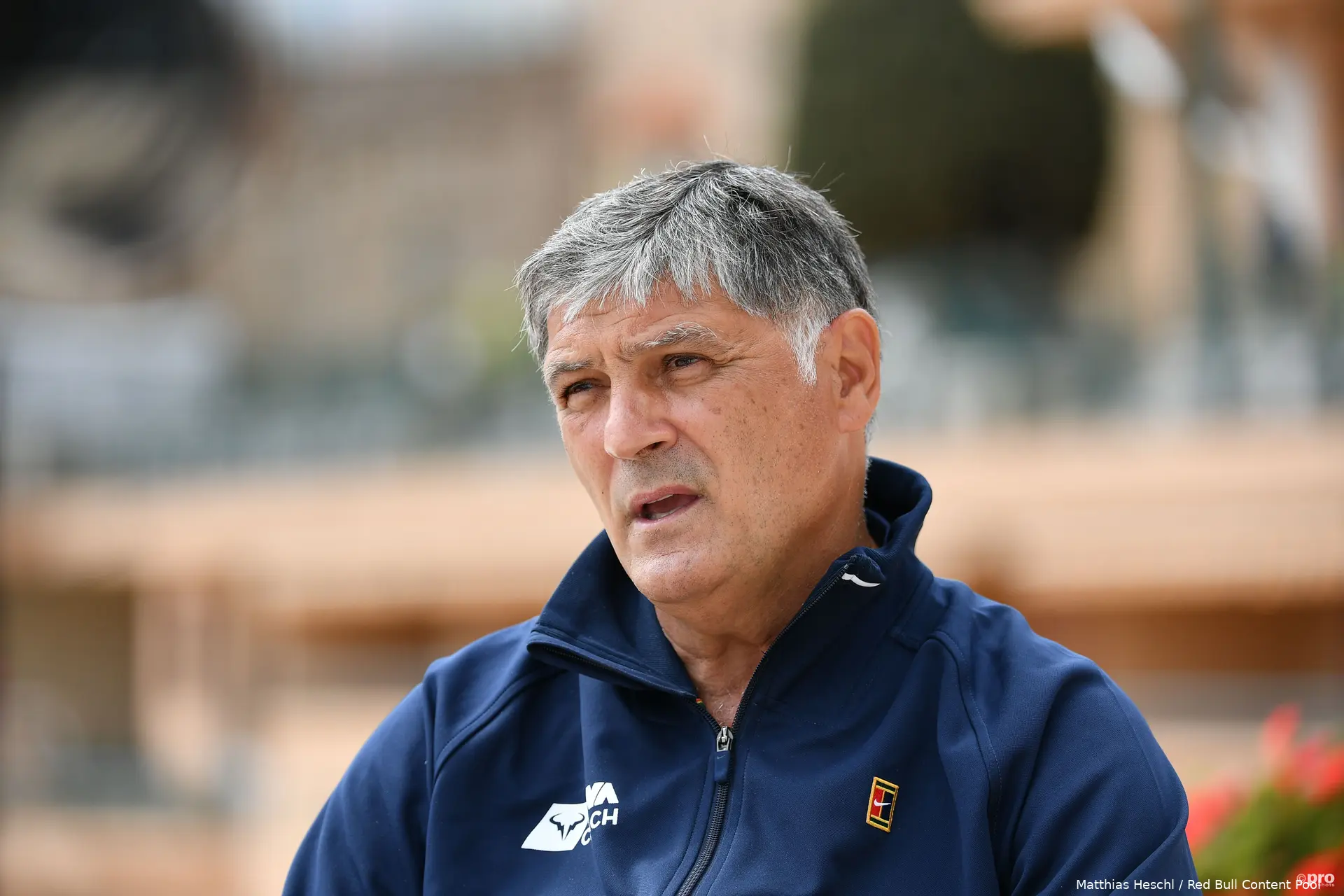
The tennis world is still reeling from the sudden separation between World No. 1 Carlos Alcaraz and Juan Carlos Ferrero. Following a season defined by 71 victories and a dominance that yielded six Grand Slam titles over their tenure, the split has drawn sharp analysis from industry veterans. Toni Nadal, uncle and former coach of Rafael Nadal, offered a particularly candid assessment of the situation durign an interview with Clay Magazine.
Nadal expressed visible surprise at the reported manner of the dissolution. He highlighted the jarring nature of the negotiations, which allegedly involved strict deadlines inconsistent with a seven-year partnership. For an expert observer like Nadal, the logistical friction suggests a breakdown that goes beyond the practice court, hinting at administrative pressures that may have forced the hand of the young Murcian just days before the new season commences.
The dynamic between a player and coach evolves drastically as a junior prospect transforms into a global icon. Alcaraz is no longer just the promising 15-year-old who arrived at the Equelite academy; he is a multinational corporation with vast commercial interests. Nadal points to this evolution as a critical friction point, noting that as "Carlos becomes a global figure," the hierarchy inevitably shifts, often displacing the original mentor who once held absolute authority.
Despite the controversy surrounding the methodology, Nadal insists that the player’s autonomy remains the governing principle of the sport. Unlike team sports where the manager holds absolute authority, tennis operates on a unique model where the athlete is the employer. He emphasized that ultimately, "nothing is done without Carlos' approval," reinforcing that the decision, however influenced by external factors, rests on the shoulders of the reigning World No. 1.
Contract deadlines and structural anomalies
The most startling detail emerging from Nadal’s analysis concerns the alleged timeframe given to Ferrero to accept new terms. It paints a picture of a relationship that, despite its historic success, had likely become transactional and rigid. Nadal questioned the logic of applying such pressure to a long-term mentor, suggesting it reflects a cold corporate strategy rather than a sporting decision. He criticized the reported ultimatum regarding the contract renewal:
"They told me they gave him a contract and he had to answer in 48 hours. It's a bit strange after a relationship of seven years that they rush you to take those decisions."

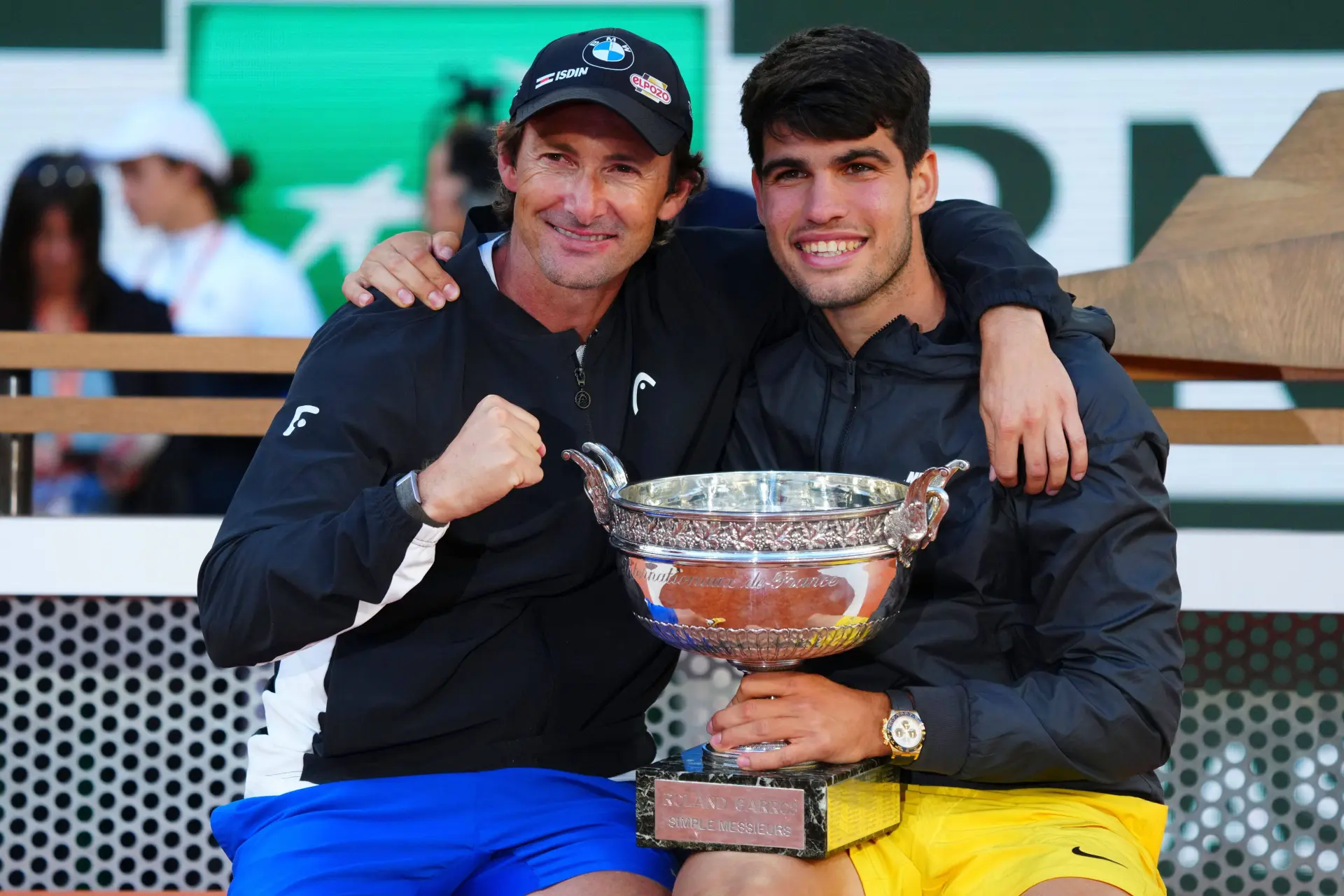
Carlos Alcaraz and Juan Carlos Ferrero.
Nadal also elaborated on the specific idiosyncrasies of tennis coaching that facilitate these abrupt departures. In team sports, the coach dictates the culture; in tennis, the coach is a facilitator who must align with the player's personal and professional trajectory. When those paths diverge, the separation is often swift and brutal. Nadal highlighted this structural vulnerability, noting that eventually, it becomes "difficult to combine things".
"The difference is very clear, usually coaches, by age, are the ones who decide. In the case of tennis, the coach accompanies where the player wants to go. And it is difficult, there comes a point where it is difficult to combine things."
The battle for control and future outlook
The transition from a mentorship to a professional partnership involves a complex power struggle involving family and agents. When Ferrero began working with Alcaraz, he was the authority figure guiding a teenager; today, Alcaraz is the centerpiece of a massive operation. Nadal observes that this shift invites new stakeholders, including parents and family members, who naturally seek to protect the player's expanding interests and assert influence over the team's direction.
"As the years pass and Carlos becomes a global figure, I suppose they [the Alcarazes] want to have control of what was happening. Before, Juan Carlos could decide on and off the court, but then I suppose the parents, the family, Alcaraz himself and everyone wanted to get involved because there is a lot at stake."
Despite the noise surrounding the split, Nadal remains optimistic about Alcaraz’s immediate future on the court. He believes the technical and mental groundwork laid by Ferrero is sufficiently robust to withstand a change in leadership. With Samuel Lopez stepping in, the continuity of the Spanish style is assured. Nadal gives credit to the work already done, suggesting the momentum will carry the World No. 1 forward: "Juan Carlos did a very good job on the court. I think everything will remain the same, the foundations are well established."

Cristhián AvilaTennis Journalist
Cristhián Ávila is a tennis journalist based in Santiago, Chile, and has been part of the TennisUpToDate team since early 2023. He covers the ATP and WTA Tours as well as all four Grand Slams, producing breaking news, match reports, analysis, and regular liveblogs from major tournaments.
His reporting combines statistical analysis with clear explanation, helping readers understand tactical developments, player form, and broader storylines across the tour. Working fluently in both Spanish and English, Cristhián collaborates with an international editorial team and contributes to comprehensive global coverage. As part of his work, he has conducted interviews and media interactions with leading figures in the sport, including Caroline Wozniacki and John McEnroe.
In his journalism, Cristhián places strong emphasis on careful sourcing, editorial accuracy, and updating articles promptly when new, verified information becomes available. His coverage is grounded in research, context, and direct engagement with professional tennis.
claps 0visitors 0
Just In

Popular News
Latest Comments
- A healthy Qinwen may be hard to stop next season. She was already scaring her opponents before her medical leave(s). Unfortunately, Zheng insisted on singing again. On the positive side -- Mirra did not sing!! ;~}
 mandoist11-10-2026
 - Where is it written that athletes, entertainers... People in general... are mandated to keep looking at -- or even using [anti]Social Media? Public & private figures consistently complain and reveal their concerns about negativity and violence thrown at them -- yet they insist on participating. Avoid it, don't use it, don't read it. It's okay to occasionally look up at the World instead beating your eyes & thumbs to death on The Inventions out there.mandoist11-10-2026
- great articlestennisseserver07-10-2026
- Medvedev was leading Djokovic 7-5, 3-5 when an attempted return..' NO you ignorants, Djokovic was leading .weiss05-10-2026
- No more bullshit "Wildcards" to these two. Qualify like everyone else -- there will be cameras there, too. Time to scream... WTF ????!!!!mandoist29-09-2026
- Let's not BS the general public -- Sabalenka started showing cracks in her game last season. Her losses and near-losses started at about the same time she began being distracted by Fame (constant Selfies, making TV commercials, magazine shoots, endless Social Media nonsense, etc., etc.) One would think even Saba could recognize the parallels with others who failed before her -- Raducanu, Giorgi, Bouchard to name a few.mandoist25-09-2026
- Gross!! Hey Raducanu, Giorgi, and Bouchard -- reserve a seat at your Social Media Selfie table for Saba + Naomi. They're heading in your direction soon enough.mandoist24-09-2026
- And then these same players will complain about how lengthy their season’s were and need more time-off. I’m all for more tennis but the amount of tennis we get now is actually kind of crazy! We all need a break, especially the players.DaveyWavey23-09-2026
- You should do a comparison article for "different kinds of justice" the courts decide for tennis players. I can think of at least three players who received very small bans of a few months, however Tara Moore has been fighting for her literal survival the past few years. It seems odd considering she is not a "name" player, unlike the other cases.DaveyWavey22-09-2026
- PRIZE MONEY & POINTS Winner - $185,500 Finalist - $114,500 Semi-Finalist - $66,003 Quarter-Finalist - $35,000 Round of 16 - $18,045 Round of 32 - $13,005 Winner - 500 Finalist - 325 Semi-Finalist - 195 Quarter-Finalist - 108 Round of 16 - 60 Round of 32 - 1DaveyWavey20-09-2026

Loading