“We should have spaces without being filmed”: Carlos Alcaraz warns over cameras at Monte-Carlo
ATPMonday, 06 April 2026 at 02:30
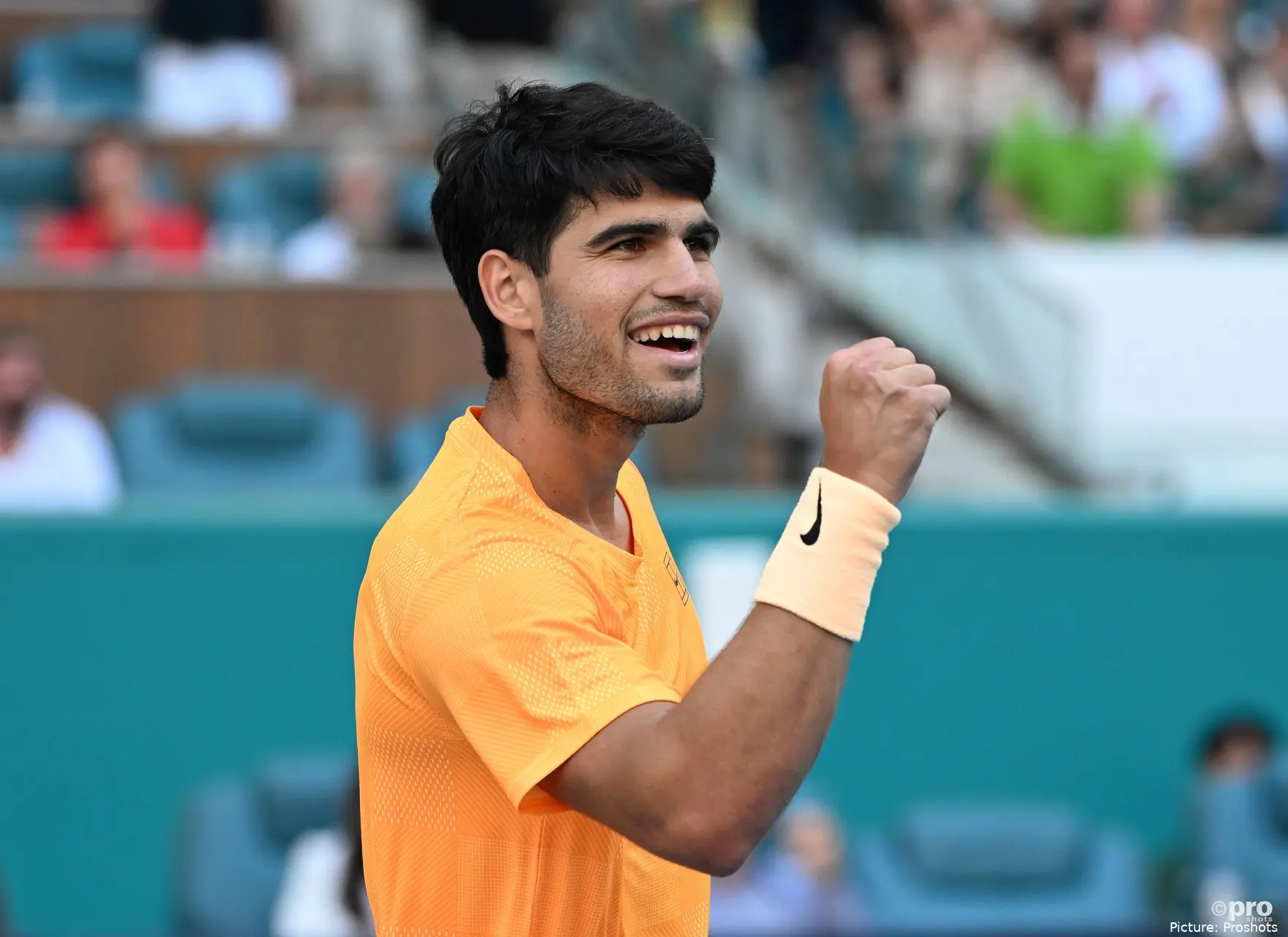
Carlos Alcaraz used his appearance at the Monte-Carlo Masters Media Day to raise concerns over the growing presence of behind-the-scenes cameras on tour, describing the current level of access as excessive. The world No. 1 warned that players are increasingly exposed in spaces that were previously considered private, calling for clearer limits as broadcast coverage continues to expand across ATP events.
His comments come as he prepares to begin his clay-court campaign in Monte Carlo, where he arrives as the defending champion. The tournament marks a key transition point in the season, shifting from hard courts to clay, a surface that demands greater physical endurance and tactical variation, areas where Alcaraz has consistently been among the most effective players on tour.
The Spaniard enters the European clay swing following an uneven start to 2026 by his standards, making this stretch particularly significant in re-establishing momentum. Monte Carlo, Barcelona, Madrid and Rome form a condensed sequence, with ranking implications and Roland Garros preparation closely tied to results across these events.
Alcaraz nevertheless framed his immediate focus around internal factors rather than external expectations, stressing the importance of rhythm and match readiness. His early sessions on clay have centred on adaptation and timing, as he looks to rebuild comfort on the surface before shifting attention fully to competition.
Privacy concerns emerge as cameras expand on tour
Alcaraz was direct when addressing the increasing presence of cameras inside tournament facilities, acknowledging their value for fans while highlighting the impact on players. He noted that access has extended into areas that were previously informal, changing how players experience time away from the court.
While he recognised the benefits of greater transparency for audiences, he pointed to a growing lack of spaces where players can disconnect. The constant awareness of being filmed, he suggested, has altered routines and reduced opportunities for recovery and mental reset during tournaments.
“For the fans it’s great. They love seeing what happens behind the scenes, what we do, what the facilities inside the tournaments are like. But for the players it’s a bit strange, because we no longer have anywhere to relax, because we are constantly thinking that there are cameras and that everyone is watching us.”
He went further in outlining what he considers excessive access, particularly when it extends into personal moments. His comments reflect a broader discussion on tour regarding the balance between entertainment and privacy as media coverage continues to evolve.
“Having cameras so close, being able to see what we are looking at on our phones, seems excessive to me. We already don’t have much privacy in tournaments, and I think this is too much. We should have spaces where we can be alone without being filmed.”
Read also
Clay return, routines and a demanding schedule ahead
Alongside the off-court discussion, Alcaraz spoke about his return to clay, a surface he described as central to his game. His preparation has focused on regaining rhythm, with early training sessions aimed at rebuilding movement patterns and timing after the hard-court swing.
He also referenced small routines that remain part of his weekly preparation, including habits that carry over from previous editions of tournaments. These details, while not decisive, form part of a structured approach that supports consistency across a long season.
“I miss clay every time the season ends. I miss it a lot. It had been a long time since I last played on clay, so it was already feeling endless. The first sessions I had were to get back into rhythm, to tell myself: ‘That’s it, it’s time to get my socks dirty again’. Honestly, it’s an incredible feeling to be back on clay.”
Despite arriving as defending champion, Alcaraz downplayed the relevance of past results, instead focusing on his current level. His approach centres on preparation and physical condition rather than external expectations linked to ranking or titles.
“It’s a new year, new feelings, new things to improve, new things I’m thinking about in training and in matches. I’m going to try to prepare myself as well as possible for the first match and for next week. I’m not thinking about defending a title. It’s about how I feel, and right now I’m just trying to have good sensations.”
He confirmed a full clay-court schedule, with Monte Carlo, Barcelona, Madrid and Rome forming the core of his campaign. While acknowledging the physical and mental demands of the stretch, he indicated that managing his body across consecutive tournaments will be the priority.
“Monte Carlo, Barcelona, Madrid, Rome… that’s the idea. It’s very demanding physically and mentally. The week in Barcelona is perhaps when I should rest, but Barcelona is a very important tournament for me. I feel something special there; I was already playing there when I was under 14, I have many friends there, I play at home, so it’s always special.”

Cristhián AvilaTennis Journalist
Cristhián Ávila is a tennis journalist based in Santiago, Chile, and has been part of the TennisUpToDate team since early 2023. He covers the ATP and WTA Tours as well as all four Grand Slams, producing breaking news, match reports, analysis, and regular liveblogs from major tournaments.
His reporting combines statistical analysis with clear explanation, helping readers understand tactical developments, player form, and broader storylines across the tour. Working fluently in both Spanish and English, Cristhián collaborates with an international editorial team and contributes to comprehensive global coverage. As part of his work, he has conducted interviews and media interactions with leading figures in the sport, including Caroline Wozniacki and John McEnroe.
In his journalism, Cristhián places strong emphasis on careful sourcing, editorial accuracy, and updating articles promptly when new, verified information becomes available. His coverage is grounded in research, context, and direct engagement with professional tennis.
claps 0visitors 0
Just In


Popular News
Latest Comments
- Different venues have noticeably had a variety of obstructions on the courts last season -- and even more junk stashed here and there this season. Only a matter of time before a career is derailed or ended!!
 mandoist13-08-2026
 - Injuries, my ass. She's claimed injuries and been seen the next day scouring the city on foot shopping and eating and shopping. Her goal seems to have been to salvage as many sponsors as possible (even attained a couple new ones). That's been her "game" for awhile now.mandoist11-08-2026
- It’s exhausting as a casual fan to keep up with Raducanu’s “issues” but I can only imagine how difficult it must be for her to have to go through them personally. So many good players with so many injuries lately.DaveyWavey11-08-2026
- It’s amazing how this tournament just cannot catch a break this year. Issue after issue.DaveyWavey11-08-2026
- Loved this article! Huge Capriati fan since childhood and watched most of these ladies throughout their careers. It’s crazy what Hingis was able to do at such a young age especially during the Graf/Seles/Davenport/Williams Sisters era. I also (unfortunately) believe that Raducanu’s run was a weird one-off fluke… but we’ll likely never know now… Thanks for your work. Looking forward to more of your articles.DaveyWavey10-08-2026
- If psychologist Ewa Woydyllo-Osiatynska is your therapist -- perhaps another choice is in order?mandoist10-08-2026
- Perhaps this stupid psychologist should consider having a conversation with Iga. She is out of place to make such bold assumptions!Rapunzel08-08-2026
- Wow!! Haven't seen a Volley-A-Thon like that in a long time. This Bejlik girl has some great stuff. Iga got a hell of a workout.mandoist04-08-2026
- Yes, "so cruel". It's so bad she's been forced to "train" at an exclusive resort in St. Moritz, Switzerland.mandoist04-08-2026
- Writer states: "These different brands have slight differences that the players need to get used to" That is the dumbest F-ing thing I've heard in quite some time. A sports fan (I assume a fan) telling the World's Top Players they are, essentially, full of shit.mandoist02-08-2026

Loading